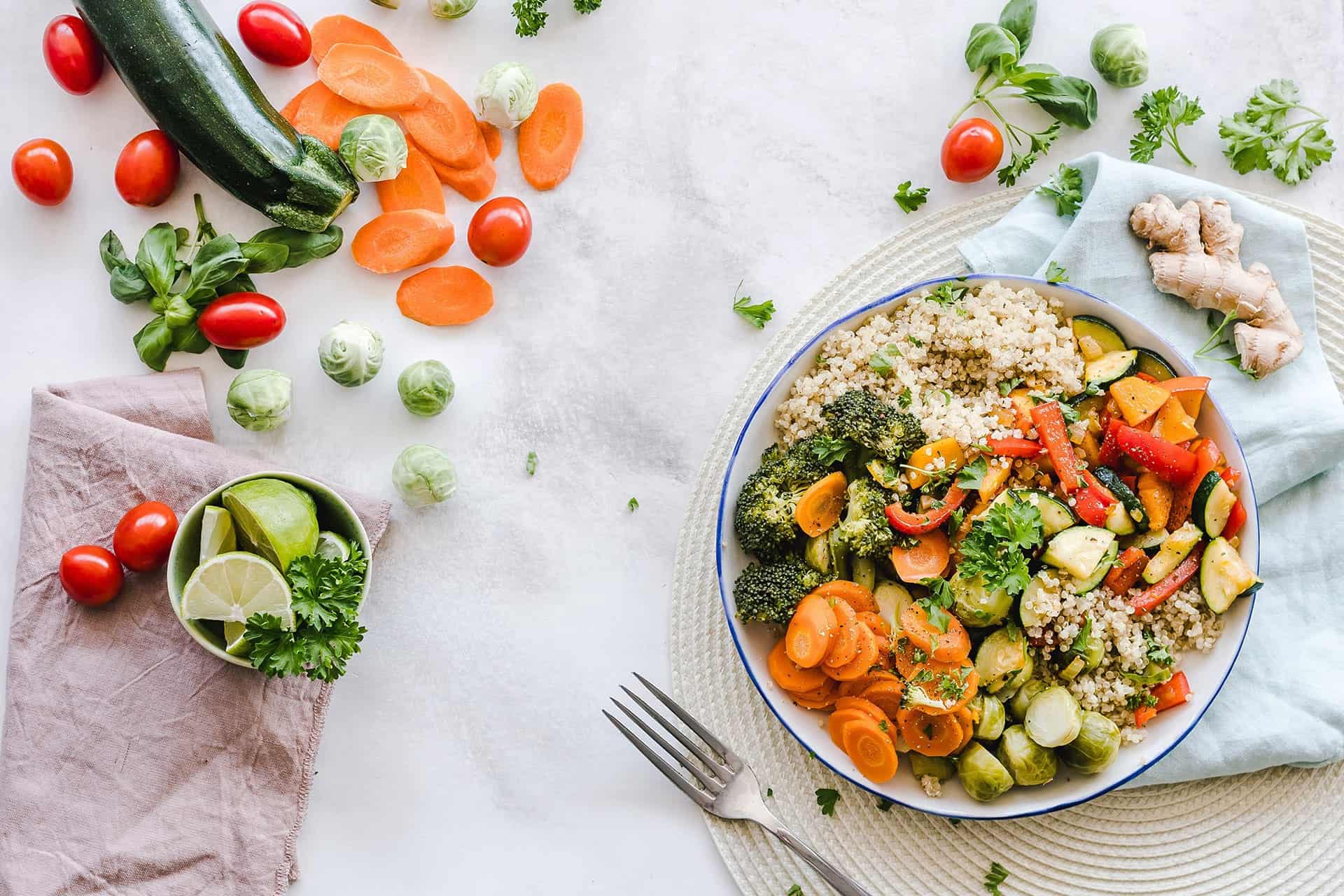
A fiber-forward stir-fry is one of the simplest ways to build a fast, colorful dinner around vegetables, beans or soy foods, and whole grains. The formula is flexible: choose a protein, add several vegetables, include a fiber-containing base, and use a measured sauce for flavor.
This article provides general nutrition education and is not individualized medical advice.
Why Make Stir-Fry a Fiber-Forward Dinner?
Fiber is found naturally in foods such as vegetables, beans, whole grains, nuts, seeds, and fruit. A stir-fry makes it practical to combine several of those foods in one skillet. The Dietary Guidelines for Americans encourage eating patterns with vegetables, legumes, grains, and a variety of protein foods.
Easy Weeknight Cashew-Edamame Stir-Fry
Serves 4 · Prep 15 minutes · Cook 12 minutes
Ingredients
- 1 tablespoon neutral oil
- 1 cup broccoli florets, 1 sliced bell pepper, 2 carrots, 1 cup snap peas, and 1 cup mushrooms
- 1½ cups shelled edamame or 14 ounces extra-firm tofu, cubed
- 2 cloves garlic and 1 tablespoon grated ginger
- 3 tablespoons lower-sodium soy sauce, 1 tablespoon rice vinegar, and 1 teaspoon sesame oil
- 3 cups cooked brown rice or another whole grain
- ¼ cup unsalted cashews and optional red pepper flakes
Instructions
- Whisk soy sauce, vinegar, sesame oil, garlic, and ginger in a small bowl.
- Heat oil in a large skillet. Cook the firm vegetables first, then add snap peas and mushrooms until crisp-tender.
- Add edamame or tofu and the sauce. Toss until heated through and glossy.
- Serve over brown rice and scatter with cashews. Add lime or cilantro if you like.

Make the Formula Work on Busy Nights
Use plain frozen vegetables, pre-cooked brown rice, or bagged slaw to shorten preparation. Canned beans can also work; rinse and compare sodium on labels. Keep sauce separate until the end so vegetables stay crisp rather than steaming in liquid.
A balanced meal does not have to be identical every week. Rotate vegetables, protein foods, and grains to suit availability, preferences, and budget. If you have a condition that affects sodium, potassium, carbohydrate, protein, or food safety needs, follow your clinician’s individual guidance.
Frequently Asked Questions
What makes a stir-fry fiber-forward?
It includes several fiber-containing foods, such as vegetables, edamame or beans, and a whole-grain base.
Can I use frozen vegetables?
Yes. Add them directly to a hot skillet and avoid crowding the pan so excess moisture can evaporate.
Are cashews necessary?
No. They add crunch, but peanuts, sesame seeds, or no nuts at all can work based on preference and allergy needs.
How can I lower sodium in stir-fry?
Use a measured amount of lower-sodium soy sauce, build flavor with ginger, garlic, vinegar, citrus, and herbs, and compare labels.
What protein works best?
Edamame, tofu, beans, chicken, shrimp, and eggs can all fit. Choose the option that works for your dietary needs and cook it safely.
Sources
- Dietary Guidelines for Americans
- USDA MyPlate
- American Heart Association: Fiber
- FoodSafety.gov: Safe Minimum Internal Temperatures
This content is for general educational purposes and is not a substitute for professional medical or nutrition advice.