
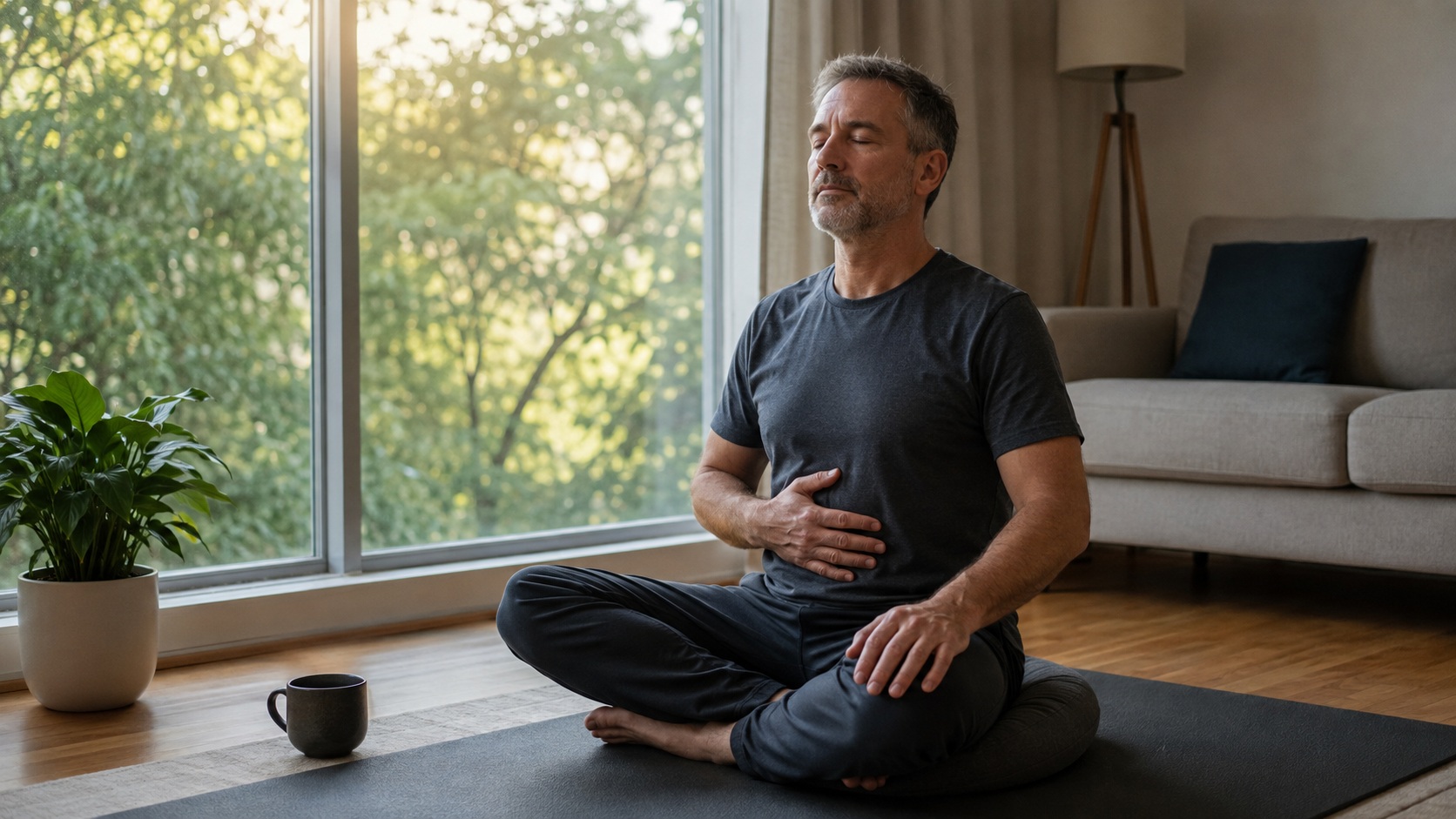
A stress relief routine for men over 40 does not need an hour of meditation or an elaborate wellness schedule. Start with a few repeatable habits: move regularly, use several minutes of comfortable breathing or relaxation, protect sleep, reduce unnecessary demands, and stay connected with people you trust. When stress comes from workload, finances, relationships, caregiving, health problems, or another ongoing pressure, coping skills can help—but addressing the underlying stressor matters too.
Key Takeaways
- Regular exercise, adequate sleep, relaxing activities, realistic priorities, and social connection can support stress management.
- Short breathing or relaxation practices may help, but no single technique works for everyone.
- Reducing an overloaded schedule can be more useful than continually adding self-care activities.
- Pay attention to caffeine, alcohol, sleep loss, and inactivity when they appear to make stress harder to manage.
- Stress management should not become another performance goal or test of toughness.
- Persistent anxiety, low mood, severe sleep problems, or symptoms that interfere with daily functioning deserve professional care.
Why Stress Management Matters After 40
Men in their 40s can face overlapping demands from work, finances, relationships, parenting, caregiving, changing health needs, and limited recovery time. Stress can also show up physically through muscle tension, headaches, poor sleep, digestive changes, irritability, or difficulty concentrating.
Stress itself is not always harmful. Short-term stress can help you respond to a challenge. Problems develop when pressure stays high, recovery remains limited, or stress and anxiety begin disrupting everyday life.
A useful routine therefore does more than help you feel calm for a few minutes. It creates regular opportunities for physical recovery, better sleep, movement, connection, and practical problem-solving.
Useful distinction: coping skills can change how you respond to stress. They cannot make an unsafe workplace, unsustainable workload, financial crisis, abusive relationship, or untreated health condition disappear.
Start With a Five-Minute Stress Reset
A short reset can interrupt the cycle of rushing, multitasking, and muscle tension. Use it after a difficult meeting, before leaving work, during a demanding afternoon, or whenever you notice stress building.
- Minute 1: stop unnecessary multitasking and put down the screen when possible.
- Minutes 2–3: slow your breathing without forcing unusually large breaths.
- Minute 4: relax your jaw, shoulders, hands, and abdomen.
- Minute 5: identify the next necessary action and decide what can wait.
This five-minute format is a practical template rather than a clinical prescription. Shorter or longer resets can work depending on your schedule.
Habit 1: Use Comfortable, Slow Breathing
Breathing exercises require no equipment and can fit almost anywhere. NIMH includes breathing exercises among relaxing activities that may support mental well-being, while NCCIH describes slow, deep breathing as one type of relaxation technique.
A 2023 meta-analysis of randomized trials found a small-to-medium reduction in self-reported stress with breathwork compared with control conditions. Most included studies had some methodological concerns, so the findings support cautious use rather than exaggerated claims.
Another randomized trial involving 400 adults did not find that one coherent-breathing method outperformed an active breathing control. That result reinforces a practical point: you do not need one supposedly perfect breathing rate or branded technique.
Simple approach: breathe comfortably, slow the pace slightly, let the exhale feel unhurried, and continue for several minutes. Stop if you become lightheaded or uncomfortable.
Habit 2: Move Your Body Regularly
Physical activity offers both immediate and long-term benefits. CDC reports that a single session of moderate-to-vigorous activity can reduce feelings of anxiety and improve sleep quality.
NIMH suggests regular exercise and notes that small amounts add up. A walk can therefore serve as a practical stress-management tool even when a full workout does not fit.
- Take a brisk walk during lunch.
- Walk for several minutes after a stressful meeting.
- Use regular strength training as part of your weekly routine.
- Choose cycling, swimming, hiking, recreational sports, or another activity you enjoy.
- Keep some sessions easy when sleep, stress, or recovery is poor.
Exercise should support your health rather than become another source of pressure. Missing a workout does not require punishment or an extreme catch-up session.
Habit 3: Release Physical Tension
Stress often appears in the body before you consciously notice feeling overwhelmed. Tight shoulders, clenched teeth, a rigid abdomen, or constantly raised muscle tension can become part of the pattern.
Progressive muscle relaxation involves briefly tightening and then relaxing different muscle groups so that the contrast becomes easier to notice. NCCIH includes progressive relaxation among established relaxation techniques and notes evidence of stress-alleviating effects in some people.
You can also use a simpler version: check your jaw, shoulders, hands, and abdomen several times during the day and deliberately soften unnecessary tension.
Habit 4: Set Clear Priorities and Boundaries
NIMH recommends setting goals and priorities, deciding what needs attention now, and recognizing what can wait. It also encourages saying no when new demands exceed your capacity.
Boundaries can be practical rather than dramatic. Stop checking nonurgent work messages after a chosen time, delegate a household task, decline an optional commitment, or reschedule something that does not need to happen today.
A stress routine becomes more effective when it reduces avoidable pressure instead of simply helping you tolerate an endlessly expanding workload.
One-minute priority check: identify what must happen today, what would be useful but optional, and what can wait without meaningful consequences.
Habit 5: Protect Sleep
Stress can interfere with sleep, while insufficient sleep can make the next day harder to manage. NIMH recommends making sleep a priority and keeping a regular schedule.
CDC recommends seven or more hours for adults ages 18 to 60. A consistent schedule, a quiet and comfortable bedroom, less stimulating screen use near bedtime, regular exercise, and avoiding caffeine later in the day can all support sleep.
If you are repeatedly sacrificing sleep to finish work or household tasks, another relaxation technique may not solve the main problem. Protecting enough time for sleep may require changing the evening workload.
Sleep deserves attention: persistent snoring, gasping, repeated waking, chronic insomnia, or major daytime sleepiness deserves evaluation rather than simply increasing caffeine.
Habit 6: Eat Regularly and Stay Hydrated
Long stretches without food or fluids can make an already demanding day feel worse for some people. NIMH recommends healthy, regular meals and hydration as part of mental self-care.
You do not need a specialized anti-stress diet. Keep practical meals available, drink according to your needs, and avoid allowing back-to-back meetings or work demands to eliminate every meal and break.
A packed lunch, fruit, yogurt, nuts, leftovers, a simple sandwich, or another convenient meal can reduce the need to improvise when you are already tired and hungry.
Habit 7: Notice How Caffeine Affects Stress
NIMH recommends paying attention to caffeine and how it affects mood and well-being. Caffeine can improve alertness, but larger amounts may also worsen jitteriness, palpitations, anxiety, or sleep problems in susceptible people.
If your stress routine includes several coffees or energy drinks simply to keep going, look at the underlying pattern. Sleep loss, skipped meals, excessive workload, or an untreated sleep problem may deserve more attention than another stimulant.
Try reducing the amount or moving caffeine earlier if you notice a connection with anxiety or poor sleep.
Habit 8: Do Not Rely on Alcohol to Unwind
NIMH recommends paying attention to alcohol use and how it affects well-being. Alcohol can feel relaxing in the short term, but using it regularly as the main way to switch off can create additional health and sleep problems.
If the end of every difficult day automatically leads to drinking, consider building another transition first: take a walk, shower, eat dinner, call someone, listen to music, or use a short relaxation practice.
Anyone concerned about alcohol use or finding it difficult to cut back can discuss confidential treatment options with a healthcare professional.
Habit 9: Stay Connected
NIMH recommends staying connected with friends and family who can provide emotional support and practical help. Stress becomes harder to manage when every problem stays private.
Connection does not require discussing every emotion in detail. You might walk with a friend, eat with family, ask someone for practical help, talk through a difficult decision, or simply spend time around people who help you feel less isolated.
Professional support also counts. Therapy can provide structured help when stress connects with anxiety, depression, grief, relationship problems, burnout, trauma, anger, or other persistent difficulties.
A 15-Minute Stress Relief Routine
| Time | Action |
|---|---|
| First 3 minutes | Step away from unnecessary screens and use comfortable slow breathing |
| Next 7 minutes | Walk, stretch, or use another comfortable form of movement |
| Final 5 minutes | Review priorities, identify one unnecessary demand, and choose the next realistic action |
Use this as a flexible template rather than an evidence-based requirement to spend exactly 15 minutes. The purpose is to combine physical downshifting with practical problem-solving.
A Routine for Extremely Busy Days
When the day becomes unusually demanding, keep a minimum version rather than expecting yourself to complete a full wellness routine.
- Step away from unnecessary screens for several minutes.
- Use comfortable breathing or consciously relax muscle tension.
- Take a short walk when your circumstances allow it.
- Eat a regular meal and drink according to your needs.
- Remove, delay, or delegate one nonessential task.
The goal on an overloaded day is not peak wellness. It is creating enough recovery to keep one difficult day from becoming a pattern of chronic overload.
Build a Weekly Stress-Management Plan
| Area | Practical approach |
|---|---|
| Movement | Schedule walks, workouts, or recreational activity across the week |
| Relaxation | Use short breathing, muscle relaxation, mindfulness, music, reading, or another calming activity |
| Sleep | Protect enough sleep opportunity and keep a reasonably consistent schedule |
| Connection | Make room for supportive contact rather than allowing every week to become work-only |
| Boundaries | Identify one demand you can reduce, delegate, delay, or decline |
Avoid turning all five areas into mandatory daily tasks. Choose a few actions that address the sources of stress you actually face.
Common Stress-Relief Mistakes After 40
Trying to Eliminate All Stress
Some pressure is unavoidable. A more realistic goal is reducing unnecessary stress, improving recovery, and responding more effectively when challenges occur.
Treating Stress Management as a Test of Toughness
Constantly pushing through poor sleep, irritability, anxiety, or physical symptoms does not prove resilience. Adjusting workload or seeking support can be a practical health decision.
Turning Self-Care Into Another Checklist
Meditation, journaling, exercise, breathing, reading, stretching, cold exposure, supplements, and elaborate morning routines do not all need to happen every day. Keep the practices that clearly help.
Using Hard Exercise for Every Stressful Day
Exercise can support mental health, but every difficult day does not require an exhausting workout. Easy walking and moderate activity remain useful options.
Relying on Supplements Instead of Addressing the Problem
No supplement can fix an unsustainable workload, severe sleep deprivation, untreated anxiety, depression, financial stress, or a harmful relationship. Supplements can also interact with medications.
When Stress Needs Professional Support
NIMH advises seeking professional help when severe or distressing symptoms last two weeks or more. Examples include persistent sleep difficulty, changes in appetite, trouble concentrating, loss of interest in usual activities, difficulty getting out of bed because of mood, or inability to complete ordinary tasks.
Stress and anxiety also deserve attention when they begin interfering with everyday life or causing you to avoid normal activities. Therapy, medical evaluation, medication, workplace changes, relationship support, or other interventions may be appropriate depending on the cause.
If you are in the United States and experiencing suicidal thoughts or an immediate mental health crisis, call or text 988. Call 911 for a life-threatening emergency.
Frequently Asked Questions
The Bottom Line
A stress relief routine for men over 40 should make recovery easier rather than create another demanding project. Use regular movement, adequate sleep, comfortable relaxation techniques, balanced meals, realistic priorities, and supportive relationships as the foundation.
Breathing and muscle-relaxation practices can help some people, but they cannot solve every source of stress. Reduce avoidable demands when possible and seek appropriate support when anxiety, depression, insomnia, substance use, relationship problems, work conditions, or another ongoing issue requires more than a self-care routine.
Medical disclaimer
Medical disclaimer: This content is for educational and informational purposes only and is not a substitute for professional medical advice, diagnosis, or treatment. Dietary needs and supplement suitability vary by individual.
Sources
- National Institute of Mental Health. Caring for Your Mental Health. Last reviewed April 2026.
- National Institute of Mental Health. I’m So Stressed Out! Infographic. Accessed September 2026.
- National Center for Complementary and Integrative Health. Stress. Accessed September 2026.
- Centers for Disease Control and Prevention. Managing Stress. 2026.
- Centers for Disease Control and Prevention. Health Benefits of Physical Activity for Adults. March 10, 2026.
- Centers for Disease Control and Prevention. About Sleep. May 15, 2024.
- Fincham GW, Strauss C, Montero-Marin J, Cavanagh K. Effect of Breathwork on Stress and Mental Health: A Meta-Analysis of Randomised-Controlled Trials. Scientific Reports. 2023;13:432.
- Fincham GW, et al. Effect of Coherent Breathing on Mental Health and Wellbeing: A Randomised Placebo-Controlled Trial. Scientific Reports. 2023.
