
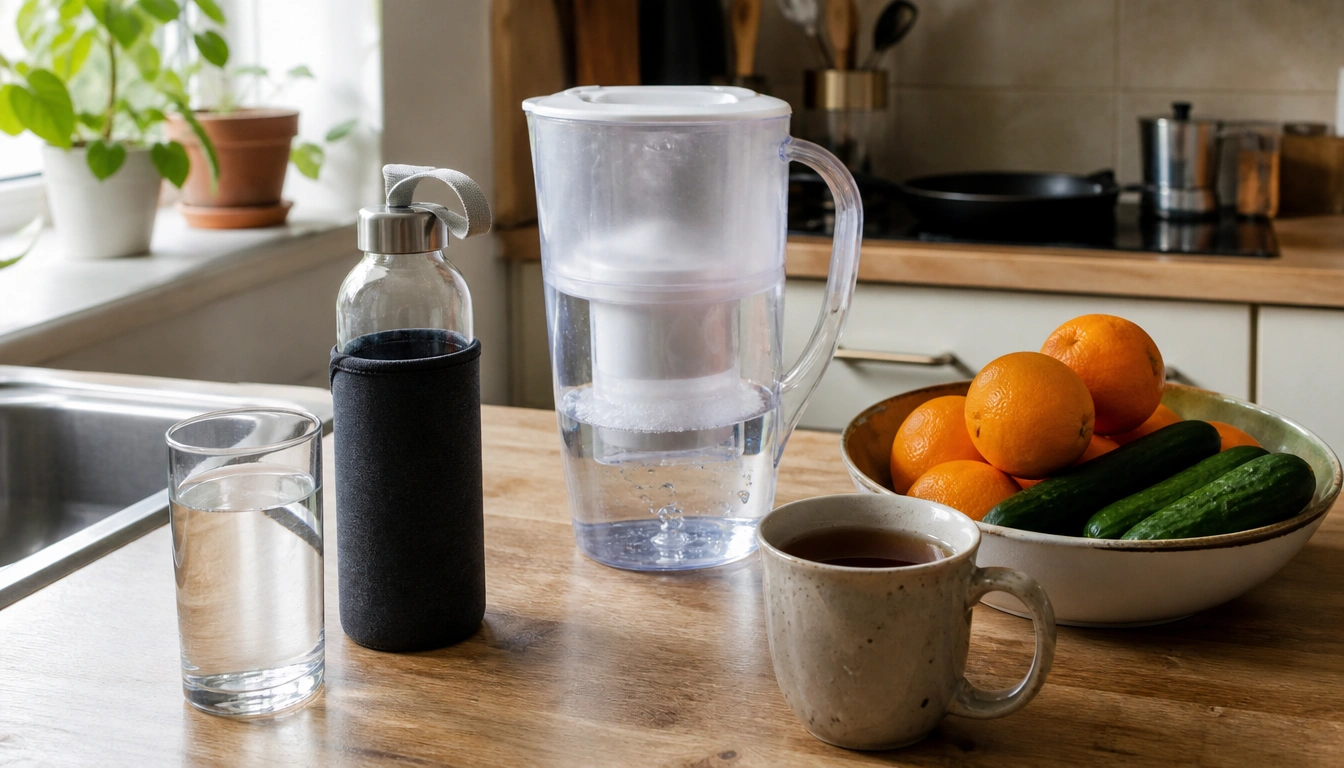
The cheapest way to keep a household hydrated is to make plain tap water the default, then build simple drinking habits around waking, meals, medication, school drop-off, breaks, and bedtime. Foods such as soups, fruit, vegetables, and oats also contribute fluid, so you do not need every sip to come from a glass. Most households can meet daily needs affordably without bottled drinks or sugary beverages.
Key Takeaways
- Tap water is usually the lowest-cost hydration option; a basic pitcher filter can help if taste or odor is the barrier.
- You can get about 20% to 30% of daily water intake from foods, especially soups, stews, oats, cucumbers, tomatoes, melons, and oranges.
- A routine works better than thirst alone: connect drinking to existing cues like meals, medication, and leaving the house.
- Pale yellow urine usually suggests you are drinking enough; dark yellow or amber urine is a sign to drink more.
- Older adults, pregnant or breastfeeding people, outdoor workers, and anyone in hot weather often need more deliberate hydration planning.
- Tea, coffee, and homemade infused water can count toward fluids, but sugary drinks are usually the costliest choice for hydration.
Why hydration matters in everyday life
Hydration supports everyday functions that are easy to overlook until they slip: body temperature control, digestion, circulation, kidney function, joint lubrication, and mental sharpness. The brain is sensitive to even modest fluid shortfalls, which is one reason low intake can show up as fatigue, headache, irritability, or trouble concentrating before it looks like a dramatic illness. The CDC and other public health sources also recognize that drinking enough water helps replace what you lose through breathing, sweating, urination, and bowel movements.
For budget-conscious households, hydration matters for another reason: expensive drinks add up fast. Soda, juice, bottled water, energy drinks, and flavored beverages can become a regular grocery expense without providing better hydration than simpler options. If the goal is steady daily fluids, the most economical approach is usually to make low-cost drinks easy to reach and to use food as part of the plan instead of treating hydration as something that only happens from a bottle.
The cheapest hydration foundation: tap water first
For most households with safe public water, tap water is the cheapest reliable source of hydration. It is also the simplest option to keep stocked because it does not require buying cases, storing bottles, or remembering a last-minute trip to the store. Public health guidance generally favors plain water over sugar-sweetened beverages because water adds fluid without calories, sugar, or dental wear.
If your tap water tastes flat, metallic, chlorinated, or simply unpleasant, a basic pitcher filter can be a practical middle ground. It is not necessary for everyone, but it can make people more willing to drink enough. That matters more than chasing a premium brand. In many households, the best hydration setup is not the fanciest one; it is the one people will actually use every day.
Bottled water is usually unnecessary for routine hydration and often costs far more over time. A reusable bottle, a sink or pitcher, and a predictable refill habit usually cover most needs. If your tap water quality is uncertain, follow local advisories and use the safest approved source available in your area.
How much fluid you actually need
There is no single perfect number for everyone, because fluid needs change with body size, age, diet, heat, activity, illness, pregnancy, and breastfeeding. Public guidance commonly points adults toward about 6 to 8 cups of fluid a day, while broader reference intakes from organizations such as the National Academies are higher when all beverages and food moisture are counted together. That difference is one reason it helps to think in patterns rather than obsess over a precise ounce target.
A useful everyday rule is that food contributes meaningfully to hydration. Research summaries often estimate that about 20% to 30% of daily water intake comes from food, especially watery produce and dishes with broth or added liquid. So if your meals include soups, stews, oatmeal, fruit, and vegetables, part of your hydration is already built in.
Needs rise in hot weather, during physical labor, and with exercise because sweat losses go up. Older adults may also need more deliberate routines because thirst can become less reliable with age. Pregnancy and breastfeeding increase fluid needs as well, because the body is supporting extra blood volume and, during lactation, milk production. The practical takeaway is not to chase one universal target, but to notice when your household’s baseline routine needs to be stronger.
A budget hydration routine you can repeat daily
The easiest hydration habit is the one attached to something you already do. Instead of waiting until someone feels thirsty, pair drinking water with routine cues. For many families, that means one glass on waking, one with each meal, one at a medication time, and one at a predictable break such as school drop-off, a work pause, or bedtime.
This cue-based approach works because habits are easier to remember when they are linked to an existing event. You do not have to “find time” for hydration; you build it into moments that already happen. For children, that might mean drinking after hanging up a backpack or before leaving for practice. For older adults, it might mean placing a filled cup near morning pills and refilling it at lunch and dinner. For caregivers, the goal is consistency, not perfection.
If forgetfulness is a problem, keep water visible. A filled pitcher on the counter, a reusable bottle by the front door, or cups placed near the sink can prompt action without extra effort. If your household uses shifts or variable schedules, match the cue to the routine: before commute, after a break, when starting dinner, or when returning from errands. The habit should feel automatic, not like another task to manage.
Food-first hydration on a tight budget
Food-first hydration is one of the easiest ways to stretch a grocery budget. Many inexpensive foods contain a lot of water and contribute to total fluid intake. Soups and stews are especially helpful because they combine water with filling ingredients, so a single meal can support both hydration and satiety.
Budget-friendly high-water foods include oats cooked with extra liquid, cucumbers, tomatoes, cabbage, lettuce, oranges, apples, melons, and frozen fruit that is thawed into meals or drinks. Seasonal produce often gives the best value, and frozen fruits and vegetables can be just as useful when fresh prices are high. A bowl of oatmeal, a bean soup, a piece of fruit, and a vegetable side can quietly add up to a meaningful amount of fluid without feeling like a separate hydration project.
This matters most when the grocery budget is tight because every small swap counts. If one meal includes broth, vegetables, and fruit, you may need fewer commercial drinks to reach a good hydration pattern. That is one reason many public health recommendations favor whole foods and water over relying on packaged beverages for fluid intake.
Low-cost ways to improve taste without sugary drinks
Many people do not skip water because they dislike hydration itself; they skip it because plain water tastes boring. The cheapest fix is often simple flavoring at home. A slice of lemon, lime, cucumber, or a few mint leaves can make tap water more appealing without turning it into a sugary drink. Frozen fruit can also be used as a flavoring tool and as a way to chill water at the same time.
Store-brand tea bags or bulk tea can be another low-cost option, especially if your household already buys hot drinks. Brewed tea usually costs far less than bottled flavored water or ready-to-drink beverages. Plain tea and coffee can both count toward fluid intake, which means they can be part of hydration rather than something to avoid completely. The main caution is not to load them with sugar, syrup, or heavy cream if the goal is to save money and reduce sweet drinks.
If your household likes variety, rotate a few low-cost options rather than buying specialty beverages. Plain water, citrus-infused water, iced tea, and hot tea can cover most preferences without much expense. The goal is to make the healthy option the easy one.
Tea, coffee, and other drinks: what counts and what to limit
Tea and coffee do count toward daily fluids. For many adults, moderate amounts of unsweetened coffee or tea are a practical and affordable part of hydration. They can be especially helpful for people who prefer warm drinks or who are trying to replace soda and sweetened coffee drinks.
What usually hurts the budget is not the tea bag or coffee grounds; it is the extras. Prepackaged flavored coffee drinks, syrups, creamers, and sweetened bottled teas can cost far more than plain brewed drinks. If caffeine is part of your routine, simple preparation is usually the cheapest route. If someone is sensitive to caffeine, pregnant, or trying to avoid late-day sleep disruption, earlier use may be a better fit.
Soft drinks, energy drinks, and juices can contribute fluid, but they are not the best default hydration tools for most households because they often add a lot of sugar and cost more per serving. If you drink them occasionally, that is different from using them as the main way to meet fluid needs.
How to tell if your routine is working
You do not need to track every ounce to know whether your routine is helping. Urine color is one of the simplest low-cost checks. Pale yellow or straw-colored urine generally suggests adequate hydration. Dark yellow or amber urine usually means you need more fluids. This is not a perfect medical test, but it is a practical everyday signal.
Energy level and symptom patterns matter too. If a household member is regularly getting headaches, feeling tired for no clear reason, becoming dizzy when standing, or having trouble concentrating, low fluid intake may be part of the picture. These signs can have many causes, so they are not proof of dehydration on their own, but they are useful prompts to review the household routine.
A helpful habit is to look at the pattern, not a single moment. Someone may have darker urine first thing in the morning and lighter urine later after drinking, which can be normal. The goal is not constant clear urine; it is generally pale yellow through most of the day and a routine that keeps people from falling behind.
Special situations that need extra planning
Some people need more routine attention than the average household. Older adults are one example because thirst can become less reliable with age. If mobility, memory, or medication schedules are barriers, a set drinking routine is often more effective than waiting for thirst. Placing drinks within easy reach also helps.
Pregnant and breastfeeding people often need additional fluids, so skipping drinks during busy days can lead to a faster shortfall. Outdoor workers, athletes, and anyone in hot climates lose more fluid through sweat and may need to drink at regular intervals rather than in response to thirst alone. In these settings, small frequent drinks tend to work better than trying to catch up at the end of the day.
Children also benefit from routines because they may not remember to drink unless an adult builds it into the day. School drop-off, recess, meals, and after-playtime breaks are easy anchors. If the household includes someone with a medical condition such as severe heart failure, advanced kidney disease, or a clinician-prescribed fluid limit, individualized medical advice overrides general hydration tips.
Safety boundaries: avoid overdrinking and know when to get help
Drinking more is not always better. Very large amounts of water in a short period can dilute sodium in the blood and cause a dangerous condition called hyponatremia. That is uncommon in everyday life, but it is one reason to spread fluids through the day instead of trying to “make up” for missed drinking all at once.
Severe dehydration needs prompt medical attention. Warning signs include confusion, fainting, rapid heartbeat, rapid breathing, inability to keep fluids down, or not urinating for many hours. In those cases, home strategies are not enough. If someone seems severely ill, seek medical care quickly.
Medical conditions and medications can also change what is appropriate. Fluid restriction, swelling, advanced kidney disease, or heart failure may require a clinician-guided plan rather than general advice. For most households, though, the safest and cheapest starting point is still simple: water first, food-forward meals, and a routine built around daily life.
| Low-cost option | How it helps | Best use case |
|---|---|---|
| Tap water | Lowest-cost default with no added sugar or calories | Everyday household hydration |
| Pitcher filter | Can improve taste or odor for some households | When water quality is fine but taste is a barrier |
| Bulk tea bags | Cheap hot or iced drink that counts toward fluids | Replacing soda or bottled sweet drinks |
| Homemade infused water | Improves flavor without buying flavored beverages | Families who want variety with minimal cost |
Frequently Asked Questions
How much fluid do adults need each day on average?
Needs vary, but public guidance commonly points adults toward about 6 to 8 cups of fluid a day, while broader reference intakes are higher when food moisture is included. A good household target is a steady daily routine, not a rigid number that every person must hit exactly.
What are the cheapest drinks that still count toward hydration?
Tap water is usually the least expensive option. Plain tea and coffee also count, and homemade infused water can be a low-cost way to make plain water easier to drink. The most expensive choices are usually bottled flavored drinks, sodas, and energy drinks.
Can tea and coffee count toward daily fluids?
Yes. Plain tea and coffee contribute to daily fluid intake. They are often affordable and useful for adults who prefer warm drinks. The main thing to limit is added sugar or expensive extras that turn a simple drink into a costly one.
How do I build a hydration habit that children or older adults will actually follow?
Use the same cue every day: waking, meals, medication, school drop-off, after play, or bedtime. Keep water visible and easy to reach. For children and older adults, routines work better than asking them to remember thirst on their own.
How can I tell if we are drinking enough without tracking every ounce?
Use urine color as a simple check. Pale yellow or straw-like urine usually suggests enough fluid, while dark yellow or amber means the person likely needs more. Also watch for repeated headaches, fatigue, dizziness, or trouble concentrating, which can be clues that intake is too low.
The Bottom Line
A budget-friendly hydration routine does not need expensive drinks or strict tracking. For most households, the cheapest plan is tap water first, food-rich meals that contribute fluid, and a few predictable drinking cues built into the day.
If taste is the barrier, try a basic pitcher filter, citrus slices, cucumber, mint, frozen fruit, or store-brand tea before reaching for bottled or sweetened beverages. If someone is older, pregnant, breastfeeding, working in heat, or exercising heavily, plan for more frequent drinks.
Use urine color and day-to-day symptoms as practical feedback. Pale yellow usually means the routine is working; dark yellow, frequent headaches, or low energy suggest it is time to drink more. If there are severe symptoms or a medical fluid restriction, follow clinical advice instead of general rules.
Medical disclaimer
Medical disclaimer: This content is for educational and informational purposes only and is not a substitute for professional medical advice, diagnosis, or treatment. Dietary needs and supplement suitability vary by individual.
Sources
- Centers for Disease Control and Prevention (CDC) — cdc.gov. Accessed October 2026.
- National Health Service (NHS) — wchc.nhs.uk. Accessed October 2026.
- National Health Service (NHS) — www.nhs.uk. Accessed October 2026.
- National Institutes of Health (NIH) — nih.gov. Accessed October 2026.
- Mayo Clinic — mayoclinic.org. Accessed October 2026.
- Academic Research Institution — harvard.edu. Accessed October 2026.
