
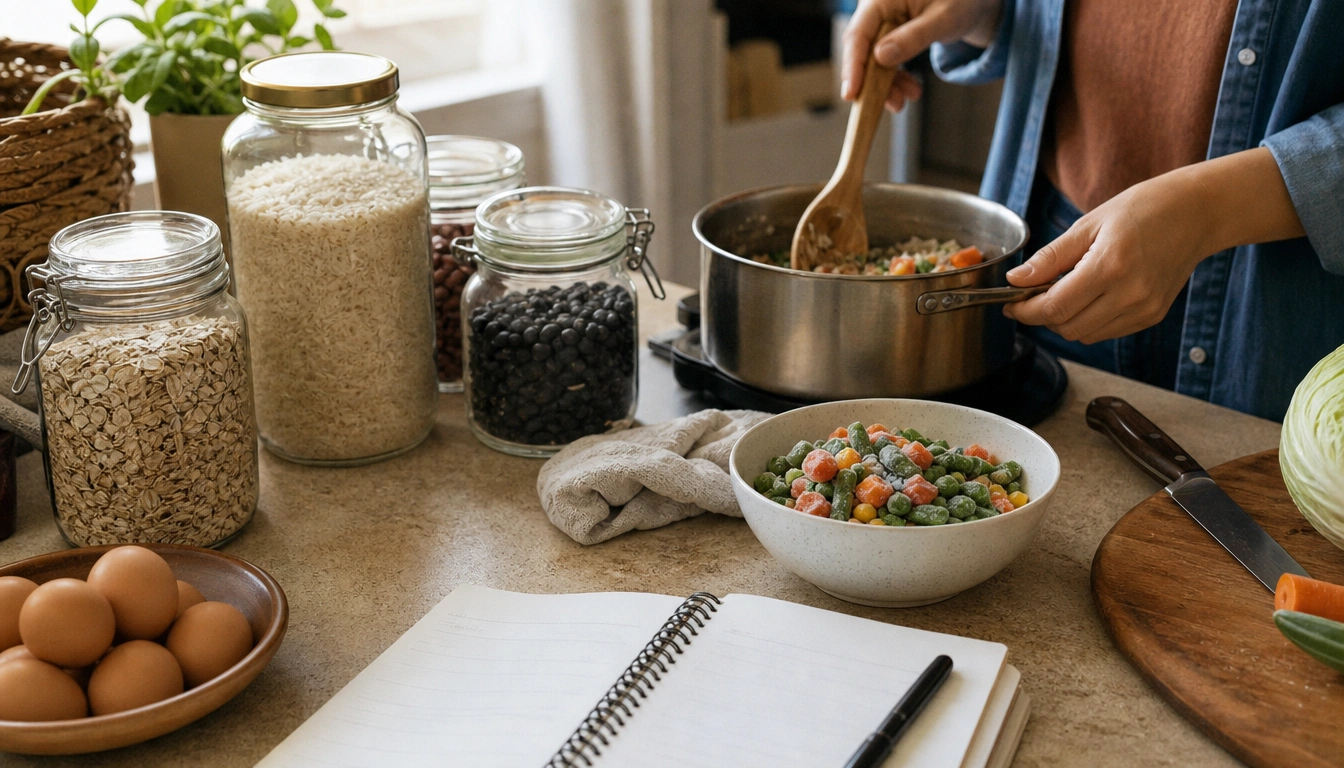
You can reset your health each week on a budget by starting with a pantry, fridge, and freezer audit, then building a simple meal plan around low-cost staples, free movement, and a consistent sleep routine. The goal is not perfection or expensive products. It is a repeatable week that supports energy, steady eating, activity, and recovery without overspending.
Key Takeaways
- Start with what you already have at home before shopping. A pantry, fridge, and freezer audit reduces waste and helps the week begin without extra spending.
- Frozen and canned produce are valid budget tools. They can count toward fruit and vegetable goals and make healthy eating more affordable year-round.
- Keep meals simple with cheap staples like oats, beans, lentils, rice, eggs, and seasonal produce. Store brands and bulk dry goods usually stretch further.
- Use free movement first: walking, stairs, bodyweight exercises, stretching, and public trails can support fitness without a gym membership.
- Protect sleep and recovery with a consistent bedtime, a screen-free wind-down, and hydration. These habits cost little and help the reset stick.
- If food access is tight, frugality should not become under-eating. Community food resources and professional support matter when budget wellness stops feeling sustainable.
Weekly wellness reset for people on a budget starts with what you already have
A practical weekly reset does not begin in a supplement aisle or with a new workout plan. It begins with a quick check of your pantry, fridge, and freezer. That first step helps you use food already on hand, avoid duplicate purchases, and lower the chance of waste. The CDC and the NHS both support simple, steady habits rather than expensive wellness fixes, and that fits budget living well.
Think of the reset as a short planning cycle: what food do you have, what meals can you build from it, what movement can you fit in, and how will you protect sleep? That structure keeps the week from drifting into takeout, skipped meals, or “all-or-nothing” health plans that are hard to afford and hard to maintain.
If time is tight, keep the audit brief. Look for grains, beans, eggs, frozen vegetables, fruit, yogurt, canned fish, oats, rice, pasta, tortillas, and leftovers that need to be used first. Write down only a few meals you can actually repeat. A small, realistic plan beats a long list that never gets cooked.
Build a 7-day meal plan from cheap staples and store brands
A budget-friendly meal plan works best when it is built around a handful of dependable foods. Oats, rice, beans, lentils, eggs, potatoes, frozen vegetables, canned tomatoes, seasonal produce, and plain yogurt can form many different meals without requiring specialty ingredients. Public health guidance encourages an eating pattern centered on vegetables, fruits, whole grains, and protein sources such as beans and eggs.
For many households, the easiest approach is to choose one breakfast, two or three lunch and dinner bases, and a few snacks. For example: oats with fruit for breakfast; rice and beans with vegetables for lunch; lentil soup or egg and vegetable stir-fry for dinner. You do not need a different recipe every day. Repeating low-cost meals is often what makes the plan affordable and less stressful.
When fresh produce is expensive or spoils quickly, frozen and canned options help fill the gap. Frozen vegetables are picked and frozen close to peak ripeness, and canned vegetables or fruit can still be useful when you choose versions without a lot of added sugar or salt. That means a healthy week is still possible even if the produce section is not in budget.
If you are trying to stretch groceries, build meals around fiber and protein first. Beans, lentils, oats, brown rice, and eggs can help meals feel more complete and may support steadier energy across the day. That matters when your schedule is busy and when convenience foods are tempting because they are fast, not because they are actually better for your body.
Cheapest useful swaps that still support health
Frugality is not about buying the least nourishing food possible. It is about choosing foods that do more than one job. Store-brand staples, bulk dry goods, canned beans, canned fish, frozen produce, and canned fruit in water or juice are often the most useful swaps because they last longer and reduce waste.
Here is a simple way to think about those choices: dry goods usually give the lowest cost per serving, frozen produce reduces spoilage, and canned foods can save time on busy nights. Store-brand oats, rice, whole-wheat pasta, and beans often perform just as well as more expensive versions for everyday cooking. The cheaper option is often the one you will actually use.
Read labels with purpose, not perfection. If you manage high blood pressure, look for lower-sodium canned beans and vegetables when possible and rinse canned beans to reduce sodium. If you have diabetes, pair carbohydrate foods with protein and fiber rather than relying on sweet drinks or refined snacks. The goal is to make the same budget work better for your health, not to create a stricter version of the same spending problem.
Seasonal produce can also be a smart buy, but only if you can use it in time. A bundle of spinach may be cheaper than a pre-cut salad mix, yet it is still a waste if half of it spoils. Budget wellness is partly a storage strategy: buy less, use more, and freeze leftovers when you can.
Batch cook once, then repurpose leftovers all week
Batch cooking can save money and decision fatigue at the same time. One pot of lentil soup, a tray of roasted vegetables, cooked rice, or a pan of beans can become multiple meals. The point is not to spend hours meal prepping. The point is to create a few building blocks that make the next several days easier.
A practical reset might include one base grain, one protein, and one vegetable batch. For example, cook rice, make a pot of beans or lentils, and roast or steam vegetables. From there, leftovers can become grain bowls, soup, wraps, omelets, or quick stir-fries. Leftover chicken can become a sandwich filling, salad topping, or soup addition. Cooked vegetables can be folded into eggs, pasta, or rice.
This approach reduces the number of decisions you need to make when you are tired. It also lowers the chance of late-night takeout or convenience-store meals that cost more and often leave you less satisfied. If you have a very small kitchen or limited storage, even one extra batch meal can make a noticeable difference.
Use free movement instead of a gym membership
Physical activity does not have to be packaged as a class, app, or monthly fee. The CDC recommends regular aerobic activity and muscle-strengthening work across the week, and that can be done with walking, stair climbing, bodyweight exercises, stretching, and public trails. These options are useful because they are accessible, flexible, and easier to repeat.
Walking is a strong starting point for many adults. It is low-cost, low-barrier, and easy to scale up or down. A brisk walk around the neighborhood, a walk during a phone call, or a few short walks spread through the day all count. If you want more structure, add a short circuit of squats, wall push-ups, lunges, calf raises, or modified planks at home. No equipment is required to begin.
For people who are sedentary now, the safest plan is usually the one you can recover from and repeat. Start with manageable sessions and build gradually. If you have joint pain, balance concerns, heart disease, or a long gap since regular exercise, choose gentler movement and talk with a clinician before making the week much more intense. Movement should support your life, not create a new injury cycle.
Protect recovery with low-cost sleep and stress habits
Sleep and stress recovery are part of a wellness reset, not an optional extra. Consistent sleep and wake times help your body settle into a more predictable rhythm. The NHS and CDC both emphasize sleep-friendly habits such as a regular schedule and reducing screen exposure before bed. Those habits are free, and they often matter more than buying sleep products.
Choose one short wind-down routine you can repeat. That might mean dimming lights, charging your phone across the room, drinking water, washing up, or reading a few pages before bed. A simple bedtime cue helps tell your body the day is ending. If screens keep you awake, give yourself even a short screen-free window before sleep and see how your body responds.
Hydration matters too, but it does not need to be complicated. Keep water available and drink steadily through the day rather than trying to fix everything at night. If stress is high, build in one small recovery habit that costs nothing: a short walk, stretching, slow breathing, or a quiet ten-minute pause. The goal is not to eliminate stress. It is to stop it from running the whole week.
Keep the reset budget-friendly with a few shopping rules
Shopping habits can quietly determine whether a reset saves money or burns through it. Use a list based on your meal plan and shop after you have eaten, not when you are hungry. That single change can reduce impulse buys, extra snacks, and emergency convenience food that never quite matches the plan.
It also helps to shop from the perimeter and the freezer aisle with a clear purpose. Frozen vegetables, canned beans, plain oats, rice, eggs, and seasonal produce tend to be more budget-friendly than novelty wellness items, prepared bowls, and drinks that promise energy but do little for satiety. If a product is expensive and your basic meal plan is still incomplete, skip the product.
Reducing waste is a health habit as much as a money habit. Use leftovers first, keep a visible “eat soon” container in the fridge, and freeze extra portions before they spoil. A weekly wellness reset becomes much more sustainable when your food budget is spent on meals, not on forgotten produce and duplicate purchases.
Adjust the plan for age, health conditions, and real food access
Not every budget reset should look the same. Older adults may need extra attention to protein, calcium, vitamin D, and foods that are easy to chew and prepare. Teens may need more overall food because they are still growing and may be more active. In both cases, the answer is usually not specialty products. It is making sure enough nourishing food is actually available.
People managing diabetes, high blood pressure, digestive problems, or other conditions may need more specific food choices. Lower-sodium canned foods, fiber-rich staples, and balanced meals can help, but medical nutrition needs are individualized. If you have been told to follow a particular eating plan, keep the reset aligned with that advice rather than using a generic budget template.
Food access is the most important exception to the usual budget advice. If “wellness” is starting to mean skipping meals, stretching food too thin, or feeling anxious about running out, that is not a healthy reset. Community food pantries, local mutual aid, government nutrition assistance programs, school meal programs, and a registered dietitian or clinician can be part of the solution. Frugality should make life easier, not make food feel scarce.
If you are experiencing persistent fatigue, unplanned weight change, dizziness, frequent digestive symptoms, or a sense that your stress and eating habits are spinning out of control, ask for help. A budget-friendly reset is useful, but it is not a substitute for medical or mental health care when something deeper is going on.
Frequently Asked Questions
What should I do first in a weekly wellness reset if I’m on a tight budget?
Start with a quick pantry, fridge, and freezer audit before you buy anything. List what needs to be used first, then build simple meals around those ingredients. That lowers waste and prevents you from spending money on food you already have.
How can I eat healthier for the week using cheap foods and what I already have at home?
Use simple staples such as oats, rice, beans, lentils, eggs, frozen vegetables, and seasonal produce. Frozen and canned fruits and vegetables can help fill gaps when fresh food is expensive. Aim for repeatable meals, not a new recipe every day.
What are the best free or low-cost ways to exercise and recover during the week?
Walking, stairs, bodyweight exercises, stretching, and public trails are all low-cost options. For recovery, keep a regular sleep schedule, use a short screen-free wind-down, and stay hydrated. These habits support health without equipment or memberships.
How do I reduce stress and improve sleep without buying apps, equipment, or supplements?
Pick one simple bedtime routine you can repeat, such as dimming lights, putting your phone away, drinking water, and reading or stretching for a few minutes. Consistency matters more than a product. Even a short screen-free window before bed can help.
What should I do if I’m not sure whether I have enough food or if budget wellness starts feeling like restriction?
Treat that as a sign to pause and reassess, not push harder. If you are skipping meals, constantly worried about food, or losing weight unintentionally, reach out to a food pantry, nutrition assistance program, clinician, or registered dietitian. Wellness should not feel like hunger.
The Bottom Line
A weekly wellness reset on a budget works best when it is built around planning, not purchasing. Audit what you already have, shop with a list, choose low-cost staples, and repeat a few simple meals instead of chasing expensive wellness trends.
Use free tools where they matter most: walking, bodyweight movement, a consistent sleep routine, and basic recovery habits. Frozen and canned produce, store brands, and batch cooking can keep the week affordable without lowering the quality of your routine.
If money is tight enough that food becomes uncertain, the priority changes from optimization to support. Community resources and professional guidance are part of real wellness too.
Medical disclaimer
Medical disclaimer: This content is for educational and informational purposes only and is not a substitute for professional medical advice, diagnosis, or treatment. Dietary needs and supplement suitability vary by individual.
Sources
- National Health Service (NHS) — www.nhs.uk. Accessed October 2026.
- Centers for Disease Control and Prevention (CDC) — cdc.gov. Accessed October 2026.
- Centers for Disease Control and Prevention (CDC) — cdc.gov. Accessed October 2026.
