
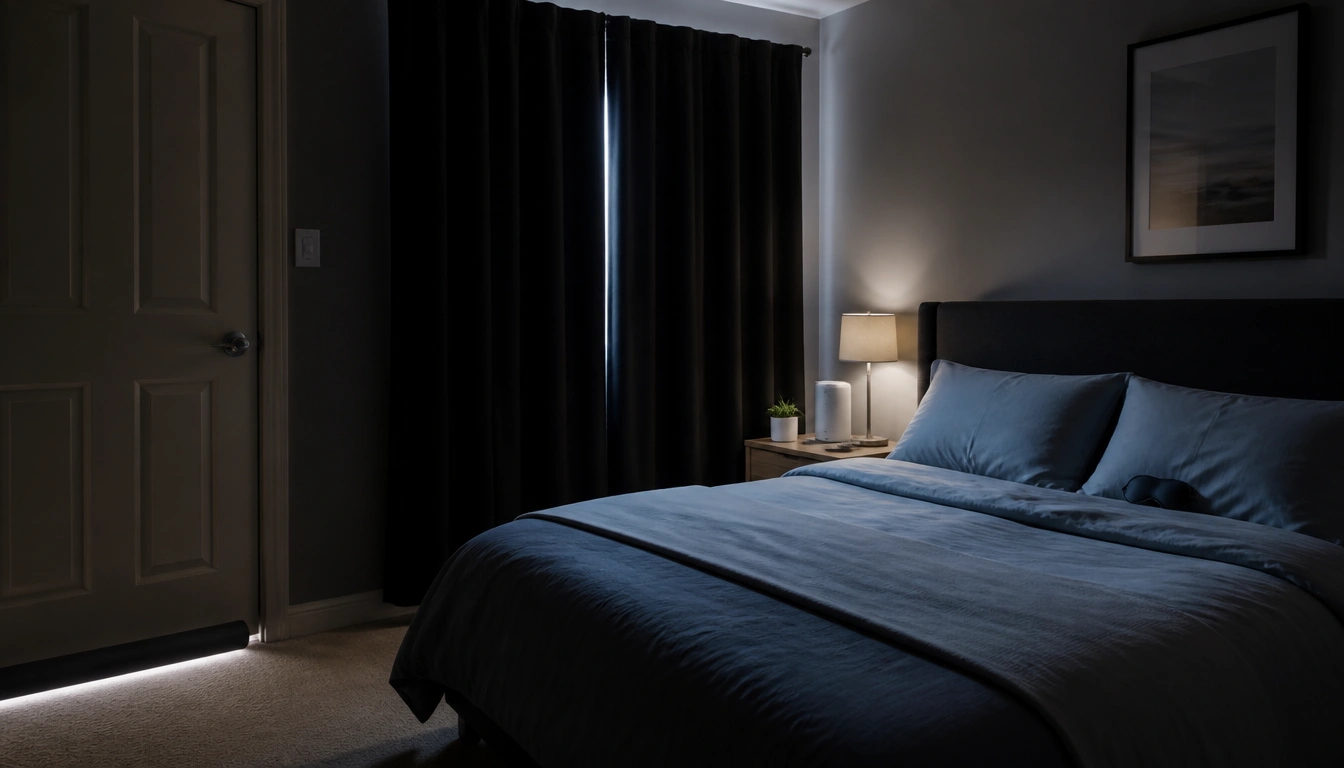
Start with the three controls that matter most for shift workers: make the room as dark as possible, reduce sudden noise, and keep it cool. Use blackout curtains or shades plus a sleep mask if needed, block light leaks, add steady background sound or earplugs for unpredictable noise, and choose breathable bedding so your body can cool down for sleep. If sleep problems persist despite a well-set bedroom, get evaluated for shift work disorder or chronic insomnia.
Key Takeaways
- For daytime sleep, shift workers need a bedroom that acts like nighttime: dark, quiet, and cool are the main controls.
- Blackout curtains help, but light leaks, hallway glow, and device LEDs can still disturb sleep; a sleep mask can fill the gaps.
- Noise is easier to manage when you combine earplugs with steady background sound and household quiet-hour agreements.
- A cooler room supports sleep onset and maintenance; breathable bedding helps when thermostat control is limited.
- If you still cannot sleep well after improving the bedroom, medical evaluation may be needed for shift work disorder or chronic insomnia.
Shift worker sleep needs a different bedroom setup
A quiet bedroom checklist for shift workers is not about comfort extras; it is about helping your body sleep against its natural alerting signals. Night shifts, rotating shifts, and early-morning schedules push sleep into daylight hours, when light and activity tell the brain to stay awake. The goal is to build a room that reduces those signals enough for sleep to happen and stay asleep.
The Centers for Disease Control and Prevention and the National Institute for Occupational Safety and Health both emphasize the same basic environment for shift workers: dark, quiet, and cool. That matters because light can delay sleepiness, daytime noise can trigger micro-arousals, and warmth can make it harder for core body temperature to drop. A good setup does not need to be perfect, but it should remove the biggest barriers first.
Think of the bedroom as a sleep system rather than a single product purchase. The strongest setup usually combines several partial fixes: better window coverings, less light around the edges, a way to soften noise, and temperature control that prevents overheating. In a shared home, the same principle applies to household planning and communication, not just gear.
Build a light blocking system for daytime sleep
Daylight is the hardest signal to defeat because it tells the brain to be alert immediately. Heavy blackout curtains or room-darkening shades are the first step, but they rarely solve the problem alone. Light often slips in around the sides, top, bottom, and through small gaps at the door or window frame.
To make the room truly sleep-friendly, check for every source of glow. Seal edge leaks where the curtain does not fully cover the frame. Use a draft stopper, towel, or door sweep if hallway light enters under the bedroom door. Remove or cover electronics with bright indicators, including chargers, clocks, game consoles, and standby LEDs. Small lights may seem harmless, but in a dark room they can be enough to keep sleep lighter than it should be.
If architectural darkening is limited, a contoured sleep mask is a practical backup. It is especially useful in rentals, dorms, or older homes where you cannot make the room fully dark. A mask works best when it stays on for the full sleep period and fits closely enough to block light at the nose bridge and edges. For bathroom trips, a dim red nightlight is less disruptive than a bright white bulb because it is less likely to cue full wakefulness.
Reduce noise with masking, earplugs, and household planning
For shift workers, the most disruptive sounds are often not the loudest ones. Sudden noises from traffic, deliveries, children, pets, appliances, or roommates can trigger brief awakenings even when they do not fully wake you. Those repeated micro-arousals add up and can leave daytime sleep shallow and unrefreshing.
A steady-state sound source can help smooth out that problem. White noise, fan sound, or another consistent background signal can make unpredictable spikes less noticeable. The goal is not silence at all costs; it is to reduce contrast between quiet and unexpected noise. Pairing sound masking with properly fitted earplugs often works better than relying on either one alone.
Phone settings matter too. Put the phone on Do Not Disturb, silence nonessential notifications, and keep emergency exceptions narrow so alerts do not break through. In a shared home, the most useful noise control may be a quiet-hour agreement. Ask household members to cluster chores, TV time, laundry, and social activity outside your main sleep block. Clear expectations are usually easier to maintain than repeated last-minute reminders.
Keep the room cool enough for sleep
Heat works against sleep because the body normally lowers core temperature to fall asleep and stay asleep. If the room is too warm, the body has to work harder to reach that drop. That is one reason shift workers often do better in cooler bedrooms than in warm ones, especially after coming home from work when they already feel overstimulated or overheated.
A commonly recommended room temperature for sleep is around 65°F (18°C), but the best setting is the one that feels cool without being uncomfortable. If you cannot control the thermostat, focus on what you can change. Use breathable sheets and pajamas, choose moisture-wicking bedding if you tend to sweat, and keep heavier blankets available only if you truly need them. Fans can help by moving air and making the room feel less stuffy, even if they do not lower the actual temperature much.
If daytime sun warms the room, close the room before leaving for work or before your sleep period so heat has less time to build up. If you share the room with someone else, agree on a temperature range that supports the sleep window rather than the waking window. Small temperature changes can make a noticeable difference when the body is already fighting circadian alertness.
Use a priority order if your budget or housing is limited
If you cannot change everything at once, start with the upgrades that usually give the most benefit per dollar. The first priority is blocking obvious light. The second is reducing sudden noise. The third is improving the room’s cooling and bedding. That order matches the biggest barriers to daytime sleep for most shift workers.
A practical budget sequence might look like this:
- First: close gaps around the window, cover LEDs, and use a sleep mask if the room is not fully dark.
- Second: add earplugs or a steady sound source to blunt sudden noise.
- Third: switch to breathable bedding, lighter layers, and a fan or cooler room setting.
- Fourth: refine household quiet hours, phone settings, and hallway lighting.
In shared housing, the best solution is often a layered one rather than a perfect one. For example, a good sleep mask plus steady noise plus a door draft stopper may work better than a single expensive product. The aim is to lower the number and strength of sleep interruptions, not to create a perfect laboratory bedroom.
Common setup mistakes that still let light, sound, or heat through
One common mistake is assuming blackout curtains are enough on their own. If the curtain does not extend beyond the window frame, or if light pours in through the sides, the room is still signaling daytime. Another mistake is leaving bright indoor lights on in adjacent spaces. Hallway or bathroom light can spill under the door and undo the darkness you created.
Noise setups also go wrong when earplugs are used incorrectly or when masking sound is too variable. Earplugs only work well when they fit properly and are comfortable enough to wear for the full sleep period. A sound app that changes volume or plays intermittent sounds may be more distracting than helpful. Consistent background sound usually works better than unpredictable audio.
Temperature mistakes are just as common. Heavy blankets, non-breathable fabrics, and a room that traps afternoon heat can all make sleep harder. If you wake sweaty, restless, or repeatedly kick off the covers, the room may be too warm even if it does not feel hot at bedtime. The fix is usually a combination of ventilation, lighter bedding, and less heat gain from sunlight.
When bedroom changes are not enough
If you have made the room dark, quiet, and cool but still cannot sleep well, the problem may be larger than the environment. The National Institute on Health and occupational health guidance recognize that some shift workers develop ongoing sleep disruption that needs professional evaluation. Persistent insomnia, excessive sleepiness, difficulty staying awake at work, or dangerous drowsiness while driving are signs to take seriously.
Medical evaluation is also worth considering if you frequently need long recovery sleep, feel unrefreshed despite enough time in bed, or notice that your sleep worsens across rotating shifts. A clinician can help determine whether the issue is shift work disorder, chronic insomnia, another sleep disorder, or a mix of sleep loss and schedule strain. That matters because the right treatment depends on the cause, not just the bedroom setup.
Environmental changes remain important even when medical care is needed. A better bedroom can support treatment and reduce day-to-day sleep debt. But if the basic checklist is in place and sleep still fails, the next step is not another gadget. It is a clinical conversation about the sleep pattern itself, safety at work, and whether the schedule can be improved.
Frequently Asked Questions
How do I block daylight effectively for daytime sleep?
Start with true blackout curtains or room-darkening shades, then seal the edges so light does not leak around the window or under the door. Remove or cover small LEDs inside the room. If you still see light, add a sleep mask so you are not relying on the room alone.
What is the best way to reduce noise in a bedroom for shift workers?
The best approach is layered: use steady background sound to blur sudden noise, wear well-fitted earplugs if they are comfortable, and set household quiet hours around your main sleep block. That combination usually works better than trying to eliminate every sound.
What temperature should a shift worker bedroom be for sleep?
A commonly recommended target is around 65°F (18°C), but the main goal is a cool room that helps your body temperature drop. If you cannot control the thermostat, use breathable bedding, lighter layers, and airflow from a fan or open vent.
Are sleep masks, earplugs, and white noise actually useful for shift workers?
Yes, especially when used as part of a layered setup. Sleep masks help when light control is imperfect, earplugs reduce sudden noise, and white noise or another steady sound helps cover unpredictable sounds that can cause brief awakenings.
What should I do if I share a home and cannot fully control noise or light?
Focus on what you can control and ask others for clear sleep windows. Use a sleep mask, earplugs, door-gap fixes, and quiet-hour agreements. If a shared home also has children or roommates, plan the noisiest tasks for times when you are not sleeping.
The Bottom Line
For shift workers, a better bedroom is usually built from three basics: dark, quiet, and cool. Start by blocking daylight, softening unpredictable noise, and preventing heat buildup during the sleep window.
You do not need a perfect room to get better sleep. Small fixes such as sealing light leaks, using a sleep mask, adding steady background sound, and choosing breathable bedding can make daytime sleep more stable, especially in shared housing.
If the room is already well set up and sleep is still poor, get evaluated for shift work disorder or chronic insomnia. Environmental changes help, but persistent sleep problems deserve medical attention.
Medical disclaimer
Medical disclaimer: This content is for educational and informational purposes only and is not a substitute for professional medical advice, diagnosis, or treatment. Dietary needs and supplement suitability vary by individual.
Sources
- National Health Service (NHS) — tims.nhs.uk. Accessed October 2026.
- Centers for Disease Control and Prevention (CDC) — cdc.gov. Accessed October 2026.
- U.S. Government / Health Authority — health.mil. Accessed October 2026.
- National Institutes of Health (NIH) — nih.gov. Accessed October 2026.
