
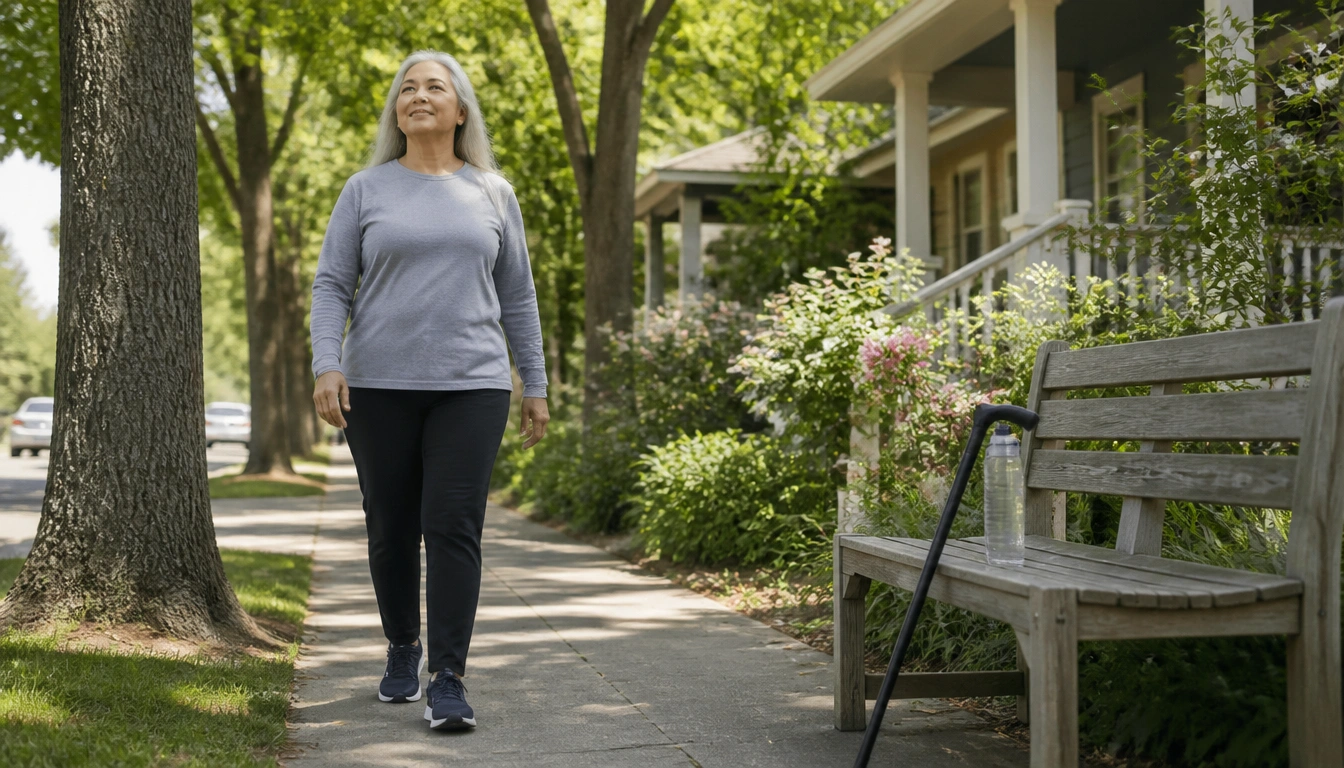
The easiest safe changes are the ones you can repeat: short walks, fewer long sitting stretches, better hydration, lighter food swaps, and a little strength, balance, or mobility work. For adults over 50, these micro-habits can improve energy, support blood pressure and heart health, and help protect mobility and independence. Some activity is better than none, and 10-minute bouts still count.
Key Takeaways
- Start with one or two micro-habits, not a full overhaul. Small actions are easier to keep and can still improve health.
- Ten-minute walks, light chores, and brief movement breaks can add up toward weekly activity goals.
- Standing up for 2 to 3 minutes each hour helps reduce the harm of long sitting stretches.
- Joint-friendly options like water aerobics, recumbent cycling, and chair-based exercises can make movement safer.
- Simple food swaps, especially lower-sodium choices and more whole foods, support blood pressure and heart health.
- New routes, recipes, or classes add novelty, which can support brain health and make routines easier to sustain.
Why small habit changes matter more after 50
After 50, the body often becomes less forgiving of long periods of inactivity. Muscle mass can decline more easily, joints may feel stiffer, balance may become less automatic, and blood pressure often trends upward with age. That does not mean big change is the only useful change. It means the daily basics matter more.
The Centers for Disease Control and Prevention and the World Health Organization both emphasize that some physical activity is better than none. For people who feel deconditioned, intimidated by exercise, or worried about injury, that message is practical: you do not need a perfect routine to start protecting health. A few repeatable habits can help preserve walking speed, stair climbing, steadiness, and the ability to keep doing everyday tasks independently.
Small changes also reduce the all-or-nothing trap. A person who cannot face a full workout may still be able to walk for 10 minutes, stand up during a TV break, choose a lower-sodium meal, or stretch before bed. Those small choices support cardiovascular health, blood sugar control, brain stimulation, and the muscle and bone strength that help prevent falls and frailty.
The easiest high-impact habits to start with: movement, sitting less, hydration, and food swaps
If you want the shortest path to a better daily routine, start with the habits that affect the most systems at once. Walking, standing, drinking enough fluids, and making a few food swaps are low-friction and do not require special equipment.
Movement: A 10-minute walk after breakfast, lunch, or dinner can be enough to get started. Ten-minute bouts also make the weekly movement goal feel possible. If you repeat them across the week, they add up. Moderate movement should still let you talk, but it should feel like you are working a little harder than usual.
Sitting less: Long sitting stretches are a problem even for people who exercise. A simple tactic is to stand, stretch, or walk around for 2 to 3 minutes every hour. That brief reset can support circulation, blood pressure, and metabolic health, especially on days when a full workout is not realistic.
Hydration: Many older adults miss thirst cues. Keeping a glass of water near the bed, coffee maker, or kitchen sink turns drinking into a cue-based habit instead of a memory task. This is not about forcing large amounts of fluid; it is about making regular intake easier.
Food swaps: Small changes often work better than strict diets. Try seasoning with herbs, citrus, garlic, vinegar, or pepper instead of relying on table salt. Choose more vegetables, beans, fruit, plain yogurt, eggs, fish, oats, or nuts when possible. These swaps can improve overall diet quality without making meals feel completely different.
How to use habit stacking so changes fit into an existing routine
Habit stacking means linking a new action to something you already do. That is useful after 50 because willpower is not the main issue for most people; friction is. If a habit is attached to a reliable cue, it is easier to remember and repeat.
Examples are simple:
- Walk for 10 minutes right after breakfast.
- Do heel raises while the kettle boils.
- Stand up and stretch after every bathroom break.
- Drink a glass of water before coffee or tea.
- Take a short stroll after putting away dinner dishes.
The best stack is the one that fits your life with the least resistance. If mornings are busy, use the afternoon. If walking outside feels like too much, walk indoors, pace the hallway, or circle the house. If remembering is hard, use visual cues such as shoes by the door or a water glass on the counter.
Trying to change many habits at once often backfires. One movement cue and one food cue are usually enough at first. Once those feel automatic, add another small habit.
Joint-friendly and beginner-friendly movement options for low fitness or discomfort
People with arthritis, knee pain, back stiffness, balance concerns, or low confidence often do better with low-impact choices than with high-intensity plans. The goal is not to push through pain. The goal is to keep moving safely enough that movement becomes sustainable.
Good starting options include brisk but gentle walking, indoor walking, water aerobics, swimming, recumbent cycling, chair exercises, and simple resistance-band work. Water-based exercise is especially helpful for people who need to reduce joint loading. A recumbent bike can also feel steadier than a standard bicycle because it offers more back support and a lower fall risk.
If standing exercises are hard, begin with seated marches, sit-to-stand practice from a sturdy chair, or very light band rows. For balance concerns, hold onto a counter or wall while doing heel raises or side steps. For arthritis, warming up slowly often matters more than intensity; many people feel better once joints are moving.
Think in terms of function, not fitness labels. Can you get out of a chair more easily? Walk to the mailbox with less fatigue? Climb stairs with more confidence? Those are meaningful gains that support independence.
Brain-health habits that add novelty, social connection, and mental stimulation
Brain health is not only about puzzles. The research brief points to novelty, movement, and social connection as helpful supports for cognitive function. New experiences encourage the brain to adapt, while regular aerobic movement increases blood flow and supports neural pathways.
A useful pattern is to make one familiar routine slightly unfamiliar. Take a different walking route. Try a new recipe. Join a class you have never taken. Listen to a new podcast while walking. Visit a different store or park. These changes are small, but they ask the brain to pay attention in a fresh way.
Social habits matter too. A walking partner, community class, volunteer role, or weekly coffee with a friend can support mood and consistency. For many adults over 50, social routines are not just pleasant extras; they are a stabilizing part of healthy aging.
For heart and blood pressure health, the same daily pattern helps: move a little more, sit a little less, and make simpler food choices more often. According to the CDC and the U.S. Department of Health and Human Services, regular activity, muscle-strengthening work, and less sedentary time are all part of good long-term health. You do not need a perfect diet to benefit from better defaults.
How to build a safer week: pacing, recovery, and when to scale back
The safest way to build a habit is to start below your limit. If 10 minutes of walking feels easy, keep it easy for a week before adding more. If 10 minutes feels like too much, start with 3 to 5 minutes. Progress is useful only if it stays repeatable.
Pacing matters because fatigue can show up later, especially if you have been inactive. A good rule is to stop a little before you feel wiped out. That leaves you more likely to repeat the habit tomorrow. Recovery is also part of the plan: sleep, fluids, and a lighter day after a harder one are all reasonable.
Scale back if you notice new or worsening joint pain, unusual shortness of breath, dizziness, or a steady drop in confidence with movement. Mild muscle soreness can be normal after starting something new, but sharp pain, instability, or symptoms that interfere with daily tasks deserve attention.
Balance and fall safety deserve special care. Clear loose rugs, use good lighting, wear supportive shoes, and choose sturdy surfaces for standing exercises. If balance is poor, practice near a counter or ask about a formal assessment before increasing challenge.
When to ask a clinician or physical therapist for guidance
Some people can safely start with small changes on their own. Others should check in with a clinician first, especially if they have been inactive for a long time or have known medical conditions. A physical therapist can also help if pain, weakness, or fear of falling is keeping you from moving.
Get medical advice before increasing exercise if you have unexplained chest discomfort, pressure, or shortness of breath with mild effort. Also ask for help if you have frequent dizziness, faintness, balance problems, or a sudden change in exercise tolerance. Those are not situations to push through.
Talk with a clinician if joint pain is new or sharply worse, if you have a recent fall, if you have diabetes or cardiovascular disease and are changing activity patterns, or if you are unsure whether your medications affect hydration, balance, or exertion. The same applies if you want to make a larger diet change and have kidney disease, heart failure, or other conditions that can change fluid or sodium needs.
A physical therapist may be especially helpful for arthritis, deconditioning, fear of movement, or trouble getting up from a chair. They can suggest safer strength, balance, and mobility options tailored to your body and home setup.
A 7-day starter plan for one or two realistic micro-habits
Pick just one movement habit and one support habit. The goal for the first week is not transformation. It is repetition.
Choose your movement habit: a 10-minute walk after one meal, or a 3- to 5-minute walk if you are very inactive.
Choose your support habit: stand up for 2 to 3 minutes each hour, or drink a glass of water at a fixed cue.
Then use this simple week:
- Day 1: Do the movement habit once and notice how it feels.
- Day 2: Repeat it at the same time of day.
- Day 3: Add one sitting break or one water cue.
- Day 4: Keep the same plan; do not add more yet.
- Day 5: Try a small novelty, such as a new walking route or a different food swap at dinner.
- Day 6: Repeat the most successful part of the week.
- Day 7: Review what felt easiest and keep that as your base habit.
If you miss a day, restart the next day without making it a failure. The habit is the repetition, not perfect attendance. Once one micro-habit feels natural, add a second one. Over time, those small choices can support strength, steadiness, blood pressure, mood, and the independence most people want to keep.
Frequently Asked Questions
How can adults over 50 start exercising safely if they have been inactive?
Start with very short, easy bouts such as 3 to 10 minutes of walking, indoor steps, or chair-based movement. Keep the effort light enough that you can talk. If you have chest symptoms, dizziness, or major balance problems, check with a clinician first.
What small diet changes can help blood pressure and heart health after 50?
Lower-sodium swaps, more whole foods, and fewer ultra-processed convenience foods are practical first steps. Use herbs, citrus, vinegar, and spices for flavor. Even a few consistent changes can support blood pressure and overall heart health.
How much movement do older adults need each week?
Official guidance from the CDC and WHO recommends at least 150 minutes of moderate-intensity aerobic activity each week, plus muscle-strengthening activities on 2 or more days. Short bouts of 10 minutes or more can count toward that total.
What are simple ways to reduce sitting time during the day?
Stand, stretch, or walk for 2 to 3 minutes every hour. You can pair that with common cues such as ending a phone call, finishing a TV episode, or waiting for coffee to brew. Short breaks matter even on busy days.
Which daily habits support brain health and cognitive function after 50?
Regular movement, social connection, and novelty are all helpful. Try a new walking route, learn a recipe, join a class, or schedule a weekly walk with someone else. New experiences and repeated physical activity both support brain engagement.
The Bottom Line
The safest way to improve daily habits after 50 is to start smaller than you think you need to. A short walk, an hourly stand-up break, a water cue, or one lower-sodium food swap can be enough to begin.
Those changes do more than help weight or general wellness. They support mobility, balance, blood pressure, brain health, and the ability to keep living independently. If pain, dizziness, or chest symptoms are part of the picture, get medical guidance before pushing ahead.
Medical disclaimer
Medical disclaimer: This content is for educational and informational purposes only and is not a substitute for professional medical advice, diagnosis, or treatment. Dietary needs and supplement suitability vary by individual.
Sources
- Centers for Disease Control and Prevention (CDC) — cdc.gov. Accessed October 2026.
- National Institutes of Health (NIH) — nih.gov. Accessed October 2026.
- World Health Organization (WHO) — who.int. Accessed October 2026.
- U.S. Government / Health Authority — health.gov. Accessed October 2026.
- U.S. Government / Health Authority — health.gov. Accessed October 2026.
