
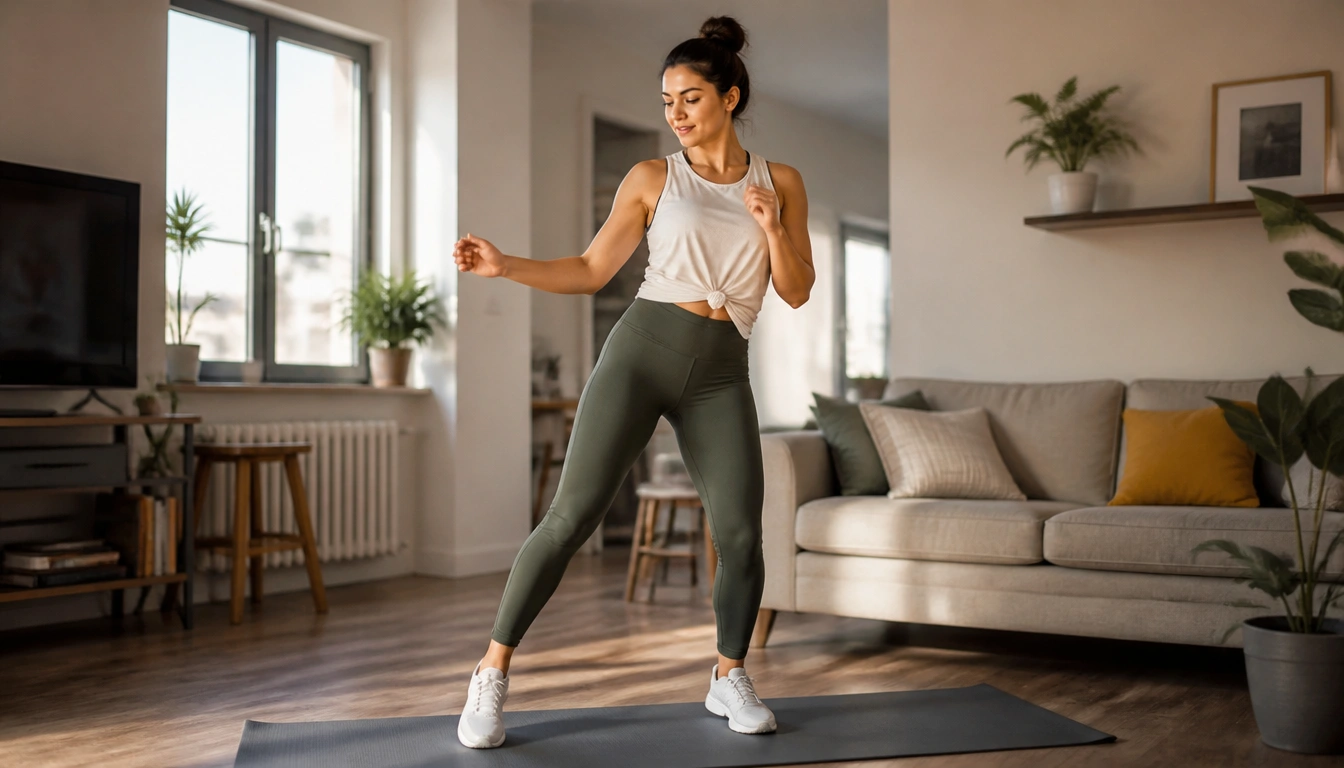
Yes—you can do an effective low-impact cardio workout at home without jumping, equipment, or a lot of space. The goal is to keep moving continuously at a pace that raises your breathing and heart rate while staying joint-friendly. Low-impact does not mean low-intensity: step-based moves, arm drive, and short work intervals can all create a true cardiovascular workout.
Key Takeaways
- Low-impact cardio can still be moderate intensity if you move continuously, use large muscle groups, and keep the pace brisk enough to elevate breathing.
- You can meet weekly aerobic goals with 30-minute sessions or shorter 10-minute blocks spread through the day, according to CDC and HHS guidance.
- A good home routine includes a warm-up, a 15-20 minute circuit, and a cool-down, all without equipment.
- Normal muscle effort feels different from joint or tendon pain; sharp, catching, or worsening pain is a signal to stop or modify.
- Beginners, older adults, and people with osteoarthritis often do best with shorter bouts, simpler steps, and slower progressions.
- Apartment-friendly cardio is possible with quiet footwork, soft landings, a mat, and habit stacking around daily routines.
Why low-impact cardio works at home
Low-impact cardio is exercise that reduces jarring force through the joints. In practice, that usually means one foot stays grounded, or the movement is absorbed smoothly instead of landing with repeated shocks. That makes it a strong option for home workouts, especially if you are protecting the knees, hips, ankles, or back.
Low-impact does not mean low-intensity. Heart rate, breathing, and energy use depend on how continuously you move, how much muscle mass you recruit, and how brisk the rhythm is. A step-and-reach circuit done with purpose can challenge the cardiovascular system even if nothing leaves the floor. That is why low-impact cardio can count as real cardio, not just a lighter version of the “real” thing.
This matters for people who are rebuilding fitness, managing joint stiffness, or exercising in an apartment. You can get a meaningful heart-health stimulus without pounding the floor or needing a treadmill, bike, or jump rope.
How to judge intensity without jumping
The easiest home tool is the talk test. During moderate-intensity exercise, you should be breathing harder and feel your heart rate rise, but you should still be able to speak in short sentences. If you can sing comfortably, the pace is probably too easy. If you cannot get out more than a few words, it may be drifting into vigorous effort.
Posture and rhythm matter too. Keep your movements continuous rather than starting and stopping often. Use a pace that feels purposeful, with active arm movement and enough lower-body engagement to warm you up. In a home setting, you may not need high impact to reach a solid training effect; steady motion is often enough.
For beginners, a useful target is “comfortably hard.” You should feel challenged, but not strained. If you are new to exercise, it is fine to start with shorter work bouts and recoveries that let you maintain good form.
A practical 20–30 minute home routine
This routine is built to fit a small space and keep noise low. It can be done with no equipment, though a supportive mat can help on hard floors.
Warm-up: 3 to 5 minutes
March in place, roll your shoulders, and swing your arms gently. Add easy torso turns and ankle circles. The goal is to raise body temperature and prepare your joints, not to tire yourself out.
Main circuit: 15 to 20 minutes
Move through four exercises for 45 to 60 seconds each, then rest 15 to 30 seconds as needed. Repeat for 3 to 4 rounds.
Cool-down: 3 to 5 minutes
Slow your pace with gentle marching, then stretch the calves, hamstrings, hip flexors, chest, and upper back. Keep stretches comfortable, not forceful.
If you only have 10 minutes, do one warm-up, one round of the circuit, and a short cool-down. A short session still counts, especially when you repeat it later in the day.
Exercise-by-exercise breakdown of the routine
Standing jacks
Step one foot out, then the other, while sweeping your arms overhead and back down. Keep your knees soft and your feet light. This gives you the feel of jumping jacks without the impact. To make it easier, step more slowly. To make it harder, move faster and use a bigger arm arc.
Knee raises
Lift one knee at a time toward hip height while reaching the opposite hand forward or down. Stay tall through the torso and avoid leaning back. This raises intensity through hip flexion and core work while keeping at least one foot grounded. If your balance is limited, hold a wall or counter lightly.
Front and side taps
Tap one foot forward, then return it; tap it to the side, then return it. Keep your weight centered and your chest lifted. A small athletic stance helps engage the legs without deep squatting. This move is useful for coordination, especially in small spaces.
Speed-bag arms
Circle both arms quickly at chest level while stepping side to side. This is a simple way to raise heart rate without adding impact. Keep your shoulders relaxed and your ribs from flaring. If your shoulders tire quickly, shorten the arm circles and keep the feet moving.
These moves work best when they flow together. The circuit becomes more cardiovascular when transitions are short and your effort stays steady from one movement to the next.
How to progress safely over time
The safest way to improve is to add challenge without adding impact. First, increase the length of each work interval. Then, reduce rest time. After that, add another round. Those changes build stamina while keeping the joint load low.
You can also increase range of motion, arm drive, or step speed. For example, make the side steps a little wider or the knee raises a little higher. The movement should still feel controlled. If your form gets sloppy, the pace is too aggressive.
If you are returning to exercise after time off, progress slowly enough that your joints and tendons can adapt. Muscles often respond faster than connective tissue, so a workout that feels easy for the lungs can still be a lot for the knees or calves the next day. Give yourself recovery days or easier sessions between harder ones when needed.
Joint-friendly modifications and safety signals
If your knees are sensitive, reduce the depth of any bend and keep the steps smaller. If your hips feel stiff, shorten your stride and avoid forcing high knee lifts. If your ankles bother you, focus on smooth, flat-footed steps rather than bouncing. If your back feels reactive, keep your torso tall and avoid twisting fast or leaning too far forward.
Learn the difference between normal effort and pain that should not be ignored. A burning sense in the muscles, faster breathing, and general fatigue can be normal. Sharp pain, catching, instability, swelling, numbness, or pain that worsens as you continue is not something to push through. Stop, adjust the movement, or switch to a gentler option.
People with osteoarthritis or chronic joint stiffness often do well with shorter sessions, longer warm-ups, and lower step height. Beginners and older adults may also prefer one or two rounds at first, then build gradually. If you have chest pain, dizziness, unexplained shortness of breath, or known heart or metabolic disease, get medical guidance before starting a new program.
Home setup tips that reduce friction
A routine is easier to repeat when setup takes almost no effort. Choose a small open area where you can take a few steps in each direction without hitting furniture. Clear away rugs that slip, cords, or loose objects. If the floor is hard, a mat can soften contact and make standing movements more comfortable.
For apartment living, quiet footwork matters. Step instead of hop, keep your knees slightly bent, and land softly through the whole foot. You can also lower the volume by wearing supportive sneakers or exercising on a mat rather than bare floor. If you live below others, avoid stomping and keep the pace smooth.
Habit stacking can help the routine stick. Pair it with something you already do, such as after morning coffee, before showering, or right after logging off work. That reduces decision-making and makes the workout feel like part of the day rather than a separate project.
How to fit low-impact cardio into a weekly plan
According to the CDC and the U.S. Department of Health and Human Services, adults should aim for at least 150 minutes of moderate-intensity aerobic activity per week, or a combination of moderate and vigorous work. That can be built from 30-minute sessions five days a week, or from shorter blocks accumulated across the day.
For example, three 10-minute sessions can be a practical way to reach your weekly total. This is useful for busy schedules, low confidence, or days when a full session feels unrealistic. The weekly pattern matters more than making every workout long.
Low-impact cardio also pairs well with strength training. Public health guidance recommends muscle-strengthening activity on at least two days per week. You do not need to do both on the same day, but many people like to separate them or place strength work after a shorter cardio warm-up. Leave room for recovery, especially if you are new to exercise or dealing with joint stiffness. The goal is consistency you can maintain, not a workout that leaves you too sore to return tomorrow.
Over time, a simple weekly structure might include two to five low-impact cardio sessions, two strength sessions, and lighter recovery movement on the other days. That mix supports heart health, mobility, and long-term adherence without requiring high impact or equipment.
Frequently Asked Questions
How long should a low-impact home cardio session be to meet weekly exercise guidelines?
A session can be as short as 10 minutes if you accumulate enough total weekly activity. CDC and HHS guidance points adults toward at least 150 minutes of moderate-intensity aerobic activity each week, which many people build with 30-minute sessions or several shorter bouts across the day.
What exercises count as low-impact cardio at home?
Step-based moves usually count, including marching in place, standing jacks, knee raises, front or side taps, and rhythmic arm-driven cardio. The key is continuous movement with minimal joint jarring, not whether you are using equipment.
How do I know if the workout is moderate intensity if I’m not jumping or running?
Use the talk test. Moderate intensity means your breathing is faster and your heart rate is up, but you can still speak in short sentences. If you can sing easily, increase the pace; if you cannot talk at all, slow down.
Can low-impact cardio still improve heart health, weight management, and blood pressure?
Yes. Regular aerobic exercise supports heart health and can help with blood pressure, blood glucose control, and healthy weight management. The results come from consistent training over time, not from impact level alone.
What should beginners, older adults, or people with joint pain avoid or modify?
Avoid movements that cause sharp, catching, or worsening joint pain. Beginners and older adults often do better with smaller steps, shorter sessions, more rest, and longer warm-ups. If you have joint instability or medical conditions, check with a healthcare professional before starting.
The Bottom Line
A low-impact cardio routine at home can be effective, quiet, and joint-friendly. You do not need jumps or equipment to raise your heart rate, improve endurance, and support overall health.
Focus on continuous movement, moderate effort, and gradual progress. If you can talk but not sing, you are usually in the right zone for moderate-intensity work.
The best routine is the one you can repeat. Keep the setup simple, protect sore joints by modifying early, and build your weekly total with short sessions when that fits your life.
Medical disclaimer
Medical disclaimer: This content is for educational and informational purposes only and is not a substitute for professional medical advice, diagnosis, or treatment. Dietary needs and supplement suitability vary by individual.
Sources
- Centers for Disease Control and Prevention (CDC) — cdc.gov. Accessed October 2026.
- Centers for Disease Control and Prevention (CDC) — cdc.gov. Accessed October 2026.
- American College of Sports Medicine (ACSM) — acsm.org. Accessed October 2026.
- Academic Research Institution — cuny.edu. Accessed October 2026.
- Academic Research Institution — etsu.edu. Accessed October 2026.
