
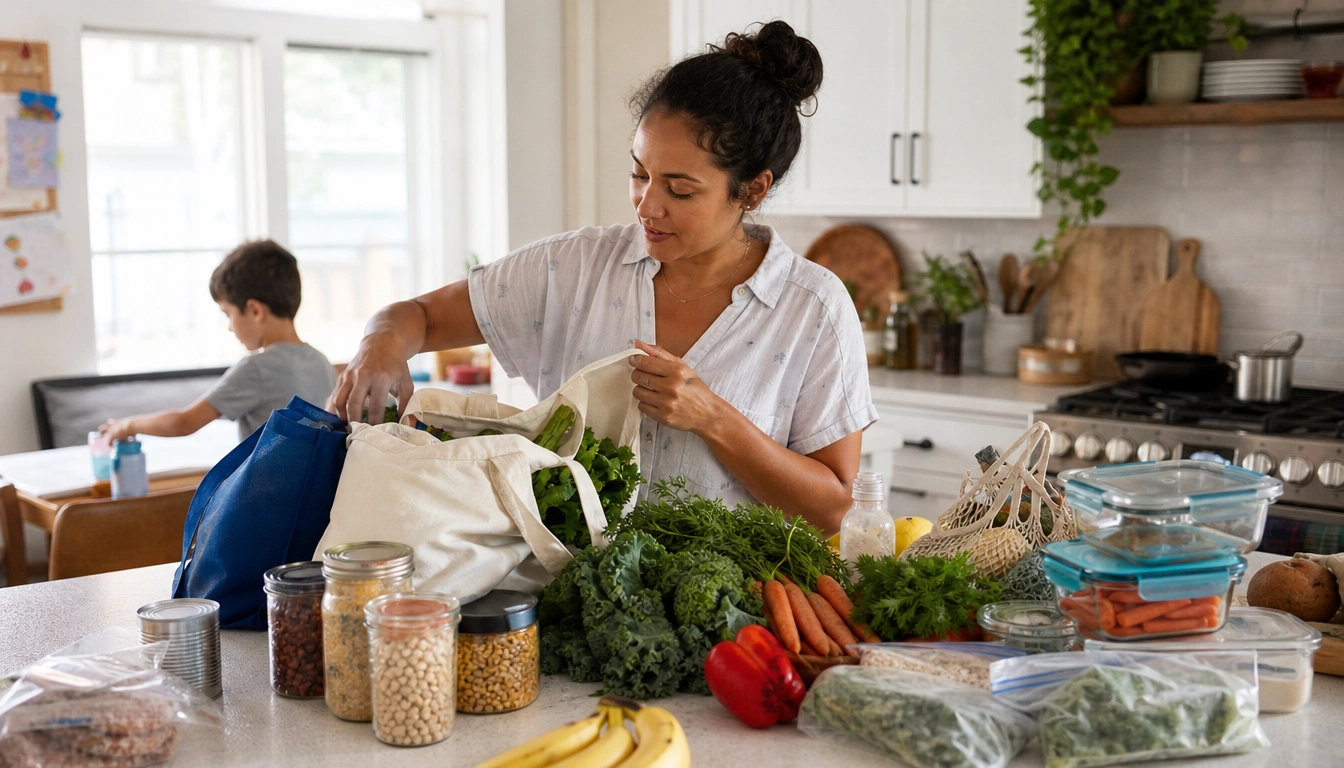
A realistic grocery routine for busy parents starts with a quick home audit, a short list of flexible meals, and a store-organized shopping list. Build your cart around MyPlate basics, keep a few frozen or canned backups on hand, and use simple home storage habits like FIFO so food gets used before it spoils. The goal is not perfection; it is fewer decisions and easier dinners.
Key Takeaways
- Start by checking what you already have, then plan only 3–4 flexible meals that can reuse ingredients across the week.
- Organizing your list by store department cuts backtracking, impulse buys, and the mental fatigue of deciding what to do next.
- Fresh, frozen, canned, pre-washed, and pre-chopped foods can all fit a healthy family routine; convenience is sometimes the better choice.
- Let children help in age-appropriate ways, but use pickup or delivery if the in-store trip consistently becomes stressful or chaotic.
- After shopping, refrigerate perishables promptly and use FIFO so older foods get used first, which helps both safety and waste reduction.
A simple weekly routine that is easy to repeat
A practical grocery routine for busy parents works best when it is small enough to repeat every week. The easiest version has three parts: do a quick audit of what is already in the fridge, freezer, and pantry; choose 3 to 4 flexible meals; then turn those meals into a department-mapped shopping list. This keeps grocery shopping tied to real meals instead of vague good intentions.
The home audit does not need to be elaborate. Look for ingredients that need to be used soon, leftovers that can become lunch, and any staples you are about to run out of. That short check lowers food waste and helps you avoid buying duplicates. Then choose meals that can share ingredients, such as tacos, grain bowls, pasta with vegetables, or sheet-pan dinners. Shared ingredients make shopping easier and reduce the number of items that can go unused.
For many families, the best planning question is not “What should I cook every night?” but “What meals can I realistically assemble on a tired weekday?” The answer often includes one or two very easy dinners and one or two that leave room for leftovers. The Academy of Nutrition and Dietetics and USDA-style meal planning both support this kind of practical structure: simple, repeatable, and flexible enough to handle a schedule change.
How to organize the list by store zone
A department-mapped list is one of the fastest ways to make shopping less draining. Supermarkets are usually arranged so that fresh foods sit around the perimeter and shelf-stable items are in the center aisles. If your list follows that pattern, you spend less time zigzagging and less time wandering past items that were never part of the plan.
Try grouping the list into store zones such as produce, proteins, dairy, grains, freezer, and pantry. That structure does more than save steps. It also reduces decision fatigue because you are not trying to remember the whole plan while standing in the aisle. You simply check the next section and move on.
This approach also helps with impulse buying. When you shop without a route, endcaps, snack displays, and random add-ons are harder to ignore. A zone-based list gives you a built-in filter: if the item is not on the list for that zone, you can keep moving. If a household uses a phone note, a shared app, or a paper checklist, the format matters less than the structure.
A useful habit is to keep a short “next week” section on the same note. That is where you can park things you are almost out of but do not need today. It keeps the main list focused and prevents last-minute panic buys.
What to prioritize first for quick family meals
If you want quick healthy family meals, start with the foods that make the most meals possible. A MyPlate-style frame from USDA guidance is helpful because it keeps the cart balanced without making meal planning complicated. In practice, that means centering the cart on produce, lean proteins, dairy or fortified soy options, grains, and a few pantry staples that can mix into several meals.
Think in categories rather than recipes. Produce can support snacks, sides, lunches, and dinner. Proteins such as eggs, chicken, beans, tuna, tofu, or yogurt can anchor multiple meals. Grains like oats, brown rice, whole-wheat bread, or whole-grain pasta stretch across breakfasts and dinners. Pantry staples like salsa, canned beans, broth, and olive oil help turn those base foods into actual meals.
MyPlate is most useful when it stays practical. You do not need every plate to look identical, and you do not need to build a perfect meal every night. A more realistic target is to regularly include fruits and vegetables, choose whole grains often, and rotate protein sources across the week. That gives you structure without turning dinner into a project.
When packaged foods are part of the plan, use the label to support the framework. Look for whole grains in ingredient lists, and compare sodium, added sugars, and saturated fat where it makes sense. The goal is not to buy only one type of food; it is to make the cart work harder for your family with less effort.
When frozen, canned, pre-washed, or pre-chopped foods help
Many parents assume fresh produce is always the best choice, but that is not the whole story. USDA and other public health sources recognize that frozen and canned fruits and vegetables can fit a healthy diet and are often packed at peak ripeness. In a busy home, that makes them an important backup rather than a compromise.
Frozen produce is useful when freshness is unpredictable or when you need ingredients that will not spoil before you can use them. Canned vegetables, beans, and fruits can also be helpful, especially if you choose lower-sodium or no-sugar-added options when available. These foods can reduce waste because they stay usable for longer and can keep dinner from collapsing when the week gets hectic.
Pre-washed salad greens, pre-cut vegetables, and pre-chopped aromatics cost more, but they are often worth it during high-stress weeks. The real comparison is not just price versus price. It is price versus the risk of takeout, skipped vegetables, or food that rots in the crisper drawer. A convenience item that helps you cook at home may save money overall by preventing last-minute delivery orders.
For a busy household, these foods are not shortcuts in the negative sense. They are tools. A family can use a mix of fresh, frozen, canned, and ready-to-cook ingredients and still eat well.
How to shop with children without derailing the trip
Shopping with children can work if the goal is realistic. Younger kids usually do better with limited, pre-approved choices instead of open-ended browsing. For example, they can choose between two vegetables, pick a fruit color, or help spot items from the list. That gives them a sense of control without turning the trip into a negotiation.
Older children can take on slightly more responsibility, such as finding one item in a category or comparing two similar products with guidance. The important part is keeping the task narrow. Too many choices can make the trip longer and more stressful for everyone.
If the store trip regularly becomes chaotic, online pickup or delivery may be the better strategy. That is not a failure of parenting. It is a practical adaptation when the barrier is not the meal plan itself but the shopping environment. Reducing meltdowns, impulse buys, and time pressure can make the whole routine more sustainable.
A helpful rule is to decide ahead of time what children may help choose and what is nonnegotiable. When expectations are clear before you enter the store, there is less room for conflict in the aisle.
What to do when the groceries get home
The work is not finished when you unload the car. Food safety and home organization are part of the grocery routine, especially for perishables. Cold items should be the last things you pick up in the store and the first things you put away at home. Meat, poultry, seafood, dairy, and other temperature-sensitive foods should be refrigerated promptly.
If the trip took longer than expected, or if you had to run extra errands, be especially careful with items that need refrigeration. The USDA emphasizes keeping perishable foods out of warm conditions for too long and storing them promptly once you get home. This is one of the simplest ways to protect both safety and quality.
FIFO, which means first in, first out, is a useful home system. Put newer groceries behind older ones so the items you already had get used first. That small habit reduces waste and helps you notice what needs to be cooked soon. It also makes your next meal decision easier because the fridge is arranged around use, not just storage.
To keep FIFO practical, group similar items together. Put older produce where you can see it, keep leftovers visible at eye level, and avoid burying new groceries behind random containers. A tidy fridge is not the goal; a visible, usable one is.
Budget-smart habits that make the list go further
Busy families often need a grocery plan that protects both time and money. One of the easiest ways to do that is to shop by unit price, not just shelf price. The unit price tells you what you are paying per ounce, pound, or gram, which helps you compare package sizes more accurately. This is especially useful for staples like oats, rice, beans, pasta, and yogurt.
Another budget strategy is overlapping ingredients. If bell peppers show up in a pasta dish, a stir-fry, and a breakfast scramble, the chance of waste drops because the same item serves more than one meal. Overlap also reduces mental effort. You are not learning a new recipe every night; you are reusing a small set of ingredients in different ways.
It also helps to keep a small “staple insurance” backup pantry. This is not about hoarding food. It is about having a few dependable items that can become dinner when the plan falls apart. Examples include quick-cooking oats, whole-grain pasta, canned beans, tuna, frozen vegetables, and frozen fruit. That reserve can stop a rough night from turning into takeout.
For many households, this backup shelf is what keeps the routine realistic. A grocery system that has no fallback is fragile. A system with a few dependable backups is more likely to survive busy weeks.
What to do when the week breaks down
Even a good routine will occasionally fall apart. A child gets sick, a meeting runs late, or the ingredients you planned around never get cooked. When that happens, the goal is not to rescue the entire week. The goal is to avoid starting over from scratch.
Keep a short list of fallback meals that can be assembled quickly from what you already have. Good examples include pasta with frozen vegetables and beans, eggs with toast and fruit, rice bowls with canned beans and salsa, yogurt with fruit and oats, or a simple sheet-pan dinner built from frozen vegetables and a protein. These are not fancy meals, but they are often enough to keep everyone fed without the cost and stress of takeout.
It can also help to keep one or two frozen meals or pantry-based dinners as your “rescue plan” for the hardest nights. That way, a derailment does not turn into a pattern of ordering out for the rest of the week. The more your system protects against failure, the more useful it becomes in real family life.
If the problem is not logistics but a child’s very limited eating, severe sensory issues, or a narrow diet that affects growth, that is a different situation. In that case, a pediatrician, pediatric registered dietitian, or occupational therapist can help you tailor the plan more safely.
Frequently Asked Questions
How do I make a grocery list that cuts impulse buys and decision fatigue?
Group the list by store zone, not by recipe. Write produce, proteins, dairy, grains, freezer, and pantry separately, then stick to the route. That structure reduces wandering, makes it easier to skip nonessential aisles, and lowers the number of decisions you have to make in the store.
What should I buy first if I want quick, healthy family meals during a busy week?
Start with produce, a few protein options, grains, dairy or fortified soy foods, and several flexible staples that can work across multiple meals. A MyPlate-style mix is helpful because it supports balanced meals without requiring elaborate planning.
Is frozen or canned produce just as healthy as fresh for families?
Often, yes. Frozen and canned fruits and vegetables are commonly packed at peak ripeness, which helps preserve nutrients. They are especially useful for busy families because they last longer and can reduce waste. Choose no-sugar-added or lower-sodium options when possible.
How can I shop with kids without turning the store trip into a meltdown?
Give children a limited role with pre-approved choices, such as choosing between two vegetables or helping find one item on the list. If the trip is still too disruptive, online pickup or delivery can be the better family strategy.
What are the safest ways to handle groceries after the store, especially perishables?
Pick up cold items last, take them home promptly, and refrigerate them soon after unloading. Keep older food in front and newer groceries behind it so you use what you already have first. That supports both food safety and waste reduction.
The Bottom Line
A workable grocery routine for busy parents is usually simple: check what you already have, plan a few flexible meals, and shop with a list organized by store department. That alone can reduce impulse buying, save time, and make weeknight cooking feel less overwhelming.
The smartest family grocery cart is often a mix of fresh, frozen, canned, and ready-to-use foods. Convenience items are not a failure of planning; they can be the reason dinner happens at all. Add a few backup staples, use FIFO at home, and build in a fallback meal or two for rough weeks.
Medical disclaimer
Medical disclaimer: This content is for educational and informational purposes only and is not a substitute for professional medical advice, diagnosis, or treatment. Dietary needs and supplement suitability vary by individual.
Sources
- U.S. Government / Health Authority — usda.gov. Accessed October 2026.
- Academic / Medical Research Institution — heart.org. Accessed October 2026.
- eatright.org — eatright.org. Accessed October 2026.
