
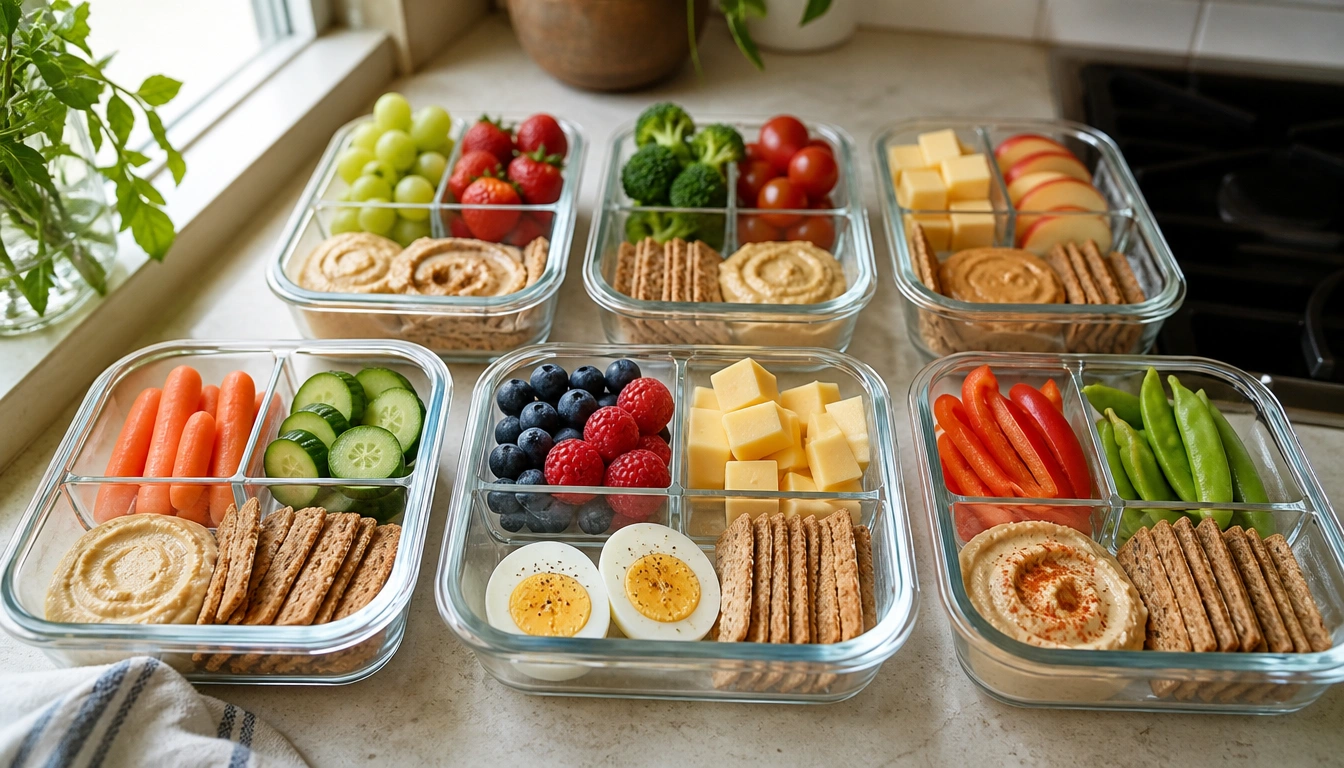
Easy healthy snack box ideas usually start with a simple formula: pair protein with produce, then portion it ahead of time so the snack is filling without being oversized. For beginners, that means a few repeatable combinations like hummus and vegetables, eggs and whole-grain crackers, cottage cheese and berries, or apple slices with nut butter and cheese. The best snack boxes are practical, transportable, and easy to adjust for kids, athletes, or blood sugar goals.
Key Takeaways
- Use the protein + produce formula to build snacks that feel more satisfying and help avoid a quick energy crash.
- A 100–200 calorie snack box is a useful reference for many people between meals, though active people may need more.
- Prep snack boxes in a 30–45 minute session and keep wet and dry foods separate so they stay fresh.
- Store perishable snack boxes at or below 40°F (4°C), and use an ice pack when taking them to work or school.
- Choose lower-glycemic produce and protein-forward pairings for steadier blood sugar, and scale portions down for children.
Why snack boxes help beginners stay consistent
Healthy snack box ideas work well for meal-prep beginners because they replace guesswork with a simple system. Instead of deciding from scratch when hunger hits, you already have a balanced option ready in the fridge. That makes it easier to skip the usual convenience snacks that are often higher in added sugar, sodium, or saturated fat.
The best part is that snack boxes are flexible. You can repeat the same structure each week and change the ingredients based on what is on sale, what your family likes, or what needs to be used up first. That reduces food waste and makes planning feel manageable rather than rigid.
Public health guidance from the CDC and the American Heart Association supports a pattern built around whole fruits, vegetables, lean proteins, legumes, nuts, seeds, and plain dairy foods. A snack box is just an easy way to put those foods together in a form you can grab fast.
Build every box with protein and produce
The core formula is simple: protein + produce. Protein helps a snack feel more filling, while fiber-rich produce adds volume and slows digestion. Together, they support satiety and help smooth out the rise and fall in energy that can happen with sweet, low-fiber snacks.
Think of protein as the anchor and produce as the freshness. Protein choices can include eggs, cottage cheese, hummus, plain Greek yogurt, cheese, chicken, turkey, tofu, beans, or edamame. Produce can be crunchy vegetables, berries, grapes, apple slices, melon, snap peas, or cherry tomatoes.
If you want a little more staying power, add a small amount of healthy fat or a complex carbohydrate, such as crackers, whole-grain toast points, or a few seeds. That can make the snack feel more complete without turning it into a full meal.
Four easy snack box ideas to rotate all week
Mediterranean hummus box: Pair hummus with baby carrots, cucumber rounds, bell pepper strips, and cherry tomatoes. This is a good beginner option because the dip adds creaminess while the vegetables bring crunch and fiber. It also travels well if you keep the dip in a separate compartment.
Egg and cracker crunch box: Pack one or two hard-boiled eggs with whole-grain crackers and snap peas or radishes. This mix gives you protein, a little carbohydrate, and something crisp to keep the texture interesting. It is especially useful when you want a snack that feels more substantial.
Cottage cheese and berry box: Combine cottage cheese with berries and a sprinkle of chia seeds or chopped nuts if allowed. The berries add sweetness without needing added sugar, and the cottage cheese gives the box a creamy, protein-rich base. If you prefer a softer snack, this is a strong choice.
Apple, cheese, and nut butter box: Slice an apple and pair it with cheese cubes or a stick of cheese plus a tablespoon of nut butter or seed butter. This box gives a mix of crunch, creaminess, and natural sweetness. It is a useful option when you want something easy to assemble from common groceries.
These ideas are meant to be templates, not strict recipes. If one part is missing, swap in another protein or another produce item and keep the same structure.
How much to pack for a snack box
A useful reference for many snack boxes is the 100–200 calorie range. That size often works well between meals because it can take the edge off hunger without crowding out lunch or dinner. For people trying to manage overall intake, this gives a practical starting point rather than an exact rule.
Portion size should still match your schedule and appetite. A person with a light day at the desk may feel satisfied with a smaller box, while someone with a long gap before the next meal may need more. Active people, athletes, or anyone doing intense training often need a larger snack, especially if the goal is to support performance or recovery.
If you are using snack boxes for weight management, consistency matters more than making every box identical. Keeping portions pre-packed helps reduce grazing from large containers and makes it easier to notice when you are actually hungry.
A beginner prep workflow that saves time and food
Start with a 30 to 45 minute prep window once a week. Pick two or three snack box combinations, then make all of them at once. That rhythm is usually easier to maintain than preparing a different snack every day.
Before shopping, write a short grocery list that matches the boxes you plan to make. For example, if you want three hummus boxes and two egg boxes, buy only the vegetables, eggs, crackers, and dip you need. Planning ahead helps reduce food waste and keeps you from buying extra ingredients that never get used.
Wash produce and dry it well before storing it. Wet vegetables and fruit spoil faster, especially when they are packed in closed containers. Use paper towels or a clean kitchen towel to remove excess moisture, then slice and portion the items.
Multi-compartment containers make the process much easier because they keep wet and dry ingredients separate. That prevents crackers from going soft and keeps dips, cut fruit, and vegetables tasting fresher. If you do not have bento-style boxes, small glass containers with tight lids can still work well.
Keep snack boxes safe in the fridge and on the go
Perishable snack boxes need basic food safety habits. Store them in the refrigerator at or below 40°F (4°C), especially if they contain eggs, dairy, cut fruit, or cooked protein. If you are packing a snack for work, school, or errands, use an ice pack and a well-sealed container so the food stays cold until snack time.
When possible, keep wet and dry ingredients separate until you are ready to eat. This is not only about texture; it also helps reduce spoilage. Dips, sliced fruit, and vegetables hold up better when they are packed apart from crackers, granola, or other dry items.
If a snack box will sit out for a while, choose sturdier foods that are less likely to spoil or get soggy quickly. For example, whole fruit, whole vegetables, shelf-stable crackers, and sealed single-serve hummus cups are often easier to transport than soft or highly perishable items.
How to adapt snack boxes for kids, athletes, and blood sugar goals
For children: Use smaller portions and make the box playful. Colorful produce, bite-size pieces, and simple shapes can make the snack feel more inviting. Young kids often do better with a few familiar foods rather than too many choices at once.
For athletes and highly active people: Increase the portion size or add a more substantial carbohydrate source. A larger snack box might include extra crackers, a wrap, or a bigger serving of fruit. When energy needs are high, the snack should support training rather than act like a tiny placeholder.
For blood sugar-conscious eating: Lean toward lower-glycemic produce such as cucumbers, leafy greens, peppers, and berries, then pair them with protein or a modest amount of fat. That combination can help create a steadier response than a snack built mostly from refined starches or sugary foods.
For people using a snack box as part of medical nutrition therapy, individual needs can differ. A registered dietitian can help tailor portions and food choices if there are concerns about diabetes, kidney disease, or other conditions that change what should be included.
Budget-friendly and nut-free swaps that still taste good
You do not need specialty ingredients to make a good snack box. If hummus is expensive, use plain beans mashed with a little olive oil and seasoning. If berries are costly, choose apples, oranges, pears, grapes, carrots, or celery. Frozen fruit can also work once it is thawed and drained.
For nut-free settings, use sunflower seed butter or tahini if those are allowed, or rely on dairy, eggs, beans, and cheese for protein. Many workplaces and schools have allergy rules, so it helps to check before packing nuts or nut-based spreads.
If convenience matters most, build boxes from foods you already buy for meals: boiled eggs, string cheese, yogurt, leftover roasted vegetables, sliced fruit, canned chickpeas, or pre-cut vegetables. The goal is not gourmet variety every day. The goal is a snack that is easy to repeat, satisfying enough to use, and simple enough to keep doing.
Frequently Asked Questions
How do I build a snack box using the protein + produce formula?
Start with one protein food, such as eggs, yogurt, cheese, hummus, beans, or tofu, then add one or two produce items like berries, carrots, cucumbers, or apple slices. If you want a little more staying power, add a small portion of crackers, seeds, or another whole-food carbohydrate.
What foods work best for make-ahead snack boxes that won’t get soggy or spoil quickly?
Sturdy foods work best: hard-boiled eggs, cheese cubes, whole fruit, carrots, snap peas, cucumbers, bell peppers, hummus, crackers, and roasted chickpeas. Keep wet items separate from dry ones when possible, and choose produce that holds up well during storage and transport.
How many calories should a snack box have if I’m using it between meals?
A common starting point is about 100–200 calories, which can be enough to bridge the gap between meals for many people. Active people, growing teens, or anyone with a longer stretch until the next meal may need a larger snack.
How do I adapt snack boxes for diabetes or blood sugar control?
Choose lower-glycemic produce such as berries, cucumbers, peppers, and leafy greens, then pair them with protein or healthy fat. That combination tends to be more balanced than snacks built mainly from refined starches or sweets. Individual needs can still vary, so medical nutrition guidance may help.
What are good snack box options for kids or picky eaters?
Keep portions small and familiar. Good choices include cheese and apple slices, yogurt with berries, crackers with hummus, or eggs with cucumber sticks. Using colorful foods, simple shapes, and just a few items per box can make the snack feel less overwhelming.
The Bottom Line
Healthy snack box ideas are easiest to stick with when you treat them like a repeatable template: protein plus produce, then a small portion sized to your day. That structure supports satisfaction, steadier energy, and less random snacking.
A beginner-friendly routine can be very simple: choose two or three combinations, prep for 30 to 45 minutes, dry produce well, and store everything cold in airtight containers. From there, adjust for budget, allergies, children, or higher energy needs without changing the basic system.
If you keep the foods practical and the portions realistic, snack boxes can become one of the easiest meal-prep habits to maintain week after week.
Medical disclaimer
Medical disclaimer: This content is for educational and informational purposes only and is not a substitute for professional medical advice, diagnosis, or treatment. Dietary needs and supplement suitability vary by individual.
Sources
- Centers for Disease Control and Prevention (CDC) — cdc.gov. Accessed October 2026.
- Academic / Medical Research Institution — heart.org. Accessed October 2026.
- Academic Research Institution — harvard.edu. Accessed October 2026.
