
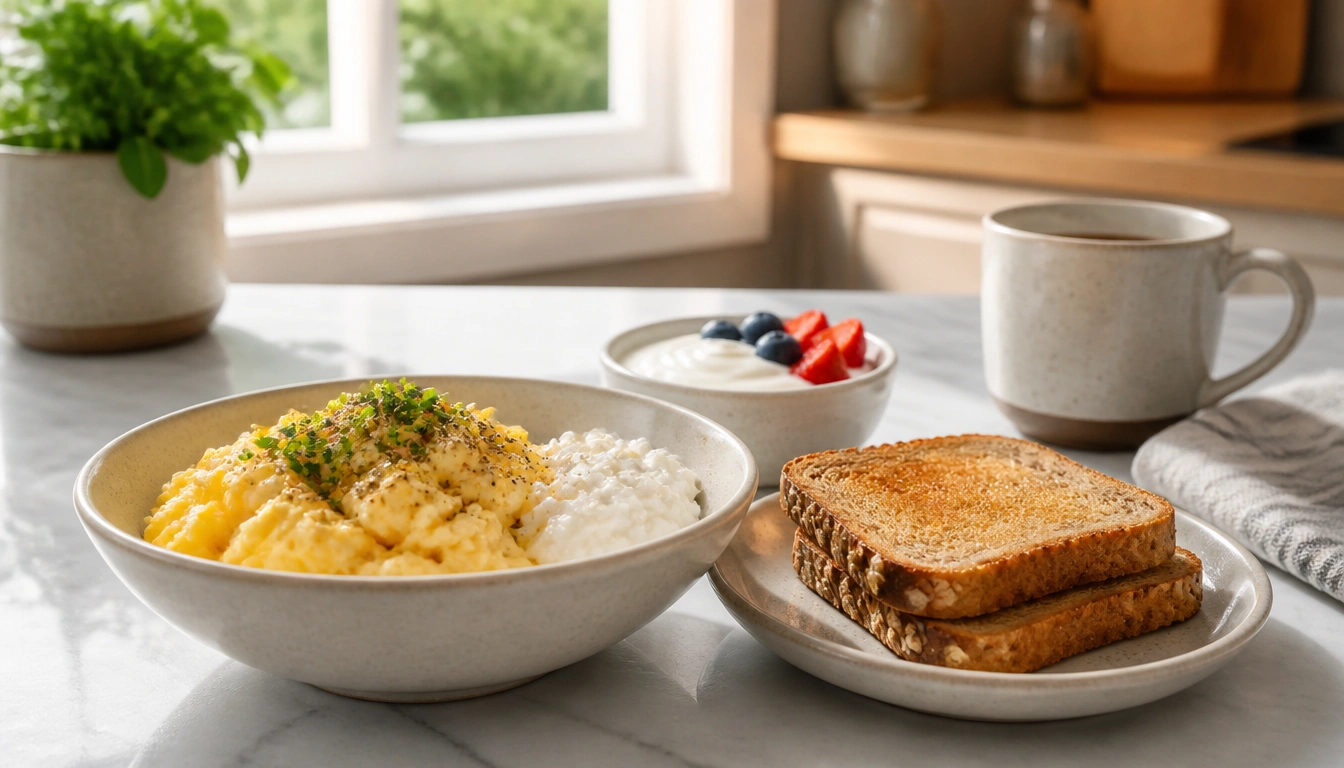
The quickest egg breakfast ideas for adults over 50 are the ones that keep the eggs but add a fast protein booster: Greek yogurt, cottage cheese, cheese, milk, seeds, smoked salmon, or whole grains. Two eggs are a good start, but many older adults do better with a breakfast that gets closer to 25–30+ grams of protein. That usually means pairing eggs with one or two high-protein sides, not making breakfast more complicated.
Key Takeaways
- Adults over 50 often need more protein at breakfast because aging can reduce how strongly muscles respond to protein.
- Two eggs alone usually provide about 12 grams of protein, which may fall short of the practical 25–30+ gram morning target.
- Whole eggs are often a smarter default than egg whites alone because the yolk adds useful micronutrients and may support muscle protein synthesis better.
- The fastest protein add-ins are cottage cheese, Greek yogurt, cheese, milk, seeds, and ready-to-eat fish or beans.
- Soft textures, small portions, and one-pan or microwave methods can make breakfast easier when appetite is low.
- People with chronic kidney disease, certain cholesterol disorders, or diabetes may need to personalize how often they eat eggs and how much protein they aim for.
Why quick egg breakfasts matter more after 50
As we age, the body often becomes less responsive to protein. This is called anabolic resistance, and it helps explain why a breakfast that once felt adequate may no longer do enough to support muscle maintenance. According to clinical and geriatric nutrition guidance, healthy older adults often benefit from a higher daily protein intake than younger adults, and spreading protein across meals can help support muscle protein synthesis.
That matters because breakfast is often the easiest meal to keep simple. Eggs are a strong fit for this stage of life: they cook quickly, are easy to chew when prepared softly, and provide complete, high-quality protein. The challenge is that a standard two-egg breakfast is often only a starting point. For many adults over 50, the practical goal is not just “having breakfast,” but building a breakfast that delivers enough protein to make the meal work harder for muscle and fullness.
Eggs also bring useful nutrients beyond protein. The yolk provides choline, vitamin D, lutein, and other compounds that are hard to replace if you rely on egg whites alone. That is one reason whole eggs are often a better default for older adults unless a medical reason says otherwise.
How to build a better egg breakfast
A useful breakfast target for many older adults is roughly 25–30 grams of high-quality protein, especially earlier in the day. Two large eggs usually give about 12 grams, so a plain two-egg breakfast often needs help. That does not mean you need a big plate of food. It usually means adding one easy protein partner.
The fastest options are the ones that mix into eggs or sit beside them without extra cooking:
- Greek yogurt: a small bowl on the side, or used as a creamy base under eggs.
- Cottage cheese: stirred into scrambled eggs for extra protein and a softer texture.
- Cheese: shredded or sliced, especially when paired with eggs and whole-grain toast.
- Milk: whisked into eggs or served as part of the meal if tolerated.
- Seeds: hemp, chia, or pumpkin seeds add a modest protein boost and more staying power.
- Whole grains: toast, oats, pita, or a tortilla help round out the meal and make it more filling.
The simplest rule is this: keep the eggs, then add one protein-rich item and one supportive side. For example, two eggs with cottage cheese and whole-grain toast will usually be more effective than two eggs alone. If appetite is small, choose concentrated add-ins rather than trying to eat a much larger plate.
For many people, whole eggs make the most sense unless a clinician has advised a different pattern. Research has found that whole eggs can stimulate muscle protein synthesis more effectively than equal protein from egg whites alone, likely because the yolk supports the body’s response in ways the white does not. In practical terms, that means egg whites are not the only healthy option, but they are not always the best default for older adults trying to make breakfast count.
Fast egg breakfast ideas that get you closer to the protein target
These ideas are meant to be realistic, quick, and flexible. None require special equipment, and each can be adjusted based on appetite, budget, and what is already in the fridge.
Cottage cheese scramble
Whisk two eggs with a few spoonfuls of cottage cheese, then scramble gently in a nonstick pan. Serve with toast or fruit if desired. The cottage cheese melts into the eggs, which makes the texture softer and boosts protein without adding much work. This is a strong choice for adults who want something warm, mild, and filling.
Eggs with Greek yogurt and herbs
Make two soft-boiled, poached, or microwaved eggs and serve them over plain Greek yogurt seasoned with dill, black pepper, or a little salt. Add a drizzle of olive oil or a sprinkle of seeds if you like. This works well when you want a breakfast bowl rather than a sandwich, and it is especially useful if chewing is difficult in the morning.
Microwave egg and cheese mug
Beat eggs in a microwave-safe mug with shredded cheese and a handful of spinach, then cook in short bursts until set. This is one of the cleanest options because it can be eaten from the mug and needs only one utensil. Pair it with milk or a small piece of whole-grain toast if you need more protein or energy.
Smoked salmon egg pocket
Scramble or fold two eggs, then tuck them into a whole-wheat pita with smoked salmon and a little cream cheese. The eggs and salmon make a protein-forward combination that also brings strong flavor, so a small portion can feel satisfying. This is a good option when you want something savory without a large serving.
Spinach and cheddar skillet eggs
Cook eggs with spinach and a little cheddar in one pan, then serve with beans, toast, or leftover roasted potatoes if available. Cheese makes the eggs more filling, and spinach adds volume without much chewing effort. This is a useful template when you want to use whatever is already in the kitchen.
These ideas work because they rely on combinations, not culinary effort. Eggs supply a strong base, while the add-ins move the meal closer to a more effective protein amount. If you prefer a softer breakfast, choose scrambled or baked eggs. If you prefer a more substantial meal, add toast, pita, beans, or yogurt alongside the eggs.
Texture, appetite, and convenience swaps
Many adults over 50 do not need a bigger breakfast so much as a breakfast that is easier to eat. If appetite is small, focus on concentrated protein in soft textures. Scrambled eggs, baked egg cups, mug eggs, poached eggs, and soft omelets are often easier than dry or overcooked eggs.
If chewing is tiring, use creamy or moist add-ins. Cottage cheese can be folded into scrambled eggs. Greek yogurt can become a side or base. Cheese melts into eggs and adds flavor quickly. If you want an even softer meal, try eggs with avocado and yogurt on the side, rather than a dry sandwich.
Budget matters too. Eggs remain one of the more affordable protein foods, and you do not need expensive extras to make them work. Store-brand cottage cheese, plain yogurt, milk, canned salmon, shredded cheese, beans, and frozen spinach are all practical options. Whole-grain bread, tortillas, and oats can stretch the meal without making it feel heavy.
For minimal cleanup, use one pan, a microwave mug, or a small bowl. Cooking eggs in batches can also help. Hard-boiled eggs, baked egg muffins, and refrigerated scrambled eggs can be repurposed for several mornings, which is useful when mornings are busy or energy is low.
If you are trying to eat more but feel full quickly, pair eggs with calorie- and protein-dense foods instead of large portions of plain produce. A small amount of cheese, yogurt, nut butter on toast, or seeds can make the meal more useful without making it feel oversized.
Health guardrails for cholesterol, diabetes, and kidney disease
Eggs can fit into many healthy eating patterns, but some people should personalize how often they eat them and how they build breakfast. If you have chronic kidney disease, protein goals may need to be adjusted, so do not increase protein aggressively without advice from your nephrologist or renal dietitian. Kidney care is individualized, and the right amount can depend on stage of disease, lab results, and treatment plan.
If you have cardiovascular disease, diabetes, or familial hypercholesterolemia, the whole diet matters more than any single food. Modern guidance emphasizes that dietary cholesterol from eggs does not affect blood cholesterol the same way for everyone, but people with lipid disorders or elevated cardiovascular risk should ask a clinician how eggs fit into their overall pattern. The question is usually not whether eggs are “allowed,” but how often they fit and what they replace.
Diabetes adds another layer: eggs themselves do not contain carbohydrates, but what you serve with them matters. Toast, juice, sweetened yogurt, and refined breakfast pastries can raise blood sugar quickly. A better pattern is eggs plus high-protein, high-fiber sides such as plain yogurt, whole grains, vegetables, or beans.
Also pay attention to allergies, digestive tolerance, and personal appetite. Some people feel best with whole eggs; others do better with a mix of whole eggs and egg whites. If you have trouble swallowing, nausea, or ongoing low appetite, mention that to a healthcare professional, because those issues can change the best breakfast strategy.
Batch-prep and shopping shortcuts for busy mornings
The easiest way to eat better breakfasts is to make the first step easier. Keep a short list of reliable staples on hand: eggs, Greek yogurt, cottage cheese, shredded cheese, milk, whole-grain bread or tortillas, frozen spinach, and one or two backup proteins such as canned salmon or beans. With those ingredients, breakfast can be built in minutes.
Batch-prep helps most on rushed mornings. Hard-boil several eggs for grab-and-go use. Bake a tray of egg muffins with vegetables and cheese. Pre-portion yogurt into containers. Wash herbs or greens when you bring them home. Small prep tasks can make the difference between skipping breakfast and eating something protein-rich.
Try pairing foods so the decision is already made: eggs plus yogurt, eggs plus toast and cottage cheese, eggs plus salmon, or eggs plus beans and cheese. Having a few default combinations reduces morning effort and makes it easier to repeat what works.
If you are cooking for someone else, keep the meal familiar. Older adults often eat better when breakfast is recognizable, soft, and not overly large. A modest egg breakfast that is easy to finish is usually better than an ambitious plate that gets half-eaten. Consistency matters more than novelty here.
For caregivers, the most helpful question is not “What is the most elaborate breakfast?” but “What can this person realistically eat most mornings?” That answer often leads back to eggs, plus one smart protein partner, plus a texture and portion size the eater can manage.
Frequently Asked Questions
How much protein should adults over 50 aim for at breakfast?
Many older adults do better with about 25–30 grams of high-quality protein at breakfast, especially if the rest of the day’s protein is spread across meals. The exact need varies by body size, activity level, and health conditions, but two eggs alone usually fall short of that practical target.
Are whole eggs better than egg whites for older adults?
Often, yes. Whole eggs provide the protein in the white plus micronutrients and healthy fats from the yolk. Research also suggests whole eggs may support muscle protein synthesis better than egg whites alone in some settings. Egg whites can still be useful if you need extra protein with less fat, but whole eggs are a strong default for many adults over 50.
What can I add to eggs to reach a higher protein target quickly?
Fast add-ins include Greek yogurt, cottage cheese, shredded cheese, milk, seeds, smoked salmon, beans, and whole grains. The easiest method is to mix one protein booster into the eggs or serve it on the side so breakfast stays quick and filling.
Are eggs safe to eat if I have high cholesterol or diabetes?
For many people, eggs can fit into a heart-healthy or diabetes-friendly diet. The overall eating pattern matters more than one food. If you have cardiovascular disease, diabetes, or familial hypercholesterolemia, it is smart to ask your clinician or dietitian how often eggs fit best for you.
What if I have chronic kidney disease and need to watch protein intake?
Do not use a higher-protein breakfast plan without medical guidance if you have chronic kidney disease. Protein needs can be different depending on CKD stage and treatment. A nephrologist or renal dietitian can help you find a safe amount and show you how to fit eggs into your plan if appropriate.
The Bottom Line
Quick egg breakfasts can work very well after 50, but the main adjustment is simple: two eggs are a base, not always the full answer. To make breakfast more effective, pair eggs with another protein source such as Greek yogurt, cottage cheese, cheese, milk, seeds, beans, or smoked salmon.
Whole eggs are usually the better starting point for most older adults because they are convenient, nutrient-dense, and may support muscle protein synthesis better than egg whites alone. Keep the meal soft, fast, and realistic so it is easy to repeat.
If you have chronic kidney disease, significant cholesterol concerns, diabetes, or another condition that changes nutrition needs, personalize the plan with your clinician or dietitian. The best breakfast is the one that fits your health needs and you can actually eat most mornings.
Medical disclaimer
Medical disclaimer: This content is for educational and informational purposes only and is not a substitute for professional medical advice, diagnosis, or treatment. Dietary needs and supplement suitability vary by individual.
Sources
- National Institutes of Health (NIH) — nih.gov. Accessed October 2026.
- National Institutes of Health (NIH) — nih.gov. Accessed October 2026.
- U.S. Government / Health Authority — acl.gov. Accessed October 2026.
- National Institutes of Health (NIH) — nih.gov. Accessed October 2026.
- Academic Research Institution — wustl.edu. Accessed October 2026.
