
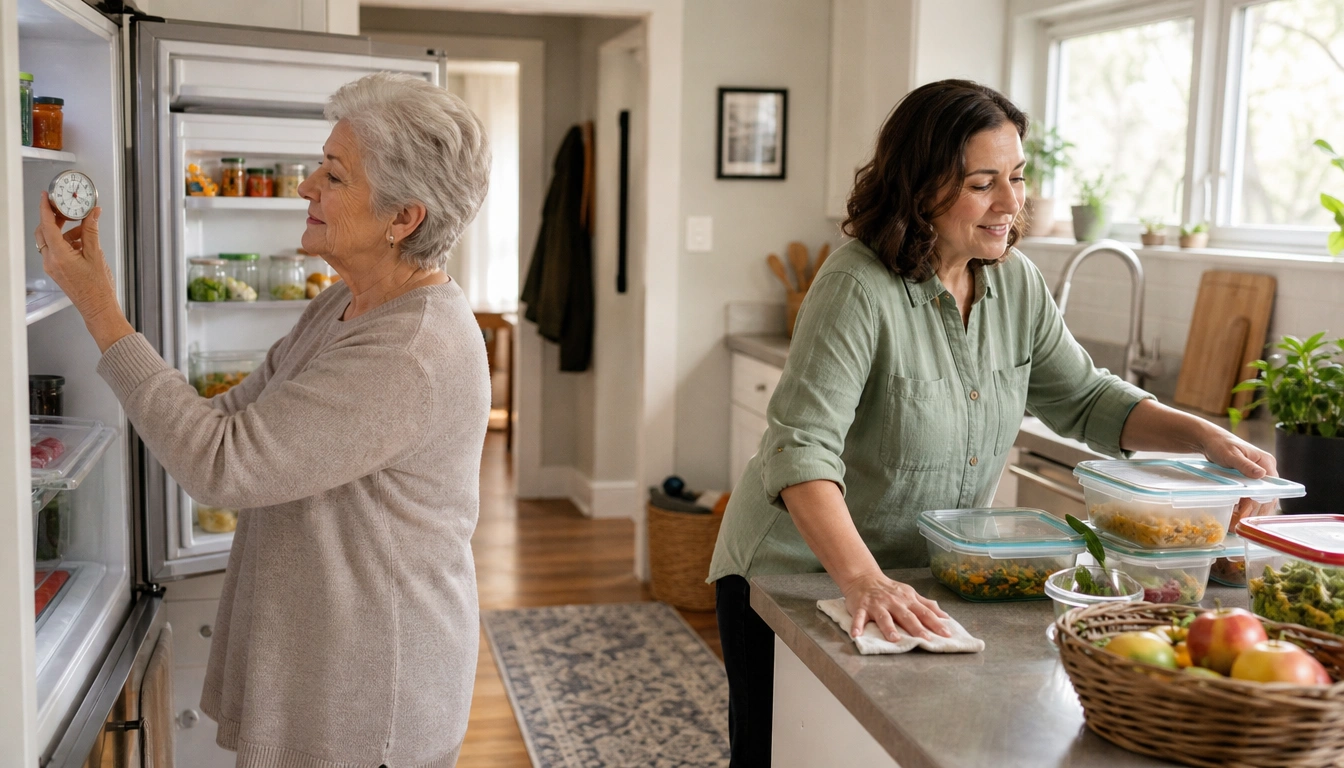
A weekly kitchen reset for adults over 60 should focus on three things: food safety, safer movement, and easier cooking. Each week, check the refrigerator temperature, discard leftovers older than 3 to 4 days, rotate food so older items are used first, clear floor clutter, and make sure high-use items are stored where they are easy to reach. Add simple reminders and safety checks if memory, vision, or balance are changing.
Key Takeaways
- Check the refrigerator at least weekly and keep it at or below 40°F; use an appliance thermometer rather than guessing.
- Use the 3- to 4-day leftover rule for prepared foods, and discard anything you cannot confidently identify or date.
- Reduce fall risk by storing everyday items at waist level and avoiding high-shelf reaching or heavy lifting when balance or joint pain is an issue.
- Make the kitchen easier to use with labels, brighter lighting, reminder systems, and automatic shutoff aids if needed.
- A weekly reset should also include stovetop, grease, smoke alarm, and handle checks to lower fire risk.
- If possible food poisoning causes vomiting, dehydration, blood in stool, high fever, or confusion, older adults should seek prompt medical care.
Why a weekly kitchen reset matters more after 60
A weekly kitchen reset for adults over 60 is not just about tidiness. Aging can make foodborne illness more serious because the immune system becomes less resilient and recovery can be slower. Public health guidance also notes that older adults are more likely to become severely ill from certain bacteria, including Listeria, Salmonella, and Campylobacter. That means a small storage mistake or an overlooked leftover can matter more than it once did.
The same weekly routine also helps with two other common risks in older adulthood: falls and kitchen fires. A cluttered floor, a spill near the sink, or reaching for a heavy pan on a high shelf can lead to injury. In the kitchen, cooking is a major source of home fires, and older adults face greater risk of harm if something is left unattended. A reset gives you one regular time to catch problems before they stack up.
Think of the goal as prevention, not perfection. The best routine is the one that is simple enough to repeat every week without straining your body or memory.
The refrigerator, storage, and leftover check
Start with the refrigerator because that is where the most time-sensitive problems usually build up. The easiest decision point is temperature: the refrigerator should be at or below 40°F. A small appliance thermometer gives you a real reading, which is better than relying on how cold it feels. If the temperature is too warm, adjust the setting and recheck after the fridge has had time to settle.
Next, scan leftovers and prepared foods. Follow the 3- to 4-day rule: if a cooked item has been refrigerated for more than 4 days, throw it out. If you do not clearly remember when it was made, it is safer to discard it. This is especially important for older adults because some dangerous bacteria can keep growing in refrigerated food.
Use FIFO, or first in, first out. Move older safe foods to the front and newer groceries behind them. That simple step reduces waste and makes it more likely that food gets used while still fresh. Wipe up spills, remove wilted produce, and toss anything with mold, an off smell, or a label that is impossible to read.
Storage matters too. Keep everyday dishes, mugs, and light cookware at waist level when possible. Put the heaviest items in spots that do not require overhead reaching or deep bending. If balance is poor, if your knees or shoulders hurt, or if you use a walker or cane, do not make the weekly reset a reason to climb, stretch, or carry more than you should. Ask a helper to move heavy items or place them where you can reach them safely.
Clean for health and convenience
Once food is sorted, clean the surfaces that touch food most often. Counters, sink edges, refrigerator handles, microwave buttons, and cabinet pulls can collect grease and germs even when the kitchen looks neat. Hot, soapy water is usually enough for routine cleaning, as long as you rinse and dry surfaces afterward.
Give special attention to the sink and sponge area. A damp sponge can hold onto bacteria, so replace old or smelly sponges regularly. If you prefer reusable cloths, launder them often and keep a clean backup ready. Paper towels can be a useful option for quick wipe-downs when you want to reduce cross-contamination.
For older adults, the benefit here is practical as much as hygienic. Clean handles are easier to grip, uncluttered counters make cooking simpler, and a routine wipe-down helps you notice problems early, such as leaks, sticky spills, or a refrigerator door that is not sealing well. A cleaner kitchen is usually a safer and easier kitchen.
Fire prevention checks that belong in every weekly reset
Fire safety should be part of the same weekly routine because it takes only a minute to look for hazards. Check stovetop knobs to make sure they turn off fully and are easy to read. If the markings are faint, improve them with a practical label system so “off” is obvious at a glance. Clear crumbs and grease from around burners, the stovetop surface, and the range hood or vent area, since built-up grease can fuel a fire.
Also make sure the path around the stove is open and dry. A towel on the floor, a dropped utensil, or a slick spot can cause a fall while you are cooking. If you use an oven, toaster oven, or slow cooker, inspect cords for damage and keep appliances away from curtains, paper towels, or other clutter.
Smoke detectors should not be ignored. Test them monthly and replace batteries when needed, following the manufacturer’s directions. If hearing is reduced, consider a device or alert system that is easier to notice. The weekly reset is a good time to look over the whole cooking area so the stove, the floor, and the detector are all part of the same safety check.
Make the kitchen easier to use with memory and vision changes
Memory, hearing, or vision changes can make a familiar kitchen feel less predictable. That does not mean cooking independence has to end. It does mean the setup should become simpler and more visible. High-contrast labels on shelves, bins, and leftover containers can reduce confusion. Large writing, bold tape, or color coding can help more than tiny handwritten notes.
Reminders are useful when they are built into the environment. A note on the refrigerator door, a phone alarm, or a calendar alert can prompt the weekly check or remind someone to use a food item before it spoils. For caregivers, a shared checklist can reduce missed steps and help everyone follow the same routine.
Lighting also matters. Brighter task lighting over the counter and stove makes spills, dates, and control settings easier to see. If you have trouble remembering whether the stove is off, automatic shutoff devices or other safer appliance features may be worth discussing with a family member or occupational therapist. The aim is not to add gadgets for their own sake, but to reduce the number of decisions and memory demands in a space used every day.
Special situations that change the reset
Some health conditions make the weekly kitchen reset even more important. If you have diabetes, kidney disease, swallowing difficulty, or a diet that is shaped by medications, the refrigerator check should include more than spoilage. It should also include foods that no longer fit the current medical plan, items that are too hard to chew safely, or ingredients that should be limited because of sodium, potassium, or other restrictions.
For people taking medications that affect appetite, hydration, or bleeding risk, meal planning may need extra care. A weekly reset can be a chance to make sure there are safe, easy options available and that food labels are still readable. If a caregiver manages groceries or meal prep, keep the rules simple and written down so the same foods are chosen, stored, and discarded consistently.
Swallowing problems deserve special attention. Keep textures and serving sizes appropriate to the person’s needs, and avoid leaving unsafe foods in view if they are likely to be mistaken for something easier to eat. If there is any question about a prescribed diet, use the weekly reset as a prompt to verify it with the healthcare team rather than guessing.
A realistic weekly reset routine
A good reset does not have to take a long time. The best routine is the one you can finish without fatigue, pain, or rushing. If you only have 15 minutes, focus on the highest-risk items: check refrigerator temperature, throw out old leftovers, clear the floor, and wipe the handles you touch most often. That alone covers the biggest food-safety and fall-prevention priorities.
If you have about 30 minutes, add a more complete food review. Move older items to the front, discard questionable foods, wipe a shelf or two, inspect the stove area, and replace old sponges or cloths. This version works well for many adults who want a reliable routine without turning the task into a major chore.
If you have 45 minutes, you can do a fuller reset. Review the refrigerator and freezer, clean the sink and counters, reorganize waist-level storage, check appliance cords, look over labels and reminders, and test the smoke detector if it is your monthly check day. The point is not to do every task every week. The point is to choose the version that keeps the kitchen safe and usable without overdoing it.
When mobility is limited, divide the reset across the week. For example, one day you might check leftovers, another day you might wipe surfaces, and another day you might deal with storage. Splitting the work is often safer than trying to push through pain or dizziness all at once.
When a kitchen reset is not enough
Sometimes the problem is bigger than spoiled food or a messy kitchen. If an older adult may have food poisoning and develops high fever, blood in the stool, repeated vomiting, confusion, dizziness, or signs of dehydration such as very little urination, they should get prompt medical care. Older adults can become dehydrated or worsen faster than younger people, so waiting too long is risky.
Also pay attention to safety during the reset itself. If someone is too unsteady to stand at the stove, is having frequent near-falls, or cannot safely reach common items without climbing or straining, the kitchen setup needs to change. That may mean moving storage, adding help from a caregiver, or getting an occupational therapy opinion on safer kitchen design. A weekly reset is useful, but it should never require a person to take avoidable risks in order to complete it.
Frequently Asked Questions
How do I know which leftovers are still safe to keep?
Use the 3- to 4-day rule for refrigerated leftovers. If you do not know when a food was made, or if it smells, looks, or feels off, throw it out. When in doubt, the safer choice is to discard it rather than test it.
What kitchen tasks help prevent falls and fire hazards for older adults?
Clear the floor, dry spills quickly, keep walkways open, and store often-used items at waist level. For fire prevention, check stove knobs, clean grease from cooking areas, and test smoke alarms regularly. These steps reduce the most common kitchen risks without adding much time.
How can I set up the kitchen so I do less bending and reaching?
Put daily-use items in waist-level cabinets or on easy-to-reach shelves. Move heavy cookware lower, keep light dishes near the front, and avoid high shelves for items you use often. If balance or joint pain is a problem, ask for help with anything that requires climbing or heavy lifting.
What food safety rules matter most for adults over 60?
The biggest rules are to keep the refrigerator at or below 40°F, discard refrigerated leftovers after 3 to 4 days, use clean utensils and surfaces, and cook foods to safe temperatures. Older adults are more vulnerable to foodborne illness, so routine checks matter more than guessing.
When should an older adult get medical help after suspected food poisoning?
Seek prompt medical care for high fever, blood in the stool, repeated vomiting, confusion, dizziness, or signs of dehydration like very little urination. Older adults can become seriously ill more quickly, so it is better to get help early than wait for symptoms to pass.
The Bottom Line
A weekly kitchen reset can do a lot with very little effort: keep food safer, make the room easier to move around in, and lower the chance of cooking accidents. For adults over 60, the most important habits are checking refrigerator temperature, using the 3- to 4-day leftover rule, and keeping the floor and stove area clear.
The best reset is the one that fits your body and your memory. Waist-level storage, bright labels, simple reminders, and automatic safety features can make the kitchen more manageable without making it feel clinical or complicated.
If illness symptoms, falls, or unsafe reaching are becoming part of the routine, the kitchen setup needs more than cleaning. That is the time to bring in a caregiver, a clinician, or an occupational therapist for a safer plan.
Medical disclaimer
Medical disclaimer: This content is for educational and informational purposes only and is not a substitute for professional medical advice, diagnosis, or treatment. Dietary needs and supplement suitability vary by individual.
Sources
- U.S. Government / Health Authority — foodsafety.gov. Accessed October 2026.
- Centers for Disease Control and Prevention (CDC) — cdc.gov. Accessed October 2026.
- Academic Research Institution — waldenu.edu. Accessed October 2026.
