
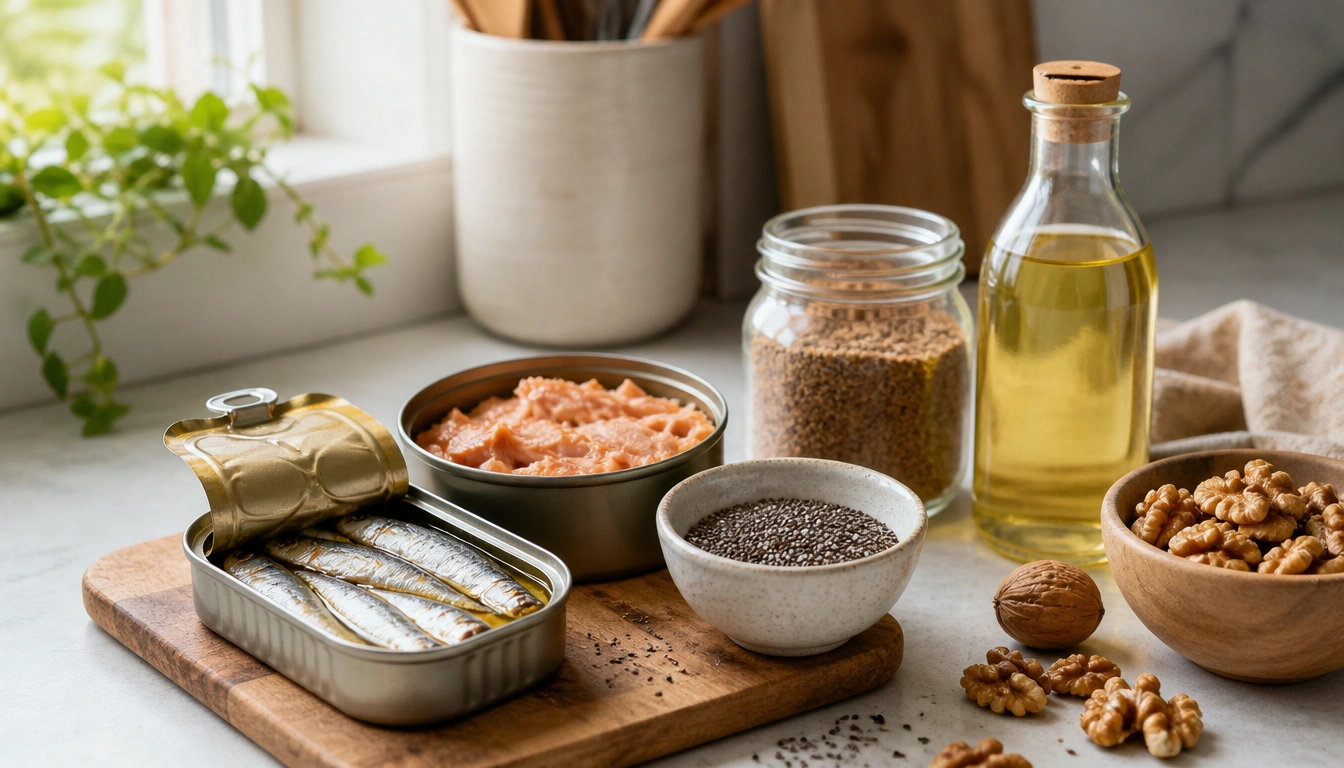
The cheapest practical omega-3 foods are usually canned sardines, canned salmon, mackerel, and herring for direct EPA and DHA, plus flaxseed, chia, canola oil, soybean oil, and walnuts for plant-based ALA. If you want the best value, start with pantry fish for marine omega-3s and use seeds and oils as everyday backup. Most shoppers can meet a food-first omega-3 pattern without routine supplements.
Key Takeaways
- Canned oily fish usually gives the best omega-3 value per dollar because it supplies EPA and DHA directly.
- Flaxseed, chia, walnuts, canola oil, and soybean oil provide ALA, but plant conversion to EPA and DHA is limited.
- Grinding whole flaxseed at home improves absorption and can make a cheap omega-3 source more useful.
- Shelf-stable fish and pantry oils reduce waste, save time, and make it easier to keep omega-3 foods in regular rotation.
- Food-first omega-3 choices fit major guidance better than routine supplements for most healthy adults.
- Pregnant and breastfeeding shoppers should favor low-mercury seafood choices and avoid fish liver oil supplements.
Why omega-3s matter for budget shoppers
Omega-3 foods are worth prioritizing because they help you get fats your body needs but cannot make on its own. The most useful distinction for shoppers is between EPA and DHA, which come mainly from fish and seafood, and ALA, which comes from plants such as seeds, nuts, and certain oils. According to the National Institutes of Health and heart-health guidance from the American Heart Association, both matter, but they are not interchangeable.
For a tight grocery budget, the good news is that omega-3s are not limited to expensive fresh fish. Canned seafood, common seed staples, and basic cooking oils can all contribute. The cheapest plan is usually not a single “superfood,” but a mix of affordable pantry items that you can actually keep, use, and repeat week after week.
That food-first approach also matches major guidance better than routine supplement use for most people. Supplements can have a place in specific medical situations, but for everyday prevention and general health, affordable foods usually give you more value, more nutrients, and less guesswork.
Best low-cost marine sources of EPA and DHA
If your goal is to get the most direct omega-3 benefit for the money, oily canned fish is hard to beat. Sardines, salmon, mackerel, and herring provide EPA and DHA in a ready-to-eat form. They are especially practical because they require no special prep, no freezer space, and little risk of spoilage if you keep a few cans on hand.
| Food | Why it works well on a budget | Practical notes |
|---|---|---|
| Canned sardines | Often low-cost, high in EPA and DHA, and usually sold in single-serving cans | Strong flavor, but easy in toast, pasta, rice bowls, or salad |
| Canned salmon | Affordable compared with fresh salmon and versatile for patties or sandwiches | Often milder tasting than sardines |
| Mackerel | Fatty fish with strong omega-3 content and generally good value | Choose shelf-stable cans when possible for convenience |
| Herring | Another oily fish option that can be affordable and nutrient-dense | Works well in savory spreads, salads, or with potatoes |
For many budget shoppers, the best deal is not the cheapest can on the shelf, but the one you will actually eat. A can that sits unused is not good value. Pantry fish earns its place because it helps you meet omega-3 goals while also providing protein. It can replace a pricier lunch meat, a takeout meal, or a convenience snack that offers far less nutrition.
Best low-cost plant sources of ALA
Plant foods can be very useful for omega-3 intake, especially when fish is not part of every meal. The most budget-friendly plant sources are flaxseed, chia seed, canola oil, soybean oil, and walnuts. These foods provide alpha-linolenic acid, or ALA, which is the essential plant omega-3.
Flaxseed is often the standout bargain because a small amount goes a long way. Whole flaxseed stores well, but it should be ground before eating if you want to absorb the omega-3 efficiently. Chia seed is another useful staple because it keeps well in the pantry and can be stirred into oatmeal, yogurt, or smoothies without much effort.
Cooking oils are easy to overlook, yet canola and soybean oil are practical everyday sources of ALA. They are often cheaper per use than specialty oils, and they can quietly improve omega-3 intake through normal cooking. Walnuts are usually more expensive than seeds, but a small portion can still be a useful add-on if you buy store brands or use bulk bins carefully.
How to compare omega-3 value on a budget
Price alone does not tell you which omega-3 food is the best deal. A smart comparison looks at serving size, shelf life, ease of use, and cost per meal. A food that costs a little more but prevents waste may actually be the better buy.
For example, canned fish is convenient because it is already cooked and ready to eat. That convenience matters when your schedule is busy or when you are more likely to skip cooking. Seeds and oils tend to win on cost per serving and storage, but they do not provide EPA and DHA in the same direct way as fish.
A simple budget comparison table can help:
| Factor | Canned fish | Seeds and oils |
|---|---|---|
| Direct EPA/DHA | Yes | No, mostly ALA |
| Shelf life | Long pantry life | Flax and chia keep well; oils need storage care |
| Convenience | Very high | High once stocked and portioned |
| Waste risk | Low if canned | Low for pantry staples, higher if bought in excess |
That is why the cheapest plan is usually a combination: pantry fish for a few meals each week, plus plant sources used daily in small amounts.
How to use budget omega-3 foods in real meals
Affordable omega-3 foods work best when they fit into meals you already eat. A can of sardines can become toast with mustard and tomato, a rice bowl with vegetables, or a quick salad topping. Canned salmon can be mixed with a little yogurt or mayonnaise for sandwiches, stuffed into wraps, or formed into patties with oats and onion.
Seeds are just as flexible. Ground flaxseed can be mixed into oatmeal, overnight oats, smoothies, pancake batter, or yogurt. Chia can thicken cereal bowls, be stirred into drinks, or added to baked goods. If your meals are rushed, even a small add-on is useful because it works in the background without requiring a separate recipe.
For lunches, pantry staples reduce the temptation to buy more expensive convenience food. A tuna-like fish sandwich, salmon salad on crackers, or toast topped with a seed butter and chia mixture may not sound fancy, but those meals are inexpensive, fast, and more omega-3-friendly than most processed snack options. The goal is consistency, not culinary perfection.
What plant omega-3 foods can and cannot do
Plant omega-3 foods absolutely count. They provide ALA, and ALA is an essential fatty acid. But the body converts ALA into EPA and DHA only to a limited extent, and that conversion is generally low. That means plant foods are useful, but they do not fully replace marine omega-3 sources in a practical sense.
This matters most if you rely heavily on plant foods and rarely eat fish. You may still meet your ALA needs, but your intake of EPA and DHA may remain lower than it would be with seafood. For people who eat no fish, plant omega-3 foods are still better than none, and they can be part of a very healthy diet. The limitation is not that they are useless; it is that they do a different job.
A budget-friendly compromise is to use both. Let seeds, walnuts, and oils cover the everyday baseline, then add canned fish once or twice a week if you can. That pattern gives you direct EPA and DHA without requiring expensive seafood or frequent cooking.
Shopping and storage tips that save money and preserve quality
Some of the best savings come from reducing waste. Buy whole flaxseed for longer shelf life, then grind only what you need for the week. A coffee grinder or small blender works well. Ground flax can spoil faster than whole seeds, so storing it in a sealed container in the refrigerator is a practical habit.
For fish, look for shelf-stable cans or pouches that you can keep in the pantry. Stocking a few cans makes it easier to avoid last-minute takeout or expensive deli food. If you see a good sale on sardines, salmon, mackerel, or herring, it is often worth buying a small extra supply as long as you will use it before the date on the package.
Oils should also be stored carefully. Keep them capped tightly and away from heat and light. If a cooking oil is on the shelf for months in a warm kitchen, its quality can decline. Buying only what your household will use reasonably soon is often cheaper than chasing the lowest price per bottle.
Special situations and safety: pregnancy, breastfeeding, and supplements
Pregnancy and breastfeeding are times when omega-3 choices deserve extra care. Low-mercury seafood can be a smart, affordable way to support fetal and infant development, and major guidance supports choosing fish wisely rather than avoiding seafood altogether. Smaller oily fish such as sardines and herring are often practical choices because they provide omega-3s without the same mercury concerns seen in some larger fish.
One important caution is to avoid fish liver oil supplements in pregnancy unless a clinician specifically recommends them. These products can contain too much preformed vitamin A, which is not the same thing as standard fish oil. If you are pregnant or breastfeeding and unsure which seafood is best, local public health advice and your prenatal care team are the safest sources to follow.
For most healthy adults, routine omega-3 supplements are usually not necessary if budget-friendly fish and plant foods are already part of the diet. If you take blood thinners, have a bleeding disorder, or are considering a high-dose supplement for a medical reason, ask a healthcare professional first. Food-based omega-3s are generally the simpler, lower-risk option.
Frequently Asked Questions
Which budget fish give the most omega-3 per dollar?
Canned sardines, canned salmon, mackerel, and herring are usually the strongest value choices because they provide direct EPA and DHA in a shelf-stable form. The best pick is often the one that is cheapest at your store and that you will actually use regularly.
Can plant foods like flaxseed and chia seed meaningfully replace fish for omega-3 intake?
They can contribute a lot of ALA and are very useful, but they do not fully replace fish because the body converts ALA to EPA and DHA only in limited amounts. For many people, a mix of plant and marine sources is the most practical approach.
How do I use whole flaxseed correctly so I actually absorb the omega-3s?
Whole flaxseed is best bought whole for storage, then ground before eating. Grinding breaks the seed coat so your body can access the oil. Use a coffee grinder or blender, then store the ground flax in a sealed container in the refrigerator.
Are omega-3 supplements necessary if I eat budget-friendly omega-3 foods?
Usually not for healthy adults who eat fish or plant omega-3 foods regularly. Food-first choices are generally preferred because they are less expensive, come with other nutrients, and fit major guidance better than routine supplement use. Supplements may still be appropriate for specific medical reasons.
What should pregnant or breastfeeding shoppers know about low-cost omega-3 choices?
Choose low-mercury seafood such as sardines, salmon, mackerel, and herring when possible, and follow local food safety guidance. Avoid fish liver oil supplements unless a clinician recommends them, because they can contain too much preformed vitamin A.
The Bottom Line
If you want the cheapest practical omega-3 strategy, start with canned oily fish for EPA and DHA, then use flaxseed, chia, canola oil, soybean oil, and walnuts as affordable plant support. That combination is realistic, low-waste, and easy to repeat.
The smartest budget plan is not buying a single expensive superfood. It is keeping a few pantry fish cans on hand, grinding flax when needed, using common cooking oils well, and building omega-3s into meals you already eat.
For pregnancy, breastfeeding, or medical conditions that affect bleeding or supplement use, food choices are still important, but individualized advice matters too. A clinician or registered dietitian can help you choose the safest pattern for your situation.
Medical disclaimer
Medical disclaimer: This content is for educational and informational purposes only and is not a substitute for professional medical advice, diagnosis, or treatment. Dietary needs and supplement suitability vary by individual.
Sources
- National Health Service (NHS) — www.nhs.uk. Accessed October 2026.
- National Institutes of Health (NIH) — nih.gov. Accessed October 2026.
- National Health Service (NHS) — nhsdorset.nhs.uk. Accessed October 2026.
- Academic / Medical Research Institution — heart.org. Accessed October 2026.
- Academic Research Institution — harvard.edu. Accessed October 2026.
