
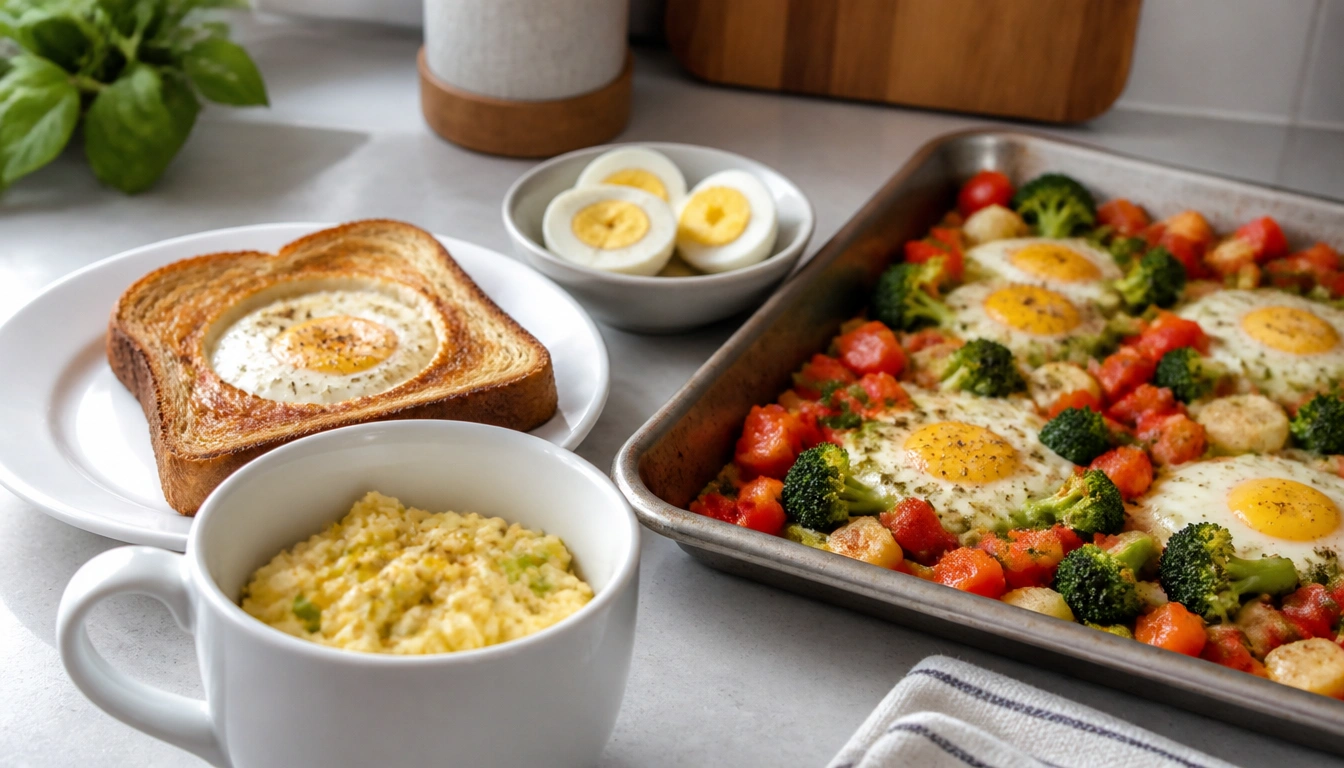
The fastest, cheapest egg breakfast ideas are usually simple combinations: a microwave mug scramble, sheet-pan eggs with vegetables, egg-in-a-hole on whole-grain toast, or hard-boiled eggs made ahead for grab-and-go mornings. Eggs are budget-friendly because they cook quickly, work with low-cost add-ins, and provide complete protein. For safety, keep eggs refrigerated, discard cracked eggs, and cook them until set unless you are using pasteurized eggs.
Key Takeaways
- 1 large egg counts as 1 ounce-equivalent in USDA MyPlate protein guidance, which makes breakfast portions easier to plan.
- The cheapest egg breakfasts usually rely on leftover vegetables, frozen vegetables, toast, or potatoes—not specialty ingredients.
- Microwave mug scrambles, sheet-pan egg bakes, and hard-boiled eggs are the best low-effort options for busy mornings.
- Eggs bring complete protein and choline, which can make breakfast more filling than sugary, refined morning foods.
- Store shell eggs in the refrigerator at or below 40°F and cook egg dishes until set to lower food-safety risk.
Why eggs work so well for low-cost mornings
If you are trying to keep breakfast cheap, eggs are one of the easiest foods to build around. They cook quickly, are widely available, and pair well with ingredients that many households already have on hand. That makes them useful for students, families, and anyone trying to avoid specialty breakfast items that add cost without adding much staying power.
Eggs are also practical from a nutrition standpoint. They provide complete protein, meaning they contain all nine essential amino acids. They are also a notable source of choline, a nutrient involved in normal cell function and metabolism. For many people, that protein-and-fat combination makes an egg breakfast more satisfying than a sweet pastry, sugary cereal, or other refined breakfast option.
One helpful planning detail from USDA MyPlate: 1 large egg counts as 1 ounce-equivalent in the Protein Foods group. That makes it easier to think about breakfast in simple terms. Two eggs plus toast and fruit can be a reasonable, balanced start without much measuring or guesswork.
Stretch eggs with the cheapest add-ins
The most affordable egg breakfasts usually rely on foods that already live in the fridge, freezer, or pantry. Leftover vegetables are a great starting point because they add volume, fiber, and flavor without much extra spending. A handful of cooked broccoli, spinach, onions, peppers, mushrooms, or diced potatoes can turn a plain scramble into a more filling meal.
Frozen vegetables are often one of the best budget buys because they reduce waste. You can use only what you need and keep the rest in the freezer. Frozen spinach, mixed vegetables, and diced peppers all work well in eggs. If you want more staying power, add whole-grain toast, a tortilla, or leftover roasted potatoes. Those ingredients are usually cheaper than packaged breakfast sandwiches or prepared bowls.
Keep the goal simple: eggs plus one inexpensive fiber source plus one produce item. If you have cheese, use a small amount as a flavor booster rather than the main feature. If you do not, salt, pepper, garlic powder, or hot sauce are enough to keep breakfast interesting without changing the budget much.
Two fast recipes that save time and cleanup
3-minute microwave mug scramble: Crack 1 or 2 eggs into a greased microwave-safe mug or bowl and whisk with a splash of water or milk, plus salt and pepper. Stir in leftover vegetables, a spoonful of beans, or a little shredded cheese if you have it. Microwave in short bursts, stirring between each one, until the eggs are set. The appeal here is speed and cleanup: one container, one fork, and almost no mess. This is a strong option for dorm rooms, work-from-home mornings, or any day when you do not want to wash a skillet.
Sheet-pan batch eggs and vegetables: Spread chopped vegetables on a greased sheet pan, then roast them until they begin to soften. Make small wells and crack eggs into the pan. Return it to the oven and bake until the whites are set. This works especially well with budget vegetables such as potatoes, onions, frozen peppers, or spinach. It is efficient because one pan can make breakfast for more than one day, and the leftovers reheat well for busy mornings.
Both methods are flexible. If you like a softer texture, reduce the cook time slightly. If you prefer a firmer texture, cook a little longer until the eggs are fully set. The point is not to make a restaurant-style plate. The point is to make a cheap breakfast that you will actually use on a weekday.
Egg-in-a-hole and toast cups for pantry breakfasts
Egg-in-a-hole is one of the simplest ways to turn bread into breakfast. Cut a hole in a slice of bread, place it in a lightly oiled or buttered skillet, and crack an egg into the center. Cook until the bread is toasted and the egg is set, then flip if needed. It uses basic pantry ingredients and gives you a warm, portable breakfast without needing special equipment.
This approach works especially well with whole-grain bread because the fiber helps the meal feel more complete. If you do not have whole-grain bread, use whatever bread is already in the kitchen. The recipe still makes sense as a budget meal, especially if you serve it with fruit or leftover vegetables.
You can also make simple toast cups using bread pressed into a muffin tin. Fill the bread cup with a beaten egg and any small amount of leftover vegetable, then bake until set. Toast cups are useful when you want individual portions for kids, commuters, or meal prep. They also help use up bread that is close to its best-by date.
Hard-boiled eggs for grab-and-go breakfasts
Hard-boiled eggs are one of the easiest make-ahead breakfast options because they require little attention and travel well. Make them at the start of the week, keep them in the refrigerator, and peel them as needed. They work as a stand-alone snack, but they are even better when paired with fruit, toast, yogurt, or a handful of nuts.
For meal prep, you can keep hard-boiled eggs in their shells until you are ready to eat them. That helps preserve freshness and makes them easier to grab in a rush. If you are packing breakfast for school or work, add a few grapes, an apple, or a slice of toast so the meal feels more complete.
Hard-boiled eggs are also useful for reducing waste because they use eggs before they age too far in the fridge. If you have an uneven number of eggs left over, boiling them is often the easiest way to turn them into a ready-to-eat breakfast. For families, that can be more realistic than cooking from scratch every single morning.
How to build a filling breakfast on a tight budget
A filling egg breakfast does not have to be complicated. A good low-cost formula is: protein + fiber + produce. Eggs provide the protein. Whole-grain toast, potatoes, oats on the side, or beans can provide fiber and staying power. Vegetables or fruit add volume, color, and nutrients.
If you are building breakfast from what is already in the house, start with the egg and then add what is cheapest. For example, two scrambled eggs with frozen spinach and toast, or a hard-boiled egg with leftover roasted potatoes and an orange. You do not need a long ingredient list. In fact, the cheapest breakfasts are often the simplest ones because they avoid waste.
This formula also helps you compare breakfast choices. A sugary muffin or refined pastry may be quick, but it usually does not keep you full as long as eggs with fiber-rich sides. That can matter on a budget because a more satisfying breakfast may reduce the urge to buy an expensive midmorning snack.
| Egg breakfast idea | Best add-ins | Why it is budget-friendly |
|---|---|---|
| Microwave mug scramble | Leftover vegetables, cheese, beans | Uses small amounts of odds and ends with very little cleanup |
| Sheet-pan eggs and vegetables | Frozen vegetables, potatoes, onions | Batch cooks several breakfasts at once |
| Egg-in-a-hole | Whole-grain bread, fruit, simple seasoning | Uses basic pantry food and no special equipment |
| Hard-boiled eggs | Fruit, toast, yogurt, nuts | Makes breakfast portable and ready ahead of time |
Food safety and storage that matter in real kitchens
Egg breakfasts are only convenient if they are handled safely. Keep fresh shell eggs refrigerated at or below 40°F. Do not leave raw eggs or cooked egg dishes sitting at room temperature for long periods. If eggs or egg dishes have been left out too long, it is safer to discard them than to guess.
Inspect eggs before using them and discard any that are cracked or leaking. Cracks can let bacteria enter the egg more easily. Wash your hands, utensils, and counters after handling raw eggs, and do not reuse a container that held raw egg mixture unless it has been washed and sanitized.
Cook eggs until the whites and yolks are set unless you are using pasteurized eggs for a recipe that calls for a softer or less-cooked texture. That matters for scrambled eggs, baked egg dishes, and egg sandwiches alike. If you are packing cooked eggs for later, cool them promptly and refrigerate them. Safe handling is what makes make-ahead breakfasts practical instead of risky.
Who should personalize egg intake
Eggs fit into many healthy eating patterns, but some people should personalize how they use them. Anyone with an egg allergy should avoid eggs completely and use another protein source. Families with young children should also be careful about hidden egg ingredients in baked goods, sauces, and prepared foods.
People with diabetes, heart disease, or certain cholesterol concerns may want individualized guidance from a clinician or registered dietitian. Current dietary thinking places more emphasis on the overall eating pattern than on a single food alone, but personal medical history still matters. If you have been told to follow a specific fat, cholesterol, or heart-healthy plan, use that advice first.
For most healthy adults, eggs can be a practical breakfast choice when they are part of a balanced meal. The most useful question is often not whether eggs are allowed, but how to use them in a way that fits your health needs, budget, and routine.
Frequently Asked Questions
How many eggs count as a protein serving in a breakfast meal?
Under USDA MyPlate, 1 large egg counts as 1 ounce-equivalent in the Protein Foods group. That makes it easy to build a breakfast around one or two eggs, then add toast, vegetables, or fruit to round out the meal.
What are the cheapest ingredients to combine with eggs for a filling breakfast?
The most budget-friendly add-ins are usually leftover vegetables, frozen vegetables, potatoes, whole-grain bread, tortillas, and beans. These foods stretch eggs without needing specialty ingredients, and they add fiber or volume that helps breakfast feel more satisfying.
How can I make egg breakfasts ahead of time for busy mornings?
Hard-boil eggs at the start of the week, or bake a sheet pan of eggs and vegetables so you have ready-made portions. Store cooked eggs promptly in the refrigerator and reheat only what you plan to eat right away.
Are eggs a healthy breakfast choice for most people?
For many people, yes. Eggs provide complete protein and choline, and they can be part of a balanced breakfast when paired with fiber-rich foods like vegetables, fruit, or whole grains. People with specific medical conditions may need individualized guidance.
How do I store and cook eggs safely to avoid foodborne illness?
Keep shell eggs refrigerated at or below 40°F, discard cracked eggs, and cook egg dishes until the whites and yolks are set unless you are using pasteurized eggs. Also wash hands, tools, and surfaces after contact with raw eggs.
The Bottom Line
The cheapest egg breakfasts are usually the simplest: a mug scramble, sheet-pan eggs and vegetables, egg-in-a-hole, or hard-boiled eggs made ahead. These ideas work because eggs cook quickly, use low-cost add-ins, and provide filling protein without much cleanup.
If you want the most value, build around eggs plus one inexpensive fiber source and one produce item. Use leftovers and frozen vegetables first, then add toast or potatoes if you need more staying power. Safe storage and thorough cooking matter just as much as the recipe.
For most budget shoppers, eggs are a strong breakfast base because they are versatile, portable, and easy to pair with pantry staples. If you have an allergy, diabetes, heart disease, or a cholesterol-related concern, personalize the pattern with your healthcare professional’s advice.
Medical disclaimer
Medical disclaimer: This content is for educational and informational purposes only and is not a substitute for professional medical advice, diagnosis, or treatment. Dietary needs and supplement suitability vary by individual.
Sources
- Academic Research Institution — usu.edu. Accessed October 2026.
- fns-prod.azureedge.us — azureedge.us. Accessed October 2026.
