
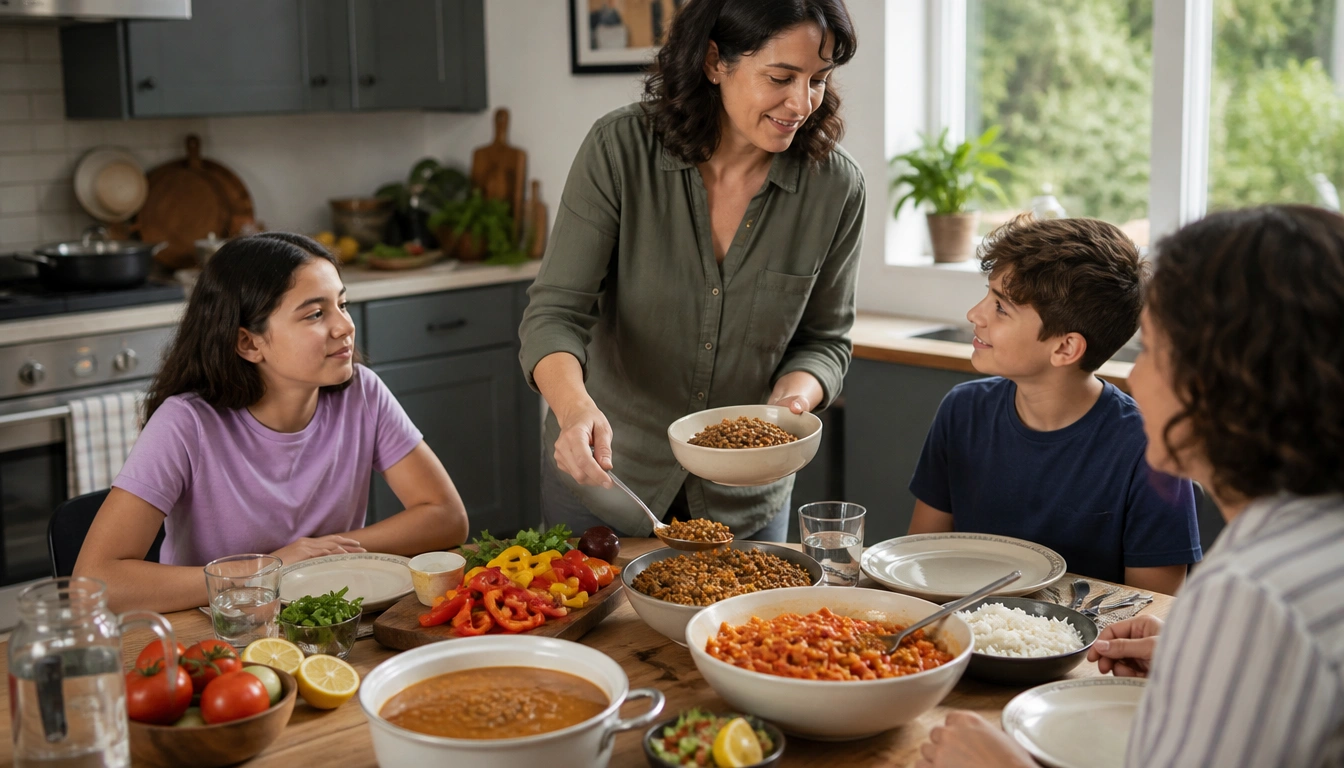
The easiest lentil meals for busy families are the ones built on familiar formats: taco filling, pasta sauce, soup, dal, and grain bowls. Red lentils are fastest and turn creamy, brown or green lentils hold up well in taco-style fillings and hearty sauces, and French green or black lentils work best in salads and skillet meals. Canned lentils can make these dinners much faster, with very little prep.
Key Takeaways
- Red lentils cook quickly and blend into creamy sauces, soups, and simple dals that are easy for kids to eat.
- Brown and green lentils are the best choice when you want a hearty, “meaty” texture for tacos, burritos, or sloppy-joe-style fillings.
- French green and black lentils keep their shape, so they work well in grain bowls, side salads, and skillet meals.
- Canned lentils are a real weeknight shortcut: rinse, warm, and add them to pasta sauce, soup, or taco filling.
- Pair lentils with vitamin C-rich foods like tomatoes, bell peppers, citrus, or broccoli to support better iron absorption.
- Introduce lentils gradually if your family is new to high-fiber foods, and offer water or other fluids alongside the meal.
Why lentils work so well for weeknight family meals
For busy parents, lentils solve several dinner problems at once. They are inexpensive, shelf-stable, quick to cook, and flexible enough to fit the meals many kids already recognize. That matters on nights when you need dinner to be fast, filling, and not too fussy.
According to the NIH and NHS, lentils fit well into a healthy eating pattern because they provide plant protein, fiber, and important nutrients such as iron and folate. They can help meals feel more satisfying without requiring a long shopping list or complicated prep. The biggest advantage is that lentils are adaptable: the same pantry ingredient can become taco filling one night and soup or pasta sauce the next.
They also fit the “use what you have” reality of family cooking. A bag of dried lentils or a few cans can turn leftovers, jarred sauce, or frozen vegetables into dinner with very little extra effort.
Which lentil type to use for each kind of meal
If you only want to keep a few lentils on hand, it helps to know what each one does best in the pan.
Red lentils are the fastest option. They soften quickly and break down into a creamy texture, which makes them useful for curries, thick soups, and smooth pasta sauces. They are a good choice when you want lentils to disappear into the dish.
Brown or green lentils are the most flexible for family dinners. They hold their shape well enough for taco fillings, burrito bowls, shepherd’s-pie-style toppings, and hearty chili. They also work when you want a texture that feels more like ground meat.
French green or black lentils stay firmer after cooking. Use them when you want distinct texture in salads, warm grain bowls, or skillet meals with vegetables. They are less likely to turn soft or mushy.
If you want the simplest pantry setup, many families can get by with two types: red lentils for quick creamy dishes and brown or green lentils for savory main meals.
Fast lentil meal formulas families actually eat
The easiest lentil meals are often built from familiar family favorites. That way, you are not asking picky eaters to adjust to a completely new dinner format.
Taco or burrito filling: Simmer brown or green lentils with taco seasoning, onion if you have it, salsa or tomato paste, and a splash of water or broth. Use the filling in tacos, burritos, nachos, quesadillas, or rice bowls. This is one of the best ways to make lentils feel “meaty” without extra work.
Pasta sauce: Stir red lentils into crushed tomatoes or tomato sauce with garlic, Italian seasoning, and any minced vegetables you already have. The lentils thicken the sauce as they cook, so you get a hearty pasta topping with little effort.
Dal: Red lentils, broth, mild curry spices, and a little coconut milk or tomato make a creamy one-pot meal. Serve with rice, naan, or flatbread. Keep the seasoning gentle if you are feeding children who prefer mild flavors.
Soup: Lentils work well in vegetable soup, chicken soup, or tomato soup. Brown or green lentils add body, while red lentils melt into the broth and make the soup thicker.
Grain bowls: Use cooked lentils as the protein base, then add rice, quinoa, roasted vegetables, or chopped salad ingredients. This is especially useful for clearing out small amounts of leftover produce.
When time is tight, choose one starch, one vegetable, and one lentil base. That keeps dinner practical instead of overcomplicated.
How to make lentil dinners kid-friendly
Kid-friendly lentil meals usually work best when they look and taste familiar. The goal is not to hide everything, but to keep the texture and seasoning approachable.
Start with mild seasoning. Garlic, onion, tomato, Italian herbs, mild curry powder, cumin, and paprika are usually easier for children than very spicy blends. If your child likes salsa, pasta sauce, or soup, those flavors can carry lentils naturally.
Use familiar formats: tacos, pasta, bowls, quesadillas, and soups tend to feel less “different” than a bowl of plain lentils. You can also mix lentils into ground meat dishes to stretch the meal and make the transition easier.
Texture matters. Some children prefer smooth sauces, while others accept small, soft pieces better than an obviously grainy texture. Red lentils are helpful for smooth dishes, while brown or green lentils can be lightly mashed if your family prefers a softer bite.
Mix-ins can also help. Stir lentils into pasta sauce, top them with cheese, tuck them into quesadillas, or serve them with rice and a favorite dipping sauce. Familiar toppings often matter more to kids than the ingredient list itself.
Pantry and freezer shortcuts that save real time
Canned lentils are not just a backup ingredient. They can be the main shortcut that makes a lentil dinner possible on a rushed weeknight. Rinse and drain them, then add them directly to soup, sauce, chili, or taco filling. That cuts out soaking and most of the cooking time.
Batch-cooked lentils are also useful if you have one free afternoon or want to prep once and eat twice. Cook a larger pot, cool it safely, and refrigerate or freeze portions for later in the week. Plain cooked lentils can be added to salads, reheated in sauce, or folded into casseroles and grain bowls.
Another time-saving trick is stretching what you already have. Stir lentils into jarred pasta sauce, mix them into leftover chili, or add them to frozen vegetables and rice. Lentils make small amounts of food go further, which can help when you are trying to feed a family on a budget.
If you keep one pantry meal base around, make it tomatoes, onions, broth, and lentils. That combination can become soup, sauce, or a skillet dinner depending on what else is in the kitchen.
Nutrition add-ins that make lentil meals more balanced
Lentils already bring protein, fiber, and minerals to the table, but a few add-ins can improve the balance of the meal without much extra work.
One especially useful strategy is pairing lentils with vitamin C-rich foods. Public health guidance notes that vitamin C helps the body absorb non-heme iron from plant foods more effectively. Easy options include tomatoes, bell peppers, citrus juice, broccoli, or even a fruit side dish after dinner.
That can be as simple as tomato-based pasta sauce, salsa on tacos, roasted broccoli on the side, or a squeeze of lemon over lentil soup. You do not need a special supplement or a complicated recipe for this to help.
For a fuller meal, add vegetables and a little fat too. Olive oil, avocado, cheese, yogurt, or tahini can make lentils more satisfying and improve flavor. Grain-and-lentil combinations also help create a more complete plate for the whole family.
If you are serving vegetarian meals often, think in terms of balance rather than perfection: lentils plus grains, vegetables, and a vitamin C source is a practical, family-friendly framework.
Introducing lentils to toddlers and high-fiber newcomers
Families who are not used to high-fiber foods may need a slow start. That is normal. Lentils are nutritious, but a sudden jump in fiber can cause temporary bloating or gas in some people, including children.
Start with small portions and build up gradually. For toddlers, a few spoonfuls mixed into a familiar dish may be enough at first. For adults or older children who are new to beans and lentils, it can help to begin with a modest serving alongside plenty of fluid.
Texture safety matters for very young children. Cook lentils until soft and serve them in forms the child can manage easily, such as mashed into sauce, mixed into rice, or spooned over soft vegetables. Avoid any choking risks from oversized or dry add-ins.
Hydration also helps. Offer water with the meal and keep the rest of the day’s fluids in mind if your family is increasing fiber intake. That does not need to be complicated; it just means not making lentils the only change in the meal pattern.
If a child has ongoing digestive problems, or if a family member has a diagnosed condition that affects how they tolerate beans or fiber, it is wise to ask a healthcare professional for individualized guidance.
Simple fixes for mushy lentils, bland flavor, and bloating
If the lentils are mushy: Choose a firmer variety next time, especially brown, green, French green, or black lentils. Also watch the simmer time. Red lentils are meant to break down, but firmer types should be cooked only until tender. If the texture is already soft, use the lentils in soup, sauce, or a mash instead of a salad.
If the flavor is bland: Lentils need seasoning. Start with onion, garlic, tomato, broth, herbs, or spices that match the rest of the dish. A little acid at the end, such as lemon juice or vinegar, can brighten the flavor. Salt helps too, especially in a large pot, but add it thoughtfully as the dish develops.
If there is gas or bloating: Keep portions smaller at first and increase them gradually. Rinsing canned lentils well can also help some people. Serve lentils with fluids and keep the rest of the meal simple until your family adjusts. If symptoms are persistent or severe, or if they interfere with regular eating, it is worth discussing with a clinician or dietitian.
If kids reject the texture: Blend part of the sauce, mash some of the lentils, or serve them in a format your children already like. Familiar presentation often helps more than changing the whole recipe.
Lentils are one of the most forgiving ingredients for busy family cooking. Once you know which type to choose and how to season it, dinner becomes much easier to put together.
Frequently Asked Questions
Which type of lentil works best for tacos, soups, or pasta sauces?
Brown or green lentils are usually best for taco fillings because they keep their shape and feel hearty. Red lentils are best for soups and pasta sauces when you want a thicker, creamier texture. French green or black lentils are better for salads and skillet meals.
Can I use canned lentils instead of dried lentils for faster meals?
Yes. Canned lentils are a very practical shortcut for weeknight cooking. Rinse and drain them, then add them to pasta sauce, soup, grain bowls, or taco filling. They save the soaking and cooking time that dried lentils need.
How do I make lentil meals kid-friendly without making them bland?
Use familiar formats like tacos, pasta, soup, or quesadillas and keep the seasoning mild. Tomato, garlic, onion, Italian herbs, or gentle curry flavors usually work well. Cheese, yogurt, salsa, or a favorite sauce can make the meal feel more familiar.
How can I reduce bloating or digestive discomfort when my family is new to lentils?
Start with small portions and increase them slowly over time. Offer water with the meal, and choose soft, well-cooked lentils at first. Rinsing canned lentils well may also help. If symptoms are ongoing or severe, ask a healthcare professional.
What foods help the body absorb the iron in lentils better?
Pair lentils with vitamin C-rich foods such as tomatoes, bell peppers, citrus, or broccoli. Even simple choices like salsa, tomato sauce, lemon juice, or roasted broccoli can help support iron absorption from plant foods.
The Bottom Line
Lentils are one of the easiest pantry ingredients for busy parents because they are fast, budget-friendly, and flexible enough to fit meals kids already know. If you want the quickest route, keep red lentils for creamy dishes and brown or green lentils for taco-style or hearty meals.
Canned lentils make weeknight cooking even easier, and a few simple add-ins can improve flavor, texture, and nutrition. Pair them with vitamin C-rich foods, introduce them gradually if your family is new to fiber, and adjust the texture to match your kids’ preferences.
Medical disclaimer
Medical disclaimer: This content is for educational and informational purposes only and is not a substitute for professional medical advice, diagnosis, or treatment. Dietary needs and supplement suitability vary by individual.
Sources
- National Institutes of Health (NIH) — nih.gov. Accessed October 2026.
- National Health Service (NHS) — www.nhs.uk. Accessed October 2026.
- National Health Service (NHS) — gloshospitals.nhs.uk. Accessed October 2026.
