
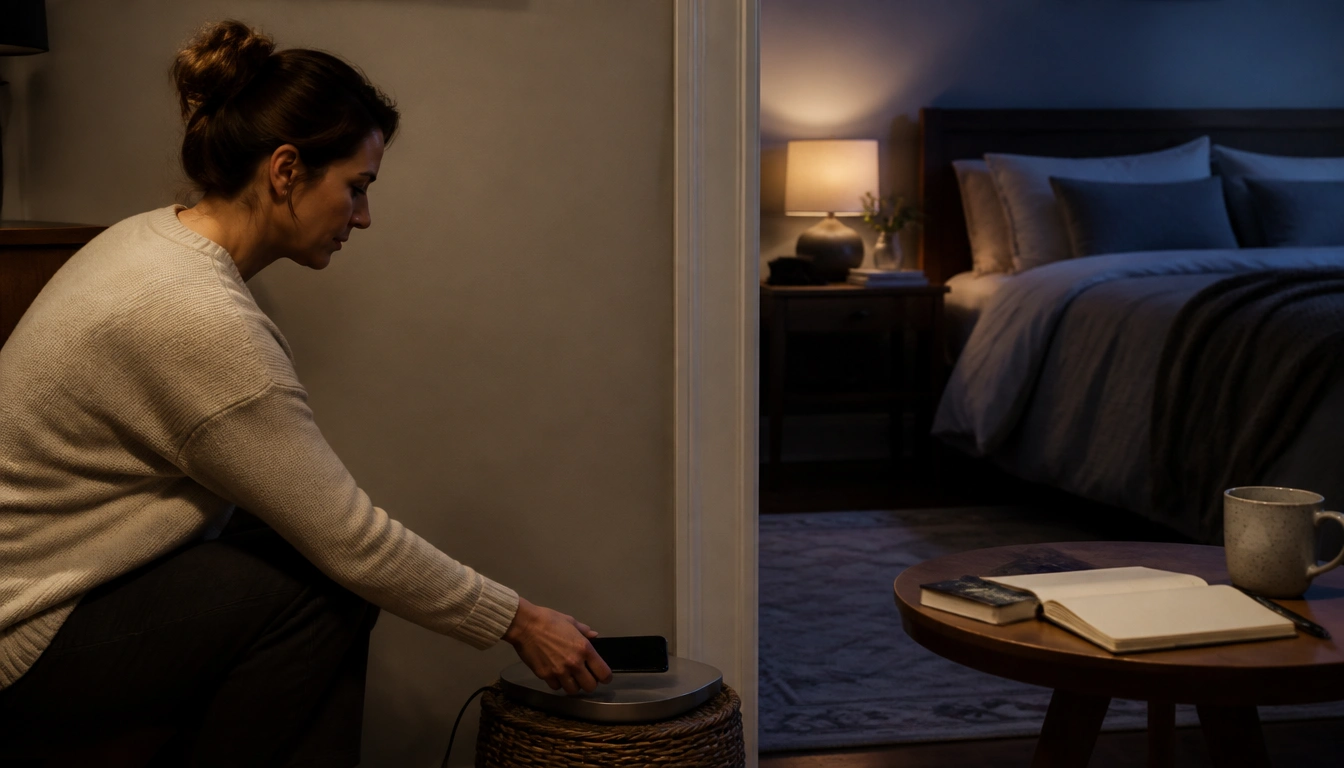
Start with a simple 3-part routine about 45 minutes before bed: cut screens, do a quick mental offload and basic hygiene, then spend the last 15 minutes in a quiet, dim, low-stimulation wind-down. Keep the routine small enough to repeat most nights. If you still cannot sleep after about 20 minutes, get out of bed and do something calm in low light until you feel sleepy again.
Key Takeaways
- A healthy evening routine works best when it is short, repeatable, and tied to your bedtime instead of based on motivation.
- The easiest beginner setup is: digital sunset, mental offload plus hygiene, then a quiet wind-down in a cool, dark room.
- If your phone keeps pulling you back in, move it out of the bedroom or switch to an old-fashioned alarm clock.
- Writing tomorrow’s to-do list or worries on paper can reduce racing thoughts when passive relaxation is not enough.
- If you work nights or rotating shifts, treat your sleep period like nighttime by blocking light and noise.
- Persistent insomnia, loud snoring, gasping at night, or major daytime sleepiness can signal a problem that needs medical evaluation.
Why a healthy evening routine matters for sleep, mood, and next-day energy
A healthy evening routine for beginners is less about perfection and more about giving your brain clear cues that the day is ending. Sleep is linked to mood, concentration, reaction time, and physical recovery, so a calmer night often shows up as a better morning. Public health guidance from the CDC and NHS emphasizes the basics: enough sleep, a consistent schedule, and habits that support your body’s internal clock.
The reason this works is biological, not just behavioral. Light tells the brain when to stay alert, which is why bright screens late at night can make sleep harder. A calmer environment helps melatonin rise naturally and supports the drop in core body temperature that prepares you for sleep. Think of the evening routine as a sequence of signals: less light, less stimulation, less mental load.
For beginners, the goal is not to build a perfect nighttime lifestyle. The goal is to make bedtime easier by reducing friction. If a routine is too long or complicated, it usually fails. If it is short and tied to a specific time, it becomes much easier to repeat.
The simplest healthy evening routine for beginners: a 3-step plan
A practical bedtime routine can be built around three steps that happen in order. Start about 45 minutes before you want to fall asleep. If 45 minutes feels like too much, use the same order in a shorter window and keep the actions small.
Step 1: Digital sunset. Put down entertainment screens and stop work-like tasks. This is the point where you begin reducing input, not the moment you have to become perfectly relaxed. If you want a beginner-friendly workaround for screen dependence, move your phone to another room and use an analog alarm clock. That removes the easiest excuse for “one last scroll.”
Step 2: Mental offload and gentle hygiene. Spend a few minutes writing tomorrow’s to-do list, or jot down worries that keep replaying in your head. This helps when your mind stays busy even after the room gets quiet. Then do your basic hygiene routine, such as brushing your teeth and washing your face, under soft lighting if possible.
Step 3: Low-stimulation wind-down. Use the final stretch for a quiet activity that does not rev you up. Good options include reading a paper book, listening to calm audio, light stretching, or breathing slowly. Keep the bedroom cool, dark, and quiet so the environment supports the routine rather than working against it.
What makes this plan useful is that it is specific. You are not asking yourself to “relax more.” You are moving through a small sequence that tells your body what comes next.
How to time each step and keep the routine flexible
Most people do best when the wind-down begins 30 to 60 minutes before bed, which matches guidance from major sleep organizations. That said, the exact timing matters less than the pattern. If your schedule changes, keep the order of the steps and adjust the clock time to fit your life.
A flexible version looks like this: first, reduce screens and bright light; next, clear your head and do your hygiene tasks; last, settle into something calm in a sleep-friendly room. If you only have 30 minutes, compress the steps rather than skipping them. If you have more time, do not add more tasks just because the clock allows it.
Consistency is especially helpful for your internal clock. A similar bedtime and wake time most nights gives your body a predictable rhythm. That does not mean every evening must look identical. It means the body keeps seeing the same message: night is starting.
If you are unsure where to begin, choose one anchor. Many people start with a fixed “screens off” time, then build the rest around it. Others begin with a consistent bedtime and let the routine shrink or expand around that target. Either approach can work if you repeat it often enough.
What to avoid in the evening, and how to make the routine stick
Several common habits make sleep harder, even when the routine itself looks good on paper. Caffeine too late in the day can keep the brain alert. Heavy meals close to bedtime can make you feel uncomfortable or too full. Alcohol can make you sleepy at first, but it often fragments sleep later in the night. Bright overhead lighting can also keep your brain in “day mode” longer than you want.
The point is not to create a list of forbidden nighttime behaviors. It is to notice which inputs keep your body awake. If you only change one thing at first, start with the easiest one to control. For many beginners, that is late screen use or late caffeine.
To make the routine stick when you are busy, distracted, or unmotivated, reduce decisions. Put the book where you normally sit at night. Keep your charger outside the bedroom. Lay out pajamas or toothbrush items in advance. Small setup steps remove the need for willpower in the moment.
It also helps to use “good enough” thinking. Missing one night does not mean the routine failed. The routine is doing its job if it becomes your default most evenings, not if it is perfect every time.
Healthy evening routine for beginners who work nights or rotating shifts
Shift workers need the same sleep signals, but they often need them during daytime sleep rather than nighttime sleep. The core idea is to create an artificial night. That means making the room as dark, quiet, and cool as possible so your body can treat sleep time as sleep time even when the sun is out.
Blackout curtains can block daylight, and an eye mask can help if light leaks around the edges. White noise or a fan can reduce the impact of street noise, house noise, or daytime activity outside your room. If your sleep schedule changes often, these environmental tools matter more, not less, because your body cannot rely on the clock outside.
Shift workers also benefit from a personal wind-down routine before the sleep block begins, even if that block happens in the morning or afternoon. Keep the same sequence: reduce light, offload the mind, do basic hygiene, then settle down. The body responds better to repeated cues than to random attempts to “just crash.”
If your schedule is irregular, focus on protecting the sleep period you do control. A consistent pre-sleep routine can still help even when the exact bedtime moves around.
What to do if you are in bed but not sleepy after 20 minutes
If you go to bed and cannot fall asleep after roughly 20 minutes, do not stay in bed staring at the ceiling. That can teach your brain to connect the bed with wakefulness, frustration, and effort. Instead, get up and do something quiet, dull, and low-light until you feel sleepy again.
Good options include reading a physical book, sitting in a dim room, listening to calm audio at low volume, or doing a simple relaxation exercise. Avoid bright screens and anything mentally activating. The goal is not to “make yourself sleep.” The goal is to stop reinforcing wakefulness in bed.
This rule matters because sleep often arrives more easily when you stop trying so hard. If your body is not ready yet, a short reset outside the bed can be more effective than pushing through the discomfort. When sleepiness returns, go back to bed.
If this happens often, that is useful information. It may mean your bedtime is too early, your routine is too stimulating, or something else is interfering with sleep.
When a sleep problem needs more than a better routine
A healthy evening routine helps many people, but it does not replace medical care when sleep trouble is persistent or severe. If you have practiced better sleep habits for several weeks and still cannot sleep well, it is worth talking with a healthcare professional. The same is true if you have loud snoring, gasping or choking at night, or major daytime sleepiness.
Those signs can point to sleep disorders such as sleep apnea, or to other medical, mental health, or medication-related causes of poor sleep. A routine can support treatment, but it should not be used to explain away ongoing symptoms.
Also pay attention if anxiety, low mood, pain, restless legs, reflux, or frequent bathroom trips are repeatedly interrupting your night. In those cases, the problem may not be just bedtime habits. A clinician can help sort out what is driving the sleep issue and what treatment fits best.
If you are unsure whether your sleep problem is serious enough, it is reasonable to ask for help sooner rather than later. Sleep is a basic health function, not a luxury.
Frequently Asked Questions
How long before bed should I start winding down?
A good starting point is 30 to 60 minutes before bed. Beginners often do well with a 45-minute routine because it gives enough time to reduce screens, clear mental clutter, and settle down without turning the evening into a project.
What should I do instead of scrolling on my phone before sleep?
Try a low-stimulation replacement such as reading a physical book, listening to calm audio, stretching lightly, or doing a short journal dump. If your phone is the problem, move it out of the bedroom and use a separate alarm clock so you are not relying on willpower.
What if I can’t fall asleep after going to bed?
If you are awake after about 20 minutes, get out of bed and do something quiet in low light until you feel sleepy again. This helps prevent your brain from linking the bed with being awake and frustrated.
How does an evening routine change for shift workers?
The routine stays similar, but the environment matters more. Treat your sleep time like nighttime by using blackout curtains, an eye mask, and white noise or a fan. Keep the same wind-down sequence even if your actual bedtime changes.
When is poor sleep more than just a bad routine and worth seeing a doctor about?
If sleep problems keep happening for weeks despite good habits, or if you have loud snoring, gasping, choking, severe daytime sleepiness, or other ongoing symptoms, it is worth medical evaluation. Those signs can point to an underlying sleep disorder or another health issue.
The Bottom Line
A healthy evening routine for beginners does not need to be elaborate. The most useful version is usually a short sequence: screens down, mental offload and hygiene, then a calm wind-down in a cool, dark room.
If you want the simplest place to start, choose one repeatable habit first, such as moving your phone out of the bedroom or writing tomorrow’s to-do list before bed. Small changes done consistently are more useful than a perfect routine you cannot maintain.
If sleep is still poor after several weeks of better habits, or you have signs such as snoring, gasping, or strong daytime fatigue, get checked by a healthcare professional. A routine can support sleep, but it should not replace evaluation when symptoms suggest a deeper problem.
Medical disclaimer
Medical disclaimer: This content is for educational and informational purposes only and is not a substitute for professional medical advice, diagnosis, or treatment. Dietary needs and supplement suitability vary by individual.
Sources
- National Health Service (NHS) — coventryfamilyhealthandlifestyleservices.nhs.uk. Accessed October 2026.
- National Health Service (NHS) — www.nhs.uk. Accessed October 2026.
- Centers for Disease Control and Prevention (CDC) — cdc.gov. Accessed October 2026.
- National Health Service (NHS) — www.nhs.uk. Accessed October 2026.
- National Health Service (NHS) — uhb.nhs.uk. Accessed October 2026.
- Academic Research Institution — harvard.edu. Accessed October 2026.
