
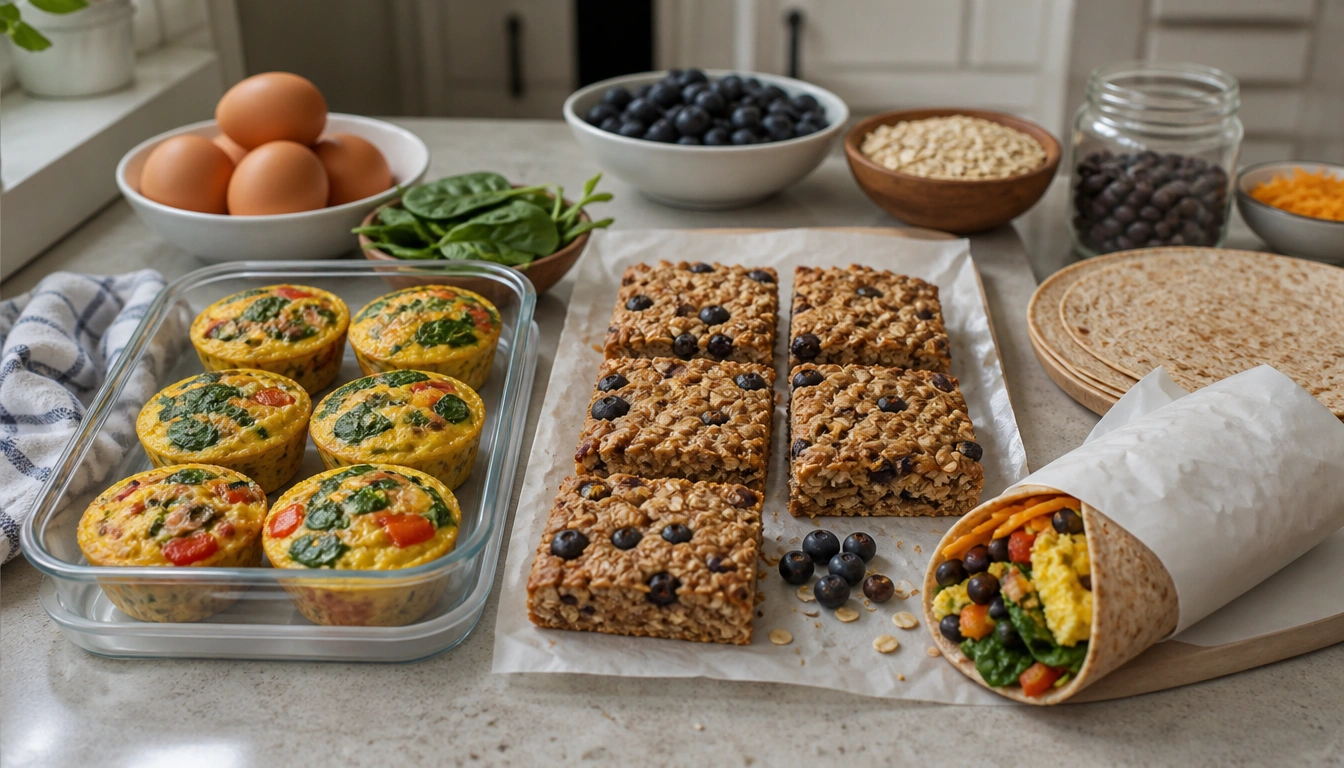
The best freezer-friendly breakfast ideas for adults over 50 are meals that combine protein, fiber, and produce in a form that reheats well: veggie egg muffins, baked oatmeal squares, and whole-grain breakfast burritos with beans and greens. These options can help support muscle maintenance, digestion, and steadier morning energy while reducing reliance on salty or sugary convenience foods.
Key Takeaways
- Choose breakfasts that pair protein with fiber so they are more filling and better balanced for older adults.
- Egg muffins, baked oatmeal squares, and breakfast burritos are practical make-ahead options because they freeze and reheat well.
- Softer textures matter for dry mouth, dental issues, or smaller appetites, so add moisture instead of making food drier.
- Use no-salt-added ingredients, rinsed beans, and careful seasoning to better fit blood pressure, diabetes, or kidney concerns.
- Batch-cook, cool quickly, portion individually, and label containers so freezer breakfasts stay safe and easy to use.
Why freezer-friendly breakfasts make sense after 50
Freezer-friendly breakfast ideas for adults over 50 solve a very ordinary problem: mornings can feel harder when appetite is low, energy is limited, or cooking from scratch is no longer appealing. A freezer breakfast lowers the daily decision burden while still giving you a real meal instead of grabbing something highly processed and often higher in sodium or added sugar.
That matters because older adults benefit from steady protein intake, enough fiber, and nutrient-dense foods across the day, according to the National Institute on Aging and CDC-aligned nutrition guidance. Breakfast is a practical place to start. Protein helps support muscle maintenance, while fiber from oats, beans, vegetables, and whole grains supports digestion and a steadier rise in blood sugar. A well-chosen make-ahead breakfast can also be easier to tolerate than a large hot meal first thing in the morning.
Freezer meals are not just about convenience. They can also make healthy eating more realistic on days when fatigue, pain, or time pressure would otherwise push breakfast choices toward packaged pastries, salty breakfast sandwiches, or skipped meals altogether.
What a good older-adult breakfast should provide
A useful framework is simple: build breakfast around protein, add a source of fiber-rich carbohydrate, and include produce when you can. For many adults over 50, that combination improves satiety without requiring a large portion. It also helps distribute protein more evenly across the day instead of saving most of it for dinner.
Eggs, low-fat dairy, fortified soy foods, beans, lentils, nuts, and seeds are all practical protein choices. Whole oats, whole-wheat tortillas, and vegetables add fiber and volume. Fruit can fit in as well, especially when it is baked into oatmeal or served on the side. The goal is not a “perfect” breakfast. The goal is a repeatable one that is easy to thaw, heat, and eat.
Texture matters too. Some older adults do better with softer, moist foods that are easier to chew. Others need smaller portions because appetite is reduced. A good freezer breakfast should still feel satisfying in a modest serving size.
Veggie egg muffins and baked oatmeal squares
Veggie-packed egg muffins are one of the best high-protein freezer breakfasts for older adults. They are small, flexible, and easy to reheat one or two at a time. Whisk eggs with a splash of milk, then fold in finely chopped spinach, bell peppers, onions, mushrooms, or other cooked vegetables. A little cheese can add flavor and moisture, but it does not need to dominate the recipe. Bake until set, cool completely, and freeze in a single layer before packing them into a container or bag.
Egg muffins work well for people who want a savory breakfast without much effort. They are especially useful when appetite is limited because the serving can be small but still protein-forward. If chewing is difficult, chop vegetables finely and avoid overbaking so the texture stays tender.
High-fiber baked oatmeal squares are the best fit when steady energy and digestion are the priority. Rolled oats bring soluble fiber, and the dish can be made softer than stovetop oatmeal by using enough liquid. Add cinnamon, chopped nuts or seeds if tolerated, and fruit such as berries or diced apples. Bake in a pan and cut into squares once cooled.
These squares are useful for adults who prefer something mild, sweet, and easy to chew. They also travel well and can be eaten plain or with yogurt for extra protein. If the person has a smaller appetite, a square or two may be enough to start the day without feeling heavy.
Breakfast burritos with beans and greens
Whole-grain breakfast burritos are the most balanced grab-and-go option in this group because they combine protein, fiber, and produce in one hand-held meal. Fill whole-wheat tortillas with scrambled eggs, rinsed beans, sautéed greens, and a little cheese or salsa. Wrap tightly, cool, and freeze individually.
Beans add plant protein and fiber, which makes burritos especially filling. Greens such as spinach or kale add volume and micronutrients. If you use canned beans, choose no-salt-added when possible and rinse them well to reduce sodium. If you want a softer texture, cook the greens until tender and keep the filling moist rather than dry.
Breakfast burritos are also easy to adapt for different preferences. Some people like a mild version with eggs and black beans only. Others prefer more vegetables or a little avocado added after reheating. The main advantage is that the components stay familiar while the breakfast feels more substantial than toast alone.
Making freezer breakfasts easier to chew or swallow
Older adults with dry mouth, dental changes, or sensitive teeth often do better with foods that are moist, soft, and not crumbly. That is why the texture of a freezer breakfast matters as much as the ingredient list. Dry, overbaked muffins or dense grain bars can be uncomfortable and can discourage eating altogether.
For egg muffins, keep the vegetable pieces small and avoid overcooking. For baked oatmeal, add enough liquid so the final texture is soft rather than cakey. For burritos, use fillings that stay tender after reheating instead of dry scrambled eggs alone. Yogurt, applesauce, cottage cheese, or a soft piece of fruit can round out the meal when appetite is low.
Portion size matters here too. A smaller serving that is easy to eat is more useful than a larger one that gets left behind. If swallowing is a concern, a healthcare professional or speech-language pathologist can help tailor texture choices safely.
Swaps for sodium, sugar, and chronic conditions
If you are cooking for someone with high blood pressure, diabetes, or kidney disease, ingredient choices deserve extra attention. The most helpful habit is to start with plain, minimally processed foods and season with herbs, pepper, garlic, onion, citrus, or vinegar instead of leaning on salt-heavy mixes.
For lower sodium, choose no-salt-added beans and vegetables when possible, and rinse canned beans before using them. For lower added sugar, use unsweetened oats, plain yogurt, and fruit for sweetness rather than syrup or sweetened pastry-style fillings. For blood sugar steadiness, pair carbohydrates with protein and fiber so the meal is less likely to act like a quick sugar hit.
People with kidney disease may need more individualized guidance on sodium, potassium, phosphorus, and protein. People taking warfarin should keep vitamin K-rich leafy greens consistent from week to week rather than swinging between none and a lot. If a recipe becomes part of a regular routine, consistency matters as much as the ingredients themselves.
Freezer prep, storage, and reheating workflow
A workable freezer system is simple enough to repeat. Batch-cook once, cool food quickly, portion it individually, label it, and reheat it safely. That workflow is what turns breakfast prep from a one-time project into a habit that actually lasts.
After cooking, let the food cool before freezing so steam does not create excess ice crystals or soggy texture. Wrap individual burritos tightly, place muffins or oatmeal squares in freezer-safe containers or bags, and label them with the name and date. Keep portions small enough that you can thaw only what you need.
For reheating, use the microwave or oven until the center is hot and steaming. Burritos usually reheat best when wrapped in a damp paper towel in the microwave. Egg muffins often need only a short heating time, while baked oatmeal may improve if thawed overnight or warmed gently with a splash of milk. For best quality, use frozen breakfasts within a reasonable storage window rather than letting them sit forgotten for months.
How to keep a freezer breakfast rotation interesting
The easiest way to avoid boredom is to keep the format the same while changing the flavor. That might mean spinach and feta egg muffins one week, mushroom and cheddar the next, or baked oatmeal with blueberries instead of apples. For burritos, rotate beans, vegetables, and seasoning combinations so the food feels familiar but not repetitive.
You can also build a small breakfast stash around a few base patterns: one savory egg option, one softer grain-based option, and one handheld option. That gives you enough variety without turning meal prep into a full-time job. If you live with a caregiver or cook for a parent or partner, label each batch clearly so the right item is easy to find on busy mornings.
For budget-minded cooking, use ingredients that are already in your kitchen: oats, eggs, canned beans, frozen vegetables, and whole-wheat tortillas are all practical freezer staples. The goal is not to stock a restaurant-style menu. The goal is to keep a few healthy breakfasts ready so mornings are easier, more filling, and less dependent on packaged convenience foods.
Frequently Asked Questions
What freezer breakfast recipes are high in protein for adults over 50?
Egg muffins, breakfast burritos with eggs and beans, and baked oatmeal served with yogurt or milk are strong options. They are practical because they offer protein without requiring a fresh-cooked breakfast every morning.
Which freezer breakfasts are best for fiber and steady energy?
Baked oatmeal squares and breakfast burritos with beans, whole grains, and vegetables are usually the best fit. They provide fiber and slower-digesting carbohydrates, which can help with fullness and more even energy.
How do you freeze and reheat breakfast meals safely without ruining texture?
Cool cooked food before freezing, portion it individually, and store it in airtight containers or wrapped portions. Reheat until hot in the center, and use moisture-friendly methods such as a damp paper towel for burritos or a splash of milk for oatmeal.
What should adults over 50 watch for if they have high blood pressure, diabetes, or kidney disease?
Watch sodium, added sugar, and portion size. People with kidney disease may need more individualized advice, and people on warfarin should keep leafy-green intake consistent instead of changing it sharply from week to week.
Which freezer-friendly breakfasts are easiest to chew or swallow?
Soft baked oatmeal and moist egg muffins are often the easiest. The best versions are not dry or overbaked, and they can be made with finely chopped vegetables and extra moisture for comfort.
The Bottom Line
For adults over 50, the best freezer breakfasts are the ones you will actually eat: egg muffins for protein, baked oatmeal for fiber and steady energy, and breakfast burritos for a more complete grab-and-go meal. All three can support a healthier morning routine without daily cooking.
Keep the food soft enough, seasoned simply, and stored safely. If you are managing blood pressure, diabetes, kidney disease, or medication-related dietary concerns, use these recipes as a starting point and adjust them with individualized medical guidance.
Medical disclaimer
Medical disclaimer: This content is for educational and informational purposes only and is not a substitute for professional medical advice, diagnosis, or treatment. Dietary needs and supplement suitability vary by individual.
Sources
- National Institutes of Health (NIH) — nih.gov. Accessed October 2026.
- Centers for Disease Control and Prevention (CDC) — cdc.gov. Accessed October 2026.
- National Institutes of Health (NIH) — nih.gov. Accessed October 2026.
- National Institutes of Health (NIH) — nih.gov. Accessed October 2026.
- National Institutes of Health (NIH) — nih.gov. Accessed October 2026.
