
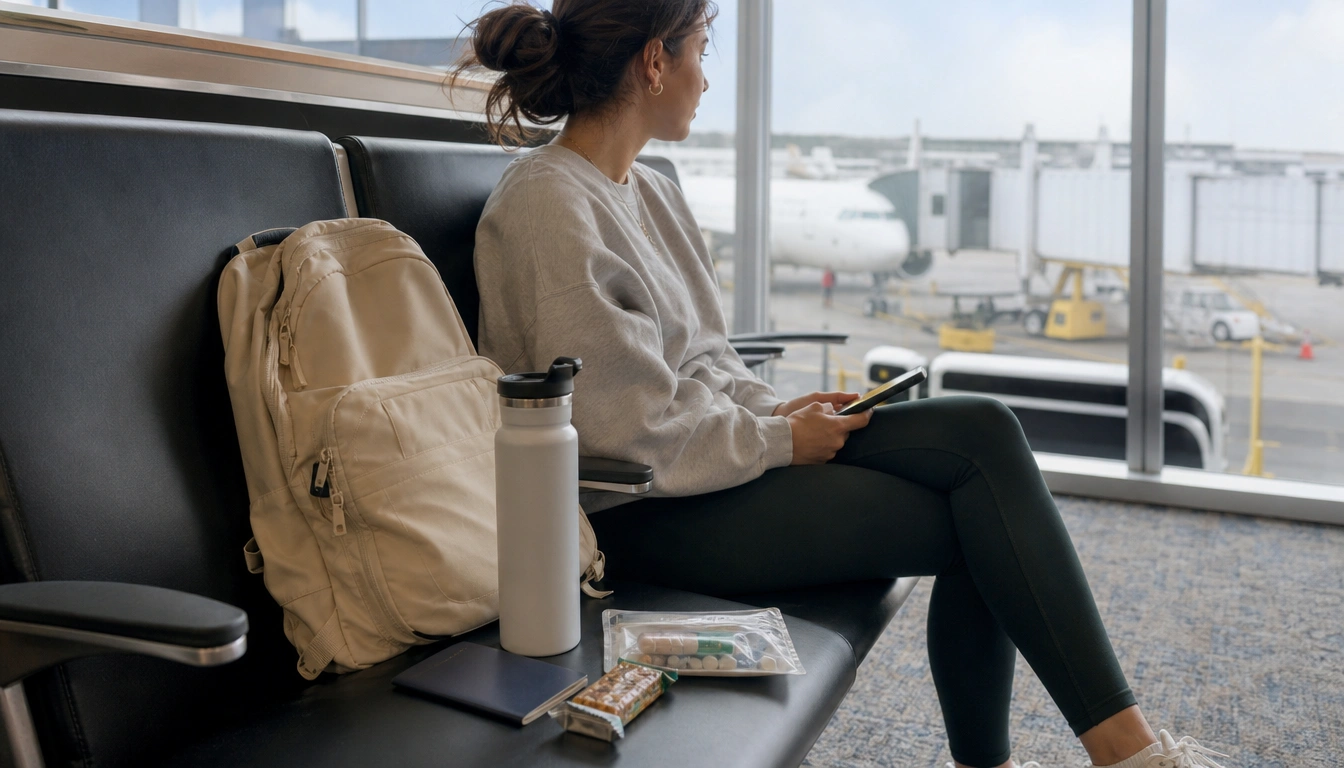
You can stay healthy while traveling as a college student by keeping the routine simple: plan 4 to 6 weeks ahead for international trips, pack medications and a few essentials in your carry-on, drink water and move regularly during transit, and protect sleep as much as possible. Build in a few food and hygiene habits you can repeat anywhere, and know the symptoms that mean you should delay travel or get medical care.
Key Takeaways
- Start early for international trips so you have time for a travel medicine visit, vaccine review, and any destination-specific prescriptions.
- Keep prescription medicines in original labeled containers in your carry-on, and pack a copy of your prescriptions or a doctor’s letter.
- During long flights or rides, use water, movement breaks, and hand hygiene to lower common travel stressors.
- Choose simple snacks and safer food options so you are less likely to rely on random convenience food or skip meals.
- Use light exposure, moderate activity, and a destination-based schedule to reduce jet lag after crossing time zones.
- If you have fever, dehydration symptoms, clot warning signs, or bloody stools, do not ignore them—get medical advice promptly.
Start with a realistic pre-travel plan
A healthy travel routine for college students works best when it starts before the suitcase is open. If you are going abroad or doing a study abroad program, schedule a travel medicine visit about 4 to 6 weeks before departure. That window gives you time to review routine vaccines, check whether you need destination-specific vaccines or preventive medication, and sort out any school or program forms that ask for health information.
For short domestic trips, the same idea still helps on a smaller scale: review your prescriptions, refill anything that might run out, and make sure you know how you will access care if you need it away from campus. The CDC recommends leaving enough time for travel health planning because some vaccines and preventive steps work best when they are not rushed. Academic medical guidance from places like the University of California, Berkeley and the University of Texas also emphasizes planning around the trip you are actually taking, not a perfect version of it.
Before you leave, check four basics:
- your vaccine status
- your prescription supply
- your insurance coverage
- your destination’s health and safety rules
If you are using a school-sponsored or international program, ask whether there is a student health or study abroad checklist. That is often the fastest way to avoid missing something simple, like an immunization record or a refill request. If you are traveling on a tight budget, start with the items that would be hardest to replace on the road: medications, insurance information, and any required documents.
Pack a small health kit you will actually carry
Your college travel health kit does not need to be elaborate. It just needs to cover the problems students run into most often: headaches, minor cuts, motion discomfort, unexpected delays, and forgotten medications. The most useful items are the ones that are easy to reach in a backpack or personal item, not buried in checked luggage.
Keep prescription medications in their original, labeled pharmacy containers and put them in your carry-on. This protects you if checked bags are delayed or lost, and it makes security or customs checks easier to explain. If you travel with several medicines, pack them together in one small pouch so they are easy to find. A copy of your prescriptions or a doctor’s letter can help if you need to replace a medication or answer questions while traveling internationally.
A compact student kit can include:
- prescription medications
- photo ID and insurance card
- copy of prescriptions or a doctor’s note
- hand sanitizer
- basic bandages and antiseptic wipes
- any personal items you use regularly, such as contacts or allergy medicine
Do not overpack this kit. One or two days of simple supplies in the bag you always carry is better than a bulky pouch you leave in the hostel, dorm, or rental car. If you have a condition that needs special supplies, talk with your clinician or student health center before you go so you know how to store and transport them safely.
Stay comfortable and protected in transit
Planes, buses, trains, and long drives can wear down even healthy travelers. Dry cabin air, long periods of sitting, crowded terminals, and irregular meals all make it easier to feel drained or catch an illness from someone nearby. The goal is not to control every exposure. It is to use a few habits that reduce the most common travel stressors.
Hydration matters because low cabin humidity and long stretches without drinking can leave you feeling sluggish and more prone to headaches. Bring an empty reusable bottle through security and fill it after screening when possible. Sip water during the trip instead of waiting until you feel thirsty. If you are tempted by a lot of coffee, energy drinks, or alcohol, keep in mind that they can make sleep and hydration worse, especially on long travel days.
Movement also matters. During long flights or road trips, get up when you safely can, stretch, and walk briefly. If standing up is not possible, flex your ankles and move your legs while seated. Loose clothing and regular movement help support circulation during long periods of sitting. That is especially useful on long-haul trips where cramped seating and stillness are hard to avoid.
Hygiene is the last piece. Crowded gates, shuttle buses, and rest stops are exactly the kind of places where hand contact spreads germs. Wash your hands with soap and water when you can, and use an alcohol-based sanitizer when you cannot. Try not to touch your eyes, nose, and mouth with unwashed hands. This is a simple habit, but it matters most when travel makes it easy to forget normal routines.
Eat simply and protect your sleep on the road
Students often lose their usual rhythm when travel starts: meals happen late, snacks come from vending machines, and sleep gets pushed aside for the sake of plans. You do not need a perfect diet to stay healthy on the road. You need enough structure to avoid the all-day crash that happens when you skip meals, eat random snacks, and stay up too late.
Pack food that travels well. Nuts, trail mix, whole-grain bars, dried fruit, and other shelf-stable snacks can help bridge long gaps between meals. They are useful when airport food is expensive, when rest stops are limited, or when your arrival time is not meal-friendly. If you are traveling internationally, be more cautious with foods that may have been washed in unsafe water or stored poorly. Thoroughly cooked hot foods are usually a better bet than raw produce or cold items from uncertain sources.
You do not have to avoid every local food, but you should be thoughtful about where and how it was prepared. If the sanitation situation looks uncertain, be especially careful with raw vegetables, unpeeled fruit, uncooked sauces, and salads. That is not about fear; it is about lowering your odds of a stomach bug that can wreck a short trip or make classes miserable when you return.
Sleep deserves similar protection. Even if you cannot get a full night, keep your sleep schedule as regular as possible, and avoid turning the entire trip into a reset of every habit. Short naps can help, but very long daytime sleep can make it harder to adapt to a new schedule. On travel days, aim for enough rest to function safely and keep your choices steady, not perfect.
Reduce jet lag by using the new time zone on purpose
Jet lag is easier to manage when you start thinking in the destination’s time zone instead of your home campus schedule. The more time zones you cross, the more your body clock may lag behind your plans. That can show up as fatigue, poor sleep, stomach upset, or feeling mentally slow for a day or two.
One of the most practical strategies is to shift your habits toward local time as soon as you can. Eat meals, go to sleep, and wake up based on the destination schedule rather than your phone’s old routine. Light exposure is one of the strongest cues for your internal clock, so use it deliberately. After eastward travel, afternoon light can help your body adjust. After westward travel, morning light can help. Keep activity moderate rather than pushing an intense workout right away, because exhaustion can make the adjustment harder.
If you are returning to campus after break, the same logic applies in reverse. Give yourself one or two days to re-stabilize if possible, especially after crossing several time zones. Students who jump straight into a packed class schedule, late-night study session, and social plans often feel worse than they need to. A calmer first day back usually helps more than trying to force productivity through fatigue.
Small choices also matter: avoid a heavy late meal, limit extra caffeine late in the day, and try to get outside for daylight if that fits the schedule. These are not magic fixes, but they help your body recognize where it is and when it is supposed to sleep.
Know when travel should wait or medical care should come first
Most routine travel problems are manageable, but some symptoms are a reason to stop and reassess. If you develop a high fever, severe diarrhea, or a contagious respiratory illness right before departure, talk with a healthcare professional before you travel. Sometimes the safest move is to postpone the trip, especially if you could get sicker on the road or expose other people.
Some symptoms need urgent attention, not just rest. Seek prompt medical care if you have signs of severe dehydration, such as dizziness, extreme dark urine, or inability to keep fluids down. Also seek help right away for unilateral leg swelling, calf pain, or sudden shortness of breath, which can be warning signs of a blood clot. Bloody stools, severe persistent abdominal pain, or a fever that does not improve are also red flags that should not be brushed off as “travel stomach.”
If you are far from home, keep your student health center, after-hours nurse line, and travel insurance contact information saved on your phone. That way you are not trying to search for help while sick, tired, or offline. If symptoms are mild and short-lived, you may not need emergency care, but you should still know where your campus health resources are before you leave.
For students with chronic conditions, the line between “normal travel discomfort” and “call for help” should be discussed in advance with your own clinician. That is especially important if you have a history of severe allergies, asthma, clotting problems, diabetes, or a condition that could affect your ability to hydrate or stay on schedule.
Make the routine fit college life, not the other way around
The best travel health plan for students is the one that works when you are busy, on a budget, and packing at the last minute. Think of it as a small checklist, not a full lifestyle overhaul. For weekend trips, your priorities are medications, hydration, food you can trust, and a way to stay rested enough to function. For spring break or study abroad, add the extra layer of early planning, document checks, and time-zone strategy.
If money is tight, focus on high-value basics: refill medicines early, bring a reusable bottle, pack shelf-stable snacks, and keep your health documents in one digital and one paper place. If space is tight, choose items that serve more than one purpose, such as sanitizer that fits in a pocket or snacks that double as a meal bridge. If your schedule is unpredictable, set a reminder for the day before you leave to check your medications, charger, insurance card, and return plans.
Students who travel often also benefit from a habit of doing a quick “health reset” when they arrive: drink water, wash hands, eat something decent, and figure out when they will sleep. Those first few actions reduce the chance that the trip turns into several days of catching up. A healthy routine does not need to be complicated to be effective. It just needs to be repeatable.
Frequently Asked Questions
What should a college student do 4 to 6 weeks before international travel?
Book a travel medicine visit, review routine vaccines, and ask whether you need destination-specific vaccines or preventive medicine. This is also the time to refill prescriptions, check insurance coverage, and make sure your travel documents and school forms are in order.
How can I avoid getting sick during a long flight or road trip?
Drink water regularly, move or stretch when you safely can, and use hand sanitizer after touching shared surfaces. Try to avoid touching your face, and do not rely on one giant meal followed by hours without food or fluids.
What are the best travel snacks and hydration habits for students?
Choose shelf-stable foods such as nuts, trail mix, dried fruit, or whole-grain bars. For hydration, keep a refillable bottle with you and sip consistently instead of waiting until you feel thirsty. Go easier on excess caffeine and alcohol, especially on long travel days.
How do I reduce jet lag and get back on schedule after travel?
Shift toward the destination time zone as soon as you can, use light exposure strategically, and keep activity moderate. Try to eat and sleep on local time, and give yourself a little adjustment time when you return to campus after crossing several time zones.
When should I not travel because of illness or other health risks?
Postpone or get medical advice before traveling if you have a high fever, severe diarrhea, or a contagious respiratory illness right before departure. Seek urgent care for severe dehydration, bloody stools, unilateral leg swelling, calf pain, or sudden shortness of breath.
The Bottom Line
A healthy travel routine for college students does not need to be fancy. The basics do most of the work: plan early for international trips, pack medications and documents in your carry-on, drink water, move during transit, and protect sleep.
For short trips, focus on the few habits that are easiest to repeat anywhere: hand hygiene, steady snacks, and a simple plan for rest. For study abroad or international travel, give yourself more lead time so vaccines, prescriptions, and insurance details are handled before departure.
If you start to feel truly unwell, do not push through red-flag symptoms just to stay on schedule. Getting medical advice early is often the smartest way to protect both the trip and your health.
Medical disclaimer
Medical disclaimer: This content is for educational and informational purposes only and is not a substitute for professional medical advice, diagnosis, or treatment. Dietary needs and supplement suitability vary by individual.
Sources
- Academic Research Institution — colorado.edu. Accessed October 2026.
- Academic Research Institution — berkeley.edu. Accessed October 2026.
- Academic Research Institution — udel.edu. Accessed October 2026.
- Academic Research Institution — utexas.edu. Accessed October 2026.
