
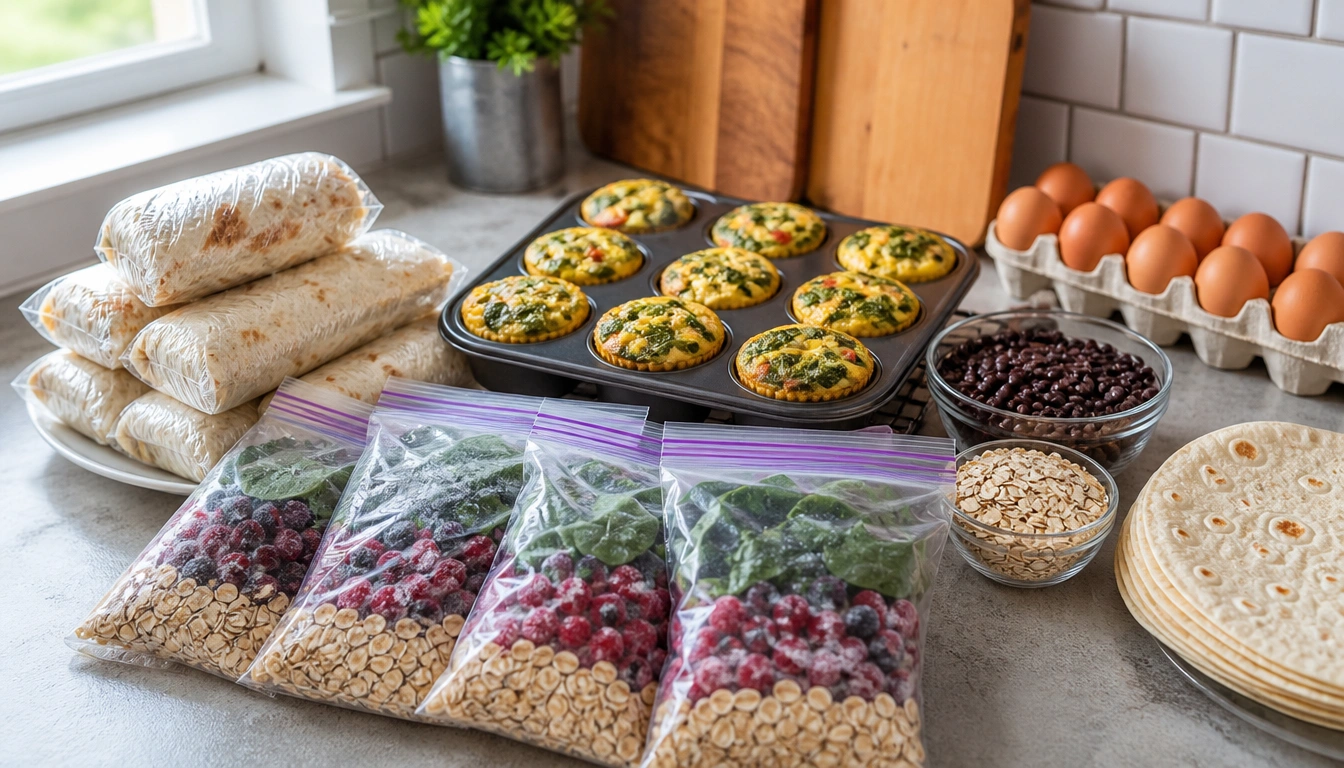
The cheapest healthy breakfast ideas to make ahead and freeze are usually breakfast burritos, baked egg muffins or crustless quiches, and smoothie packs built from oats, eggs, beans, tortillas, frozen fruit, and vegetables. These options are budget-friendly because they rely on bulk staples, and they stay nutritionally useful when cooled, packed airtight, frozen promptly, and reheated until hot throughout.
Key Takeaways
- Pair high-fiber carbs with protein to stay full longer and reduce the mid-morning crash that often leads to snacking.
- Bulk staples such as oats, eggs, beans, tortillas, and frozen fruit usually cost less per serving than packaged breakfast convenience foods.
- Homemade freezer breakfasts can keep their best quality for about 1 to 3 months when cooled fully and stored airtight.
- Texture matters: burritos reheat best with a damp wrap, egg muffins warm quickly from frozen, and smoothie packs should be blended straight from the freezer.
- You can adjust these ideas for certified gluten-free needs, lower sodium goals, or higher-calorie portions for teens and active adults.
What makes a freezer breakfast cheap, filling, and balanced
A budget freezer breakfast works best when it does three jobs at once: it stretches inexpensive ingredients, keeps you satisfied, and holds up after freezing. The most dependable formula is a high-fiber carbohydrate plus a protein source, with produce or a small amount of fat for taste and staying power. That combination slows digestion, helps steady blood sugar after eating, and makes it less likely you will be hungry again an hour later.
That is why oatmeal, whole-grain tortillas, beans, eggs, and fruit show up again and again in low-cost meal prep. They are simple foods with a lot of practical value. A breakfast sandwich from the shop may look convenient, but you are often paying for packaging, labor, and extra sodium or sugar. At home, you can build a breakfast that is cheaper per serving and closer to your own preferences.
For budget shoppers, “balanced” does not mean complicated. It usually means one of these patterns: oats plus yogurt or eggs, tortillas plus eggs and beans, or fruit plus oats and milk in a smoothie pack. If a breakfast has fiber and protein, it is much more likely to keep you steady through the morning.
The low-cost staples that do most of the work
Some ingredients earn a place in freezer breakfasts because they do several jobs at once. Oats are inexpensive, filling, and easy to portion into smoothie packs or baked breakfasts. Eggs are versatile and provide protein without needing many extras. Beans add protein, fiber, and bulk for very little money, especially if you buy dried or canned versions on sale.
Whole-wheat or standard tortillas are useful because they turn leftovers into handheld meals. Frozen fruit is often a better value than fresh fruit out of season, and it saves prep time because it is already washed, peeled, or cut. Frozen vegetables such as spinach, peppers, and onions also help you stretch a recipe without much cost.
The cheapest breakfast plan usually relies on store-brand items, bulk packaging, and ingredients you can reuse in more than one recipe. For example, a dozen eggs can become burritos one week and egg muffins the next. A bag of frozen spinach can go into egg cups, omelets, or smoothie packs. That kind of overlap lowers waste and keeps the grocery list simple.
Smart staple combinations:
- Oats, banana, and peanut butter for a low-cost, filling base
- Eggs, beans, and tortillas for a savory breakfast wrap
- Eggs, vegetables, and cheese for muffin-tin breakfasts
- Frozen berries, oats, and yogurt for a fast smoothie
Three freezer breakfast ideas that stay affordable and practical
Breakfast burritos are one of the best budget make-ahead options because they can use leftover potatoes, onions, peppers, beans, and scrambled eggs. A small amount of cheese adds flavor, but you do not need much. Wrap the filling in a tortilla and you have a breakfast that is portable, freezer-friendly, and easy to scale up. You can make them vegetarian, use leftover cooked sausage in small amounts, or keep them bean-and-egg based for a lower-cost version.
Baked egg muffins or crustless quiches work especially well when you have odds and ends in the fridge. Chop or grate vegetables finely so they bake evenly. Spinach, zucchini, mushrooms, peppers, and leftover broccoli all work. These are useful for people who want a lighter breakfast than a burrito, or for households that need a batch of individual portions ready to grab.
Freezer smoothie packs are the easiest option if the goal is speed. Pack frozen fruit, a handful of spinach, and a portion of oats into bags or containers. In the morning, add milk, yogurt, or water and blend. To keep them affordable, buy larger bags of frozen fruit, use bananas that are very ripe, and avoid expensive add-ins unless you already have them.
Simple variation ideas:
- Add black beans and salsa to burritos for more fiber
- Use cottage cheese or a little milk in egg muffins for extra protein
- Use berries plus banana in smoothie packs for sweetness without added sugar
- Fold in leftover cooked potatoes or roasted vegetables when you need to use them up
How to batch-cook, cool, wrap, label, and freeze safely
Safe freezing starts before the food goes into the freezer. Cook fillings fully, then let them cool before packaging so steam does not condense inside the wrap or container. Too much trapped moisture can damage texture and encourage freezer burn. Once the food is cool, portion it into single servings so you can reheat only what you need.
For burritos, wrap each one tightly in parchment paper or foil before placing them together in a freezer bag. For egg muffins or crustless quiches, freeze them on a tray first if you have space, then transfer them to a bag or airtight container once firm. For smoothie packs, remove as much air as possible from the bag before sealing.
Label each package with the name and date. That sounds basic, but it prevents forgotten food from sitting at the back of the freezer for months. For best quality, plan to use homemade frozen breakfasts within about 1 to 3 months. They may remain safe longer if kept continuously frozen, but texture and flavor usually decline over time.
Freezer-safety reminders:
- Cool cooked food before freezing
- Use airtight packaging to limit freezer burn
- Freeze in portions you will actually eat
- Keep the freezer at a consistent cold temperature
- Do not leave egg dishes or cooked fillings at room temperature for long periods
The best way to reheat each breakfast type
Reheating matters almost as much as freezing. If food is warmed unevenly, the texture suffers and food safety can be an issue. The goal is to heat the breakfast all the way through without turning it dry or soggy.
Breakfast burritos usually reheat best after removing foil or parchment. Wrap the burrito in a damp paper towel and microwave it until heated through. If you thaw it overnight in the fridge first, you can finish it in a dry skillet or toaster oven for better texture. That helps the tortilla crisp instead of steaming.
Egg muffins are the simplest: microwave one or two from frozen until hot in the center. If you prefer a firmer texture, heat them briefly in the microwave and finish in a toaster oven. Crustless quiches can be reheated in slices the same way, though thicker pieces may need a little longer.
Smoothie packs should usually be blended straight from frozen. Add enough liquid to get the texture you like, and do not let the ingredients sit on the counter and thaw for too long before blending. If you make a smoothie with dairy or yogurt, drink it promptly or keep it chilled until serving.
Food safety check: reheated egg-based foods should be hot throughout, not just warm at the edges. If the center still feels cool, heat a little longer rather than serving it underheated.
How to adapt freezer breakfasts for gluten-free diets, sodium goals, and different energy needs
Freezer breakfasts are easy to tailor, but the details matter. For people who avoid gluten, use certified gluten-free oats and certified gluten-free tortillas if burritos are on the menu. Regular oats are naturally gluten-free, but cross-contact is common, so certification matters when gluten is a medical issue.
If you are watching sodium, homemade breakfasts have a real advantage over many store-bought frozen sandwiches. You control the salt, the cheese amount, and whether you add processed meats. Use herbs, pepper, garlic, onions, salsa, or no-salt seasoning blends to add flavor without leaning too heavily on sodium. Beans should be rinsed well if you use canned versions.
Portions can also shift based on energy needs. Teenagers, active adults, and people with physically demanding jobs may need larger burritos, more egg muffins, or richer smoothie packs with extra oats, nut butter, or full-fat yogurt. More sedentary adults may prefer smaller portions with extra vegetables and less cheese. The best portion is the one that fits the person eating it, not a single standard serving for everyone.
Useful swaps:
- Certified gluten-free tortillas instead of standard wraps
- Certified gluten-free oats instead of regular oats when needed
- Low-sodium beans, rinsed canned beans, or homemade beans without added salt
- Extra vegetables for more volume with fewer calories
- More oats, yogurt, cheese, or nut butter for higher energy needs
Ways to save more money and cut food waste
Freezer breakfasts become even cheaper when you build them around what you already have. Leftover roasted vegetables can go into burritos or egg muffins. Overripe bananas are perfect for smoothie packs or oatmeal-based breakfasts. Bits of cheese, small amounts of cooked beans, and the last handful of spinach all have a place in this kind of cooking.
Store-brand ingredients usually make the biggest difference in cost per serving. A large bag of frozen fruit, a carton of eggs, a bag of oats, and a pack of tortillas can create several different breakfasts without much extra planning. If a recipe calls for a pricey ingredient you do not already own, ask whether it is truly necessary or just decorative.
It also helps to cook with overlap in mind. For example, if you make a batch of beans for dinner, reserve some for breakfast burritos. If you buy a large container of yogurt, use it in smoothies and as a topping. The more ingredients you reuse across meals, the less likely you are to throw food away.
Waste-saving habits that pay off:
- Freeze ripe produce before it spoils
- Use leftovers in breakfast fillings
- Choose recipes that share ingredients
- Buy the larger package only when you will use it
When homemade freezer breakfasts are not enough
For many people, freezer breakfasts are a useful everyday solution. Still, some situations need individualized advice. If you live with advanced chronic kidney disease, poorly managed diabetes, a serious food allergy, or another condition that changes how much protein, potassium, phosphorus, sodium, or carbohydrate you should eat, a generic recipe may not fit your needs well.
It is also worth getting guidance if a breakfast plan leaves you overly hungry, causes blood sugar swings, or does not match your schedule or activity level. A registered dietitian or clinician can help you adjust portions and ingredients without making breakfast more complicated than it needs to be. The goal is a routine that is affordable, safe, and realistic for your household.
If you are caring for children, older adults, or anyone with chewing, swallowing, or appetite issues, extra customization may be needed. Texture, portion size, and sodium content can matter as much as the recipe itself.
Frequently Asked Questions
How do I freeze breakfast burritos, egg muffins, or smoothie packs correctly?
Cool cooked fillings first, then portion them into airtight packages. Wrap burritos individually, freeze egg muffins until firm before bagging them, and keep smoothie packs sealed with as little air as possible. Label everything with the date so you can use the oldest items first.
What budget ingredients make freezer breakfasts both filling and nutritious?
The best low-cost staples are oats, eggs, beans, tortillas, frozen fruit, and frozen vegetables. These ingredients are inexpensive, flexible, and easy to combine into meals with protein, fiber, and produce. Store-brand versions often lower the cost even more.
How long can homemade frozen breakfasts stay in the freezer safely and still taste good?
If they are cooled properly and stored airtight, they are usually best within about 1 to 3 months for quality. They may remain safe longer if kept continuously frozen, but texture and flavor usually get worse over time.
How do I reheat frozen breakfast foods so they are hot throughout and not soggy?
Use the method that fits the food. Burritos reheat well in the microwave wrapped in a damp paper towel, then crisped in a skillet if desired. Egg muffins usually need only a short microwave time. Smoothie packs should be blended straight from frozen rather than thawed slowly on the counter.
What should people with gluten intolerance or blood pressure concerns change in these recipes?
Choose certified gluten-free oats and tortillas if gluten is a medical concern. For sodium awareness, make the fillings yourself, use low-sodium beans when possible, rinse canned beans, and go easy on cheese or processed meats. Homemade versions make salt control much easier than most store-bought breakfast foods.
The Bottom Line
The cheapest healthy freezer breakfasts are usually the simplest ones: burritos, egg muffins, and smoothie packs built from oats, eggs, beans, tortillas, frozen fruit, and vegetables. Those foods are affordable, filling, and easy to batch without much waste.
For the best results, focus on balance and technique. Pair fiber with protein, cool food before freezing, store it airtight, and reheat it until hot throughout. That keeps the meal safer, tastier, and more satisfying than a rushed grab-and-go breakfast from the store.
If you need to change the plan for gluten-free eating, lower sodium, or higher calorie needs, use the same framework and adjust the ingredients and portions. When a health condition makes breakfast more complicated, individualized advice is the safest next step.
Medical disclaimer
Medical disclaimer: This content is for educational and informational purposes only and is not a substitute for professional medical advice, diagnosis, or treatment. Dietary needs and supplement suitability vary by individual.
Sources
- National Health Service (NHS) — scot.nhs.uk. Accessed October 2026.
- National Health Service (NHS) — www.nhs.uk. Accessed October 2026.
- National Health Service (NHS) — wchc.nhs.uk. Accessed October 2026.
- Academic Research Institution — usu.edu. Accessed October 2026.
