
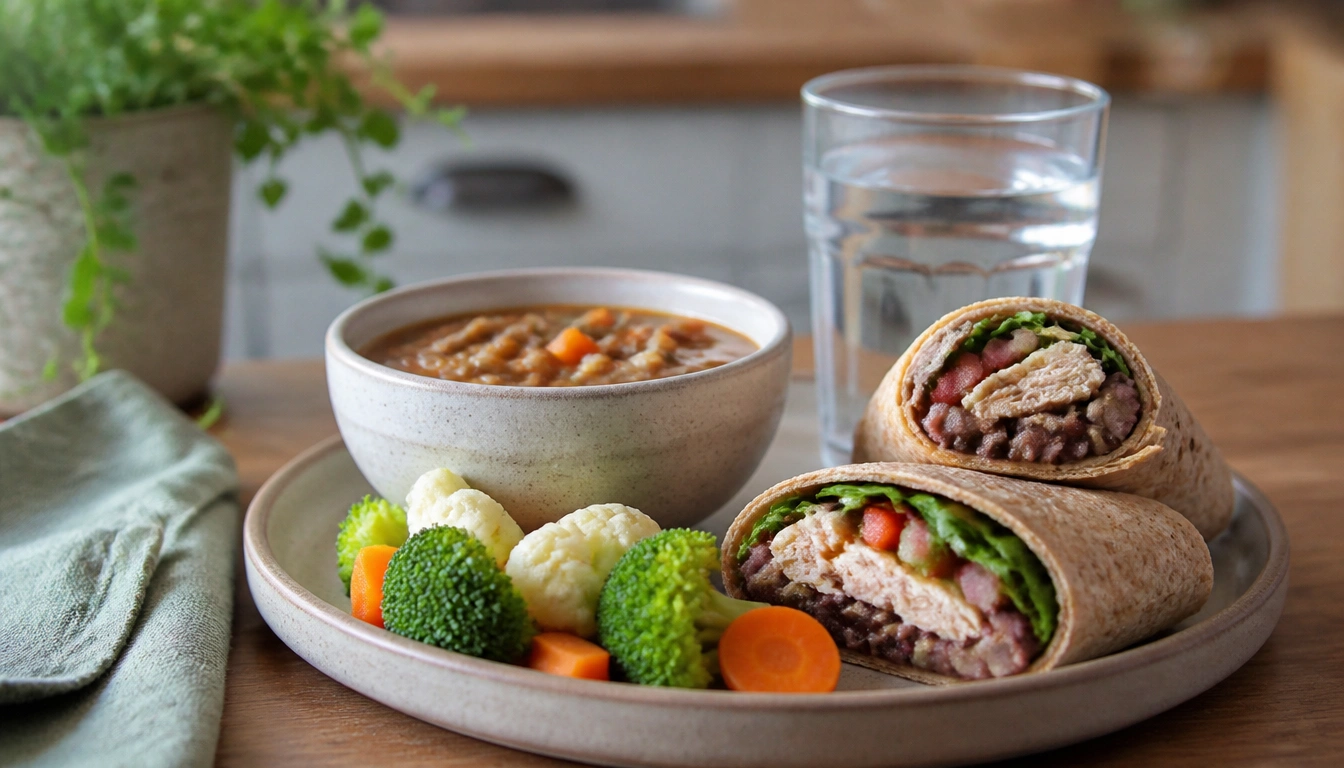
Easy high-fiber lunch ideas for adults over 50 often start with beans, lentils, whole grains, vegetables, fruit, and a protein source. A good lunch goal is usually about one-third of daily fiber needs, which can be roughly 8 to 12 grams for many adults over 50. The best choices are filling, easy to assemble, and soft enough to chew comfortably when needed.
Key Takeaways
- Adults 51+ have different fiber targets by sex: about 30 grams a day for men and 21 grams for women, according to the National Academies.
- A lunch that provides roughly 8 to 12 grams of fiber can help move you toward daily needs without making the meal too heavy.
- Soft-texture choices such as well-cooked lentils, mashed beans, tender vegetables, and shredded slaws can work well for dentures or chewing fatigue.
- Fiber works best when paired with protein, healthy fats, and enough fluid to support fullness and digestive comfort.
- Increase fiber gradually over several weeks; a fast jump can cause bloating, gas, cramping, or constipation if fluids are not also increased.
Age-specific fiber needs after 50
For adults over 50, high-fiber lunch ideas are most useful when they fit the day, not just a nutrition label. The National Academies set fiber targets at about 30 grams a day for men age 51 and older and 21 grams a day for women age 51 and older. That means lunch can do meaningful work: a meal that supplies about 8 to 12 grams of fiber may cover roughly one-third of the day’s goal.
This matters because appetite, schedule, and digestion often change with age. Some adults eat smaller meals, some feel full sooner, and some notice slower bowel function. A lunch with fiber can support regularity, help keep energy steadier, and make it easier to avoid grazing on low-nutrient snacks later in the afternoon. The goal is not to force a huge salad; it is to make lunch count in a realistic way.
How to build a high-fiber lunch
A simple formula works well: fiber + protein + healthy fat + fluid. Fiber provides bulk and helps with fullness. Protein helps the meal feel satisfying. Healthy fat improves flavor and can make a meal easier to enjoy. Fluid matters because fiber absorbs water in the digestive tract.
A balanced lunch might include beans or lentils, whole grains, vegetables, and a protein such as tuna, chicken, yogurt, eggs, tofu, or cheese. Add olive oil, avocado, nuts, or seeds if they fit your needs. Drink water, milk, unsweetened tea, or another nonalcoholic beverage with the meal. According to the NIH and other public health sources, fiber is most helpful as part of an overall eating pattern, not as a stand-alone nutrient.
If you are building lunch from leftovers, think in layers. Start with a high-fiber base, add a protein, then include a vegetable or fruit, and finish with a sauce or dressing that keeps the meal moist. That structure makes the lunch more filling without requiring much cooking.
Soft, chewing-friendly fiber sources
Adults with dentures, missing teeth, jaw fatigue, or sensitive gums often do better with softer fiber foods. That does not mean giving up fiber; it means choosing forms that are easier to chew and swallow.
- Well-cooked lentils and split peas
- Mashed or refried beans
- Soft-cooked oats or barley in savory bowls
- Tender vegetables such as steamed carrots, zucchini, spinach, or broccoli florets
- Shredded cabbage or finely sliced slaw instead of large raw chunks
- Soft fruit such as berries, ripe pears, peaches, or applesauce
These foods can be mixed into soups, grain bowls, wraps, or sandwiches. If raw vegetables feel too crisp, cook them longer or shred them finely. If whole beans feel hard to manage, mash part of them for a smoother texture. Soft textures can still deliver a meaningful amount of fiber without making lunch tiring to eat.
Food-first lunch templates that work
Several lunch patterns make it easy to reach the 8 to 12 gram range without careful counting. A grain bowl is one of the easiest. Use quinoa, farro, brown rice, or barley as the base, then add beans, chopped vegetables, and a protein. A Mediterranean-style bowl with quinoa, chickpeas, cucumbers, tomatoes, and tuna is a practical option.
Wraps and sandwiches can also work well. Choose a whole-grain tortilla or bread, then add mashed beans, shredded lettuce or cabbage, sliced turkey or chicken, and avocado. If chewing is a concern, keep the filling moist and avoid very dry bread. Soup is another strong choice, especially lentil, split pea, or bean-based soups paired with whole-grain toast.
Another easy pattern is a plate lunch: half a cup of beans or lentils, a serving of tender vegetables, a piece of fruit, and a protein. This can be assembled from leftovers and does not need a recipe. The most useful lunch is the one you can repeat.
Convenience ingredients that save time
Convenience foods are not the enemy of fiber. In fact, some of the best high-fiber lunch ideas for adults over 50 depend on them. Canned beans and lentils, pre-washed greens, frozen vegetables, steam-in-bag sides, and rotisserie chicken can all reduce prep time.
Rinse canned beans to remove extra sodium, then use them in salads, wraps, or warm bowls. Frozen vegetables can be microwaved and folded into rice, pasta, or soup. Pre-washed salad greens can become an instant base for tuna or chicken. Leftover cooked vegetables or protein from dinner can become lunch the next day with very little effort.
For budget-conscious lunches, bean-based meals are especially useful. Beans, lentils, oats, cabbage, carrots, and seasonal fruit are usually economical and versatile. A lunch does not need specialty ingredients to be high in fiber; it needs a few reliable staples used consistently.
How to increase fiber safely
More fiber is not always better if the increase happens too fast. If you go from a low-fiber pattern to a high-fiber lunch overnight, bloating, gas, cramping, or constipation can get worse, especially if fluid intake stays the same. The safer approach is to increase fiber gradually over several weeks.
One practical way to do that is to upgrade one part of lunch at a time. Add a spoonful of beans to a sandwich, switch to whole-grain bread, or add a serving of cooked vegetables to a soup. If that feels fine after a few days, build from there. Make sure you are drinking enough fluid through the day, not only at the meal.
Signs that the pace may be too fast include uncomfortable fullness, more gas than usual, hard stools, or abdominal cramping. If that happens, slow down and return to a level your body handles well before adding more fiber again.
When more fiber is not the right choice
Higher-fiber lunches are helpful for many adults, but they are not appropriate in every situation. Some gastrointestinal conditions call for temporary low-fiber eating, especially during a flare or while a clinician is managing symptoms. Examples can include diverticulitis during an acute episode, active inflammatory bowel disease, or a narrowing, or stricture, in the digestive tract.
In those cases, following the plan from a healthcare professional matters more than aiming for a high-fiber lunch. Even if fiber is generally healthy, the wrong texture or amount can worsen pain, blockage risk, or bowel symptoms in certain medical situations. This is one reason fiber advice should be individualized when digestive disease is involved.
If you have ongoing bowel changes, unexplained abdominal pain, unintended weight loss, or constipation that does not improve with more fluid and gradual fiber increases, get medical guidance. That can help rule out problems that need treatment beyond diet changes.
Sample lunch combinations near the target
If you want simple high-fiber lunch ideas for adults over 50, these combinations can get you close to the 8 to 12 gram range while staying practical. Amounts vary by brand and portion size, so think of these as useful templates rather than exact prescriptions.
| Lunch idea | What it includes | Why it works |
|---|---|---|
| Bean and chicken wrap | Whole-grain tortilla, mashed black beans, shredded chicken, lettuce, avocado | Soft enough for many chewing issues and easy to assemble |
| Lentil soup meal | Lentil soup, whole-grain toast, fruit on the side | Warm, filling, and easy to digest when well cooked |
| Quinoa bowl | Quinoa, chickpeas, tender broccoli, olive oil, tuna or tofu | Combines fiber, protein, and healthy fat in one bowl |
| Bean salad plate | Rinsed white beans, chopped tomatoes, cucumbers, whole-grain crackers, cheese | Fast to build with pantry staples and leftovers |
To make these meals easier for lower appetite, keep portions moderate and save room for fluid. A smaller lunch that is easy to finish is often better than an oversized plate that becomes tiring. If chewing is difficult, soften the vegetables and use more moist ingredients. If budget is tight, repeat the same few combinations with different beans, grains, or seasonings.
The National Institute on Aging and the NIH both emphasize practical eating patterns that support health without unnecessary complexity. For lunch, that usually means choosing foods you can prepare often, eat comfortably, and tolerate well.
Frequently Asked Questions
How much fiber should adults over 50 get each day?
The National Academies set fiber targets at about 30 grams a day for men age 51 and older and 21 grams a day for women age 51 and older. Individual needs can vary, but those numbers are the standard reference points for most healthy adults.
How much fiber should lunch provide for adults 50+?
A useful lunch goal is about one-third of the day’s fiber target, which is often around 8 to 12 grams. That is enough to help you make progress without requiring every meal to be very large or heavily loaded with rough textures.
What are the best soft high-fiber foods for older adults with chewing problems or dentures?
Well-cooked lentils, mashed beans, soft-cooked vegetables, soups, oatmeal, barley, shredded slaws, and soft fruit are all good options. These foods are easier to chew than raw crunchy vegetables while still contributing useful fiber.
How can someone increase fiber without getting bloated or constipated?
Increase fiber slowly over several weeks and drink enough fluid throughout the day. Adding too much fiber too quickly, especially without more fluid, can worsen gas, cramping, or constipation instead of improving digestion.
Which high-fiber lunch ingredients are easiest to use on a budget or with convenience foods?
Canned beans, lentils, frozen vegetables, pre-washed greens, whole-grain bread or tortillas, and rotisserie chicken are especially convenient. They make it easy to build high-fiber lunches with little prep and little cost compared with specialty foods.
The Bottom Line
High-fiber lunch ideas for adults over 50 do not need to be complicated. Beans, lentils, whole grains, vegetables, fruit, and a protein source can fit into bowls, soups, wraps, and salads that are filling and realistic to repeat.
The most useful approach is to match fiber to your chewing comfort, appetite, schedule, and digestive health. Increase fiber gradually, keep fluids up, and choose softer textures when needed. If a digestive condition is active, follow your clinician’s guidance instead of pushing fiber higher.
With a few pantry staples and a simple formula, lunch can become one of the easiest places to support heart health, bowel regularity, and steady energy after 50.
Medical disclaimer
Medical disclaimer: This content is for educational and informational purposes only and is not a substitute for professional medical advice, diagnosis, or treatment. Dietary needs and supplement suitability vary by individual.
Sources
- National Institutes of Health (NIH) — nih.gov. Accessed October 2026.
- U.S. Government / Health Authority — acl.gov. Accessed October 2026.
- Academic Research Institution — harvard.edu. Accessed October 2026.
