
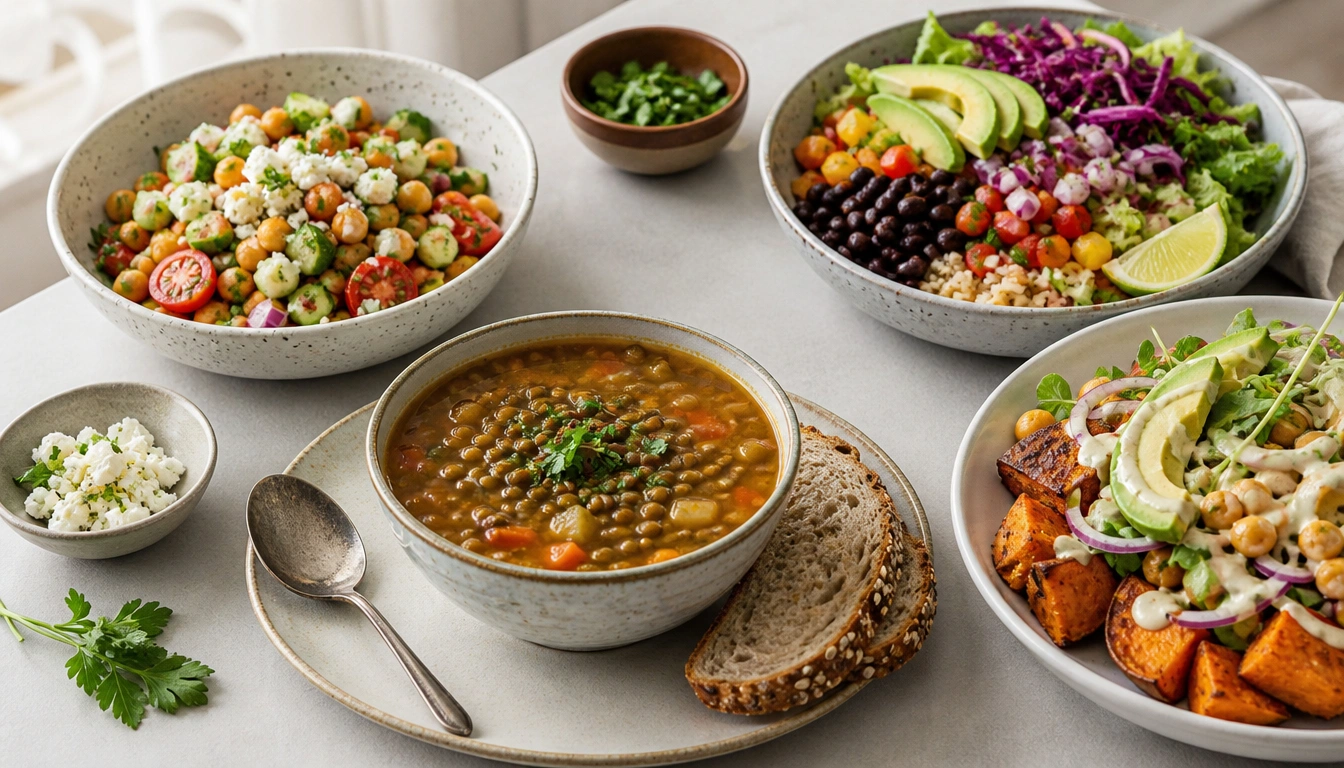
Easy high-fiber vegetarian lunches for beginners include chickpea salad bowls, black bean burrito bowls, lentil soup with whole-grain bread, and loaded sweet potato bowls. Start with smaller portions of beans, whole grains, vegetables, nuts, and seeds, then increase fiber gradually and drink more water as you go to help reduce bloating and constipation.
Key Takeaways
- Begin with familiar foods and build lunches around beans, lentils, whole grains, vegetables, nuts, and seeds.
- Increase fiber gradually over several meals or days to lower the chance of gas, bloating, and cramping.
- Fiber works best with fluid, so water intake should rise as lunch fiber increases.
- Canned beans, cooked grains, and batch-prepped vegetables make high-fiber lunches much easier to assemble.
- Some people need a lower-fiber approach, including those with IBD flares, strictures, gastroparesis, or recent bowel surgery.
Why high-fiber vegetarian lunches help beginners
If you are new to vegetarian eating, high-fiber lunch ideas for vegetarian beginners can make lunch more filling and more predictable. Fiber slows digestion, which can help you feel satisfied longer and avoid the quick energy drop that often follows a low-fiber meal. It also supports regular bowel movements and feeds beneficial gut bacteria, which is one reason plant-based eating is often linked with better long-term digestive and metabolic health.
For a beginner, lunch is a useful place to practice because it is easy to repeat. You do not need a perfect meal. You need a lunch that fits your appetite, tastes good, and gives you enough fiber to matter without overwhelming your stomach. The most practical approach is food first: start with simple ingredients you already recognize, then build from there.
Public health guidance from the CDC and the NHS supports diets that are rich in fiber from plant foods such as beans, whole grains, vegetables, fruit, nuts, and seeds. Most people fall short of those targets, so a single lunch that includes several fiber-rich ingredients can make a meaningful difference.
Soluble and insoluble fiber in everyday lunch foods
Fiber is usually grouped into two broad types, and both are useful at lunch. Soluble fiber dissolves in water and forms a gel-like texture. It slows digestion and can help steady the rise in blood sugar after a meal. You will find it in beans, lentils, oats, chia seeds, and sweet potatoes.
Insoluble fiber does not dissolve in water. It adds bulk to stool and helps food move through the digestive tract. Good lunch sources include whole grains, vegetable skins, nuts, and seeds. Many vegetarian lunches naturally contain both types, which is one reason they can be so satisfying.
A chickpea bowl, for example, brings soluble fiber from legumes and insoluble fiber from vegetables and seeds. Brown rice or quinoa adds more bulk. A baked sweet potato with the skin on contributes both texture and fiber. The point is not to memorize categories, but to notice that a mixed lunch usually works better than a single “superfood.”
Increase fiber gradually and keep fluids up
The biggest mistake many beginners make is changing too fast. If you move from a low-fiber diet to several bean-heavy lunches in a row, your gut may respond with bloating, gas, or cramping. That reaction is often temporary, but it can be uncomfortable enough to make you quit. A slower ramp-up gives your digestive system time to adapt.
A practical way to begin is to add one new fiber-rich item at a meal, then increase the portion or variety over several days. For example, start with a small serving of beans in a bowl, then add more vegetables or swap white rice for brown rice at the next meal. If your stomach feels unsettled, pause at the level you tolerate and stay there for a few meals before increasing again.
Fluid matters just as much. Fiber helps stool hold water and move through the gut, but it needs liquid to do that well. The CDC and NHS both emphasize staying hydrated, especially when dietary fiber goes up. At lunch, that can mean drinking water with the meal, having a glass before lunch, or keeping a bottle nearby so you do not forget. If fiber rises and fluid does not, constipation is more likely, not less.
A simple lunch-building framework with real food examples
The easiest way to build a high-fiber vegetarian lunch is to use a repeatable formula: base + protein and fiber core + vegetables + healthy fat + optional crunch. This keeps lunches balanced without requiring a recipe every time. It also makes it easier to judge whether a lunch is truly fiber-rich.
Use these combinations as templates:
- Chickpea salad bowl: greens or shredded cabbage, canned chickpeas, cucumber, tomato, avocado, and pumpkin seeds.
- Black bean burrito bowl: brown rice or quinoa, black beans, sautéed peppers and onions, salsa, and a little cheese or avocado if you eat dairy.
- Lentil soup with whole-grain bread: lentils, carrots, celery, tomatoes, and a slice or two of dense whole-grain toast.
- Loaded sweet potato bowl: baked sweet potato, black beans, steamed broccoli, quinoa, and sunflower seeds.
These lunches work because they combine slow-digesting carbohydrates, fiber, and enough flavor and texture to be satisfying. If beans are new to you, begin with a smaller scoop and choose softer options like lentils or well-rinsed canned beans. If you tolerate them well, increase the amount over time instead of trying to make every lunch high-fiber on day one.
According to the National Institutes of Health and the NHS, adults generally need several servings of fiber-rich plant foods each day. A lunch built this way can contribute a meaningful share of that daily total without relying on supplements.
Pantry shortcuts and prep strategies for busy weeks
You do not need a big cooking project to eat well. Busy beginners usually do better when they keep a few reliable staples on hand. Canned beans, cooked grains, frozen vegetables, bagged greens, and jarred salsa can turn into lunch fast. Rinsing canned beans can improve flavor and may make them easier to tolerate for some people.
Batch cooking helps too. Make one grain, one bean, and one vegetable early in the week, then mix and match. For example, cook quinoa, roast a tray of vegetables, and keep chickpeas ready in the fridge. Then lunch becomes assembly, not cooking. A bowl can be built in minutes with leftovers from dinner.
If you want variety without extra effort, rotate the flavor profile rather than the whole recipe. Use lemon and herbs one day, salsa and cumin the next, or tahini and cucumber another day. That keeps meals interesting while the base stays familiar, which can be helpful when your digestion is still adjusting.
For many beginners, the best meal-prep lunch is the one you will actually eat. A simple bowl with canned beans, cooked rice, and vegetables is often more useful than an elaborate recipe that takes too long.
When high-fiber eating should be modified or avoided
High-fiber vegetarian lunches are not the right fit for everyone all the time. People with an IBD flare, intestinal strictures, gastroparesis, or recent bowel surgery may need a lower-fiber or low-residue eating plan. In those situations, fiber can worsen symptoms or be harder to move through the digestive tract, so individualized medical advice matters.
Be cautious with large amounts of raw bran, very large salads, or sudden jumps to high-fiber meals if you already have a sensitive digestive system. Some people also do better with cooked vegetables, softer grains, and well-cooked legumes rather than crunchy or very rough textures. If a food seems nutritious but repeatedly causes pain, it is reasonable to step back and reassess.
Seek clinical guidance if you have persistent abdominal pain, major changes in bowel habits, unexplained weight loss, vomiting, or ongoing trouble tolerating high-fiber foods. A registered dietitian or clinician can help you decide whether you need to slow down, change texture, or temporarily reduce fiber.
Children and older adults may need different adjustments
Age matters. Children often fill up quickly on bulky, high-fiber foods, so a lunch that seems modest to an adult may crowd out calories and fats they still need for growth. For them, smaller portions and softer textures may work better than piling on large amounts of beans and raw vegetables. Pediatric fiber needs are different from adult needs, so family meals should be adjusted thoughtfully.
Older adults may need a different kind of support. Chewing problems, dental issues, reduced appetite, or slower digestion can make very coarse foods harder to manage. In that case, cooked vegetables, mashed beans, soups, and softer grains can be easier to eat while still providing fiber. Texture is often the difference between a lunch that sounds healthy and one that is actually practical.
Across life stages, the goal is the same: match the fiber load to the person eating the meal. A lunch that is comfortable and sustainable will usually do more for health than a lunch that is technically high in fiber but difficult to finish.
A quick way to judge whether a lunch is fiber-rich enough
| Lunch idea | Main fiber sources | Prep time | Digestion friendliness for beginners |
|---|---|---|---|
| Chickpea salad bowl | Chickpeas, greens, seeds, vegetables | Fast with canned beans | Often easy if portions start small |
| Black bean burrito bowl | Black beans, brown rice, vegetables | Fast to moderate | Good once beans are tolerated |
| Lentil soup with whole-grain bread | Lentils, vegetables, whole grains | Moderate, especially with leftovers | Often gentler because it is soft and hydrated |
| Loaded sweet potato bowl | Sweet potato, quinoa, beans, seeds | Moderate | Good option if textures are easier when cooked |
If a lunch has at least one legume or whole grain plus vegetables, it is usually moving in the right direction. If you are new to fiber, choose the softer options first and build from there. The goal is not to force a huge fiber jump. The goal is to create lunches that are nourishing, tolerable, and easy to repeat.
Frequently Asked Questions
How much fiber should a beginner vegetarian aim for at lunch and per day?
There is no single lunch target, but many adults aim for about 25 to 38 grams of fiber per day depending on sex and age, according to U.S. guidance. For beginners, a lunch with roughly 10 to 15 grams can be a practical step if it feels comfortable.
What are the best vegetarian foods to build a high-fiber lunch around?
Beans, lentils, whole grains like brown rice or quinoa, vegetables, nuts, seeds, oats, and sweet potatoes are strong choices. A mix of these foods usually gives you both soluble and insoluble fiber, which supports fullness and digestion.
How can I increase fiber without getting bloated or constipated?
Increase fiber slowly over several meals or days instead of changing all at once. Start with smaller portions, choose cooked foods, and drink more water as fiber rises. If bloating is severe or persistent, slow the pace and reassess.
Do I need to drink more water when eating more fiber?
Yes, usually. Fiber works best when it has enough fluid to move through the digestive tract. If you increase beans, whole grains, or vegetables but do not increase fluids, constipation can become more likely.
Which high-fiber vegetarian lunches work best for meal prep?
The easiest meal-prep lunches usually use canned beans, cooked grains, and batch-prepped vegetables. Chickpea bowls, black bean burrito bowls, lentil soup, and sweet potato bowls all hold up well in the fridge and are easy to portion.
The Bottom Line
High-fiber vegetarian lunches can be simple, filling, and gentle on the stomach when you build them gradually. Beans, lentils, whole grains, vegetables, nuts, and seeds are the main ingredients to keep on repeat.
If you are new to fiber, start with familiar textures, smaller portions, and plenty of water. Watch how your body responds, then increase slowly instead of trying to hit a big fiber target all at once.
If you have IBD flare-ups, strictures, gastroparesis, recent bowel surgery, or ongoing digestive symptoms, get personalized guidance before pushing fiber higher.
Medical disclaimer
Medical disclaimer: This content is for educational and informational purposes only and is not a substitute for professional medical advice, diagnosis, or treatment. Dietary needs and supplement suitability vary by individual.
Sources
- Centers for Disease Control and Prevention (CDC) — cdc.gov. Accessed October 2026.
- National Health Service (NHS) — www.nhs.uk. Accessed October 2026.
- National Health Service (NHS) — worcsacute.nhs.uk. Accessed October 2026.
- National Health Service (NHS) — esht.nhs.uk. Accessed October 2026.
- Mayo Clinic — mayoclinic.org. Accessed October 2026.
