
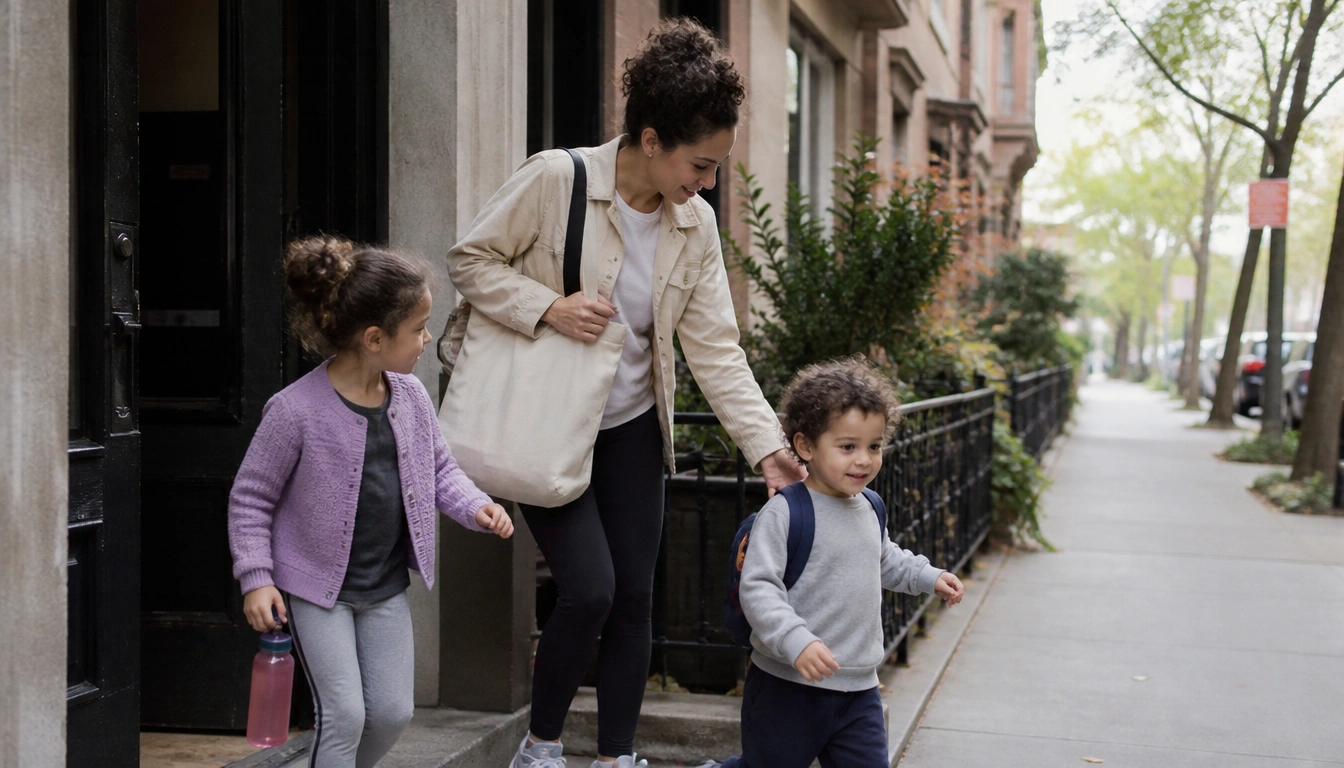
The easiest way to fit meaningful outdoor time into a busy family routine is to stop treating it like a separate outing. Attach it to things you already do: step outside after waking, pause outdoors after school or work, eat one snack or meal outside, and use short walks or porch time instead of aiming for a perfect park visit. Small daily exposure is often easier to keep and still supports sleep, attention, mood, and movement.
Key Takeaways
- Think in micro-doses: 5 to 15 minutes outside can be enough to make the habit feel doable on busy days.
- Anchor outdoor time to existing transitions so it does not require extra planning, packing, or negotiation.
- Morning light helps set the body clock, while late-day outdoor time can help kids and adults decompress.
- Families without a yard can use balconies, stoops, window views, tree-lined routes, pocket parks, and community gardens.
- Safety matters: shade, hydration, heat, insects, ticks, and sunscreen timing all change how you plan the routine.
A low-friction way to make outdoor time stick
The most sustainable outdoor time routine for busy parents is one that does not feel like a project. Instead of aiming for a full walk, a sports session, or a perfect park day, use a micro-dose approach: short, repeatable outdoor moments that fit into the day you already have. Public health guidance on children’s activity and sleep supports the idea that regular movement and light exposure matter more than occasional big efforts.
This works because routines need a clear cue. If the cue is already part of family life, the habit becomes easier to repeat. Think “outside after breakfast,” “outside before we go in the house,” or “outside with snack time.” The goal is not to add another task; it is to move an ordinary moment outdoors.
That small change can still carry value. Natural light helps with circadian rhythm support, green space can restore attention after a busy day, and outdoor movement often happens more naturally than indoor movement. According to the CDC and other public health bodies, children also need regular physical activity across the week, which makes small daily outdoor windows useful as a practical bridge.
Use the morning to set the tone
A simple weekday morning outdoor routine can be as short as 10 minutes. Step outside after waking or after breakfast, even if it is only to a porch, stoop, balcony, driveway, or front steps. Adults can carry coffee or tea outside while children stretch, look for birds, or take a quick lap around the yard or building.
Morning light is especially helpful because it helps anchor the body’s sleep-wake rhythm. That matters for the whole household: a steadier rhythm can support easier bedtime, more predictable mornings, and less “dragging through the day” feeling later on. The routine does not need to be active to be useful, but a little movement helps children wake up their bodies.
If mornings feel chaotic, make the rule very small. Shoes on, outside, back in. On colder days, a coat and hat are enough. On rushed days, the habit can be a single minute in natural light near an open door or window when going fully outside is not realistic.
Turn pickup or commute time into a reset
After school or work, many families move straight from one indoor demand to the next. A short outdoor stop can soften that transition. Instead of heading directly inside, pause at a nearby green space, tree-lined block, schoolyard edge, or neighborhood path for 15 minutes or less. For many children, this is a better way to burn off end-of-day energy than entering the house already overstimulated.
This kind of transition routine can reduce the friction that often leads to conflicts at home. Children have time to move, climb, run, or just look around, while adults get a brief mental reset before dinner, homework, or bedtime tasks. The setting does not need to be fancy. A pocket park, community garden, or even a walk around the block can serve the same purpose if it is consistent.
For families with very full afternoons, the outside stop can be brief and predictable: one loop, one bench sit, or one quick stretch before entering the house. What matters is the repeatable pause, not the length.
Make one snack or meal an outdoor habit
Outdoor time is easier to maintain when it is attached to something you already do every day. Snack time and dinner are especially useful because they already happen on a schedule. Moving one snack outdoors, or eating dinner outside once or twice a week, creates a routine without asking for extra planning.
The easiest version is simple. A sandwich on the steps, fruit at a picnic blanket, crackers at a park bench, or a weeknight meal eaten on the balcony can all count. You do not need special equipment. If cleanup feels like the barrier, choose foods that are easy to carry and low-mess. If weather is mild, even 10 minutes outside after dinner can help the family slow down before the evening rush resumes.
This also creates a natural rhythm for children: outside for food, then inside for cleanup or bath. That sequence can feel more manageable than trying to force play after everyone is already tired.
Adjust the routine by age and stage
Different ages need different versions of the same habit. For infants, the priority is shade, comfort, and avoiding direct sun. Very young babies should stay out of direct sunlight, and infants under 6 months need especially careful sun protection and thermal control. A shaded stroller, covered porch, or blanket under deep shade can be enough for fresh air and sensory input.
Toddlers and preschoolers usually benefit from unstructured outdoor play. The point is not to manage every movement, but to let them climb, squat, balance, and roam safely. School-age children often do well with a clear option such as a walk, scooter time, ball play, or a quick scavenger hunt. Teens may resist anything that feels childish, so walking, biking, or a short errand route outdoors may fit better than “play.”
For older children, outdoor movement can also support the daily physical activity targets recommended by public health agencies. That does not mean every session must be intense. It does mean the outdoor routine can be a useful piece of a larger movement pattern across the week.
Use non-yard options if you live in a city or apartment
A yard is helpful, but it is not required. Many families live in apartments or dense neighborhoods where outdoor time has to be built from smaller pieces. In that case, think in terms of access points rather than destinations. A balcony, stoop, front steps, rooftop space that is safe for family use, community garden, pocket park, or tree-lined walking route can all work.
Window views can also help. Looking at trees, sky, or water from inside is not the same as going outdoors, but restorative views still offer a useful break for tired adults and children who need a pause. If your area has a river, fountain, lakefront, or other “blue space,” that setting may add the same sense of relief as a green space walk.
Urban families often do best when they create a repeatable loop: step outside after breakfast, walk to the nearest green spot, and return home the same way. The route can be short and still meaningful if it becomes familiar.
Keep safety and logistics simple but real
Outdoor routines work best when safety is built in from the start. For children older than 6 months, sunscreen should be part of the plan when sun exposure is expected. Infants under 6 months should be kept out of direct sunlight and protected with shade and clothing rather than relying on sunscreen alone. Light, breathable clothing helps reduce overheating.
Heat is one of the most common reasons outdoor time becomes uncomfortable or unsafe. On very hot or high-humidity days, shorten the session, move to shade, or choose an indoor light-and-window version instead. Bring water for longer outings, and avoid turning outdoor time into an endurance test. For younger children, look for signs that they need a break: flushed skin, unusual crankiness, or slowing down.
If the family is spending time near woods, tall grass, or wooded paths, check for insects and ticks afterward. A quick head-to-toe check after outdoor play is usually easier than dealing with a missed tick later. The safest routine is the one that respects weather, clothing, and the child’s age instead of trying to force the same plan every day.
Build a week-one plan you can repeat
Start with one outdoor moment per day and keep it small enough that it feels almost too easy. Pick a specific cue: after breakfast, after pickup, or before the evening meal. Decide in advance what “counts” on busy days so the routine does not collapse when life gets messy. For example, outside for 5 minutes on the steps may count just as much as a longer walk on a calmer day.
It helps to remove decisions. Leave shoes by the door, keep a hat and sunscreen near the exit, or store a small picnic blanket in the car. If the route is the same most days, children learn what to expect and adults spend less energy planning. Repetition matters more than variety at first.
After the first week, you can stretch the routine gradually: a longer morning pause, an extra loop after school, or one meal outdoors on weekends. Progress should feel easy enough to keep. If the plan starts to feel like work, make it smaller rather than dropping it entirely.
Frequently Asked Questions
What is the easiest outdoor routine to start on a weekday morning?
A 5- to 10-minute outdoor pause after waking or breakfast is usually the simplest start. Step onto the porch, balcony, stoop, or sidewalk, and let everyone get morning light before the day speeds up. Keep the goal small so the habit is easy to repeat.
How much outdoor time do children actually need each day?
There is no single perfect number for every child, but public health guidance supports regular daily activity and outdoor play. Young children benefit from several active periods across the day, and older children need at least 60 minutes of moderate-to-vigorous activity daily. Short outdoor breaks can help build toward that.
What if we live in an apartment or do not have a yard?
You can still build a routine with a balcony, stoop, community garden, pocket park, tree-lined street, or nearby green space. Even a window view of trees or sky can be restorative when full outdoor time is not possible. Consistency matters more than having a private yard.
How can outdoor time help with sleep, attention, and stress?
Morning light helps support the body’s internal clock, which can make sleep patterns more regular. Green space can also help restore attention after mental fatigue and reduce stress. For many families, the benefit comes from the combination of light, movement, and a brief change of scenery.
What safety steps matter for sun, heat, insects, and toddlers?
Keep infants under 6 months out of direct sunlight, and use shade plus protective clothing. For children older than 6 months, sunscreen, breathable clothing, hydration, and shade matter more on sunny days. On wooded outings, check for insects and ticks afterward, and shorten or skip outdoor time during extreme heat.
The Bottom Line
A simple outdoor time routine works best when it is attached to something you already do: waking up, school pickup, snack time, or dinner. The routine can be short, and it can still matter if it happens often.
Families do not need a yard or a perfect weather window to make this work. A balcony, stoop, tree-lined walk, or nearby park can provide the light, movement, and reset that help the habit stick.
Start small, keep the safety basics in place, and let the routine grow only if it feels easy to repeat. The best plan is the one your family can do again tomorrow.
Medical disclaimer
Medical disclaimer: This content is for educational and informational purposes only and is not a substitute for professional medical advice, diagnosis, or treatment. Dietary needs and supplement suitability vary by individual.
Sources
- U.S. Government / Health Authority — headstart.gov. Accessed October 2026.
- National Health Service (NHS) — scot.nhs.uk. Accessed October 2026.
- Centers for Disease Control and Prevention (CDC) — cdc.gov. Accessed October 2026.
