
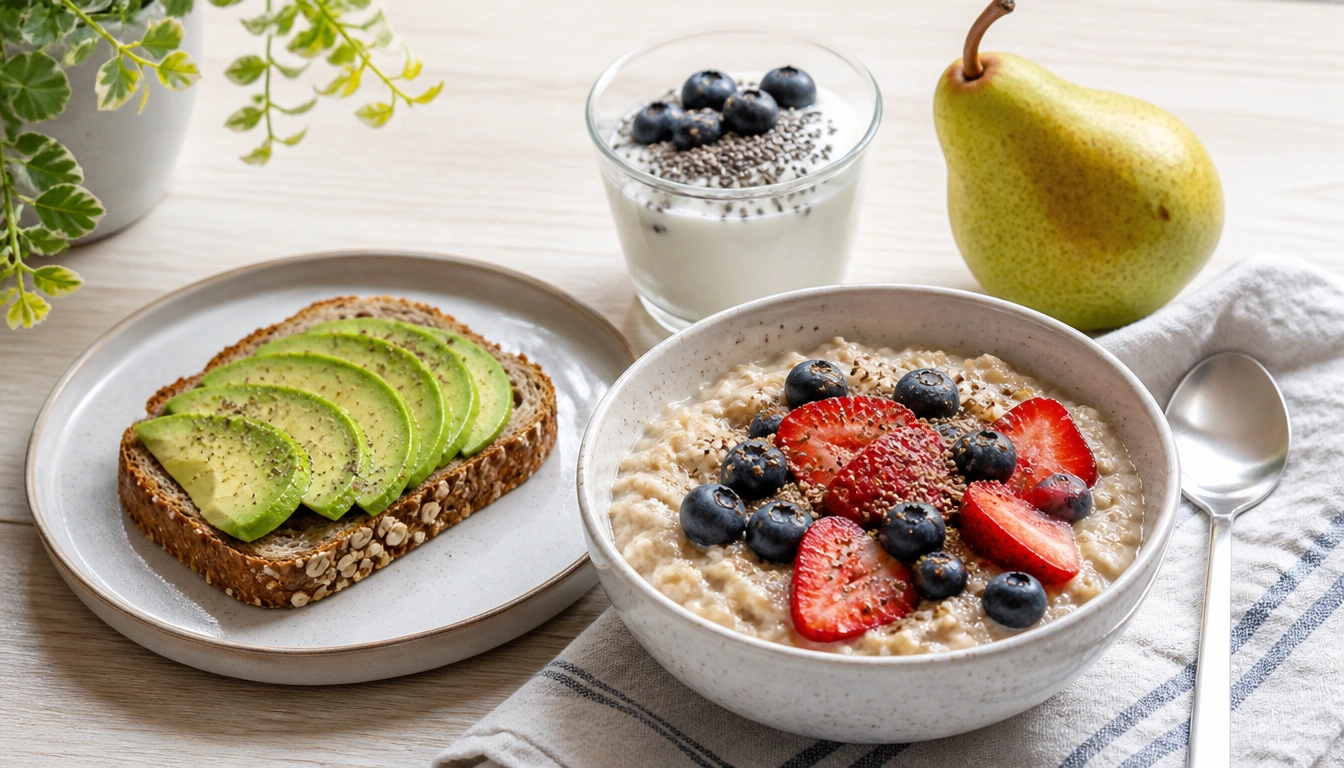
The best easy high-fiber breakfast ideas for adults over 50 are foods that combine fiber with protein, fluids, and a soft texture: oatmeal with berries and ground flaxseed, whole-grain toast with avocado, yogurt with bran or chia, and beans or eggs in savory dishes. Breakfast does not need to deliver all your fiber for the day, but aiming for about 7 to 10 grams is a practical way to make progress toward your daily target.
Key Takeaways
- Adults 50 and older generally need more fiber support in the morning because digestion can slow with age and constipation becomes more common.
- Daily fiber targets are different for men and women over 50: about 30 grams a day for men and 21 grams for women.
- A breakfast with oats, berries, flax, whole grains, avocado, beans, yogurt, or soft fruit can support bowel regularity, LDL cholesterol, blood sugar, and satiety.
- If appetite is low, a smaller breakfast still helps: think half-portions, a yogurt cup, soft fruit with nut butter, or a small bowl of oatmeal.
- Increase fiber gradually and drink enough fluids, because adding fiber too fast or without water can cause bloating or make constipation worse.
Why breakfast fiber matters more after 50
High-fiber breakfast ideas for adults over 50 are especially useful because morning digestion often becomes less efficient with age. Slower gastrointestinal motility can make constipation more likely, and many older adults also notice they do not feel as hungry early in the day. That can lead to small, low-fiber breakfasts that do not carry much nutrition into the morning.
Fiber helps in several ways. Insoluble fiber adds bulk to stool and can help move things along. Soluble fiber forms a gel-like texture that can soften stool and make it easier to pass. That same soluble fiber also plays a role in heart and metabolic health by helping lower LDL cholesterol and slowing the absorption of glucose after meals.
For adults over 50, breakfast is a practical place to add fiber because it sets the tone for the rest of the day. A fiber-rich breakfast can support bowel regularity, help with fullness between meals, and make it easier to spread intake across the day instead of trying to catch up all at dinner.
How much fiber to aim for at breakfast and across the day
Official guidance for adults over 50 is different for men and women. Men age 50 and older are generally advised to aim for about 30 grams of fiber per day, while women age 50 and older are generally advised to aim for about 21 grams per day. Those targets are useful as daily goals, but breakfast does not need to do all the work.
A practical breakfast target for many older adults is about 7 to 10 grams of fiber, especially if the rest of the day includes vegetables, beans, fruit, whole grains, and nuts or seeds. That amount is enough to make breakfast meaningful without forcing a very large meal.
If you eat smaller meals or have a lower appetite, a half-portion can still count. A small bowl of oatmeal with berries may be enough. So may yogurt with chia, whole-grain toast with avocado, or soft fruit with nut butter. The goal is not perfection; it is steady progress toward your daily total in a form you can tolerate and enjoy.
Best high-fiber breakfast building blocks
The most useful breakfast foods are usually simple foods that can be mixed and matched. Oats are a strong base because they are soft, filling, and easy to flavor. Old-fashioned or steel-cut oats work well, and both pair naturally with fruit and seeds. Oats also provide soluble fiber, which is one reason they are often linked with LDL support.
Berries are another high-value choice. Raspberries and blackberries are especially fiber-rich, but strawberries and blueberries also fit well. If chewing is a concern, berries can be lightly mashed or simmered into a soft topping.
Ground flaxseed and chia seeds are easy add-ins. Ground flaxseed is often easier to tolerate than whole seeds, and it can be stirred into oatmeal, yogurt, or a smoothie. Chia can thicken overnight oats or pudding-style breakfasts. Whole grains such as sprouted bread, bran cereal, and high-fiber cereals can also help, especially when paired with protein.
Avocado adds fiber and healthy fat, while beans bring a strong fiber boost in savory breakfasts. Yogurt adds protein and creaminess, which can be useful if appetite is low. Soft fruit such as ripe pears, bananas, stewed apples, or peaches can add fiber without much chewing. Smooth nut butters can also help, especially on toast, oats, or fruit.
| Breakfast building block | Why it helps | Best use for older adults |
|---|---|---|
| Oats | Soft, filling, and easy to combine with fruit or seeds | Good for easy digestion and steady fullness |
| Berries | Add fiber with natural sweetness | Useful for constipation support and taste without much prep |
| Ground flax or chia | Adds fiber in a small amount | Helpful when appetite is low or portions are small |
| Whole-grain toast | Simple way to add fiber fast | Works well with avocado, nut butter, or egg |
| Beans | Strong source of fiber and plant protein | Best in savory meals such as breakfast bowls or egg dishes |
| Soft fruit | Gentle on teeth and easy to chew | Good choice for dental sensitivity or early satiety |
Simple breakfast ideas that work for older adults
Berry oatmeal bowl: Cook oats with milk or fortified soy milk, then top with berries and a spoonful of ground flaxseed. This works well because it combines a soft texture, soluble fiber, and a little protein. If you want more flavor and satiety, add cinnamon or a small spoonful of nut butter.
Avocado toast with egg: Use whole-grain toast, smashed avocado, and a cooked egg. This is a good option when you want something savory and filling without a large volume of food. Add sliced tomato or soft fruit on the side for more produce and fiber.
Yogurt parfait with bran or chia: Layer plain yogurt with bran cereal, chia, and soft fruit. This works especially well for low appetite because it can be made in a small cup and eaten slowly. Choose a low-sugar cereal if you want steadier blood sugar support.
Soft bean and egg breakfast wrap or bowl: Scrambled eggs with warmed black beans, spinach, and a soft tortilla or toast can be a strong breakfast for satiety. Beans add fiber and protein, while eggs make the meal more satisfying without needing a large serving.
Peanut butter and pear plate: A ripe pear with smooth nut butter and a slice or two of whole-grain toast can be an easy no-cook choice. It is useful when appetite is low and chewing is manageable, and the components can be scaled up or down easily.
If you prefer a lighter morning meal, use these same ideas as healthy snacking breakfasts. A half bowl of oats, a small yogurt cup with seeds, or one slice of toast with avocado can still provide meaningful fiber. The best breakfast is the one you can repeat often.
How to make high-fiber breakfasts easier to tolerate
Fiber works best when you add it gradually. If your usual breakfast is low in fiber, increase it step by step rather than changing everything at once. For example, start by adding a few berries to oatmeal, then add flaxseed later, or swap white toast for whole-grain toast before adding beans or seeds elsewhere in the day. This start-low-and-go-slow approach helps reduce bloating, cramping, gas, and discomfort.
Fluids matter just as much as fiber. When fiber intake rises, pair breakfast with water, milk, or herbal tea so fiber can move through the digestive tract more smoothly. Without enough fluids, more fiber can sometimes make constipation worse instead of better.
Portion size also matters. A large bowl of oatmeal may feel too heavy, but a half-portion may be comfortable and still useful. If your appetite is low in the morning, think of breakfast as a small, fiber-rich anchor rather than a full meal. You can also split breakfast into two smaller eating times if that fits your routine better.
Texture can be adjusted without losing the benefit. Cook fruit until soft, choose creamy yogurt, and use ground seeds instead of whole ones when needed. Small changes like these make it easier to keep fiber in the diet consistently.
Texture and chewing-friendly modifications
Chewing problems, dental sensitivity, and dry mouth can make some high-fiber foods harder to manage. That does not mean fiber needs to be limited. It usually means the texture needs to change.
Choose stewed fruit instead of raw apples or firm pears. Use ripe pears, banana slices, or applesauce with no added sugar when you want something soft. Swap crunchy nuts for smooth nut butters or finely ground seeds. If whole-grain bread is too dry, toast it lightly and top it with avocado, yogurt, or egg to soften the bite.
For very small appetites, soft foods may be easier to finish than a large plate. A small bowl of oatmeal, a yogurt cup with mashed berries, or a soft egg-and-bean scramble can provide fiber without demanding much chewing. If swallowing is difficult, talk with a healthcare professional or dietitian before making major food changes, since the best texture may depend on the underlying cause.
When a slower approach or medical guidance is needed
Most adults can increase breakfast fiber safely with gradual changes, but some situations need extra care. People with chronic gastrointestinal disorders such as Crohn’s disease, diverticulitis during a flare, gastroparesis, or intestinal strictures may need a different fiber strategy. In those cases, the type and amount of fiber can matter as much as the total amount.
Medical guidance is also wise if a person has ongoing constipation, unexplained weight loss, trouble swallowing, persistent abdominal pain, or a major change in bowel habits. Older adults who take medications that interact with food or have been told to follow a special diet should ask a clinician or registered dietitian before making a big jump in fiber intake.
If you are building fiber after a long stretch of low intake, the safest approach is still gradual. Start with one breakfast change, observe how your body responds, and increase from there. That method is often more comfortable and more sustainable than trying to meet a daily target all at once.
Frequently Asked Questions
How much fiber do adults over 50 need each day?
A common target is about 30 grams a day for men over 50 and about 21 grams a day for women over 50. Those are daily goals, not breakfast goals, so it usually helps to spread fiber across meals and snacks.
What breakfast foods give the most fiber without being hard to chew or digest?
Soft oats, berries, chia or ground flaxseed, ripe pears, mashed avocado, whole-grain toast, bran cereal, yogurt with fruit, and beans in savory dishes are all useful choices. They can be softened, mashed, or portioned to fit different appetites and chewing needs.
How can someone increase fiber slowly without bloating or discomfort?
Add fiber one step at a time instead of making a sudden jump. Start with a small change, such as fruit in oatmeal or whole-grain toast, then add more later if you tolerate it well. Drink enough fluids at the same time, because fiber works better with water.
What high-fiber breakfast options work for low appetite or small portions?
Smaller, nutrient-dense breakfasts often work best: a half bowl of oatmeal with berries, a yogurt cup with chia, toast with avocado, or fruit with smooth nut butter. These choices add fiber without requiring a large plate of food.
Which high-fiber breakfast foods are better for constipation support?
Oats, berries, ground flaxseed, chia, pears, beans, and whole grains can all help. The best choice is often a soft breakfast that also includes fluids, because fiber needs water to move through the digestive tract comfortably.
The Bottom Line
For adults over 50, the best high-fiber breakfasts are simple, soft, and flexible: oatmeal with berries and flax, whole-grain toast with avocado, yogurt with chia or bran, or savory eggs with beans. These meals can support bowel regularity, LDL cholesterol, steadier blood sugar, and better fullness.
A practical breakfast target is often about 7 to 10 grams of fiber, with the rest spread across the day. If appetite is low or chewing is difficult, smaller portions still count. The main priorities are gradual increases, enough fluids, and food textures you can comfortably eat again tomorrow.
Medical disclaimer
Medical disclaimer: This content is for educational and informational purposes only and is not a substitute for professional medical advice, diagnosis, or treatment. Dietary needs and supplement suitability vary by individual.
Sources
- National Institutes of Health (NIH) — nih.gov. Accessed October 2026.
- National Health Service (NHS) — www.nhs.uk. Accessed October 2026.
- U.S. Government / Health Authority — acl.gov. Accessed October 2026.
- Mayo Clinic — mayoclinic.org. Accessed October 2026.
- Academic Research Institution — harvard.edu. Accessed October 2026.
