
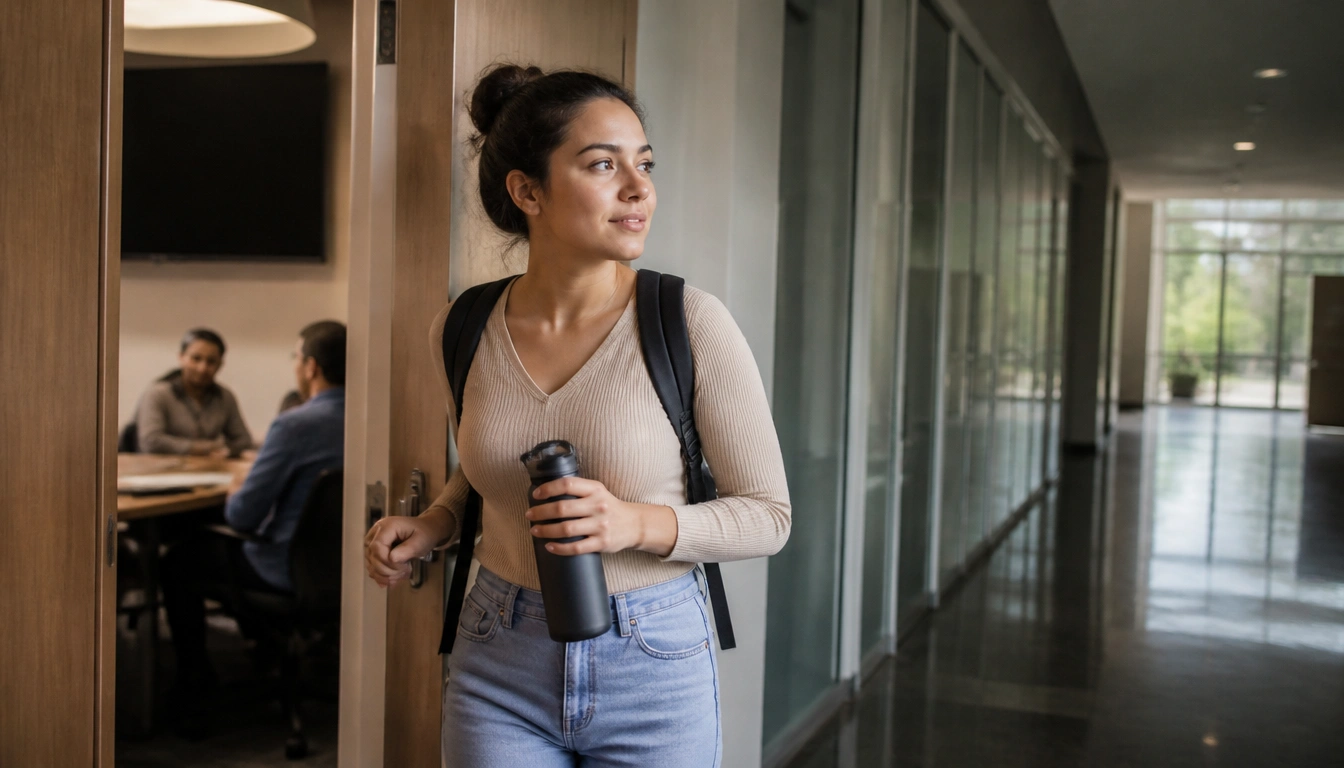
Right after a stressful meeting, step away from the room, give your body a short downshift, then hydrate or eat a small snack if you need it. A brief walk, a few slow breaths, and a change of scene can help your nervous system settle so you can focus again. If the meeting was especially intense, give yourself a longer reset before jumping back into studying.
Key Takeaways
- A post-meeting reset works best when you combine movement, breathing, and a small recovery cue like water or food.
- Breathing can help by slowing the stress response, but some people feel worse if they focus too much on their body sensations.
- Students with ADHD or sensory sensitivity often do better with walking, fidgeting, or tactile grounding than with silent meditation.
- The intensity of the reset should match the meeting: a routine check-in needs less recovery than a conflict-heavy or high-stakes presentation.
- If stress keeps disrupting sleep, appetite, concentration, or daily functioning, campus counseling or medical support is the right next step.
Why stressful meetings linger after they end
A stressful meeting can keep your body in “go mode” even after you leave the room. That is a normal stress response: your nervous system has been treating the situation as important, demanding, or possibly threatening. You may notice a racing heart, tight shoulders, faster breathing, shaky energy, or the urge to replay every word you said.
For college students, that lingering stress matters because the next part of the day often starts immediately. You may need to walk to class, answer messages, open a laptop, or switch into studying. When your brain is still scanning for what went wrong, working memory and concentration can take a hit. The Centers for Disease Control and Prevention describes short, intentional breaks and movement as useful ways to manage daily stress, and that fits the reality of campus life: you often need a reset that is brief, discreet, and realistic.
The goal is not to erase the meeting from your mind. It is to tell your body the situation has ended so your attention can move to the next task.
The five-minute reset: space, breath, fuel
The simplest post-meeting reset for college students has three parts: create space, settle the body, then give yourself a small amount of fuel if needed. Think of it as a transition, not a ritual you have to do perfectly.
Space: physically leave the meeting area. Walk down the hall, step outside, move to a different floor, or sit somewhere that does not remind you of the conversation. A change of environment gives your brain a cue that the immediate pressure is over.
Breath: use slow, controlled breathing for a short period if it feels helpful. Gentle paced breathing can support parasympathetic activity through the vagus nerve, which helps the body shift out of a stress state. Keep it simple: inhale and exhale at a comfortable pace, without forcing a big breath.
Fuel: if you have been tense, underfed, or dehydrated, a sip of water or a small snack can help you feel more settled. You do not need a full meal. You are just giving your body a clearer baseline before you try to study again.
If you only have two minutes, use the same order in compressed form: stand up, breathe out slowly a few times, then drink water if available.
Match the reset to the stress level
Not every meeting needs the same recovery dose. A routine group project check-in is different from a presentation, a difficult office hour, or a meeting that included conflict. The more intense the stressor, the more deliberate your reset should be.
For a low-stakes meeting that was simply awkward or mildly frustrating, a short walk and a few steady breaths may be enough. For a high-stakes presentation, a tense performance review, or an emotionally charged discussion, you may need a longer recovery period before you can focus well again. That could mean stepping outside for several minutes, getting a drink, and letting your nervous system settle before opening your notes.
A useful rule is to match the reset to the amount of activation you feel, not just to the calendar. If your hands are still trembling, your jaw is clenched, or your thoughts are racing, that is a sign to slow down before moving into your next task. The point is not to “bounce back” instantly. The point is to recover enough to think clearly.
If breathing makes you feel worse
Breathing exercises help many people, but not everyone responds the same way. If you already tend toward anxiety or panic, focusing hard on breathing or bodily sensations can sometimes feel uncomfortable or even make you feel more aware of what is wrong. That does not mean you are doing it incorrectly. It means this tool may not be your best first choice in that moment.
If controlled breathing starts to feel intense, shift to a method that keeps attention outside the body instead of deep inside it. For example, name objects you can see, count colors on a wall, or notice sounds in the hallway. You can also try a more natural version of breathing: let the exhale lengthen a little without trying to control every second.
Some people do better by using movement first and breathing second. A short walk, stretching your hands and shoulders, or leaning against a wall can lower the sense of being trapped. If you have a history of respiratory problems or breathing exercises make you dizzy, keep the breathing gentle and avoid forcing long holds.
What works better for ADHD or sensory sensitivity
Students with ADHD, sensory processing sensitivities, or high stimulation overload often need a reset that is more active and less silent. For some people, sitting still and trying to meditate adds another task to an already overloaded system. Movement-based resets can be more effective because they use motion, pressure, or touch to help organize attention.
Examples include walking briskly for a minute or two, pressing your feet into the floor, squeezing a stress ball, holding a cold water bottle, or rubbing your thumb against a textured object in your pocket. These are small sensory anchors, not replacements for rest. They simply give your brain a clearer signal that the meeting has ended.
If you are overstimulated, choose a place with less noise and less visual clutter when possible. If you cannot find one, even facing a blank wall, looking down at your shoes, or stepping just outside the door can help. The best reset is the one you can actually use on a crowded campus without drawing attention to yourself.
When water or a snack helps
Hydration or a small snack makes the most sense when stress has been paired with long gaps between meals, caffeine on an empty stomach, or lots of talking without a break. Stress can leave you feeling wired and flat at the same time, and mild dehydration or low energy can make that feeling worse.
A few sips of water are usually enough to start. If you have not eaten in a while, a small portable snack can help you feel more stable before your next class or study session. The goal is not to fix everything with food. It is simply to avoid layering hunger or thirst on top of stress.
If you are trying to decide whether to eat, ask two questions: Have I had water recently? Have I gone a long time without food? If the answer to either is yes, a quick snack may help more than pushing through. Choosing something easy and familiar is usually better than trying to assemble a perfect recovery meal.
When stress is no longer just situational
A post-meeting reset is a coping tool, not a substitute for counseling or medical care. If the stress starts happening most days, feels hard to turn off, or begins to interfere with sleep, appetite, class attendance, or relationships, it is worth reaching out. Campus counseling centers are used to helping students with repeated anxiety, burnout, panic symptoms, and stress tied to academic pressure or conflict.
You should also seek help if your symptoms become disabling, if you have frequent panic attacks, or if you notice persistent fatigue, appetite changes, or trouble concentrating that lasts beyond the meeting itself. Ongoing distress can have multiple causes, and it is better to get support early than to wait until you are overwhelmed.
If you ever have thoughts of self-harm or feel unsafe, seek urgent help right away through campus emergency resources, a crisis line, or emergency services. That is a different situation from ordinary meeting stress and deserves immediate attention.
Real-world examples you can use today
Right after leaving the meeting room: walk to the nearest hallway, loosen your shoulders, and exhale slowly a few times while you keep moving. Then drink water or pause before checking your phone. This is often enough after a standard class meeting or office hour.
Before class: if a stressful presentation ran right up against your next lecture, use a shorter version. Sit somewhere with less stimulation, plant both feet, and take a few quiet breaths or a brief grounding pause. You are aiming for functional focus, not total calm.
Between library sessions: if your mind keeps replaying the meeting, stand up and change locations before trying to study again. A different seat, a short walk to another floor, or a quick trip outside can help your brain stop treating the meeting as if it is still happening.
After a tense group project conversation: choose a reset that fits the level of conflict. You may need extra movement, a snack, and a longer break before replying to messages or opening shared documents. Give yourself enough time to cool down before making decisions you might regret while activated.
For many students, the best reset is not dramatic. It is a brief transition that helps the nervous system settle and gives the mind permission to move on.
Frequently Asked Questions
What is a quick 5-minute reset I can do on campus after a tense meeting?
Step away from the room, walk for a minute or two, take a few slow breaths if that feels comfortable, then drink water or have a small snack if you need it. Keeping the sequence simple helps you switch from meeting mode to the next part of your day.
Does breathing actually help after stress, and what kind is safest?
Yes, slow and gentle breathing can help the body shift toward a calmer state by supporting parasympathetic activity. The safest approach is usually a comfortable exhale that is a little longer than the inhale, without forcing breath holds or deep breaths that make you dizzy.
What if I feel more anxious when I try a breathing exercise?
Stop if the exercise makes you feel worse. Some people feel more overwhelmed when they focus on breathing or body sensations. Try movement, grounding through your senses, or a change of location instead. If this happens often, talk with a counselor or clinician.
What should I eat or drink after a stressful meeting?
Start with water. If you have not eaten in a while or you feel shaky or drained, a small snack can help. Practical options are something easy to carry and tolerate, such as fruit, crackers, yogurt, or nuts, depending on what is available to you.
When is post-meeting stress a sign I need counseling or medical help?
Reach out if the stress keeps happening, starts affecting sleep or appetite, makes it hard to function, or triggers panic attacks. You should also seek help if you feel hopeless or unsafe. Counseling and medical support are appropriate when stress stops being short-lived and situational.
The Bottom Line
A stressful meeting can leave your body activated even after the conversation ends, so a short reset is often the fastest way to get back to normal functioning. The most useful version is usually simple: change location, settle your breathing if it helps, and add water or a small snack when needed.
Do not force one method to fit every situation. A routine check-in may only need a brief reset, while a conflict-heavy or high-stakes meeting may call for more time and support. If stress keeps spilling into your sleep, schoolwork, or daily life, campus counseling or medical care is the right next step.
Medical disclaimer
Medical disclaimer: This content is for educational and informational purposes only and is not a substitute for professional medical advice, diagnosis, or treatment. Dietary needs and supplement suitability vary by individual.
Sources
- Centers for Disease Control and Prevention (CDC) — cdc.gov. Accessed October 2026.
- National Health Service (NHS) — berkshirehealthcare.nhs.uk. Accessed October 2026.
