
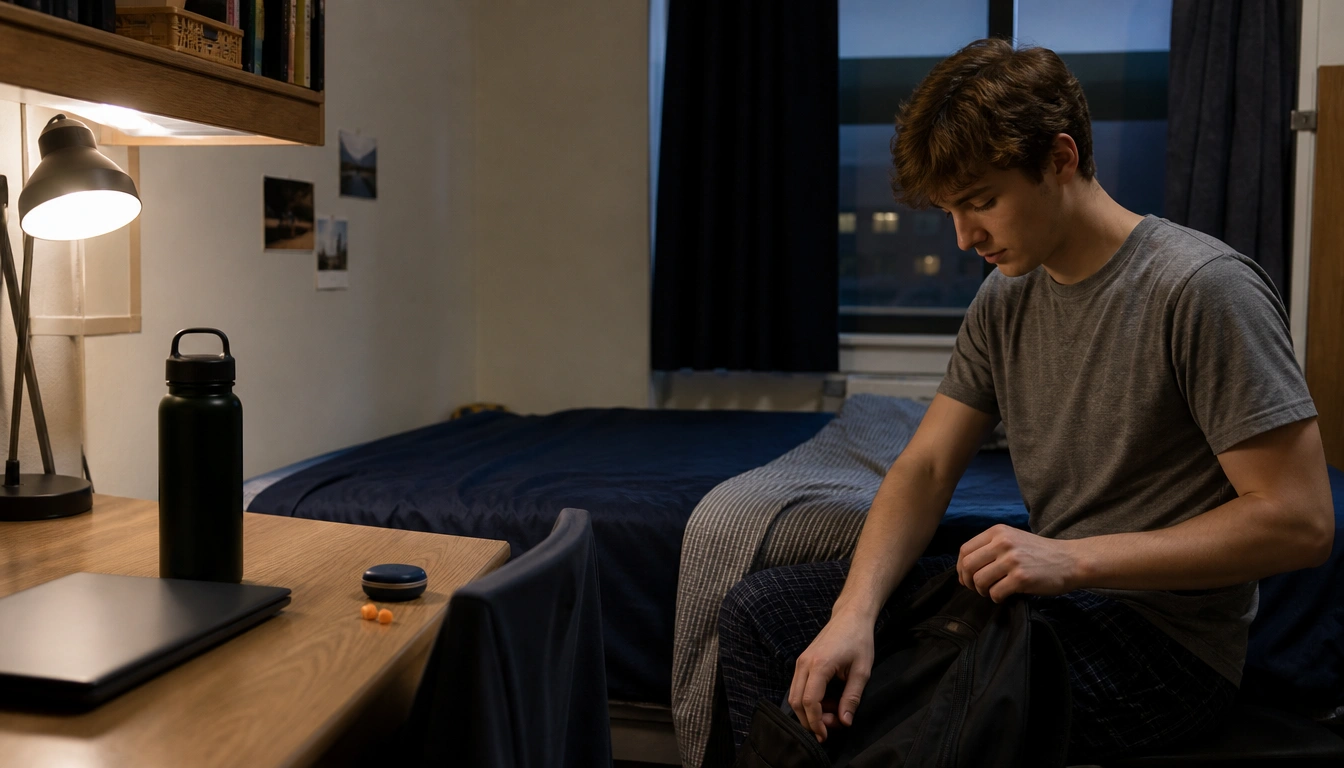
College students usually sleep better by fixing wake time first, getting morning light, cutting caffeine early in the afternoon, keeping weekends close to the weekday schedule, and making the room darker, quieter, and cooler. If sleep problems keep happening despite good habits, or you have red-flag symptoms like loud snoring, gasping, or persistent insomnia, it is worth getting evaluated rather than just trying harder.
Key Takeaways
- Start with a consistent wake time, not a perfect bedtime. That steadies the body clock even when classes and social plans vary.
- Morning light helps students with late chronotypes shift sleep timing earlier without forcing an unrealistic overnight change.
- Caffeine, energy drinks, and alcohol affect sleep differently; timing matters more than vague advice to ‘avoid stimulants.’
- A dorm sleep setup can be improved cheaply with blackout curtains, earplugs, white noise, and a cooler room temperature.
- If you are still awake after about 20 minutes, get out of bed briefly so your brain does not link the bed with frustration.
- Sleep hygiene helps, but ongoing insomnia, snoring, gasping, or daytime sleepiness may need CBT-I or medical care.
Why college students are especially prone to poor sleep
College sleep problems are common because biology and campus life pull in different directions. Many students naturally drift later in the evening during late adolescence and young adulthood, which makes late-night alertness feel normal even when early classes are not. At the same time, academic pressure, social plans, screens, noisy housing, and irregular schedules can turn a late night into a repeated pattern.
The result is often a mix of short sleep and inconsistent timing. That matters because sleep is not just downtime. It supports attention, memory consolidation, mood regulation, and the ability to learn from lectures and studying. The CDC and the American Academy of Sleep Medicine recommend 7 to 9 hours a night for young adults ages 18 to 25, but many students do not get close to that on a regular basis.
Another reason sleep gets messy in college is that students often try to solve a late schedule by pushing bedtime earlier before they have stabilized wake time. For many people, that does not stick. A better starting point is the daily anchor that most strongly shapes the body clock.
The 3-part sleep foundation: circadian timing, sleep pressure, and memory consolidation
A useful sleep plan works with three basic systems. The first is circadian timing, your internal clock, which tells the body when to feel sleepy or alert. The second is sleep pressure, the gradual build-up of the drive to sleep across the day. The third is memory consolidation, the overnight process that helps the brain store what you studied and practiced.
When sleep timing shifts around, these systems get out of sync. A student may stay up late, sleep in, nap long enough to reduce sleep pressure, then feel wired again at night. Screens, caffeine, and stress can add to that alerting effect. Even if a student falls asleep eventually, fragmented or shortened sleep can still weaken concentration and next-day learning.
That is why a good plan is not just about “getting to bed earlier.” It is about making the body expect sleep at the right time and making the day support that rhythm. Consistency, morning light, and predictable cues are more effective than occasional recovery sleep after a rough week.
A realistic college sleep plan: set a fixed wake time first, then build bedtime backward
For most students, the first move is to choose a wake time that fits classes and life, then keep it steady every day within about a 60-minute window. That includes weekends. Once wake time is set, bedtime can move backward until it allows enough sleep opportunity. This approach is often more realistic than trying to force an early bedtime on the first night.
Students with a late chronotype often benefit from a wake-time anchor plus morning light rather than only trying to go to bed earlier. Get outside soon after waking if you can, even for 10 to 15 minutes. Morning light helps reset circadian timing and gives the brain a strong daytime signal. If you are indoors, bright daylight near a window is still better than staying in a dim room.
Do not expect one perfect night to fix a delayed schedule. The goal is to make small, repeated shifts that the body can keep. If your schedule changes for an exam or event, come back to the same wake time the next day instead of letting the whole week drift.
Caffeine, energy drinks, and alcohol: how to manage them without overcomplicating your routine
Caffeine is one of the biggest reasons students feel tired at bedtime but wired during the evening. A practical cutoff is the early afternoon, often around 2:00 p.m., because caffeine can still affect the body for hours after you feel the first boost. If you are especially sensitive, you may need an earlier cutoff. Energy drinks are not different in principle; they just make it easier to take in a larger dose quickly.
Alcohol deserves separate attention. It may help some people feel sleepy at first, but it tends to fragment sleep later in the night and can make sleep less restorative. That means you may fall asleep faster and still wake up more often or feel unrefreshed in the morning. If you drink, avoid using alcohol as your main sleep strategy, especially on nights when you need solid rest before class, work, or driving.
On busy academic days, the most useful habit is not perfection. It is knowing when your last caffeinated drink should happen and noticing when “just one drink to relax” is actually becoming a sleep disruptor.
Dorm-proof sleep setup: light, noise, temperature, and roommate-proof tactics
Many college sleep barriers are environmental rather than personal. Campus lighting, hallway noise, roommates, and warm rooms can all make it harder to fall asleep or stay asleep. Fortunately, some of the best fixes are low cost and easy to test.
For light, use blackout curtains if possible or an eye mask if not. For noise, try earplugs, a white-noise machine, or a white-noise app played at a low, steady volume. For temperature, a cooler room supports the normal nighttime drop in core body temperature; many students sleep better when the room feels slightly cool rather than stuffy.
It also helps to make the room feel less like a second study lounge. If possible, separate your sleep space from your work space, even in a small dorm. A digital sunset can help too: dim or shut down screens 30 to 60 minutes before bed, and lower room lights at the same time. If your roommate keeps different hours, discuss a few shared rules, such as a quiet period, dim lights, or headphone use late at night.
A simple 30-minute wind-down routine that works with studying and screens
A realistic wind-down routine does not need to be elaborate. A useful version starts with the last 30 minutes before bed. First, finish the most stimulating tasks, like intense studying, gaming, or emotionally charged texting. Then shift to low-stimulation activities: a shower, gentle stretching, reading on paper, journaling, or listening to calm audio. The goal is to reduce mental speed, not to create a perfect self-care ritual.
If you have to study late, try to separate “working” from “winding down.” Even a short buffer helps the brain change modes. Lower light, stop scrolling, and avoid relying on your bed as the place where you finish assignments. Over time, that makes it easier for the brain to connect bed with sleep rather than problem-solving.
If you get into bed and cannot fall asleep after about 20 minutes, do not lie there frustrated. Get out of bed and move to a dim room or chair. Do something quiet and non-screen-based until you feel sleepy again, then return to bed. This is a practical way to reset the association between bed and wakefulness.
How stress and anxiety affect sleep, and what to do on high-pressure weeks
Stress and anxiety make sleep harder because they keep the body in a more alert state. Heart rate, tension, and mental replay can all rise when deadlines stack up. That does not mean you are doing sleep “wrong.” It means your nervous system is responding to pressure.
On high-pressure weeks, the goal is not a perfect routine. It is protecting the most important anchors. Keep wake time steady, keep caffeine earlier, and avoid using alcohol as a sleep aid. If your mind races at night, a short pre-bed brain dump can help: write down tomorrow’s tasks, worries, and the first step you will take in the morning. That is often more useful than trying to solve everything in bed.
It also helps to lower the sleep-related pressure itself. One difficult night does not ruin a semester. What tends to matter more is the pattern over time. Students often sleep better when they focus on the next morning’s anchor rather than on forcing sleep on command.
When sleep problems are more than habits: red flags and when to seek care
Sleep hygiene is useful, but it is not enough for every sleep problem. If you have loud chronic snoring, gasping, or witnessed pauses in breathing during sleep, you should be evaluated for possible sleep apnea. If you feel excessively sleepy during the day even when you seem to have enough time in bed, that also deserves attention.
Persistent insomnia is another reason to seek care. If you have trouble falling asleep or staying asleep several times a week for more than a month, and habit changes are not helping, you may need Cognitive Behavioral Therapy for Insomnia (CBT-I), which is the preferred behavioral treatment for chronic insomnia. A clinician can also help sort out problems like restless legs, anxiety disorders, depression, medication effects, or other medical causes.
For college students, the difference between a bad habit and a health issue is often whether the problem persists despite steady routine changes and whether there are warning signs such as snoring, gasping, daytime sleepiness, or major mood changes. Those are not things to ignore.
Frequently Asked Questions
How many hours of sleep do college students need?
Most healthy young adults ages 18 to 25 need 7 to 9 hours of sleep per night. Some students function better near the upper end, especially during heavy academic weeks. The more important point is consistency: repeated short sleep usually hurts attention, mood, and memory even if you occasionally catch up.
What is the best bedtime routine for students who stay up late?
The best routine is usually short and repeatable: lower lights, stop intense studying, put screens away or dim them, do something quiet, and keep the wake time steady the next morning. A long routine is not necessary. The routine works best when it helps your brain shift from alert mode to sleep mode.
How can a student stop caffeine from ruining sleep?
Use a consistent cutoff in the early afternoon, often around 2:00 p.m., and pay attention to how sensitive you are. Energy drinks can be especially disruptive because they deliver caffeine quickly. If you still struggle, move the cutoff earlier and avoid using caffeine to compensate for regularly short sleep.
What should I do if I can’t fall asleep after getting into bed?
If you are awake for about 20 minutes and getting frustrated, get out of bed and do something quiet in dim light until you feel sleepy again. This helps your brain stop linking bed with wakefulness. Avoid bright screens and avoid using the time to start a new stressful task.
When is poor sleep a sign of a medical problem rather than a bad habit?
Get checked if you snore loudly, gasp, have witnessed breathing pauses, feel sleepy during the day despite enough time in bed, or have insomnia most nights for more than a month. Sleep problems can also be tied to anxiety, depression, medications, or restless legs, so persistent symptoms deserve evaluation.
The Bottom Line
A college sleep plan works best when it starts with a fixed wake time, morning light, and a realistic bedtime built around that anchor. Add an early-afternoon caffeine cutoff, a dorm-friendly wind-down, and simple environmental fixes for light, noise, and temperature.
Weekend sleep-ins, late-night studying, and social events do not have to ruin everything, but big schedule swings make sleep harder to stabilize. If your sleep is still poor after steady habit changes, or you have snoring, gasping, or ongoing insomnia, it is time to get evaluated rather than just trying harder.
Medical disclaimer
Medical disclaimer: This content is for educational and informational purposes only and is not a substitute for professional medical advice, diagnosis, or treatment. Dietary needs and supplement suitability vary by individual.
