
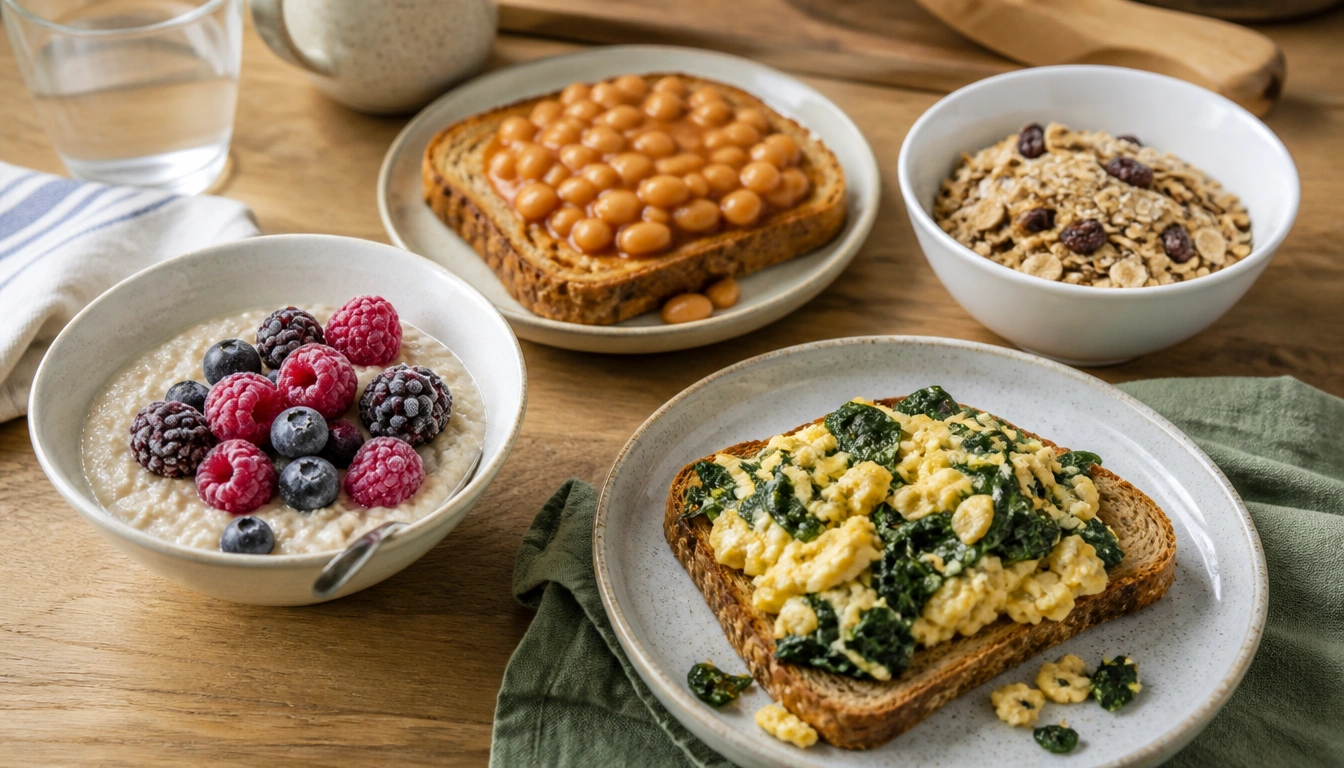
The cheapest easy breakfasts that are actually high in fiber are usually built from oats, wholemeal bread, baked beans, bran, and frozen fruit or vegetables. These foods are filling because fiber slows digestion and helps steady appetite through the morning. You do not need expensive “superfoods” to get there—store-brand basics can do the job well when you combine them simply and keep portions realistic.
Key Takeaways
- Rolled oats, wholemeal bread, tinned beans, and wheat bran are usually the most affordable fiber staples to buy first.
- Oats bring more soluble fiber, especially beta-glucan, while bran and many whole grains add more insoluble fiber.
- Frozen fruit and vegetables often cost less than fresh, waste less, and still work well in breakfast recipes.
- Increase breakfast fiber gradually over 2 to 3 weeks and drink enough fluids to reduce bloating or discomfort.
- Children and people with sensitive digestion may need smaller portions or gentler fiber choices to avoid feeling too full too quickly.
Why breakfast is the easiest place to add cheap fiber
Breakfast is a practical place to improve fiber intake because the ingredients are simple, repetitive, and easy to batch-shop. A bowl of oats, a slice of wholemeal toast, or a tin of beans can add a meaningful amount of fiber without pushing the grocery bill up much. According to academic nutrition guidance, high-fiber meals help slow carbohydrate digestion, support fullness, and make it easier to avoid mid-morning snacking driven by hunger rather than need.
For budget shoppers, the main advantage is that fiber-rich foods are often inexpensive basics rather than specialty products. Store-brand oats, bread, beans, bran, and frozen produce are usually cheaper per serving than breakfast bars, premium cereals, or smoothie add-ins. They also fit a food-first approach: one simple purchase can become several breakfasts, which makes planning easier and reduces waste.
If you are trying to spend less, think in terms of a breakfast “base” rather than a recipe that needs many separate ingredients. A fiber-rich base can be oats, toast, or cereal, then you add one low-cost topper for flavor, protein, or volume. That keeps breakfast fast, affordable, and more likely to become a habit.
Low-cost high-fiber breakfast building blocks
The best budget building blocks are the foods that deliver the most fiber for the least money and the least fuss. Rolled oats are a classic example because they are shelf-stable, easy to portion, and flexible enough for hot porridge or overnight oats. Wholemeal bread gives you a quick fiber upgrade over refined white bread and pairs well with both sweet and savory toppings.
Tinned baked beans and other tinned pulses are especially useful because they bring fiber plus protein, which can make breakfast more satisfying. Wheat bran is another low-cost option that adds concentrated fiber to cereal, yogurt, or porridge. It is useful when you want to raise fiber without changing the whole meal much.
Frozen fruit and frozen vegetables round out the budget list. Frozen berries, mixed fruit, spinach, peppers, or greens can be cheaper than fresh and are less likely to spoil before you use them. That makes them especially helpful for breakfasts, where small amounts are enough to add color, flavor, and extra fiber with very little waste.
| Budget ingredient | Best use | Why it helps |
|---|---|---|
| Rolled oats | Hot oats, overnight oats, baked oats | Affordable base with soluble fiber |
| Wholemeal bread | Toast, sandwiches, egg toast | Easy swap for a higher-fiber staple |
| Baked beans | Savory toast or breakfast bowl | Fiber plus protein for fullness |
| Wheat bran | Stir into cereal or oats | Cheap way to raise fiber fast |
| Frozen fruit | Top oats or cereal | Lower waste, often lower cost |
| Frozen vegetables | Eggs, toast toppings, breakfast bowls | Extra fiber and volume with minimal prep |
Easy breakfast ideas with oats, toast, and pantry cereal
Basic oats are one of the cheapest high-fiber breakfasts you can make. Cook them with water or milk, then add frozen fruit, cinnamon, or a spoonful of yogurt if you want more protein or creaminess. Overnight oats work well for busy mornings because you mix the ingredients the night before and grab them cold the next day. If you are watching cost closely, use the oats as the main feature and keep toppings simple.
Wholemeal toast with baked beans is another strong option. It is filling, fast, and uses ingredients many households already keep on hand. Choose wholemeal or whole-grain bread, warm the beans, and spoon them over toast. If you want a little more balance, add a piece of fruit or a side of tomatoes, but the base combination already does a lot of work on a budget.
A pantry muesli bowl can be made from rolled oats, a little wheat bran or bran flakes, and a small handful of dried fruit such as raisins. This is useful when you do not want to cook, and it lets you use shelf-stable ingredients that are easy to buy in larger packs. The bran increases the fiber density, while the oats keep the bowl more familiar and less harsh in texture.
For a simple rule, start with one main fiber base and one low-cost enhancer. Oats plus frozen fruit. Toast plus beans. Cereal plus bran and dried fruit. These combinations are easy to repeat, which matters more than chasing novelty when the goal is affordable consistency.
Savory eggs with frozen greens on whole-grain toast
If you prefer a savory breakfast, eggs with frozen greens on whole-grain toast are a strong budget choice. Eggs contribute protein, while frozen spinach, kale, peppers, or mixed vegetables add fiber and bulk. Spoon the vegetables into the pan while the eggs cook, and serve everything on toasted whole-grain bread.
This kind of meal works because it balances comfort and practicality. You get something warm and filling without relying on expensive ingredients or a lot of prep. Frozen vegetables are especially useful here because you can pour out only what you need and return the rest to the freezer, which helps control both cost and waste.
If you want to make the meal even more filling, add a side of fruit or another slice of toast. If you want to keep it lighter, use fewer vegetables and one slice of bread. The point is not to force a huge high-fiber plate onto everyone, but to build a breakfast that fits the morning and still supports steady energy.
How to shop smart for fiber on a budget
Store brands are often the first place to save money on fiber-rich breakfasts. Plain oats, wholemeal bread, frozen vegetables, frozen fruit, and tinned beans are all commonly available as supermarket own-label versions. These are usually the best-value options because the ingredient list is short and the food itself does most of the nutritional work.
Bulk packs can help if you will actually use them before they go stale or freezer-space runs out. Oats and bran are especially good bulk buys because they store well. Bread can be frozen in slices, which lets you buy a larger loaf without worrying about mold or waste. Frozen fruit and vegetables are often cheaper than fresh out of season, and they remove the pressure to “use them up” quickly.
Label reading matters most for breads, cereals, and baked beans. Look for higher-fiber or wholegrain wording on bread, and compare cereals by fiber content rather than marketing claims on the front of the box. For baked beans, lower-sugar or lower-salt versions can be helpful when available, but the bigger win is choosing a bean-based breakfast instead of a lower-fiber packaged option.
Do not assume that expensive means healthier. Many premium breakfast products are mostly refined grains, added sugar, or marketing. The most budget-friendly approach is usually the simplest one: buy the basic ingredient, then add a low-cost fiber booster like bran, beans, or frozen produce.
How to increase fiber without discomfort
More fiber is not always better overnight. If you raise intake too fast, bloating, gas, and stomach discomfort are common. Public health guidance commonly suggests increasing fiber gradually over 2 to 3 weeks so the gut has time to adapt. That is especially useful if your current breakfast is low in fiber and you want to make a bigger change.
Fluid matters too. Fiber works best when you are well hydrated, so pair higher-fiber breakfasts with water or another suitable drink. A dry, bran-heavy breakfast without enough fluids can feel uncomfortable for some people. Starting with smaller additions is often easier than trying to overhaul the whole meal at once.
A practical way to build up is to change one breakfast at a time. For example, begin by swapping white toast for wholemeal toast, or add a small spoonful of bran to cereal a few times a week. Once that feels comfortable, increase the portion or add another fiber source. Gradual changes are more likely to last and less likely to cause you to give up.
Who should adjust these breakfasts
Children often need different breakfast planning from adults. They may have smaller stomachs, so a very bulky, high-fiber plate can crowd out calories they still need for growth and activity. For them, smaller portions of fiber-rich foods often work better than large servings of bran-heavy cereal or a very large bowl of beans. A slice of wholemeal toast, a modest bowl of oats, or fruit added to a familiar breakfast is often enough.
People with IBS or sensitive digestion may also need to tailor the type and amount of fiber. Some higher-fiber foods are more comfortable than others, and some people do better with gentler changes rather than a big jump in bran or beans. If a food consistently causes symptoms, it is worth adjusting the form, portion size, or timing rather than forcing it.
If you have ongoing digestive symptoms, unexplained weight loss, or persistent changes in bowel habits, individual medical advice matters. Fiber is a useful tool, but it is not a one-size-fits-all fix. The best breakfast is the one you can tolerate and repeat comfortably.
A simple 7-day mix-and-match breakfast rotation
You do not need seven different recipes to keep breakfast from getting boring. A small set of ingredients can be rotated in different ways across the week. That keeps shopping simple and helps you use up what you buy.
Try this pattern: Monday, oats with frozen fruit. Tuesday, wholemeal toast with beans. Wednesday, pantry muesli with bran and raisins. Thursday, eggs with frozen greens on toast. Friday, overnight oats with cinnamon. Saturday, toast with beans and a side of fruit. Sunday, a leftover-mix bowl using whichever ingredients remain. If you want variety, swap frozen berries for chopped frozen peaches, or use spinach one day and mixed vegetables the next.
This kind of rotation works because it repeats the same low-cost staples in different combinations. That reduces decision fatigue, makes shopping easier, and keeps the breakfast budget under control. It also helps you notice which versions feel best on your stomach and which ones keep you full longest, which is useful information for making the plan sustainable.
Frequently Asked Questions
How can I make oats, toast, or cereal higher in fiber without spending more?
Use add-ins you already buy or can buy cheaply: rolled oats, wheat bran, wholemeal bread, tinned beans, frozen fruit, and frozen vegetables. The easiest upgrades are swapping white bread for wholemeal, stirring bran into cereal or oats, and adding beans or frozen produce to breakfast plates.
What budget breakfast foods are naturally high in soluble and insoluble fiber?
Oats are known for soluble fiber, especially beta-glucan. Bran and many whole grains contribute more insoluble fiber. Beans, lentils, wholemeal bread, frozen fruit, and vegetables all help increase total fiber, but they do so in slightly different ways and can fit different preferences.
How much fiber should an adult aim for at breakfast or across the day?
Public health guidance commonly recommends about 30 grams of fiber per day for adults. There is no single required breakfast amount, but breakfast is a useful time to add a meaningful share of that total with oats, whole grains, fruit, vegetables, or beans.
How can I increase breakfast fiber without causing bloating or stomach discomfort?
Increase it slowly over 2 to 3 weeks rather than all at once, and drink enough fluids with your meals. Start with smaller portions of oats, bran, beans, or vegetables, then build up as your digestion adapts. If symptoms persist, adjust the type or amount of fiber.
Which budget high-fiber breakfasts are better for kids or people with sensitive digestion?
Children often do better with smaller portions so breakfast does not crowd out needed calories. For sensitive digestion, gentler options like modest servings of oats, toast with a small amount of beans, or fruit with cereal may be easier than a large bran-heavy meal. Individual tolerance matters most.
The Bottom Line
Cheap high-fiber breakfasts usually come from the same small group of foods: oats, wholemeal bread, beans, bran, and frozen produce. Those ingredients are affordable, filling, and flexible enough to use in sweet or savory meals.
The smartest approach is to build gradually, use store brands, and keep the recipe simple enough to repeat. If you add fiber slowly and pair it with fluids, you are more likely to feel better, waste less food, and stick with the habit.
For most budget shoppers, the best breakfast is not a special product. It is a practical combination of low-cost staples that gives you fiber, steady energy, and enough satisfaction to carry you through the morning.
Medical disclaimer
Medical disclaimer: This content is for educational and informational purposes only and is not a substitute for professional medical advice, diagnosis, or treatment. Dietary needs and supplement suitability vary by individual.
Sources
- Academic Research Institution — sdstate.edu. Accessed October 2026.
- Health & Clinical Editorial — webmd.com. Accessed October 2026.
