
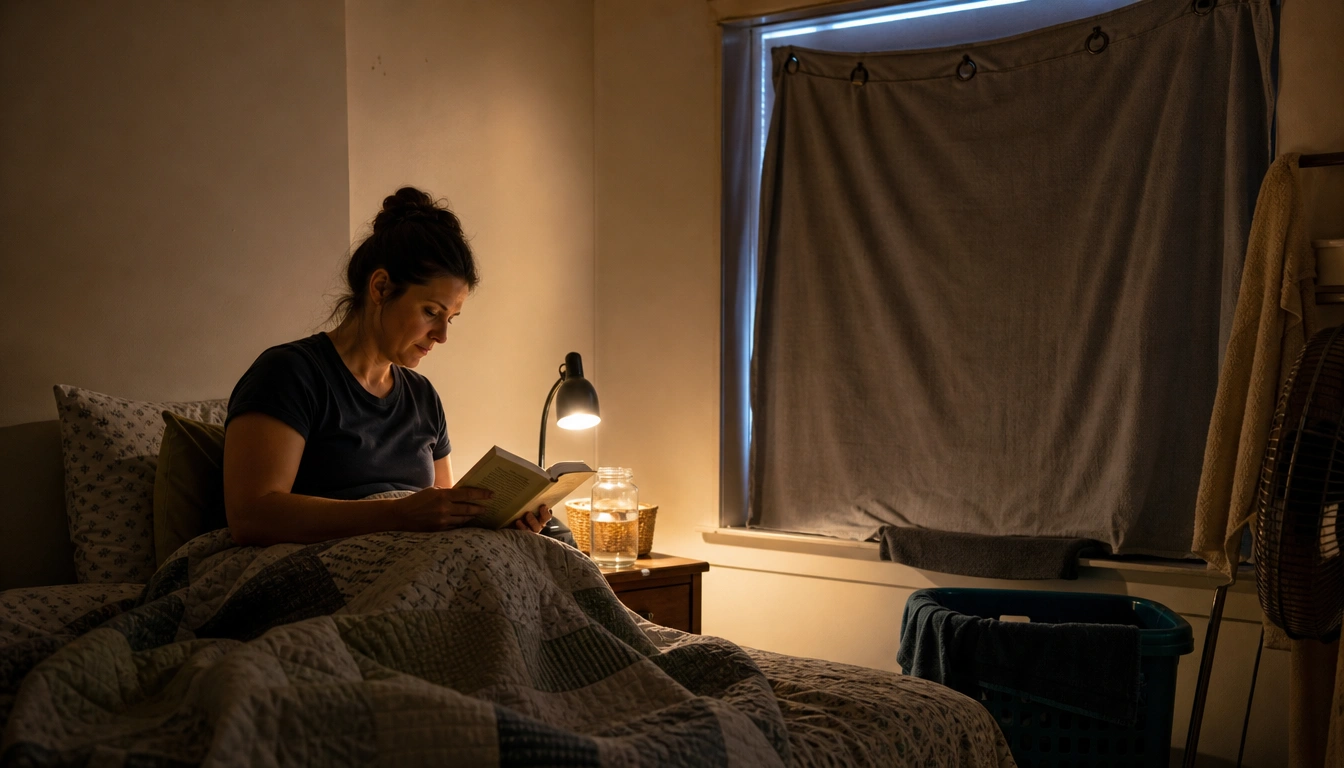
If you want to relax and sleep better tonight for little or no money, start with the biggest sleep wins first: finish heavy meals a few hours before bed, stop caffeine and alcohol early enough to matter, put screens away for 30 to 60 minutes, and use free calming habits such as breathing, stretching, reading, or journaling. Then improve the room as best you can with simple, low-cost fixes for light, noise, and temperature.
Key Takeaways
- The cheapest sleep routine focuses on habits first: food timing, screen limits, relaxation, and a calmer room.
- If money and time are tight, start with the highest-value step rather than trying to buy sleep products.
- Paper journaling, library books, free audio, and simple breathing exercises can replace costly wellness tools.
- Shared housing, bright windows, and noise can often be managed with household items or free phone apps.
- Shift workers and older adults may need different timing, but consistency still matters more than fancy gear.
Start with the highest-value steps
A budget-friendly evening wind-down checklist works best when you use your time where it matters most. The first priorities are the habits that most directly affect sleep pressure and alertness: stop heavy meals close to bedtime, cut off caffeine and alcohol early, reduce stimulation, then calm your body, then improve the sleep space. That order matters because a noisy room is hard to tolerate if your mind is still activated, and a perfect room will not fully compensate for late caffeine or a heavy meal.
For many adults, a 60- to 90-minute wind-down is enough. If that feels too long, shorten it rather than skipping it. A realistic budget routine can be very simple:
- 90 to 60 minutes before bed: finish eating, gather what you need for tomorrow, and decide when screens will stop.
- 60 to 30 minutes before bed: switch to low-stimulation activities such as reading, journaling, or quiet audio.
- 30 minutes before bed: do breathing, light stretching, or a warm shower if available.
- Last 15 minutes: make the room as dark, quiet, and cool as you can with what you already have.
Public health guidance from the CDC and NHS emphasizes consistency, device limits before bed, and a sleep environment that is quiet, dark, and comfortable. None of those require expensive products.
Tip: If you only do one thing tonight, choose the step most likely to help your sleep pattern. For many people, that is moving dinner earlier or putting the phone away before bed.
Meal, caffeine, and alcohol cutoffs
Food and drink timing can make a bigger difference than many people expect. A heavy meal late at night can keep digestion active when your body is trying to slow down. If possible, finish your last large meal about 2 to 3 hours before bed. If you are hungry later, a light snack is usually easier on sleep than going to bed uncomfortably full or very hungry.
Caffeine deserves extra attention because it can linger in the body for hours. Coffee, black tea, green tea, cola, energy drinks, and even chocolate can interfere with sleep if taken too late. Many people do best by avoiding caffeine in the later afternoon and evening, especially if they are sensitive to it. Alcohol is not a reliable sleep aid either. It may make you sleepy at first, but it can fragment sleep later in the night and leave you less rested.
If budget is a concern, you do not need special sleep drinks or supplements. Water is usually enough. If you want something warm and comforting, a caffeine-free herbal tea may help some people, but it is optional rather than necessary. The most useful low-cost move is often simply setting a cutoff time and sticking to it most nights.
For people with reflux, nausea, diabetes, or other health conditions, meal timing may need to be individualized. If you have been told to follow a specific eating plan, use that guidance first.
Screen reduction made realistic
Phones are convenient, but they are also one of the easiest ways to stay mentally “on” at night. Bright screens can suppress melatonin, and the content itself can keep your brain alert. The goal is not perfection. The goal is to create a low-friction handoff from scrolling to something quieter.
Start by giving yourself a clear off-ramp. Put a charger across the room, set one alarm if needed, and choose a stop time before you start scrolling. If you use your phone for music or alarms, switch it to a single purpose: audio only, screen face down, brightness as low as practical. If you need a replacement activity, use one that feels easy, not ambitious. Free or low-cost options include:
- Reading a borrowed library book, magazine, or old paperback.
- Writing tomorrow’s to-do list on paper so you are not rehearsing it in your head.
- Listening to a free podcast, audiobook, or ambient sound while keeping the screen off.
- Doing a simple paper puzzle, crossword, or coloring page if that feels calming.
If quitting screens abruptly feels hard, reduce the intensity first. Dim the display, avoid stressful content, and set a timer for 10 or 15 minutes less scrolling than usual. Small changes are still useful. The aim is to lower stimulation, not to create another strict rule you will dread.
Low-cost relaxation methods that actually fit real life
Relaxation does not have to mean a long routine or a purchase. The point is to lower physical and mental arousal so sleep can come more easily. Breathing exercises are one of the simplest options because they are free, private, and can be done in bed or on a chair. Slow, steady breathing with a longer exhale than inhale can help shift the body out of “go mode.”
Gentle stretching is another low-cost option. Focus on areas that carry tension: neck, shoulders, back, hips, and calves. Keep it light. The point is not exercise performance. If you prefer a more structured release, try progressive muscle relaxation: tighten one muscle group for a few seconds, then let it go, moving from feet upward.
Journaling can be especially helpful if your mind gets busy at night. It does not need to be polished. A quick “brain dump” on a scrap of paper can hold tomorrow’s tasks, worries, or reminders so you are less likely to replay them in bed. If you like a ritual, pair journaling with a warm shower or bath when possible. The water does not need to be fancy or expensive. Even a short warm rinse can feel like a boundary between the day and sleep.
Choose one or two methods, not all of them. A short, repeatable routine is more realistic than an elaborate one.
DIY sleep-environment fixes for light, noise, and temperature
A dark, quiet, cool room helps sleep, but many people do not have ideal conditions. Shared housing, streetlights, thin walls, and poor temperature control are common. You can still make meaningful improvements without specialized equipment.
For light, first use what is already available. Close blinds or curtains fully if you have them. If light leaks around windows or doors, roll up a towel or spare clothing and place it along the gap. A T-shirt, scarf, or spare cloth can also help cover bright indicator lights from electronics. If you are in a pinch, cardboard or temporary covering can reduce a bright window’s glow enough to matter.
For noise, free phone apps that play white, pink, brown, or nature sounds can be useful when neighbors, traffic, or roommates are the main problem. A fan may also provide steady background sound if you already own one. Earplugs can help, but they are not required. If you do not have them, try moving to the quietest part of the room, placing soft items near the bed, or choosing a position farther from the door or street-facing wall.
For temperature, try lighter bedding, a breathable shirt, or cracking a window slightly if safe and practical. If your space gets warm, a cool shower before bed can sometimes help more than trying to cool the whole home. The goal is comfort, not a perfect temperature reading.
How to adapt the checklist for shift work and irregular schedules
Shift workers often need to wind down at times when the rest of the world is active. That makes consistency even more important. The key is to anchor the routine to your sleep time, not the clock on the wall. If you come home after a night shift, use the same sequence every time: light meal if needed, reduce stimulation, calm the body, and block the room as best you can before sleep.
Daytime sleep usually needs stronger light control. A dark blanket over curtains, a towel at the door, or another low-cost barrier can help the room feel more nighttime-like. If sunlight is an issue, wearing sunglasses on the way home may reduce the bright-light cue that tells your body to stay alert. Once you are ready to sleep, keep the routine short and predictable.
Older adults may need a slightly different approach. Age-related sleep changes can make bedtime routines feel less dramatic, so schedule consistency and daytime light exposure matter a lot. Regular wake times, morning light, and a calm evening routine can be more helpful than trying to force sleep with complicated rituals. If naps are part of your life, keep them brief enough that they do not replace nighttime sleep.
No matter your schedule, the best routine is one you can repeat. A simple version done most days usually works better than an elaborate one done only occasionally.
Common mistakes that make cheap sleep routines less effective
Some habits seem harmless but can cancel out the benefits of a low-cost wind-down. One common mistake is treating the routine as a single product rather than a sequence. A diffuser, blanket, or app may be pleasant, but it will not do much if you are eating a heavy meal late, scrolling until lights-out, or keeping the room bright and noisy.
Another mistake is trying to do too much at once. If your routine feels like homework, you are less likely to keep it. Pick the smallest version that still helps. For example, you might choose: stop caffeine by late afternoon, put the phone away 30 minutes before bed, and do five minutes of breathing. That can be enough to start.
People also underestimate how often “sleep hygiene” fails because the issue is not the routine itself. Pain, anxiety, restless legs, snoring, breathing pauses, medication side effects, and irregular work schedules can all make sleep harder. A budget routine may still help, but it should not be used to ignore a deeper problem. If you are relying on alcohol, over-the-counter sleep aids, or increasingly strict rules just to get through the night, that is a sign to reassess.
Finally, do not compare your routine to someone else’s idealized version. The point is to lower friction, not to create a perfect lifestyle.
Warning signs that the problem may be more than sleep hygiene
A wind-down routine is useful for ordinary sleep friction, but it is not a fix for every sleep problem. The CDC and NHS both recommend seeking professional help when sleep trouble is persistent or comes with other concerning symptoms. If you have difficulty falling asleep or staying asleep several nights a week for more than a month, it is worth talking with a healthcare professional.
Get checked sooner if you snore loudly and seem to gasp or choke during sleep, wake up feeling unrefreshed despite enough time in bed, feel extremely sleepy during the day, or notice restless or uncomfortable sensations in your legs that make it hard to sleep. These problems can point to conditions that need medical evaluation rather than just a better evening routine.
It is also worth asking for help if stress, low mood, anxiety, pain, or medication changes are driving the sleep problem. In those cases, the best next step may be treatment for the underlying issue, not a stricter checklist. A cheap routine can support better sleep, but it should not delay care when symptoms suggest something more serious.
If you are unsure whether your sleep difficulty is “normal,” pay attention to how long it has lasted, how often it happens, and whether it affects daytime function. Those details are useful to bring to a clinician.
Frequently Asked Questions
What free or low-cost habits should I do 1–2 hours before bed?
Start with the habits that give the biggest return: finish heavy meals early, cut off caffeine, reduce alcohol, put screens away, and switch to quiet activities. Free options like reading, journaling, breathing exercises, or a short stretch can help your body and mind slow down without buying anything.
How can I reduce screen time at night without making the routine feel difficult?
Make the change easier rather than stricter. Pick a phone cut-off time, charge the device away from the bed, and replace scrolling with something simple such as audio, reading, or a paper to-do list. If full screen-free time feels too hard, start with 10 to 15 fewer minutes of scrolling.
What can I do if my room is noisy, bright, or too warm but I cannot buy sleep gear?
Use what you already have: towels or clothing to block light gaps, free noise apps or a fan for steady background sound, and lighter bedding or a cool shower for warmth. Small environmental changes can help even if the room is far from perfect.
Should I avoid caffeine, alcohol, or late meals in the evening?
Yes, for many people those are the first things to adjust. Caffeine can stay in your system for hours, alcohol can disrupt sleep later in the night, and heavy late meals can make it harder to settle. If you need a starting point, cut those back before trying more complicated sleep strategies.
What should shift workers do if they need to wind down during the day?
Use the same routine after every shift, even if the clock says morning. Block daylight as best you can, keep the sequence predictable, and protect your sleep window from interruptions. Consistency matters more than making the routine look like a traditional bedtime.
The Bottom Line
A better evening routine does not have to cost money. If you are on a budget, focus first on meal timing, caffeine and alcohol cutoffs, reduced screen use, and a short calming routine that you can repeat.
After that, improve the room as best you can with household items and free tools. If your sleep problem is persistent, severe, or comes with snoring, gasping, leg discomfort, or major daytime sleepiness, it may be more than sleep hygiene and worth medical care.
Medical disclaimer
Medical disclaimer: This content is for educational and informational purposes only and is not a substitute for professional medical advice, diagnosis, or treatment. Dietary needs and supplement suitability vary by individual.
Sources
- National Health Service (NHS) — uhs.nhs.uk. Accessed October 2026.
- Centers for Disease Control and Prevention (CDC) — cdc.gov. Accessed October 2026.
- National Health Service (NHS) — royalberkshire.nhs.uk. Accessed October 2026.
- National Health Service (NHS) — royalpapworth.nhs.uk. Accessed October 2026.
- National Health Service (NHS) — uhb.nhs.uk. Accessed October 2026.
- National Health Service (NHS) — wwl.nhs.uk. Accessed October 2026.
- Centers for Disease Control and Prevention (CDC) — cdc.gov. Accessed October 2026.
