
Simple tuna lunch ideas can be cheap, fast, and still satisfying if you build them around canned tuna plus fiber-rich add-ins like beans, whole grains, greens, and fruit. For most budget shoppers, canned light tuna is the more flexible everyday choice, while albacore is better kept to less frequent use because it tends to have more mercury. Look for water-packed or no-salt-added options when you can, and use lemon, vinegar, herbs, or yogurt to keep flavor high without relying on salty sauces.
Key Takeaways
- Canned tuna is a budget protein base that stores well, cooks instantly, and pairs easily with pantry staples.
- Beans, grains, and vegetables turn one can of tuna into a more filling lunch without much added cost.
- Canned light tuna is usually the better everyday choice; albacore should be eaten less often because of mercury concerns.
- Water-packed or no-salt-added tuna, rinsed beans, and acidic dressings can help keep sodium lower.
- A tuna lunch can stay simple and balanced with minimal prep: protein, fiber, produce, and a little healthy fat.
Why canned tuna works for budget lunches
Canned tuna fits budget lunch planning because it is shelf-stable, affordable, and ready the moment you open the can. That means less spoilage, less food waste, and less time spent cooking. For shoppers trying to stretch every dollar, that matters as much as the nutrition profile.
According to the U.S. Dietary Guidelines for Americans and MyPlate, seafood belongs in a healthy eating pattern because it provides protein and other useful nutrients. Tuna also brings omega-3 fats, vitamin D, and selenium, which helps make it more than just a cheap protein source. The practical advantage is that you can keep it in the pantry and build lunch when fresh food is running low.
For quick lunches, tuna works especially well because it already has a savory flavor and a tender texture. That lets you spend your budget on low-cost foods that add volume and balance, such as beans, rice, oats, pasta, crackers, greens, carrots, apples, or cucumbers.
How to build a balanced tuna lunch on a budget
A filling tuna lunch usually works best when it includes four parts: protein, fiber, produce, and a small amount of healthy fat. Tuna covers the protein. Beans, whole grains, and vegetables do most of the work for fullness. A little olive oil, yogurt, avocado, or nuts can improve texture and help the meal feel complete.
MyPlate’s simple framework is useful here: make half the plate fruits and vegetables, then add grains and protein. You do not need expensive ingredients to follow that idea. A can of tuna over brown rice with frozen peas and a squeeze of lemon is one example. Tuna with white beans and chopped tomatoes is another. Tuna on whole-grain crackers with cucumber slices also works when you need something desk-friendly.
The goal is to avoid a lunch that is only tuna and mayo. That can feel heavy, but not especially filling for long. Adding fiber-rich sides slows digestion and makes the meal more substantial, which is helpful if lunch needs to carry you through a long afternoon.
Budget ingredient swap framework
Cheap tuna lunches get easier when you think in swaps rather than recipes. If you have tuna, you can choose from budget-friendly foods in each category and build what you already own.
Beans: canned cannellini, chickpeas, black beans, or lentils add fiber and extra protein. Rinse them to reduce sodium and improve flavor.
Whole grains: brown rice, quinoa, whole-wheat pita, whole-grain crackers, cooked barley, or even leftover oats can help a tuna lunch feel more substantial.
Greens and vegetables: spinach, romaine, cabbage, celery, carrots, cucumbers, tomatoes, or frozen peas all work. Use what is cheapest or already in the fridge.
Fruit: apple, grapes, orange segments, or berries can add freshness and contrast, especially in tuna salads.
Simple condiments: lemon juice, vinegar, mustard, pepper, dill, garlic powder, and yogurt make a tuna lunch taste bright without buying a special sauce.
This swap mindset also helps if prices change from week to week. If one grain is expensive, use another. If fresh produce is pricey, rely on frozen vegetables or shelf-stable beans. The tuna remains the anchor, and the rest flexes around your budget.
Three quick tuna lunch ideas that stay affordable
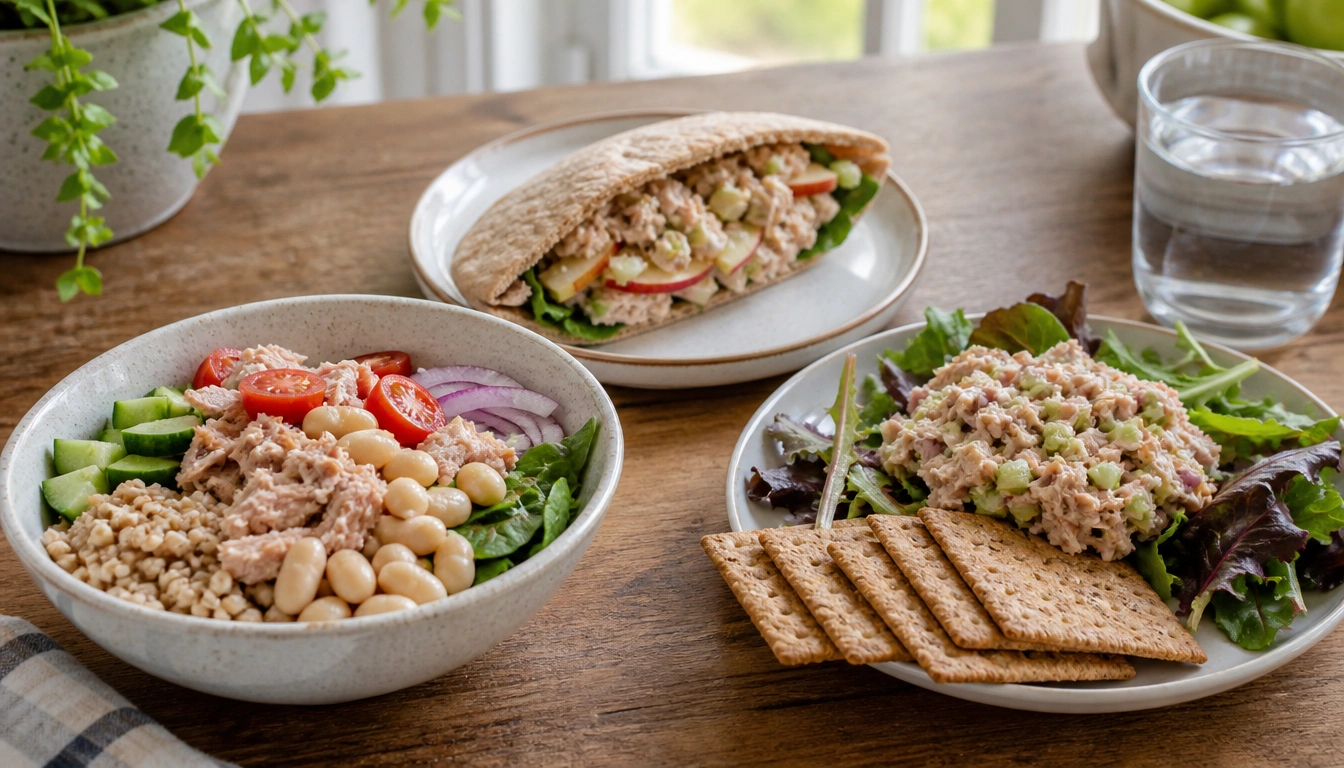
Mediterranean white bean and tuna grain bowl: Mix drained light tuna with rinsed cannellini beans, cooked brown rice or quinoa, chopped spinach or arugula, lemon juice, and a drizzle of olive oil. This is a strong option when you want a lunch that feels larger than the ingredients suggest. The beans and grain stretch one can of tuna into a more filling bowl, while the lemon keeps the flavor clean and fresh.
Apple and cheddar tuna pita with a lighter binder: Stir tuna with diced apple, a spoonful of plain yogurt or light mayonnaise, pepper, and a little shredded cheddar if you have it. Spoon into a whole-wheat pita with lettuce. This version brings crunch, sweetness, and more texture without needing much prep. Plain yogurt is a useful swap if you want a lighter binder and a little extra protein.
Italian-style tuna salad over greens or whole-grain crackers: Combine tuna with chopped tomatoes, cucumber or celery, red onion, olive oil, and a splash of red wine vinegar. Serve it over greens, or pile it onto whole-grain crackers. This one works well if you want a tuna lunch that feels more like a salad and less like a sandwich filling. The vinegar gives enough brightness that you do not need a bottled dressing.
These are ideas, not fixed recipes. If you do not have pita, use crackers or toast. If you do not have apples, try celery or chopped pickles in a smaller amount. The most useful lunch is the one you can make from what is already on hand.
How to choose the right tuna: light vs albacore, mercury, and how often to eat it
For most budget shoppers, canned light tuna is the easier everyday pick. It is usually made from smaller tuna species such as skipjack and tends to have lower average mercury levels. The FDA and EPA generally place canned light tuna in the “Best Choice” category, which is why it is commonly recommended as the more flexible option for regular meals.
Albacore, also called white tuna, is larger and tends to contain more mercury. The FDA and EPA categorize it as a “Good Choice,” which means it can still fit into a healthy eating pattern, but it should be used less often than light tuna. A practical rule for many adults is to choose light tuna more often and keep albacore occasional.
If you are comparing price tags, light tuna is often the better value because it works for more frequent lunches. Albacore can be a nice change of pace if you prefer its firmer texture and milder taste, but it is not usually the best everyday budget option. If you are trying to plan several tuna lunches in one week, light tuna is the safer default.
When you want seafood variety, you do not have to rely on tuna alone. The U.S. Dietary Guidelines for Americans encourage a range of seafood choices across the week, which helps keep meals balanced and reduces the chance of leaning too heavily on one fish type.
Sodium-smart shopping and prep tips
Many tuna lunches become too salty because of the extras, not just the fish. Canned tuna, canned beans, crackers, cheese, and bottled dressings can all add sodium quickly. If sodium matters for your health, choose the lower-salt version whenever it is available.
Look for water-packed tuna or no-salt-added tuna when you can find it. Then rinse canned beans well before using them. That small step can noticeably improve the flavor and lower the sodium load. If you use canned vegetables, check for no-salt-added versions there too.
For flavor, lean on acidic and aromatic ingredients instead of salty sauces. Lemon juice, red wine vinegar, rice vinegar, dill, black pepper, garlic powder, onion powder, mustard, and plain yogurt can all make tuna taste lively without much sodium. If you like creamy tuna salad, combine yogurt with a little mustard and herbs instead of reaching straight for a salty packaged dressing.
Also watch the “small extras” that can quietly raise sodium: pickles, olives, seasoned crackers, and cheese-heavy add-ins. None of these are off-limits, but using them in smaller amounts keeps the meal more balanced.
Who should be more cautious
Pregnant people, breastfeeding parents, and families feeding young children should pay closer attention to mercury guidance. The FDA and EPA advise choosing lower-mercury seafood options more often, and canned light tuna is generally the better choice than albacore for these groups. The goal is not to avoid fish entirely, but to choose types and portions with more care.
For children, the safest approach is to use age-appropriate portions and keep the meal simple rather than heavily salted or heavily processed. For adults who are pregnant or breastfeeding, tuna can still contribute useful protein and omega-3 fats, but variety matters. Rotating in other low-mercury seafood choices can help reduce repeated exposure from any one fish.
People with kidney disease, strict sodium limits, fish allergies, or other medical restrictions may need more personalized guidance. In those situations, a doctor or registered dietitian can help set the right balance of protein, sodium, and seafood frequency.
Simple meal-prep and storage tips for make-ahead tuna lunches
Tuna lunches are convenient because the components can be prepped in parts. You can keep the tuna unopened until needed, cook grains in batches, and wash produce ahead of time. That way, lunch comes together in minutes instead of requiring a full cooking session.
If you plan tuna salads for several days, store the tuna mixture separately from bread, crackers, or greens so the texture stays better. Add wetter ingredients, such as tomatoes or yogurt, close to eating time if you want the lunch to stay crisp. Grain bowls and bean-based tuna salads generally hold up well for meal prep.
Use clean containers and refrigerate assembled tuna lunches promptly. If you are packing lunch for work, a small ice pack helps keep the food safe until mealtime. For best quality, make only what you can reasonably eat within a few days, and follow the package guidance on any opened canned foods or mixed salads.
Meal prep does not need to be fancy. One can of tuna, one bean, one grain, and one vegetable is enough to create a practical lunch formula you can repeat with small changes all week.
Frequently Asked Questions
How often can I eat canned tuna each week without overdoing mercury?
For most adults, canned light tuna can fit a few times per week, while albacore is usually kept to once weekly or less often because it contains more mercury. Exact needs can vary with age, pregnancy status, and the rest of your seafood intake.
Which type of canned tuna is the best choice for a budget-conscious shopper: light or albacore?
Canned light tuna is usually the better budget choice because it tends to be cheaper, lower in mercury, and easier to use more often. Albacore can still work, but it is better as an occasional option rather than the main tuna you buy every week.
How can I make tuna lunches more filling using cheap pantry staples like beans, grains, and vegetables?
Add one or more fiber-rich foods to the tuna: rinsed beans, brown rice, whole-grain crackers, pita, cabbage, carrots, spinach, cucumbers, or frozen peas. These ingredients add volume and staying power without needing much extra money or prep time.
What are low-sodium ways to build a tuna lunch if I’m watching salt?
Choose water-packed or no-salt-added tuna when possible, rinse canned beans, and flavor the meal with lemon, vinegar, mustard, herbs, and plain yogurt instead of salty bottled sauces. Also watch sodium from crackers, cheese, pickles, and canned vegetables.
Can pregnant people, breastfeeding parents, or kids eat tuna lunches safely?
Yes, tuna can fit for these groups when they choose lower-mercury options more often, especially canned light tuna. Albacore should be less frequent. Portions and overall seafood variety matter, so people with special medical needs should get personalized advice.
The Bottom Line
Simple tuna lunch ideas work best when tuna is treated as a budget protein base, not the whole meal. Pair it with beans, grains, and vegetables to make lunch more filling without spending much more.
For everyday shopping, canned light tuna is usually the most practical choice, while albacore is best used less often because of mercury concerns. If sodium is a priority, look for lower-salt tuna and lean on lemon, vinegar, herbs, or yogurt for flavor.
With a few pantry staples, you can rotate between grain bowls, tuna pitas, and tuna salads on greens or crackers. That gives you variety, speed, and decent nutrition without turning lunch into a big project.
Medical disclaimer
Medical disclaimer: This content is for educational and informational purposes only and is not a substitute for professional medical advice, diagnosis, or treatment. Dietary needs and supplement suitability vary by individual.
Sources
- U.S. Food and Drug Administration (FDA) — fda.gov. Accessed November 2026.
- U.S. Food and Drug Administration (FDA) — fda.gov. Accessed November 2026.
- myplate.food — myplate.food. Accessed November 2026.
