
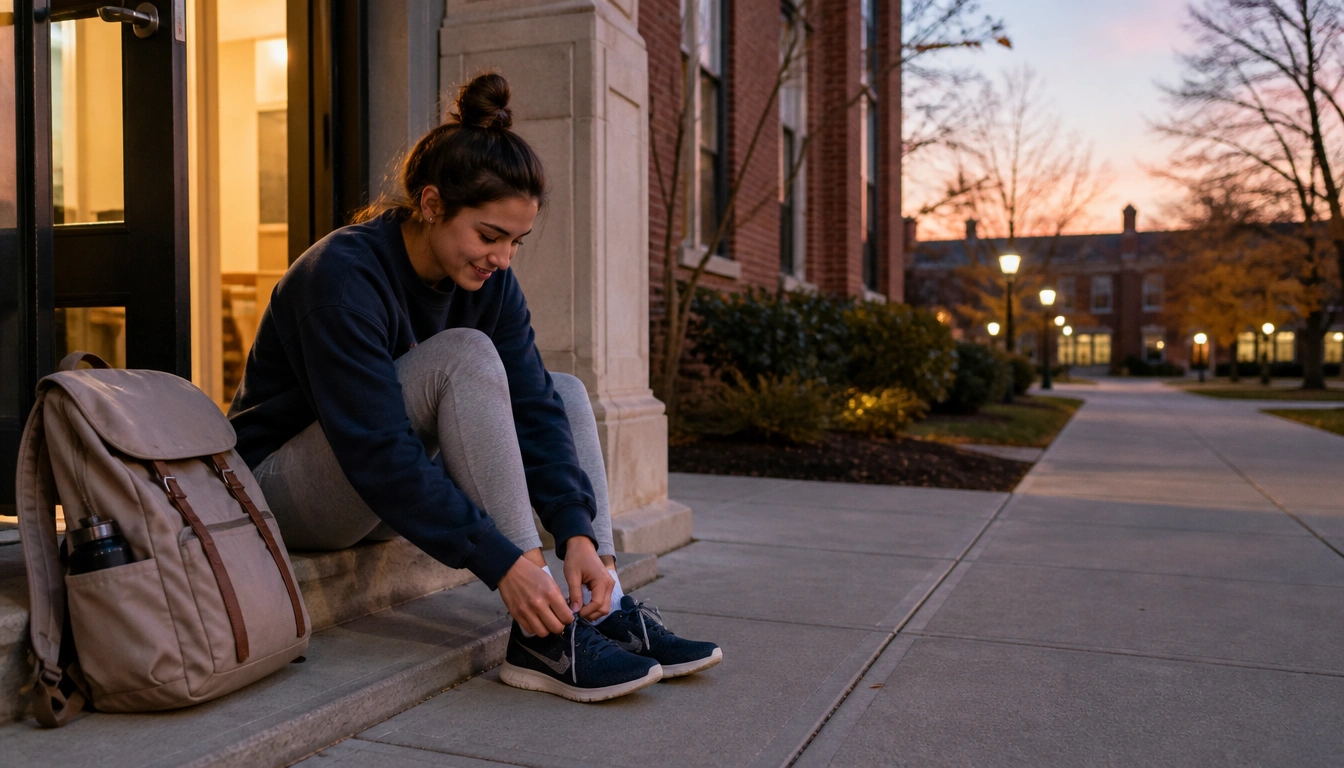
You do not need a full workout after class or a campus job to make progress. A practical after-work movement routine for college students can be as simple as 15 to 20 minutes of light mobility, a brisk walk, or a short strength circuit, chosen based on your energy and access. The goal is to leave the seated study mode, move your body, and keep the habit realistic enough to repeat.
Key Takeaways
- A short routine can work as active recovery after mentally demanding classes or campus work.
- If you feel drained, choose light movement; if you feel alert, use the same window for a harder session.
- Public-health targets can be met through short daily movement plus at least 2 strength days each week.
- You do not need a gym: dorm-room bodyweight work, campus walks, and bike rides all count.
- Habit stacking helps—change clothes, drink water, and start moving before you sit down after class.
Why the transition home is the easiest time to move
The after-class or after-work transition is one of the few moments in a student day when a movement habit can happen with less friction. You are already shifting tasks, leaving one location, and mentally closing a chapter. That makes it a useful cue for an after-work movement routine for college students, especially when the alternative is collapsing into a chair and staying there for the rest of the evening.
This moment also matters because the problem is not only exercise. It is the long stretch of sitting that often comes with lectures, library work, labs, and campus jobs. A short movement break can help you change posture, break up sedentary time, and create a small mental reset before homework, dinner, or social plans.
For students, the best routine is usually the one that feels almost too easy to start. If the first step is clear, the odds of doing it rise sharply.
Why this habit matters for students
College is a transition point. Many students are leaving a more structured school day and starting to make their own choices about sleep, food, movement, and screen time. That is good news, because small routines built now can carry into adult life. It also means there is no built-in schedule forcing activity into the day.
Long sitting periods can leave you feeling stiff, sluggish, and mentally flat. The research brief also points to the effort-recovery model: after sustained cognitive effort, light physical activity can serve as active recovery rather than another task to power through. In practical terms, movement can help you feel more “switched on” after a day that has been mostly mental.
There is also a performance angle. Short bouts of exercise can support blood flow and may help with alertness and attention. That does not mean one walk fixes everything, but it does mean movement can be a useful bridge from class mode to evening mode.
How much movement is enough
Public-health guidance for healthy adults calls for 150 to 300 minutes of moderate-intensity aerobic activity each week, or 75 to 150 minutes of vigorous activity, or a mix of both. It also recommends muscle-strengthening work involving all major muscle groups on 2 or more days each week. For students, that does not have to look like long gym sessions.
A realistic interpretation is to spread movement across the week in short, repeatable pieces. A 15-minute walk after class, a 10-minute bodyweight circuit on two or three days, and a few extra movement breaks between long sitting blocks can all contribute. Less sitting is part of the picture too.
If you already have a sports practice, active job, or long walking commute, your routine may need less added volume. If your day is mostly seated, even modest movement can make the week feel more balanced.
One useful rule: use the after-class slot to do something, not everything. Your routine can support the weekly target without trying to replace it in one evening.
Choose the right version for your energy level
Your body may be tired while your brain is also tired, and those are not always the same thing. A good routine is flexible enough to match the day. If you are mentally exhausted after an exam or a long shift, light movement can be the right choice. If you feel steadier, you can do more.
| How you feel | Best option | Example |
|---|---|---|
| Mentally drained, physically okay | Light recovery | Easy campus walk, gentle mobility, easy bike ride |
| Stiff, restless, mildly tired | Mobility-first reset | Short stretch flow, then a moderate walk or light circuit |
| Rested and motivated | Short strength session | Bodyweight or gym circuit with squats, push-ups, rows, and core work |
This kind of self-selection helps you avoid the all-or-nothing trap. If you only allow yourself a hard workout, you may skip movement entirely on heavy days. If you accept that some days are for recovery and some are for training, the habit survives real college life.
A simple 15 to 20 minute after-class routine
Start with a clear arrival cue. When you get home or back to your dorm, change out of class clothes or work clothes before you sit down. Put water nearby. If you like, take a small recovery snack first or right after your routine, especially if it has been hours since you last ate.
Minutes 1 to 3: mobility reset. Use gentle movements that undo long sitting. Try shoulder rolls, cat-cow, thoracic rotations, hip circles, ankle rocks, and a light hamstring or hip flexor stretch. The goal is not to stretch hard. The goal is to loosen up and shift gears.
Minutes 4 to 15: movement block. Pick one of these based on energy and space:
- Brisk walk around campus or your neighborhood
- Easy bike ride
- Short bodyweight circuit in your room
- Simple gym round with machines or free weights
If you choose a circuit, keep it short and controlled. For example, alternate squats, incline push-ups, glute bridges, and a plank or dead bug variation. Move smoothly rather than racing.
Minutes 16 to 20: wind-down. Slow your pace, breathe more deeply, and do a few easy stretches. This helps the routine feel like a transition, not a punishment. It can also make it easier to sit down later without feeling glued to the couch.
What to do with dorm, campus, or gym access
The same goal can fit different settings. If you are in a dorm room, bodyweight work is enough. If you are near a safe route, a walk may be the simplest option. If you have gym access and the energy for it, a short circuit can give you a more structured session.
Dorm room
Use a mat or open floor space. A few rounds of squats, wall push-ups or incline push-ups, glute bridges, bird dogs, and a brief plank or side plank can be enough. Keep noise low if roommates are present.
Campus setting
A campus loop walk works well when you need fresh air and a mental reset. If the weather is poor, use indoor stairs, a hallway loop, or a covered building route when allowed and safe.
Gym
If you already know the equipment, keep the session simple. Choose a few compound movements and stop before you are drained. The point after class is consistency, not squeezing in the hardest session of the week.
How to make it stick on busy school days
The easiest habits are attached to something you already do. For students, the after-class trigger is strong because it happens every weekday or after most shifts. The more automatic the cue, the less willpower the routine needs.
Try these habit-stacking tactics:
- Change clothes as soon as you get home.
- Put a water bottle on the desk or near the door so you drink before you sit down.
- Pair movement with a snack you already plan to eat.
- Set a default rule: no lying down until the movement block is done.
- Keep shoes, headphones, or a mat visible so starting feels obvious.
It also helps to lower the start threshold. Commit to 5 minutes first. Once you begin, you may continue. If you do not, you still kept the habit alive. That matters more than a perfect session you never start.
On the busiest days, the routine can shrink without disappearing. A 10-minute walk and a few mobility drills still count. Consistency beats intensity if your goal is to move more across the semester.
Safety, soreness, and getting back into it
Normal muscle soreness can happen when you are returning to movement or trying new exercises. Mild soreness that feels general and improves as you warm up is usually different from sharp, localized, or worsening pain. If a movement hurts in a joint, creates a stabbing sensation, or changes how you walk or move, stop and reassess.
If you have been inactive for a while, begin with lighter sessions and add time or intensity gradually. That lowers the chance of overdoing it with your calves, knees, hips, shoulders, or back. A student who has not exercised regularly does not need to prove anything on day one.
Seek medical advice before starting a vigorous new routine if you have chest discomfort, unexplained dizziness, shortness of breath that seems out of proportion, or a known medical condition that affects exercise safety. If you are recovering from an injury, campus health or a qualified clinician can help you adapt the plan.
For most students, the safest progress path is simple: start small, repeat often, and build only when the current version feels steady.
Frequently Asked Questions
How long should an after-class movement routine be if I’m tired?
If you are tired, 10 to 20 minutes is often enough to keep the habit going. You can also scale down to 5 minutes of mobility plus a short walk. The point is to do something repeatable rather than waiting for a day when you feel perfect.
What’s the best type of movement after a day of sitting in class?
The best type is usually the one that fits your energy and access. Light walking, gentle mobility, or a short bodyweight circuit can all work well after long sitting. If your body feels stiff, start with mobility and then decide whether to walk or do strength work.
Can a short walk count as a real movement routine?
Yes. A short walk can absolutely count, especially if it helps interrupt sitting and becomes a regular part of your week. It may not replace all your weekly aerobic or strength goals, but it is a real and useful routine, not a fallback that “doesn’t count.”
Do I need a gym or equipment for this routine?
No. A dorm room, hallway, campus path, or open outdoor space is enough. Bodyweight squats, push-up variations, bridges, and core work can provide a solid short session. A gym can add variety, but it is not required.
How do I know whether I should choose light movement instead of a harder workout?
Choose light movement when you feel mentally drained, unusually stressed, sleep-deprived, or physically stiff but not energized. Choose a harder session when you feel alert, coordinated, and able to focus. If the day feels heavy, keep the routine easy and consistent rather than forcing intensity.
The Bottom Line
An after-work movement routine for college students works best when it matches the reality of student life: variable energy, limited time, and uneven access to space or equipment. A short walk, mobility flow, or quick strength circuit can all fit the same goal of moving more and sitting less.
Use the transition after class or a campus job as your cue. Change clothes, drink water, and start with a small first step. If you repeat that pattern often, you build a routine that supports fitness without demanding a full workout every time.
When you have more energy, you can do more. When you do not, choose light movement and keep the habit intact. That flexibility is what makes the routine sustainable over a semester, not just for one motivated week.
Medical disclaimer
Medical disclaimer: This content is for educational and informational purposes only and is not a substitute for professional medical advice, diagnosis, or treatment. Dietary needs and supplement suitability vary by individual.
