
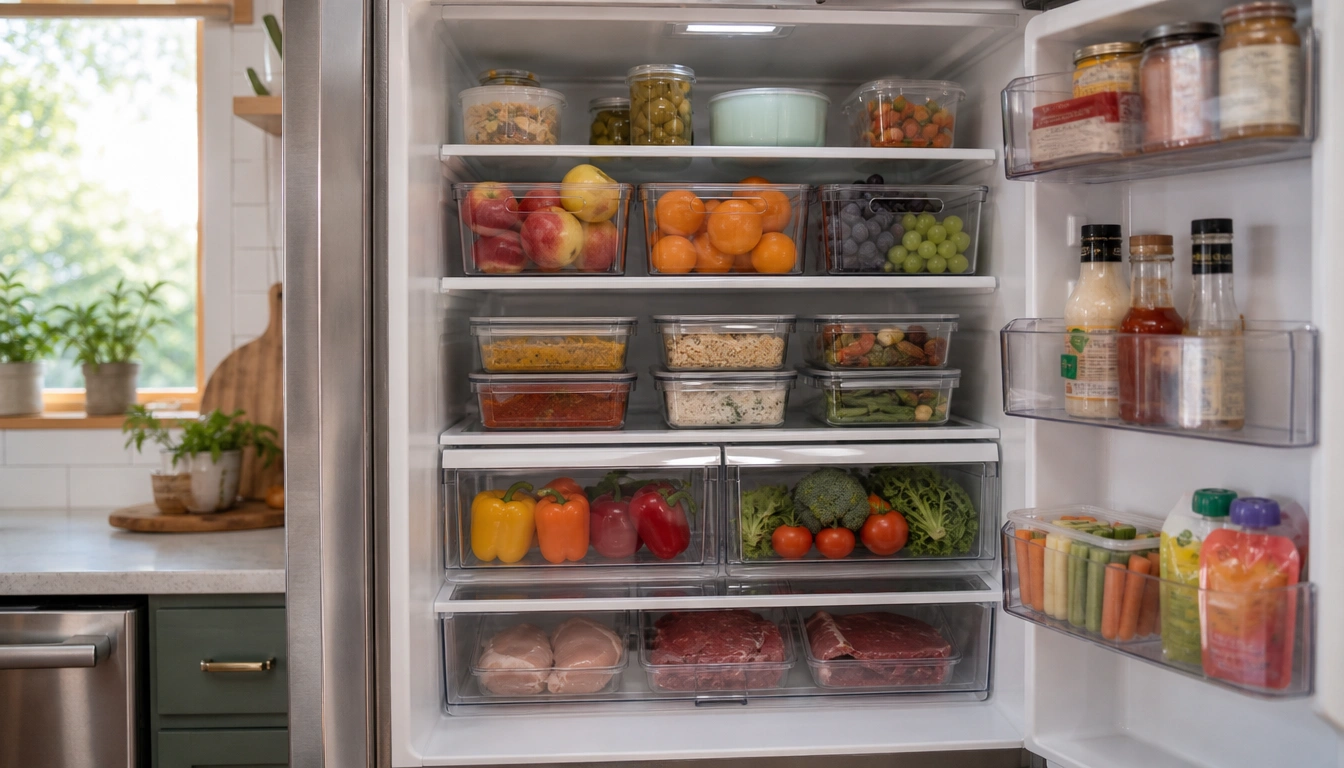
Organize your fridge so the healthiest foods are the easiest to see and grab: put ready-to-eat produce and lunch staples at eye level, keep leftovers and meal components together, store raw meat on the lowest shelf to prevent drips, and use the door only for less-perishable items. Pair that layout with basic food-safety rules so convenience and safety work together during a busy week.
Key Takeaways
- Visible, ready-to-eat foods reduce decision fatigue and make healthy choices feel easier without relying on willpower.
- Keep your fridge at 40°F (4°C) or colder and your freezer at 0°F (-18°C) to support food safety.
- Refrigerate cooked foods within 2 hours and use leftovers within 3 to 4 days, or freeze them sooner.
- Use shelf zones: produce up front, leftovers and meal parts together, raw proteins low and contained, condiments in the door.
- You do not need expensive containers; clear bins, labels, and a simple weekly reset are enough for most families.
Why fridge organization affects healthy eating in busy homes
A family fridge is not just storage. It is part of the meal system. When healthy foods are visible and easy to reach, they are more likely to get eaten because they require less thinking, less searching, and less cleanup. That matters on nights when everyone is tired and the fastest option usually wins.
This is the principle of least resistance in everyday form. If berries are at eye level, sliced vegetables are already washed, and leftovers are in a clear container, the healthy choice becomes the easy choice. That setup also reduces decision fatigue for parents who are already managing school pickup, work, activities, and dinner.
Behavioral science and public health guidance both point in the same direction: environment shapes habits. A fridge that supports healthy eating does not depend on perfect motivation. It simply makes the foods you want your family to eat more prominent and more convenient than the snacks that tend to disappear from the back of the shelf.
Start with food safety basics before rearranging anything
Before changing the layout, set the safety foundation. According to the U.S. Food and Drug Administration and USDA guidance, your refrigerator should stay at 40°F (4°C) or below, and your freezer should stay at 0°F (-18°C). If you have not checked the temperature recently, a simple appliance thermometer can help you confirm the setting is actually holding.
Use the 2-hour rule for cooked food: refrigerate leftovers within 2 hours of cooking, or within 1 hour if the room is very warm. Once food is chilled, plan to use it within 3 to 4 days or freeze it. That timeline is especially important in family homes where leftovers may be forgotten behind milk cartons or snack boxes.
Safety also depends on where food sits inside the fridge. Cold air is not equal everywhere, and the warmest spots are often the door and front edges. That is why the organization system should follow temperature and spill risk, not just convenience.
Create a top-to-bottom zone system for a family fridge
A zone system gives each shelf a job. That makes it easier to put groceries away quickly and easier for other family members to find what they need without rearranging everything. Start by grouping foods by how soon they will be used and how much safety protection they need.
An eye-level grab-and-go zone works well for the foods you want to disappear first. Put washed fruit, cut vegetables, single-serve yogurt, cheese sticks, hard-boiled eggs, hummus, and lunch-packing basics where kids and adults can see them immediately. For many families, this is the most powerful part of the whole system because it reduces the chance that healthy food gets buried.
Keep lunch-building items together if school mornings are chaotic. A small bin with fruit, a protein item, and a ready-to-pack side can turn the fridge into a faster breakfast and lunch station. The less you have to hunt, the more likely you are to use those foods instead of defaulting to packaged convenience items.
Set up produce, leftovers, and raw proteins in separate zones
Different foods need different placements. Produce that tends to survive the week can go in the crisper drawer or in a clear bin on a middle shelf if you need better visibility. Foods that are already washed and cut should be especially easy to see so they are used before they spoil. Think of this zone as your family’s fast lane for fruits and vegetables.
Leftovers and batch-cooked components belong together on a shelf that is easy to reach but not crowded. Keep them in clear containers and label them with the date so no one has to guess what is safe or still worth eating. If you cook a pot of grains, roast vegetables, or batch protein for the week, place those components near the leftovers so meals can be assembled quickly instead of starting from zero each night.
Raw meat, poultry, and seafood should always go on the lowest shelf or in a dedicated meat drawer, in a sealed container or tray that can catch leaks. This protects ready-to-eat food below from contamination. If a package drips, the risk stays contained instead of spreading to produce, leftovers, or dairy sitting underneath.
Door storage, kid access, and the weekly reset that keeps it working
The refrigerator door is best for foods that can handle slightly warmer temperatures and frequent opening. Condiments, pickles, salad dressing, jam, and other low-risk items usually fit there well. Foods that spoil quickly, such as milk or raw meat, should stay off the door because that area warms up the most each time the fridge opens.
A quick post-grocery reset keeps the system useful. As soon as possible after shopping, wash and dry produce, move older leftovers to the front, and put the newest foods behind them. This is also the time to regroup lunch items, restock grab-and-go snacks, and check what should be eaten soon. A five-minute reset is often enough to prevent waste later in the week.
For toddlers and school-age children, think about reach and safety together. Lower bins or a low shelf can hold child-friendly options such as fruit cups, yogurt, cheese, or pre-portioned vegetables, while adult-only items stay higher up. For younger children, use containers that are easy to open but still clearly designated. The goal is age-appropriate independence, not unrestricted access to every item in the fridge.
Budget-friendly tools that are enough
You do not need a perfect container system or a matching set of expensive bins. For most families, a few clear bins, simple labels, and reusable containers are enough to make a fridge easier to use. Clear storage matters because it lets you see what you already have, which lowers the chance of buying duplicates or forgetting leftovers.
Choose bins for function. One bin can hold lunch staples, one can hold kid snacks, one can hold produce that needs to be used soon, and one can hold meal components such as cooked grains or proteins. Labels do not need to be fancy; masking tape and a marker are fine. What matters is that everyone in the home can tell where things belong.
If space is tight, start with only two or three zones rather than trying to redo the entire refrigerator at once. A small system that gets used is more useful than an elaborate one that no one maintains. The best fridge setup is the one your family can keep up with on a normal week.
Common mistakes that make healthy food harder to use
One common mistake is putting the healthiest foods in the least visible spots. If produce hides behind sauces or leftovers, it will be forgotten no matter how good your intentions are. Another mistake is using the crisper drawer for random overflow. When everything is mixed together, the foods that need to be used soon are easy to miss.
Another problem is buying containers before deciding the job of each shelf. The containers should support the system, not create it. If a bin does not help you find, grab, or clean food faster, it is probably not doing enough work.
Families also run into trouble when the fridge becomes a dumping ground for half-eaten items, unlabeled leftovers, and expired condiments. A short weekly review helps here. Check dates, move older items forward, and throw out anything that is clearly spoiled or past the safe leftover window. That one habit keeps the system from collapsing under clutter.
Finally, do not make the layout so rigid that nobody can use it. If everyone in the household has to remember a complicated system, it will usually fail during a hectic week. Keep the structure simple enough that a tired adult or hungry child can follow it without a long explanation.
When fridge organization is not enough and medical nutrition guidance is needed
Fridge organization can support healthier eating, but it cannot solve every nutrition need. If a family member has food allergies, diabetes, kidney disease, growth concerns, a feeding disorder, or other medical nutrition needs, the fridge layout should be adapted with help from a registered dietitian or clinician. The right setup may need to include specific food choices, carbohydrate planning, or stricter separation of foods.
It is also worth asking for help if your child eats very little, avoids whole food groups, or has a pattern of strong food refusal that is making family meals stressful. A thoughtful fridge system can reduce friction, but it is not a substitute for individualized care when a health condition is involved. According to public health guidance from the CDC and federal child nutrition programs, small environmental supports are useful, but they work best alongside age-appropriate feeding routines and medical advice when needed.
For most busy families, though, the practical goal is straightforward: make safe, healthy foods easy to see, easy to reach, and easy to use before they spoil. That is usually enough to change the tone of the week without adding more work.
Frequently Asked Questions
What foods should go on the fridge door versus the shelves?
Use the door for condiments, dressings, jams, and other less-perishable items. Keep milk, eggs, leftovers, and raw meat on interior shelves, where temperatures stay more stable. The door is the warmest part of the fridge because it opens often.
How do I set up a fridge zone for kid-friendly healthy snacks?
Create a low or eye-level bin with items kids can safely choose, such as washed fruit, yogurt, cheese sticks, cut vegetables, or hummus cups. For younger children, keep portions simple and age-appropriate, and place anything that needs supervision higher up.
How can I organize leftovers so they get eaten before they spoil?
Put leftovers in clear containers, label them with the date, and keep them together on one shelf near the front. Use the 3- to 4-day window as your reminder to eat them, freeze them, or discard them if they are too old.
What is the safest way to store raw meat in the refrigerator?
Keep raw meat, poultry, and seafood on the lowest shelf or in a dedicated drawer so juices cannot drip onto ready-to-eat foods. Use sealed packaging or a tray under the container for extra protection.
How often should I clean or reset a family fridge to keep healthy eating habits working?
A quick reset after grocery shopping and a short weekly check are usually enough. Wipe spills, move older food forward, check dates, and clear out spoiled items so the fridge stays easy to use and safe.
The Bottom Line
A healthier family fridge is less about appearance and more about reducing friction. Put ready-to-eat produce, lunch staples, and leftovers where they are easy to see, and keep raw proteins safely separated on the lowest shelf.
Use food-safety rules as part of the layout: 40°F (4°C) or colder in the fridge, 0°F (-18°C) in the freezer, leftovers refrigerated within 2 hours, and used within 3 to 4 days. Simple bins and labels are usually enough to keep the system working.
If your family has medical nutrition needs or feeding concerns, get individualized guidance. For most busy homes, though, a small, practical reset can make healthy eating easier without adding much work.
Medical disclaimer
Medical disclaimer: This content is for educational and informational purposes only and is not a substitute for professional medical advice, diagnosis, or treatment. Dietary needs and supplement suitability vary by individual.
Sources
- Centers for Disease Control and Prevention (CDC) — cdc.gov. Accessed November 2026.
- U.S. Food and Drug Administration (FDA) — fda.gov. Accessed November 2026.
- U.S. Government / Health Authority — headstart.gov. Accessed November 2026.
