
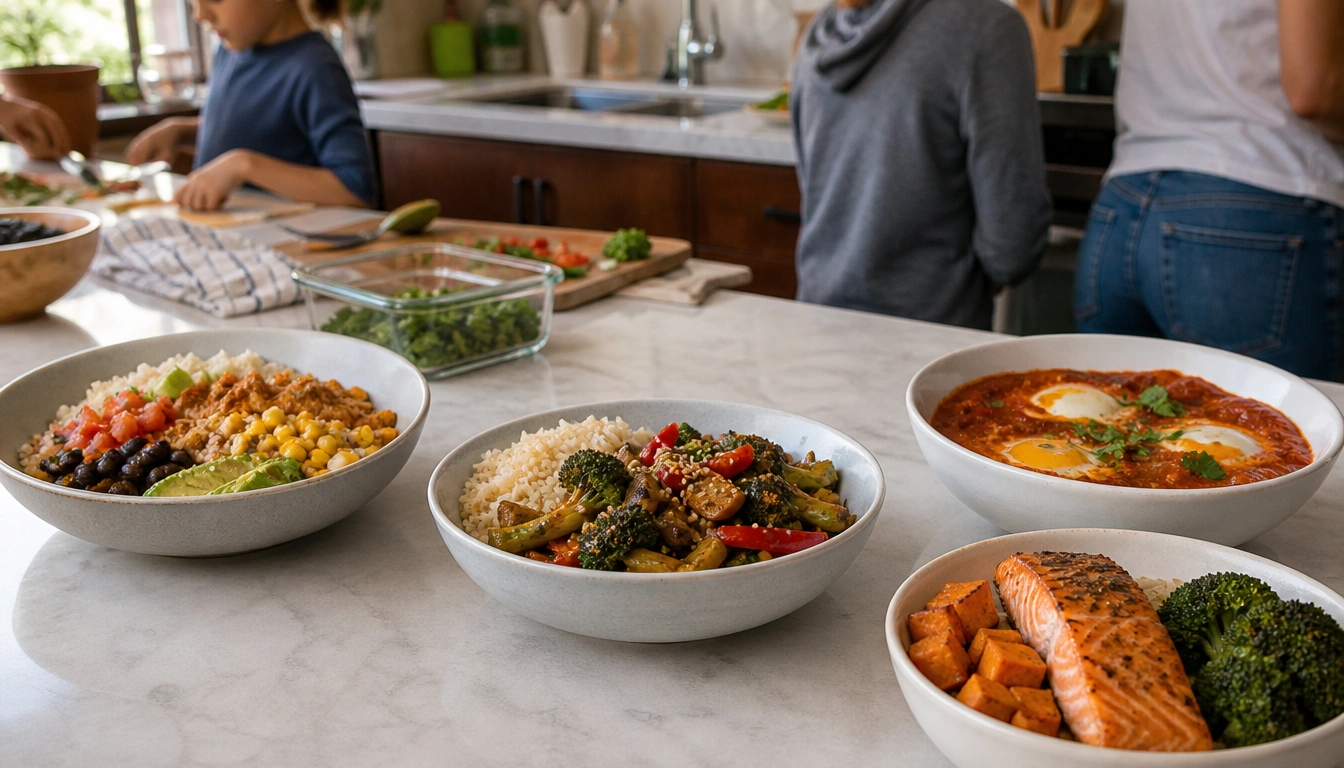
You can make healthy microwave meals that are quick, filling, and family-friendly by using a simple formula: protein plus a fiber-rich carb, vegetables, and a little healthy fat. Frozen vegetables, pouch grains, canned beans, eggs, rotisserie chicken, and shelf-stable salmon can all become balanced meals in minutes, with less cleanup and less stress than cooking from scratch on a busy night.
Key Takeaways
- Microwave meals do not have to mean packaged dinner trays. Fast ingredients like frozen vegetables, beans, and microwave grains can make a nourishing meal.
- A balanced plate helps prevent the “still hungry” problem. Include protein, fiber, vegetables, and a small amount of healthy fat.
- For quick meals, a useful label check is about 15–30 g protein, 600 mg sodium or less, at least 4 g fiber, and 4 g saturated fat or less per serving.
- Children usually need smaller portions and lower-sodium choices, so no-salt-added beans, low-sodium broth, and milder seasonings are helpful.
- Microwave safety matters: use microwave-safe containers, stir or rotate food, let it rest, and check for hot spots before serving children.
Why the microwave belongs in a healthy kitchen
The microwave is more than a reheating tool. For busy families, it can be one of the most practical ways to put together a meal that is actually worth sitting down for. It saves time, reduces dishes, and works well with ingredients that already have a strong nutritional profile. Frozen vegetables are often flash-frozen near peak ripeness, and that can help preserve their quality. Microwave cooking also uses little water and short cook times, which can help protect some water-soluble nutrients compared with longer cooking methods.
That does not mean every microwave meal is healthy. A carb-heavy bowl of plain rice or noodles may be fast, but it often leaves people hungry again soon. The better approach is to treat the microwave like a meal-building tool: use it to heat or cook a few smart components, then combine them into something balanced, affordable, and satisfying. That is especially helpful on school nights, after sports practice, or any evening when energy is low and the goal is simply to get dinner on the table without resorting to takeout.
For parents, the real value is flexibility. The microwave can handle a family’s leftovers, pantry staples, and freezer basics without requiring a full cooking session. Once you know how to combine those pieces, you can make dinner feel less like a scramble and more like a simple routine.
The meal formula that keeps everyone satisfied
A good microwave meal usually works best when it follows a balanced-plate pattern: protein, a fiber-rich carbohydrate, vegetables, and a little healthy fat. That combination helps make meals more satisfying and steadier than relying on refined carbs alone.
Protein can come from beans, eggs, chicken, tuna, salmon, or plain Greek yogurt used in a sauce or topping. Fiber-rich carbohydrates can be microwave rice, quinoa, whole-wheat pita, corn, sweet potato, or beans. Vegetables can be fresh, frozen, or canned with no added salt. Healthy fats can come from avocado, olive oil, sesame oil, nuts, seeds, or cheese in a modest amount.
A quick way to think about it is this: if one part of the meal is doing all the work, the meal usually falls short. Rice alone may fill the plate, but adding beans and vegetables gives it staying power. Eggs alone may be quick, but pairing them with toast, tomatoes, or broccoli turns them into a more complete dinner. Parents do not need complicated recipes; they need a repeatable pattern that prevents dinner from turning into a snack disguised as a meal.
Smart pantry and freezer shortcuts to keep on hand
The best microwave-friendly ingredients are the ones that are ready when you are. A few staples can make a week of meals much easier without relying on highly processed convenience foods.
Good basics include pouch grains such as brown rice, quinoa, or wild rice; canned beans such as black beans, chickpeas, or pinto beans; frozen vegetables; eggs; salsa; rotisserie chicken; canned tuna or salmon; and shelf-stable fish pouches. A microwave steam bag of broccoli, mixed vegetables, or stir-fry vegetables can be just as useful as a fresh bag of produce, especially when the fridge is empty and everyone is hungry.
Other helpful add-ons are low-sodium broth, jarred marinara, frozen corn, whole-wheat tortillas or pitas, shredded cheese, plain yogurt, and small amounts of olive oil or sesame oil. If your family likes stronger flavors, keep salsa, lemon juice, garlic powder, cumin, paprika, curry powder, and low-sodium soy sauce on hand. Those seasonings can make simple ingredients taste fresh without a lot of added salt.
For families with tighter budgets, this pantry approach can stretch groceries further. Beans, eggs, grains, and frozen vegetables are usually more affordable than many ready-made meals, and they give you more control over sodium and portion size.
Four microwave meals that work on real weeknights
Burrito bowl: Start with a pouch of microwave brown rice or quinoa. Add rinsed black beans or pinto beans, a handful of frozen corn, and shredded rotisserie chicken if you have it. Microwave until hot, then top with salsa, a little cheese, and optional avocado. This is an easy family meal because each person can add toppings they like.
Deconstructed stir-fry: Steam a bag of frozen mixed vegetables. Add sliced hard-boiled eggs, thawed cooked shrimp, or shredded chicken. Serve over microwave rice or noodles, then season with a small splash of low-sodium soy sauce, ginger, sesame oil, or a spoonful of teriyaki-style sauce. The vegetables give volume, while the protein makes the bowl more filling.
Single-serve shakshuka: Warm jarred marinara or seasoned tomato sauce in a microwave-safe bowl. Crack in one or two eggs, pierce the yolk gently, cover loosely, and microwave in short bursts until the whites are set. Serve with whole-wheat pita or toast. This is a good breakfast-for-dinner option when you need something fast but still substantial.
Salmon with sweet potato and broccoli: Microwave a sweet potato until soft, split it open, and mash the inside. Add a packet of shelf-stable salmon or a cooked salmon fillet. Microwave frozen broccoli on the side and season with olive oil, lemon, pepper, or a little yogurt-based sauce. This meal covers protein, fiber, and vegetables with very little prep.
If you want to simplify further, use the same framework for leftovers. Yesterday’s rice can become today’s burrito bowl. Extra vegetables can go into a stir-fry bowl or alongside eggs. The microwave works best when you stop thinking of meals as separate recipes and start thinking of them as combinations.
How to make microwave meals work for kids
Children usually need smaller portions than adults, and many also do better with milder flavors. That makes microwave meals a good fit because you can build one base and then adjust it for each person. Serve a smaller scoop of rice or pasta, add a modest amount of protein, and include vegetables in a form the child already accepts, such as soft broccoli, corn, peas, or finely chopped beans in a bowl.
For picky eaters, it often helps to keep ingredients separate instead of mixing everything together. A child may eat rice, chicken, and broccoli more readily when they are arranged side by side. You can also offer a “build-your-own” setup with toppings in small bowls: cheese, salsa, avocado, yogurt sauce, or chopped herbs. That gives kids some control without changing the whole menu.
Lower sodium matters too. Children have lower sodium needs than adults, so look for no-salt-added beans, low-sodium broth, and plain frozen vegetables instead of seasoned mixes. If you use canned ingredients, rinse them when appropriate to reduce sodium. For seasoning, start with garlic powder, onion powder, mild salsa, lemon, or a small amount of cheese rather than heavily salted sauces.
One more family-friendly point: make sure the food is cool enough before serving. Children are more likely to burn their mouths on food with hot spots, especially cheese, sauce, oatmeal, or stuffed fillings. Let the meal rest briefly and stir it before handing it over.
How to read labels for quick meals that actually satisfy
Packaged ingredients can be useful if you know what to look for. For quick microwave meals, label reading is less about perfection and more about building a better overall plate. A useful target for many quick meals is roughly 15 to 30 grams of protein per serving, 600 mg sodium or less per serving, at least 4 grams of fiber, and 4 grams of saturated fat or less.
Protein helps with fullness, but the source matters. Beans, lentils, eggs, chicken, tuna, salmon, and Greek yogurt are all useful options. Fiber is often the missing piece in fast meals, so choose whole grains, beans, vegetables, and fruit when possible. If a meal has good protein but almost no fiber, it may still leave everyone hungry again too soon.
Sodium is the number to watch most closely in convenience items. Canned soups, sauces, seasoned rice, and many frozen entrees can add up quickly. If you are combining several prepared ingredients, choose lower-sodium versions of each one so the final meal does not become overly salty. Saturated fat also deserves a glance, especially in creamy sauces, cheese-heavy bowls, and many frozen convenience meals.
These targets are not a rigid rule for every person, but they offer a practical way to compare products quickly in the grocery aisle. If a component is high in sodium, balance it with plain rice, unsalted beans, or vegetables. If it is low in protein, add eggs, chicken, fish, or beans. The goal is not to memorize every label; it is to make faster choices with better odds of becoming a real meal.
Microwave safety that matters for family meals
Use containers labeled microwave-safe, and favor glass or ceramic when possible. Some plastics are not meant for heating, and flimsy takeout containers can warp or release unwanted substances. Avoid heating food in containers that are not intended for the microwave, especially when the meal is oily, acidic, or likely to get very hot.
Microwaves can heat unevenly, so stir food partway through cooking when that makes sense, rotate the dish if your microwave does not turn automatically, and let the food rest for a minute before serving. That resting time helps heat spread more evenly. It is especially important for foods with thick sauce, rice, eggs, and dense fillings, which can hide hot pockets.
For children, burn prevention is a real concern. Test the temperature before serving, especially around the center of the bowl or the first spoonful from the middle. If you are heating soup, oatmeal, or sauce, stir before serving and let it cool a little longer. When reheating leftovers, make sure they are hot throughout, but not scorching. If you are cooking eggs in the microwave, use short intervals so they do not burst.
Food handling still matters with quick meals. Refrigerate leftovers promptly, reheat only what you plan to eat, and avoid keeping cooked food at room temperature for long stretches. A fast meal is still a meal, so the usual basics of clean hands, clean surfaces, and safe storage apply.
Common microwave meal mistakes to avoid
The biggest mistake is building dinner around refined carbs alone. A bowl of plain noodles or white rice may be convenient, but it is rarely satisfying on its own. Add beans, eggs, chicken, fish, vegetables, or yogurt-based sauce to give the meal more staying power.
Another common problem is leaning too heavily on high-sodium convenience foods. Some frozen meals and seasoned packets can make a dish taste good fast, but they may leave little room for the rest of the day’s sodium intake. Use those items strategically, then balance them with plain grains, vegetables, and unsalted proteins where you can.
Families also sometimes overcomplicate the microwave. You do not need a full recipe for every dinner. A bowl of rice, beans, vegetables, and salsa is dinner. So is eggs with toast and broccoli. So is salmon with sweet potato. The more repeatable your formula, the easier it becomes to cook this way on busy nights without decision fatigue.
If you are dealing with a special medical diet, such as severe food allergies, kidney disease, or a child with poor growth, a general guide is not enough. In that case, personalized advice from a registered dietitian nutritionist or a healthcare provider is the safer route.
Frequently Asked Questions
Are microwave meals actually nutritious, or do they destroy vitamins?
Microwave cooking does not automatically make food less nutritious. Because it is fast and uses little water, it can help preserve some water-soluble nutrients better than longer cooking methods. The bigger issue is usually the ingredient choice, not the microwave itself.
How can I make a microwave meal more filling and balanced for kids and adults?
Build it with protein, a fiber-rich carb, vegetables, and a small amount of healthy fat. For example, pair rice with beans and broccoli, or eggs with whole-grain toast and vegetables. That combination is more satisfying than a carb-only meal.
What healthy microwave ingredients should I keep on hand for busy weeks?
Good staples include pouch grains, canned beans, frozen vegetables, eggs, rotisserie chicken, salsa, low-sodium broth, and shelf-stable salmon or tuna. These ingredients are versatile, budget-friendly, and easy to combine into different meals.
How do I keep microwave meals lower in sodium and still taste good?
Choose no-salt-added or low-sodium versions of beans, broth, and sauces when possible. Use herbs, spices, lemon, salsa, garlic, onion powder, and small amounts of cheese or olive oil for flavor instead of relying on salty seasonings.
What microwave safety rules matter most when cooking for children?
Use microwave-safe containers, stir or rotate food for even heating, and let meals rest before serving. Check for hot spots, especially in sauce, rice, and eggs. Children are more likely to burn their mouths, so test the temperature carefully.
The Bottom Line
Healthy microwave meals are realistic for busy families when you treat the microwave as a real cooking tool, not just a reheating box. Frozen vegetables, pouch grains, beans, eggs, chicken, and shelf-stable fish can all become quick meals that feel complete.
The most useful habit is to build each meal around protein, fiber, vegetables, and a little healthy fat. That approach helps avoid the hungry-again problem and makes it easier to keep sodium and saturated fat in a better range.
With a few pantry staples, a couple of freezer basics, and simple safety habits, weeknight dinner can be faster without becoming nutrition-free or overly processed.
Medical disclaimer
Medical disclaimer: This content is for educational and informational purposes only and is not a substitute for professional medical advice, diagnosis, or treatment. Dietary needs and supplement suitability vary by individual.
Sources
- bbcgoodfood.com — bbcgoodfood.com. Accessed November 2026.
