
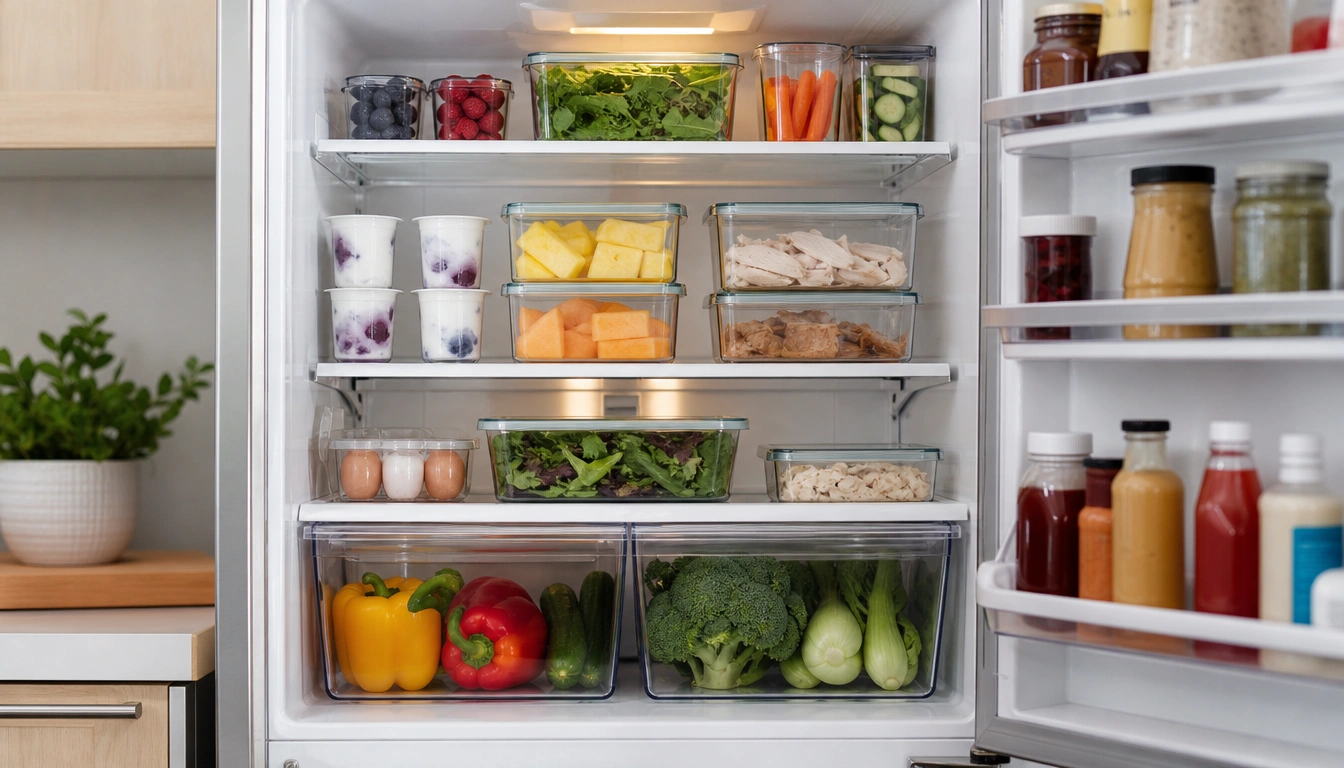
The best way to organize your fridge after 60 is to make the healthiest, safest foods the easiest to see and reach. Put ready-to-eat protein, washed produce, and leftovers you want to use soon at eye level; keep condiments in the door; store milk, eggs, and raw meat on colder shelves; and use clear containers plus older-in-front rotation so good food gets eaten before it spoils.
Key Takeaways
- Put nutrient-dense foods where your eyes land first, because visible foods are the ones most likely to get eaten.
- Use eye-level space for protein-rich, ready-to-eat options so small meals and snacks are easier to build.
- Keep milk, eggs, and raw meat off the door shelves; the door is the warmest part of the refrigerator.
- Choose clear, easy-open containers and pre-washed or pre-cut produce to reduce friction from arthritis or low energy.
- Rotate older items to the front and newer items to the back to cut waste and lower the chance of forgotten spoilage.
Why fridge organization matters more after 60
Fridge organization for healthier eating matters more after 60 because the nutrition challenge changes. Many older adults need fewer calories than they did earlier in life, but they still need food that delivers protein, fiber, vitamins, and minerals. That means each shelf should work harder for you. If the most visible foods are chips, sweets, or leftovers you no longer want, those items tend to win.
A better setup supports the way many adults actually eat: smaller meals, more frequent snacks, and less energy for prep. It also helps when appetite is lower or taste and smell are less sharp. The National Institute on Aging and USDA guidance both emphasize nutrient-dense choices, and a refrigerator that makes those choices visible can turn “I should eat better” into a much easier default.
For adults over 60, the goal is not a perfect kitchen. It is a fridge that nudges you toward foods that help maintain muscle, support overall health, and reduce waste.
The best fridge zones for healthier eating
Think of the refrigerator as several small zones rather than one big box. Each zone can serve a purpose. Eye level is your best real estate because foods there are easiest to notice. Middle shelves work well for ready-to-eat meals and proteins. Crisper drawers are best for produce. The door is the least stable area and should mainly hold condiments and other items that tolerate temperature changes better.
This layout is useful because vision and habit drive choices. If healthy foods are visible and easy to reach, they are more likely to be used. If less helpful foods are hidden, they are less likely to crowd out the basics. That simple shift can support healthier eating without adding more willpower to your day.
For food safety, placement matters too. According to the CDC, older adults have a higher risk of severe foodborne illness, so colder and more stable shelf placement is especially important for milk, eggs, meats, and other high-risk foods.
| Fridge zone | Best use | What not to rely on it for |
|---|---|---|
| Eye level | Ready-to-eat healthy foods you want to use first | Long-term storage of low-priority snacks |
| Middle shelves | Leftovers, cooked proteins, yogurt, tofu, soup | Items that need the most stable cold spot |
| Crisper drawers | Fruits and vegetables | Foods that spoil quickly if forgotten |
| Door | Condiments and stable items | Milk, eggs, raw meat, or other temperature-sensitive foods |
What to put in the eye-level grab-and-go zone
The eye-level shelf should hold foods that are ready when energy is low. This is the zone for the healthiest easy choice, not the most expensive food. Good options include single-serve yogurt, cottage cheese, washed berries, cut melon, sliced cucumbers, hummus, or a small container of chopped vegetables. If you use boiled eggs or ready-to-eat bean salads, those can fit here too.
For older adults, this matters because low appetite and fatigue can make full meal prep feel out of reach. A visible protein snack or ready-to-eat fruit can prevent long gaps between meals. That can be helpful when you want something small, but still nourishing. It also supports hydration if you place juicy fruit or chilled produce where you will notice it.
Keep this zone uncluttered. If the shelf is crowded, the foods you intend to eat first get buried. The easiest version is just a few items, placed front and center, with the most perishable ones most visible.
How to stock shelves for easy protein access
Protein deserves its own visibility strategy. Aging muscles respond better when protein is spread across the day, but many people miss it at breakfast or snacks because the best options are not easy to see. Put ready-to-eat protein at eye level or just below it so it becomes part of your routine without effort.
Good shelf choices include leftovers from a roasted chicken, cooked fish, tofu, tempeh, plain Greek yogurt, cottage cheese, soups with beans or lentils, and other prepared proteins. Keep them in clear containers so you can identify them at a glance. If you cook once and eat twice, label the container with the date so the oldest food is obvious.
If you keep eggs in the fridge, store them on a shelf rather than in the door. If you use them often, place them where they are visible enough to remember but stable enough to stay colder. That same idea applies to cooked protein: the easier it is to see, the more likely it is to be eaten before it is forgotten.
How to use crisper drawers for produce without forgetting it
Crisper drawers are useful, but they should not become a hiding place. Put fruits and vegetables there when they need a cooler, more humid environment, but make sure the drawers are still easy to check. If a drawer is deep and dark, produce can disappear until it spoils.
Use the drawers for foods that will be easier to eat when they are prepped. Pre-washed greens, baby carrots, snap peas, apples, grapes, bell peppers, and similar items are often more realistic than a bag of whole produce that needs cutting before anyone touches it. If hand strength is limited, transfer produce into clear bins or containers that are easy to open.
A simple habit helps: put the foods you need to eat soon in the front of the drawer and move less urgent items behind them. That keeps the healthiest produce from getting lost and makes it more likely you will use it before it softens or wilts.
What belongs in the door—and what should not
The refrigerator door is best for condiments, vinegar-based sauces, jams, and other items that can handle small temperature swings. It is not the best place for milk, eggs, raw meat, or other foods that need steady cold. The door warms up every time it opens, so it is the least reliable spot in the refrigerator.
That matters more with age because foodborne illness can hit harder in adults over 60. The CDC notes that older adults face a higher risk of severe complications from some foodborne germs. For that reason, keep raw meat on a lower shelf where leaks cannot drip onto other foods, and store milk and eggs on interior shelves rather than in the door.
Pay attention to expiration dates and use-by dates, but also use your senses carefully. If something smells off, looks slimy, or has been sitting too long, it is safer to discard it. A fridge that follows first-in, first-out rotation makes that check much easier.
Practical setup tips for low energy or arthritis
Low energy, arthritis, and hand stiffness can make a good food plan fail if the containers are hard to open or the produce needs too much work. Make the system easier on your hands. Choose clear containers with lids that open easily. If possible, use lightweight containers that let you see what is inside without lifting several items out first.
Pre-washed and pre-cut produce can be worth it if it helps you actually eat more of it. The same is true for cooked items stored in single portions. A little extra convenience can turn a food you plan to eat into one you really do eat. For adults with lower executive energy, that reduction in friction matters.
Try to keep the fridge front-facing and simple. Do not overfill shelves. When the refrigerator is packed too tightly, good foods are harder to reach and leftovers are easier to forget. A small amount of structure often works better than a complicated system.
A weekly reset routine that keeps the system working
The fridge works best when you reset it regularly. A weekly routine can be short. Start by checking what is left, moving older foods to the front, and deciding what should be used next. This is the heart of first-in, first-out organization, and it reduces waste while also lowering the chance that something gets overlooked until it is spoiled.
When you come home from shopping, unpack produce quickly and place healthier foods where they will be seen first. Portion larger purchases into smaller containers if that makes them easier to use. If you buy more than you will eat soon, freeze what can be frozen before it has time to spoil.
After that, restock the zones in the same order each week: eye-level protein and ready-to-eat items, middle-shelf leftovers, drawer produce, and door condiments. Once the pattern is familiar, the routine becomes low effort. That is the goal: a fridge that quietly supports healthier eating and safer food habits without making daily life more complicated.
Frequently Asked Questions
What foods should go on the eye-level shelf for older adults?
Put foods there that are ready to eat and helpful at small meals: yogurt, cottage cheese, washed fruit, cut vegetables, hummus, boiled eggs, and other easy protein options. The eye-level shelf should make the healthiest quick choice the most obvious choice.
Which fridge items should be kept in the door versus on the shelves?
The door is best for condiments, sauces, jams, and other stable items. Keep milk, eggs, raw meat, and similar temperature-sensitive foods on interior shelves, where the cold stays steadier and the risk of spoilage is lower.
How can fridge organization help prevent foodborne illness in adults over 60?
It helps by keeping high-risk foods colder, making expiration checks easier, and reducing the chance that raw meat leaks onto other foods. Since older adults are more vulnerable to severe foodborne illness, a safer fridge layout is an important prevention step.
What are easy fridge-prep tips for people with low energy, arthritis, or limited appetite?
Use clear, easy-open containers, buy pre-washed or pre-cut produce when helpful, and portion foods into smaller containers. Keep the fridge simple and uncluttered so foods do not require extra lifting, searching, or chopping before you can eat them.
How can I keep high-protein foods visible and easy to grab without wasting food?
Store ready-to-eat proteins at eye level, label leftovers with dates, and rotate older items to the front each week. Clear containers help you see what needs to be eaten first, which reduces forgotten food and makes protein easier to remember.
The Bottom Line
A healthier fridge after 60 is less about strict rules and more about good placement. Put ready-to-eat protein, washed produce, and foods you want to use soon where you can see them first, and keep the door for condiments rather than fragile foods.
For safety, store milk, eggs, and raw meat on colder shelves, not in the door, and rotate older food to the front. Small changes in visibility, storage, and routine can make healthier eating easier, reduce waste, and support safer food habits at home.
Medical disclaimer
Medical disclaimer: This content is for educational and informational purposes only and is not a substitute for professional medical advice, diagnosis, or treatment. Dietary needs and supplement suitability vary by individual.
Sources
- National Institutes of Health (NIH) — nih.gov. Accessed November 2026.
- U.S. Government / Health Authority — usda.gov. Accessed November 2026.
- U.S. Government / Health Authority — medlineplus.gov. Accessed November 2026.
- Centers for Disease Control and Prevention (CDC) — cdc.gov. Accessed November 2026.
- U.S. Government / Health Authority — nutrition.gov. Accessed November 2026.
