
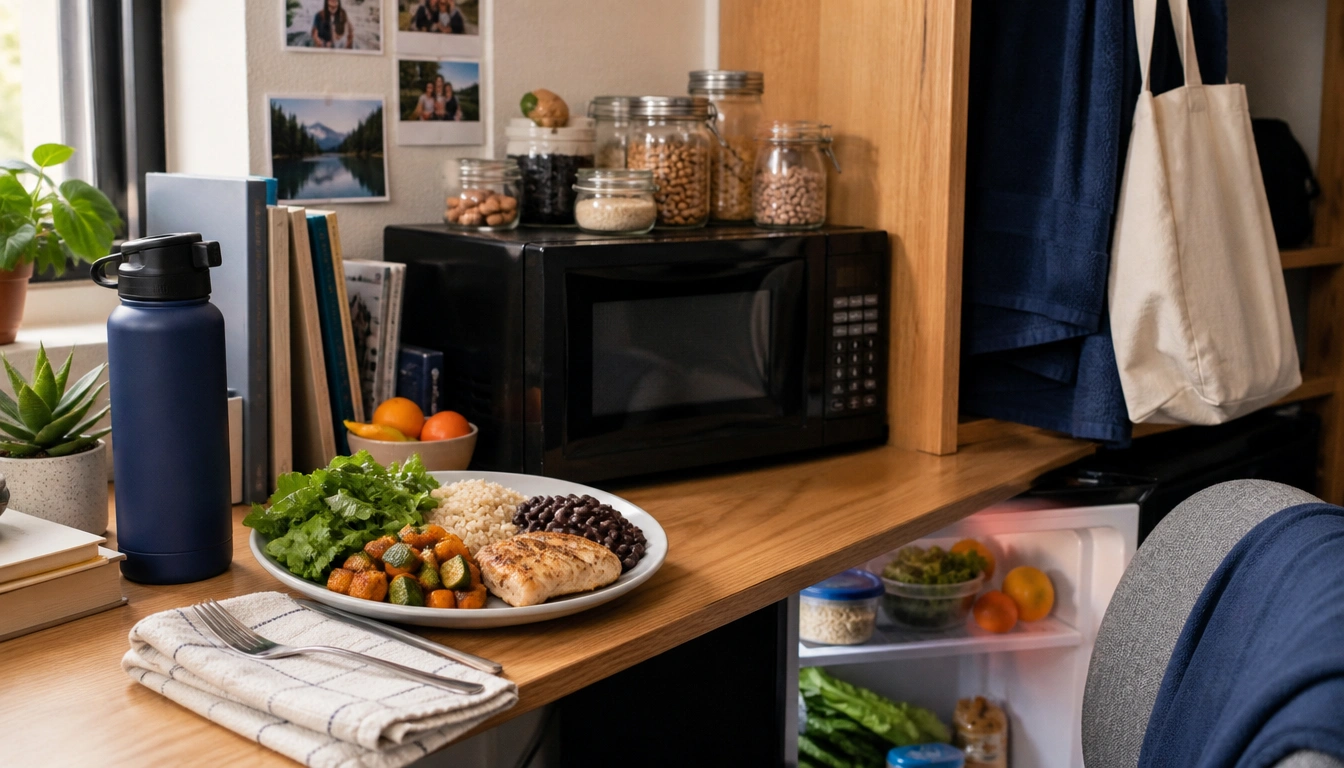
A balanced plate for a college student usually means filling about half the plate with vegetables and fruit, a quarter with whole grains or other starchy carbohydrates, and a quarter with protein. That pattern works in dining halls, with dorm microwave meals, and with budget staples like frozen vegetables, canned beans, brown rice, and canned fish. It is flexible, affordable, and easy to adapt to activity level and personal preferences.
Key Takeaways
- Use the plate shape, not perfection: aim for vegetables or fruit, a quality carbohydrate, and a protein at most meals.
- Dining hall meals work best when you start with produce, then add a grain or starch and finish with protein.
- Dorm meals can still be balanced with microwave grains, frozen vegetables, and shelf-stable proteins.
- Frozen produce, canned legumes, and bulk whole grains are often the cheapest way to build consistent meals.
- Student-athletes and very active students may need larger portions, especially more carbohydrates and total calories.
- Healthy eating should feel supportive, not rigid; strict food rules or fear of many foods can be a warning sign.
Why the balanced plate method works for college life
The balanced plate method is useful for college students because it turns nutrition into a visual habit instead of a complicated rule set. Public health frameworks such as the USDA MyPlate model and the NHS Eatwell Guide both emphasize a meal pattern built around vegetables or fruit, starchy carbohydrates, and protein. That structure is simple enough to use in a dining hall, a dorm, or a food court, even when schedules are messy.
For students, the biggest advantage is consistency. A meal with fiber-rich produce, a slower-digesting carbohydrate, and protein tends to feel more satisfying than a meal built mostly from refined snacks. That matters on campus, where long class blocks, study sessions, and irregular meal times can make it easy to under-eat, over-snack, or rely on quick foods that do not keep you full for long.
The balanced plate also helps with energy stability. Pairing carbohydrates with protein and a little fat slows digestion compared with eating mostly refined carbs alone. That can help reduce the mid-afternoon slump that many students notice after a pastry, soda, or highly processed grab-and-go meal. It is not a guarantee of perfect focus, but it gives your body a steadier fuel pattern for lectures, labs, and late study nights.
How to use the plate model in real student settings
Start with what is available, then build from there. In a dining hall, look first for vegetables, fruit, salad ingredients, or soup with vegetables. At a buffet or hot line, choose the best protein option you see and then add a starch that is more filling, such as brown rice, whole-grain pasta, potatoes, or corn. If the only protein choices are less ideal, a smaller portion can still fit the plate pattern.
If you are packing lunch, think in components rather than recipes. A sandwich on whole-grain bread can count as the starch and protein base, then fruit and cut vegetables can fill the produce portion. Leftovers can work too: a grain bowl, pasta with vegetables, or a wrap with beans or chicken can all fit the same template.
The goal is not to assemble a perfect meal every time. It is to make the healthiest choice available within the realities of campus life. The plate model is flexible enough to work with dining hall unpredictability, budget limits, and whatever you can carry between classes.
Dining hall and dorm examples that actually fit student schedules
Dining hall example: Build a tray with a large salad or mixed vegetables, then add a scoop of brown rice or quinoa and a protein such as grilled chicken, tofu, eggs, baked fish, or beans. If the salad bar is weak, pair steamed vegetables with a sandwich on whole-grain bread and a side of fruit. If the hot line has soup, choose a vegetable or bean-based soup and add a side salad and a grain.
Dorm microwave example: Use a microwave pouch of brown rice, a bowl of frozen mixed vegetables, and canned beans or canned tuna. Add olive oil, salsa, soy sauce, or lemon for flavor if you have it. This takes very little equipment, costs less than many convenience meals, and still gives you a balanced structure.
Mini-fridge example: Combine whole-grain crackers or bread with hummus, baby carrots, cherry tomatoes, an apple, and pre-cooked chicken strips or cottage cheese. If you have only five minutes, this is often enough to make a balanced plate without cooking at all. The point is to create a real meal, not just a snack assortment.
If you want a quick comparison of common campus meal setups, this simple pattern helps:
| Setting | Easy produce | Carbohydrate | Protein |
|---|---|---|---|
| Dining hall | Salad, vegetables, fruit | Brown rice, potatoes, whole-grain pasta | Chicken, tofu, beans, fish |
| Dorm microwave | Frozen vegetables, fruit cup | Microwave grains, oats, whole-grain bread | Canned beans, tuna, eggs, yogurt |
| Mini-fridge only | Baby carrots, tomatoes, apples | Crackers, bread, wraps | Hummus, cheese, yogurt, deli meat |
Budget-friendly pantry and freezer staples that make the plate easier
Students often assume balanced eating is expensive, but some of the most useful foods are also the cheapest per serving. Frozen vegetables, frozen fruit, canned beans, lentils, and bulk whole grains such as oats, brown rice, or whole-wheat pasta are practical staples because they store well and reduce waste. They also let you assemble a meal even when your schedule changes at the last minute.
Frozen produce is especially useful because it lasts longer than fresh food and still contributes fiber and micronutrients. Canned legumes are a low-cost protein source and can be rinsed to lower sodium. Bulk grains can be cooked in larger amounts when you have time, then used across several meals. These foods make the balanced plate easier to repeat, which matters more than occasional “perfect” meals.
A budget-friendly approach also reduces the pressure to order takeout when you are tired. If your pantry and freezer already contain a few reliable options, you can build a real meal quickly instead of defaulting to chips, pastries, or expensive delivery food. That kind of consistency is often what students need most.
Plant-based balanced plate example for students
Plant-based students can use the same visual model, but protein needs to come from legumes, soy foods, dairy alternatives fortified with protein, nuts, seeds, or combinations of these foods. A simple plant-based plate might include roasted sweet potato, a grain such as quinoa or whole-grain couscous, and chickpeas, tofu, tempeh, or edamame. Add a salad, steamed vegetables, or fruit to round out the meal.
Protein quality and enough total energy matter here, but the plate does not need to be complicated. A burrito bowl with rice, black beans, lettuce, salsa, and avocado; oatmeal with soy milk, nuts, and fruit; or a pasta bowl with lentils and vegetables can all fit the pattern. If you are fully plant-based, paying attention to calcium, iron, and vitamin B12 is also wise, because students may fall short on these nutrients when meals are rushed or repetitive.
For many students, the biggest challenge is not finding plant foods but building enough calories into the meal. Adding nuts, seeds, tahini, avocado, soy milk, or olive oil can make plant-based meals more satisfying and more realistic on a busy campus schedule.
How to adjust the plate for higher activity levels and student-athletes
The standard plate model is a starting point, not a ceiling. Students who train hard, play sports, or spend long hours on their feet often need more total calories and more carbohydrate than a basic plate suggests. That does not mean abandoning the model; it means scaling it up. An athlete may need a larger starch portion, a second protein serving, or an extra snack around practices and games.
Carbohydrates are especially important for active students because they help replenish glycogen, the body’s stored form of quick energy. If meals are too small or too low in carbohydrates, performance can suffer, and recovery may feel slower. In that setting, the balanced plate becomes a framework for fueling, not a weight-control tool.
Students who train regularly should also pay attention to timing. A balanced meal after practice may need to be easier to digest and more carbohydrate-heavy than a regular lunch. That can be as simple as rice and beans with fruit, a turkey sandwich with yogurt, or pasta with chicken and vegetables. Individual needs vary, so a campus sports dietitian or clinician can help if training load is high or appetite is changing.
Hydration and energy that support focus in class
Food is only part of the picture. Mild dehydration can make fatigue, headaches, and concentration problems worse, especially on days with long classes, walking between buildings, caffeine use, or sports practice. Public health guidance commonly encourages regular fluid intake across the day, with water as the main choice. For most students, carrying a reusable bottle and sipping consistently is easier than trying to catch up all at once.
Hydration should be practical, not obsessive. A simple habit is to drink water with meals and between classes, then pay attention to thirst, urine color, and how you feel during the day. If you are sweating heavily, exercising, or spending hours in a hot dorm or classroom, you may need more fluids than usual. Sugary drinks and energy drinks can add calories and caffeine without helping hydration as well as water does.
Caffeine can have a place in a student routine, but it should not replace meals or sleep. If energy is low, the first questions are often whether you have eaten enough, slept enough, and hydrated enough. A balanced plate works best when it is part of that bigger routine.
When healthy eating turns too rigid
Wanting to eat well is a good thing. Problems start when healthy eating becomes narrow, stressful, or fear-based. Warning signs can include skipping food groups without a clear medical reason, feeling intense guilt after eating convenience foods, spending an unusual amount of time planning “clean” meals, or avoiding social meals because they do not feel controlled enough. These patterns can overlap with disordered eating or orthorexia-like behavior.
Another concern is when food rules begin to interfere with life. If a student becomes preoccupied with calories, ingredients, purity, or “perfect” plates, the mental load can be as harmful as the nutrition problem. College is already a high-stress environment, and rigid food rules can make that stress worse rather than better.
Seek help from a campus clinician, counselor, registered dietitian, or other qualified professional if eating feels increasingly anxious, if there is sudden weight change, frequent gastrointestinal distress, repeated binge-restrict cycles, or if meals are becoming socially isolating. Early support is usually more effective than waiting for things to get worse.
A healthy campus eating pattern should be flexible enough to fit dorm life, dining hall surprises, exam weeks, and budget limits. If the plan feels punishing, it probably needs adjustment.
Frequently Asked Questions
How do I build a balanced plate in a dining hall without cooking?
Start with vegetables or fruit, then add a filling carbohydrate like brown rice, potatoes, or whole-grain pasta, and finish with a protein such as chicken, tofu, beans, eggs, or fish. If choices are limited, use the best available options and focus on portion balance rather than perfection.
What are cheap balanced plate ingredients for a college budget?
Frozen vegetables, canned beans, lentils, oats, brown rice, whole-wheat pasta, peanut butter, eggs, yogurt, and canned fish are all useful budget staples. They store well, reduce waste, and make it easier to build a real meal without frequent takeout.
How can I make a balanced plate in a dorm with only a microwave and mini-fridge?
Use microwave grains, frozen vegetables, and a protein that needs little prep, such as canned beans, canned tuna, pre-cooked chicken, yogurt, or hummus. Add fruit or a small salad if you have it. The goal is a simple meal with produce, carbs, and protein.
What is the balanced plate method for a plant-based student?
Use vegetables or fruit for about half the plate, a whole grain or starchy carbohydrate for about a quarter, and plant protein for the remaining quarter. Good options include beans, lentils, tofu, tempeh, edamame, soy yogurt, nuts, and seeds. Fortified foods can help cover calcium and B12 needs.
How much water should college students aim for each day?
There is no single perfect number for everyone. A useful campus habit is to drink water regularly through the day, especially with meals, between classes, and after exercise. Needs rise with heat, sports, caffeine use, and sweating, so thirst and urine color can help guide intake.
The Bottom Line
A balanced plate is one of the easiest nutrition tools for college life because it works in dining halls, dorms, and budget kitchens. If you can get vegetables or fruit, a quality carbohydrate, and a protein on the plate most of the time, you are covering the basics without overcomplicating meals.
The best student version is flexible. Frozen produce, canned beans, bulk grains, and simple proteins make it easier to eat well even when money, time, and cooking space are limited. And if healthy eating starts to feel rigid or stressful, that is a sign to pause and get support rather than pushing harder.
Medical disclaimer
Medical disclaimer: This content is for educational and informational purposes only and is not a substitute for professional medical advice, diagnosis, or treatment. Dietary needs and supplement suitability vary by individual.
Sources
- National Health Service (NHS) — humber.nhs.uk. Accessed November 2026.
- National Health Service (NHS) — www.nhs.uk. Accessed November 2026.
- Academic Research Institution — msu.edu. Accessed November 2026.
