
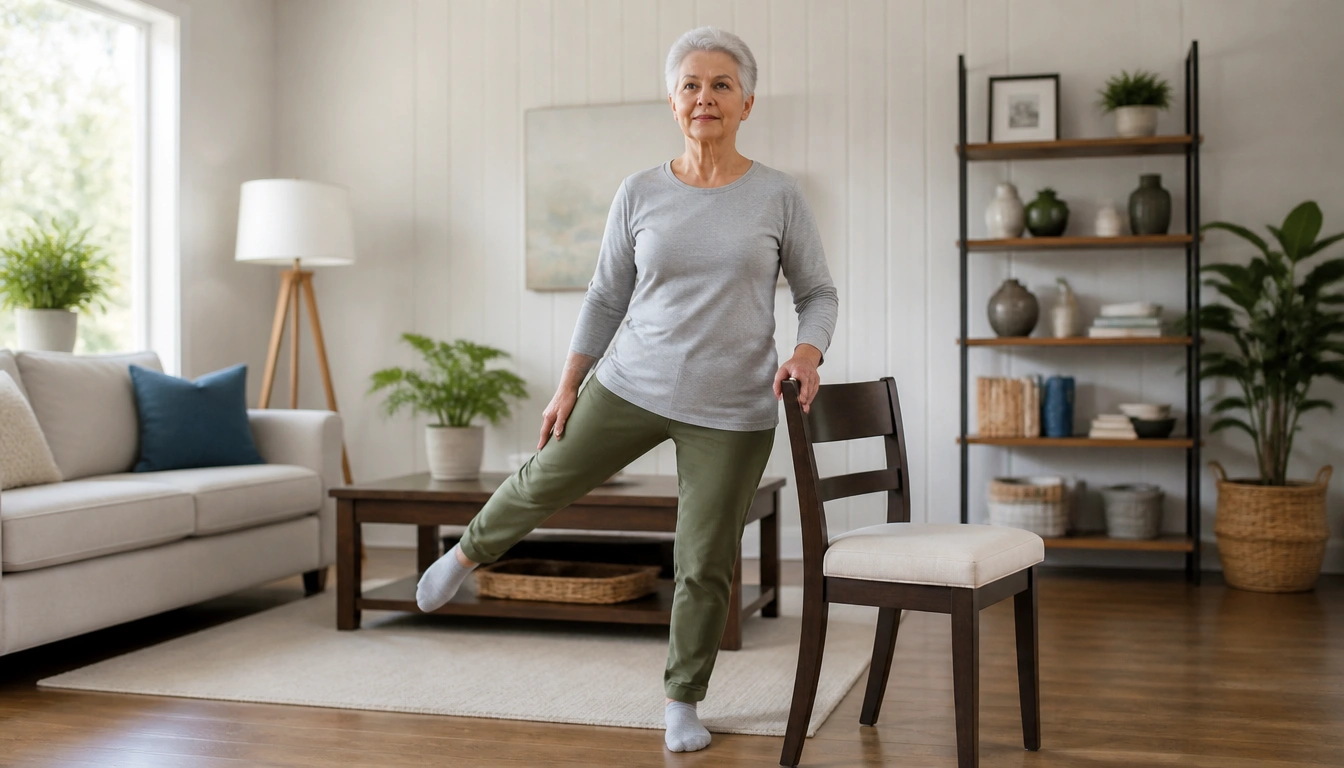
Adults over 50 can safely use a short hip mobility routine that combines gentle dynamic movement, light stretching, and glute activation. The best approach is consistent, low-force, and supported by a chair or wall if balance is limited. A mild stretch is fine; sharp pain is not. Done most days, a routine like this can help reduce stiffness and support easier walking, stair climbing, and standing up from a chair.
Key Takeaways
- Hip stiffness after 50 often reflects more sitting, tighter hip flexors, less active glutes, and age-related changes in joint and muscle elasticity.
- Hip mobility matters because the hips help drive walking stride, stair climbing, rising from a chair, and steady balance.
- A safe stretch should feel like gentle tension, not sharp pain, pinching, or burning; stop if symptoms feel wrong.
- A 10-minute routine at home is enough to build a habit when it is paired with a morning anchor and supported by a chair or wall.
- People with hip arthritis, a hip replacement, osteoporosis, or balance problems should modify movements and get medical clearance when needed.
Why hip mobility matters after 50
A good hip mobility routine for adults over 50 is less about “stretching for the sake of stretching” and more about keeping basic movement tasks smooth. With age, and especially with long hours of sitting, the hip flexors often shorten while the glutes become less active. Over time, joints may also feel stiffer because the tissues around them are not moving as freely as they once did.
That matters because the hips do a lot of work in everyday life. They help lengthen your stride, lift your leg on stairs, absorb load when you stand up, and steady the body when you turn or change direction. When hip motion is limited, the lower back, knees, and ankles often pick up the slack. According to the NHS, regular activity that improves flexibility and balance is part of healthy aging, and mobility work fits that goal well.
For older adults, improved hip motion is not just a comfort issue. Better range of motion can support postural stability and cleaner movement patterns, which may help reduce the awkward compensations that raise fall risk over time. The goal is not extreme flexibility; it is enough usable motion for daily tasks to feel easier.
Who should modify the routine
Most adults can start with gentle hip mobility, but some people need extra caution. If you have hip arthritis, a prior hip replacement, osteoporosis, recent surgery, or ongoing balance problems, choose the most supported version of each movement and progress slowly. If a clinician has given you hip precautions after replacement, follow those instructions first, because surgical guidance matters more than any general exercise advice.
People with arthritis often do better with smaller ranges of motion and more movement, not stronger pushing. A hip may feel better once it is warmed up, but it should not be forced. If you have pain that is new, worsening, or unexplained, or if you are unsure whether a movement is safe for your joint history, speak with a physical therapist, orthopedist, or primary care clinician before starting.
Balance limitations do not rule out hip work. They simply mean the routine should begin with support from a chair, counter, or wall. The safest version is the one you can repeat confidently without bracing, wobbling, or rushing.
How to tell a safe stretch from a risky one
A safe hip stretch usually feels like mild muscular tension, warmth, or a gentle pulling sensation. It should ease as you breathe and settle into position. A risky stretch feels sharp, pinching, catching, stabbing, burning, or like the joint is being jammed. That is a sign to back off or stop.
Use the pain rule: mild stretch only. You do not need to chase depth. In fact, forcing range can make your body guard, which often makes the hip feel tighter instead of looser. Bouncing is also a poor choice because it can turn a controlled mobility exercise into a jerky load on a joint or tendon.
If a movement causes pain that lingers afterward, changes your walking, or shows up as numbness, tingling, or instability, do not push through it. Those are signs to get medical guidance rather than trying to “stretch it out.”
Set up a daily 10-minute routine at home
The easiest routine is one you can do without much setup. Pick a safe spot with a non-slip floor, a sturdy chair, or a wall nearby. Choose one daily anchor, such as right after getting out of bed, before your shower, or just before your morning drink. Pairing the routine with something you already do helps it stick.
Here is a simple structure: spend a few minutes warming the hips with easy movement, then move into one or two gentle stretches, then finish with a glute exercise. That order helps because movement often feels better when the joint is warm and the muscles are awake. You do not need equipment, a mat, or a long workout block.
If your mornings are hectic, shorten the routine rather than skipping it. A brief, repeatable habit is more useful than an ideal routine you rarely do. The real target is consistency across the week, not perfection on a single day.
A chair- and wall-supported hip mobility routine
Warm-up swings
Stand tall with one hand on a chair or wall. Gently swing one leg forward and back in a small, controlled arc. Keep your torso steady and let the leg move from the hip rather than the lower back. Repeat, then switch legs. If standing swings feel unsteady, do the same movement while lightly holding a countertop and making the motion smaller.
Side-to-side leg swings
Still holding support, move one leg across the body and back out to the side in a smooth range. This can help wake up the hip without aggressive stretching. Keep the movement slow enough that you can talk normally while doing it.
Seated hip rotations
Sit tall near the edge of a chair with feet flat. Let both knees gently rotate together toward one side, then the other, staying within an easy range. If you are comfortable on the floor, a 90/90 style position can also be used, but the chair version is often the best starting point for adults with limited mobility or confidence.
Half-kneeling hip flexor stretch
Place one knee on a folded towel or cushion and the other foot in front. Tuck the pelvis slightly under, keep the torso upright, and shift forward a small amount until you feel a gentle stretch in the front of the back hip. Hold briefly, breathe, then switch sides. If kneeling is uncomfortable, try a standing lunge position with one hand on a wall for support.
Glute bridge
Lie on your back with knees bent and feet flat. Press through the heels, lift the hips, and squeeze the glutes at the top before lowering slowly. This is not just a strength move; it helps re-engage the posterior chain that often turns sleepy after long sitting. If floor work is hard, start with standing glute squeezes while holding a counter.
How to progress or scale back based on your starting point
Progress should come from control first, then range, then repetitions. If you are new, begin with the smallest comfortable movement and one set of each exercise. Stay in positions long enough to feel a change, but not so long that the joint gets irritated. As confidence improves, you can make the swings smoother, the holds a little longer, or the glute bridges more controlled.
If you are already active and flexible, the challenge is usually not depth; it is consistency and balance. You may benefit from longer single-leg support work, more deliberate transitions between positions, or a slightly deeper but still comfortable lunge stretch. If you have hip arthritis, your range may vary from day to day, so adjust by feel instead of forcing the same depth every session.
Scale back if you notice pinching, fatigue that changes your form, or a feeling that you need to brace hard to stay upright. A supported, smaller-range routine done well is better than a larger routine that makes you tense up.
How hip mobility fits with walking and strength training
Hip mobility works best as part of a larger weekly movement plan. Walking keeps the hips moving through repeated cycles of flexion and extension, while strength training helps the muscles around the hips handle load. Together, they reinforce the motion you want to keep. The NHS recommends regular activity that includes strength and balance work for older adults, and hip mobility fits naturally alongside that plan.
A practical pattern is to do the mobility routine most days, walk on most days you can, and include strength training for the lower body on at least two days per week if that is appropriate for your health and goals. You do not need a separate long session for each piece. A short mobility routine can serve as a warm-up before a walk or strength workout, or as a recovery reset afterward.
If your hips feel stiff first thing in the morning, a few gentle movements before walking often feel better than going straight into a brisk pace. If strength training leaves your hips tight, use the mobility routine after the session or later in the day. The best order is the one that helps you move more comfortably and keeps you doing it consistently.
Common mistakes that make hips feel worse
The most common mistake is forcing range. If you push too hard, the body may tighten in self-protection, and the stretch stops being useful. Another common issue is bouncing, which makes control worse and can irritate sensitive tissues. Smooth, steady movement is the safer choice.
Holding your breath is another sign that the stretch is too intense. If you cannot breathe evenly, back off. Breathing helps the nervous system relax and makes the work feel more manageable. People also skip glute activation and focus only on stretching the front of the hips. That can leave the routine half-finished, because the glutes help support the pelvis and hip motion when you stand, walk, and climb stairs.
Finally, do not treat one intense session as the solution. Hip mobility improves with repetition. A modest routine done often is usually more helpful than an occasional aggressive stretch session.
Frequently Asked Questions
How often should adults over 50 do hip mobility exercises?
Most people do well with short hip mobility work most days of the week, and some can do it daily if it stays comfortable. The main goal is regular movement, not occasional intensity. If you are recovering from injury or have a medical condition, follow your clinician’s guidance on frequency.
What is the difference between hip mobility and hip stretching?
Hip mobility is a broader idea: it includes moving the hip through control, range, and useful patterns such as rotation or leg swings. Hip stretching is one part of that, usually aimed at lengthening tight muscles. A routine can include both, but mobility is not just passive stretching.
Which hip mobility moves are safest for beginners or people with balance issues?
Chair-supported leg swings, seated hip rotations, and standing glute squeezes are often good starting points because they are simple and stable. A wall or countertop can also help. If floor work is uncomfortable, begin with the supported versions before trying kneeling or bridge exercises.
How can I modify hip mobility exercises if I have hip pain or arthritis?
Use a smaller range, slower pace, and more support. Keep the effort in the mild-stretch zone and avoid pushing into joint pain or pinching. On sore days, reduce the number of movements and favor gentle motion over longer holds. If symptoms are severe or changing, get medical advice.
Can hip mobility help with lower back pain, walking, or fall prevention?
It can help by improving the way the hips move during walking, standing, and stair climbing, which may reduce compensation elsewhere in the body. Better hip motion also supports balance and postural control. If your back pain is significant or persistent, use hip mobility as part of a broader plan rather than as a stand-alone fix.
The Bottom Line
A useful hip mobility routine for adults over 50 is short, repeatable, and gentle enough to keep doing. The best version usually combines a few supported dynamic moves, one or two comfortable stretches, and a small amount of glute activation.
If you have arthritis, a hip replacement, osteoporosis, or balance concerns, choose the supported version first and stay within a mild stretch, not pain. With regular practice, the routine can help your hips feel less stiff and make walking, stairs, and standing up feel more natural.
Medical disclaimer
Medical disclaimer: This content is for educational and informational purposes only and is not a substitute for professional medical advice, diagnosis, or treatment. Dietary needs and supplement suitability vary by individual.
Sources
- National Health Service (NHS) — www.nhs.uk. Accessed November 2026.
- orthoinfo.org — orthoinfo.org. Accessed November 2026.
