
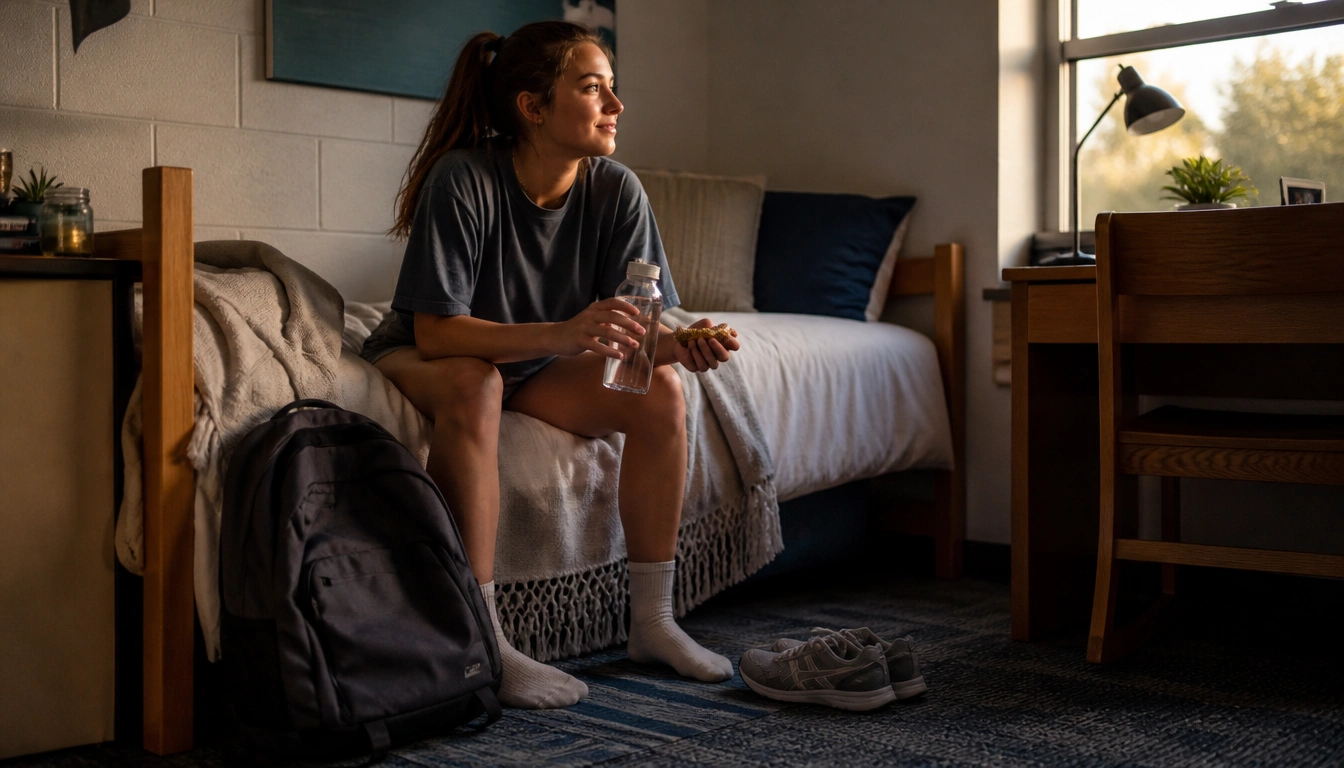
Right after a long walk, slow down for a few minutes, drink water, eat a simple carb-plus-protein snack, and do brief gentle movement before you fully settle in. If your legs feel tight, a short cool-down and a warm or lukewarm shower can help you feel less restless before bed. Most soreness is normal, but sharp pain, major swelling, or trouble walking needs medical attention.
Key Takeaways
- A short cool-down helps more than stopping suddenly, especially if you walked farther than usual or carried a heavy backpack.
- A cheap recovery snack can be as simple as fruit plus yogurt, peanut butter toast, chocolate milk, or a turkey sandwich.
- Hydration matters most if you sweated a lot, walked in heat, or notice dark urine, headache, or unusual fatigue.
- Gentle movement usually helps soreness more than total bed rest, but hard workouts can make recovery worse.
- Sleep is part of recovery: lower your body temperature, dim the room, and avoid rushing straight from exertion into an overstimulating night routine.
- Normal soreness often peaks later, not immediately, so tomorrow’s discomfort may be stronger than how you feel tonight.
Why a long walk can leave college students unusually sore or drained
A long walk is still exercise, even if it does not feel like a workout. If you covered more distance than usual walking across campus, exploring a city, or hiking on a weekend, your calves, quads, hamstrings, feet, and glutes were doing repeated work for a long time. That can leave you feeling flat, tight, or oddly tired even if the walk was not intense.
The soreness that shows up later is often delayed-onset muscle soreness, or DOMS. According to the NHS, this kind of soreness commonly appears after activity your body is not used to, and it often becomes more noticeable 12 to 48 hours later. That is one reason you may feel “fine” at night and wake up stiffer the next day.
College life can make the effect stronger. A heavy backpack increases load on the legs and feet. Poor shoes can change how your body absorbs impact. Skipping meals or drinking too little during the day can make fatigue feel worse. The goal after a long walk is not to do something fancy; it is to help your body shift from effort mode into recovery mode.
The fastest practical recovery sequence for the first 30 to 60 minutes
If you want the best recovery routine after a long walk for college students, start with a short sequence you can do between class, study time, and bedtime. You do not need equipment, a gym, or much space.
First, keep moving for a few minutes
Instead of collapsing immediately onto a bed or couch, walk slowly for about 5 to 10 minutes if you can. A gradual cool-down helps your heart rate settle and lets your muscles transition out of repeated effort. If you are already indoors, pacing in your room or hallway is enough.
Then, reset your legs
Take your shoes off, loosen socks if they are tight, and gently move your ankles through circles or flex-and-point motions. If your calves feel locked up, a light calf stretch can help, but keep it mild. The point is to reduce stiffness, not force a deep stretch while your muscles are irritated.
Finish with a quick check-in
Ask yourself three things: Am I thirsty? Am I hungry? Do my legs feel tired in a normal way, or is something actually painful? That quick check can keep you from ignoring real warning signs while also preventing you from skipping the basic things that speed recovery.
What to eat after a long walk when you are on a student budget
After a long walk, your body benefits from both carbohydrates and protein. Carbohydrates help refill energy stores, and protein supports muscle repair. You do not need supplements to make that happen. You need something easy, affordable, and available in a dorm, dining hall, or campus convenience store.
Cheap post-walk snacks for college students can be simple combinations:
- Banana plus peanut butter
- Greek yogurt plus fruit or granola
- Chocolate milk and a sandwich
- Toast with eggs or peanut butter
- String cheese and crackers
- Turkey, hummus, or bean wrap
If you are at a dining hall, build a basic plate: a starch such as rice, bread, potatoes, pasta, or fruit, plus a protein source such as eggs, beans, chicken, tuna, yogurt, or tofu. If you only have a vending machine nearby, choose the best available mix of carb and protein instead of waiting for the “perfect” recovery meal.
You do not have to eat a giant meal right away. If you are not hungry, a smaller snack first is fine, followed by a more complete meal later. For students with tight budgets, the best plan is the one you can repeat consistently, not the one that sounds ideal on paper.
How to hydrate without overcomplicating it: water, electrolytes, and simple cues
For most students, water is the first answer. Drink steadily after the walk rather than chugging a huge amount all at once. If you sweated heavily, walked in heat, or feel drained, an electrolyte drink can be useful, but it is not required for every long walk.
A simple rule is to pay attention to practical cues instead of counting every ounce. Thirst, dry mouth, headache, dark yellow urine, and feeling more tired than expected can all point toward low fluid intake. If your walk was short but casual, plain water may be enough. If it was long, hot, or hilly, adding some sodium through food or a sports drink can help replace what you lost in sweat.
The CDC and NHS both emphasize hydration as part of healthy physical activity habits. For campus life, that usually means keeping a bottle with you, sipping during the day, and having an easy refill plan between classes. The goal is not perfection; it is avoiding the common mistake of getting through a long walk, then going many hours with almost no fluids.
Gentle movement vs. full rest: what actually helps soreness
After a long walk, total inactivity is not always the fastest path to feeling better. Light movement often helps because it keeps blood flowing and reduces the stiff, heavy feeling that can settle in after you sit still too long.
Good options are low-effort and dorm-friendly: a short easy walk, gentle ankle rolls, relaxed calf raises, or a few minutes of light stretching. If you have the space, lying down with your legs propped up for a bit can also feel relieving, especially after a day of standing or walking with a backpack.
What usually does not help is turning recovery into another workout. Hard stretching, running sprints, or doing a full lower-body strength session because you “just need to loosen up” can make soreness worse. Recovery should feel easier than the walk itself. If you still need to move again tomorrow, choose the lightest option that helps you feel less stiff, not the hardest one.
Sleep setup after a long walk: cooling down, shower choice, room comfort, and timing
Sleep is one of the most important parts of recovery after a long walk. According to the NHS, quality sleep supports the body’s repair processes, and a long walk can make it harder to settle if you go from constant movement straight into a hot, bright, overstimulating night routine.
A lukewarm or warm-but-not-hot shower can help you feel clean and more relaxed without making you feel overheated. Many students do better with a shower after they have already cooled down for a few minutes. If your legs feel restless, a brief shower plus light stretching can make the transition to bed smoother than jumping directly under the blankets still sweaty and tense.
Your room setup matters too. Keep the room cool if possible, dim the lights, and avoid screens that keep you mentally switched on. If your legs feel overly warm, unroll from tight socks or layers before bed. If you like, change into loose sleepwear so nothing rubs sore calves or feet. A calmer bedtime helps prevent the “I’m tired, but I cannot get comfortable” feeling that can happen after an unusually long walk.
How recovery changes if you are a beginner, carrying a heavy backpack, or walking again tomorrow
Recovery is not the same for everyone. Beginners often feel more soreness than experienced walkers because their muscles are less adapted to the distance. That does not mean anything is wrong. It usually means the walk exceeded your current baseline.
Load matters too. A heavy backpack can make a long walk feel more like a workout, especially if you were also climbing stairs, walking fast between classes, or carrying books and a laptop. If you walked far and then still need to study, keep your recovery simple: water, a snack, five minutes of movement, and a low-stress bedtime routine.
If you have to walk again tomorrow, focus on reducing the next day’s strain. Wear the most supportive shoes you have, pack lighter if you can, and leave a little extra time so you are not power-walking across campus from the moment you wake up. For beginners, soreness may peak the next day or the day after that, so a good recovery plan matters even if tonight feels manageable.
If long walks are becoming a routine part of campus life, gradual conditioning helps more than occasional heroic efforts. Small increases in distance, better shoes, and more consistent hydration usually make a bigger difference than any single recovery trick.
Red flags that mean this is more than normal post-walk fatigue
Normal soreness usually feels like general muscle stiffness, heaviness, or tenderness that improves over a few days. It should not keep getting worse without explanation, and it should not stop you from walking normally for long periods.
Get medical advice if you have sharp or localized pain, noticeable swelling, numbness or tingling, severe weakness, or trouble bearing weight. These symptoms suggest something more than ordinary post-walk soreness. Also seek help if you develop chest pain, dizziness, fever, or feel unwell in a way that does not fit simple muscle fatigue.
If the issue is mainly soreness but it is lingering longer than expected, or you are getting the same pain every time you walk, it is worth checking footwear, training load, and overall recovery habits. Sometimes the fix is simple. Sometimes it is a sign that you need a more individualized evaluation.
Frequently Asked Questions
What should I eat after a long walk if I’m on a college budget?
Choose a low-cost mix of carbohydrates and protein: banana and peanut butter, yogurt and granola, toast with eggs, a turkey sandwich, or chocolate milk plus a snack. You do not need supplements. A simple, repeatable option is usually better than an expensive recovery product.
How much water should I drink after a long walk?
There is no single exact amount that fits everyone. Drink water steadily after the walk and use thirst, urine color, sweating, and headache as practical cues. If you sweated a lot or walked in heat, add fluids and consider sodium from food or an electrolyte drink.
Do I need stretching, or is rest enough after a long walk?
Light movement is usually more helpful than total rest, but deep stretching is not required. A short cool-down walk, easy ankle movement, and gentle calf or hamstring stretches can reduce stiffness. If a stretch hurts or feels forced, back off and keep it mild.
How does a long walk affect sleep, and what can I do to sleep better afterward?
A long walk can leave you physically tired but still restless if you stay overheated or go straight into a stimulating bedtime routine. Cool down first, take a lukewarm shower if it helps, keep your room cool and dark, and give yourself a calm transition to bed.
When is post-walk soreness normal, and when should I worry?
Normal soreness is usually general muscle tightness or tenderness that shows up later and improves over a few days. Worry about sharp pain, swelling, numbness, weakness, trouble walking, chest pain, dizziness, or fever. Those signs need medical attention.
The Bottom Line
The best recovery routine after a long walk for college students is simple: cool down, hydrate, eat something with carbs and protein, and keep movement gentle instead of going straight from exertion to complete stillness. That helps you recover faster without special gear or a big budget.
Expect soreness to lag behind the walk, especially if you are new to long distances or carrying a heavy backpack. Sleep, food, and fluids matter as much as stretching. If pain is sharp, severe, or accompanied by swelling, numbness, or trouble bearing weight, get medical help rather than treating it like normal soreness.
Medical disclaimer
Medical disclaimer: This content is for educational and informational purposes only and is not a substitute for professional medical advice, diagnosis, or treatment. Dietary needs and supplement suitability vary by individual.
Sources
- National Health Service (NHS) — hacw.nhs.uk. Accessed November 2026.
- Centers for Disease Control and Prevention (CDC) — cdc.gov. Accessed November 2026.
- National Health Service (NHS) — www.nhs.uk. Accessed November 2026.
- National Health Service (NHS) — newcastle-hospitals.nhs.uk. Accessed November 2026.
- National Health Service (NHS) — leedscommunityhealthcare.nhs.uk. Accessed November 2026.
