
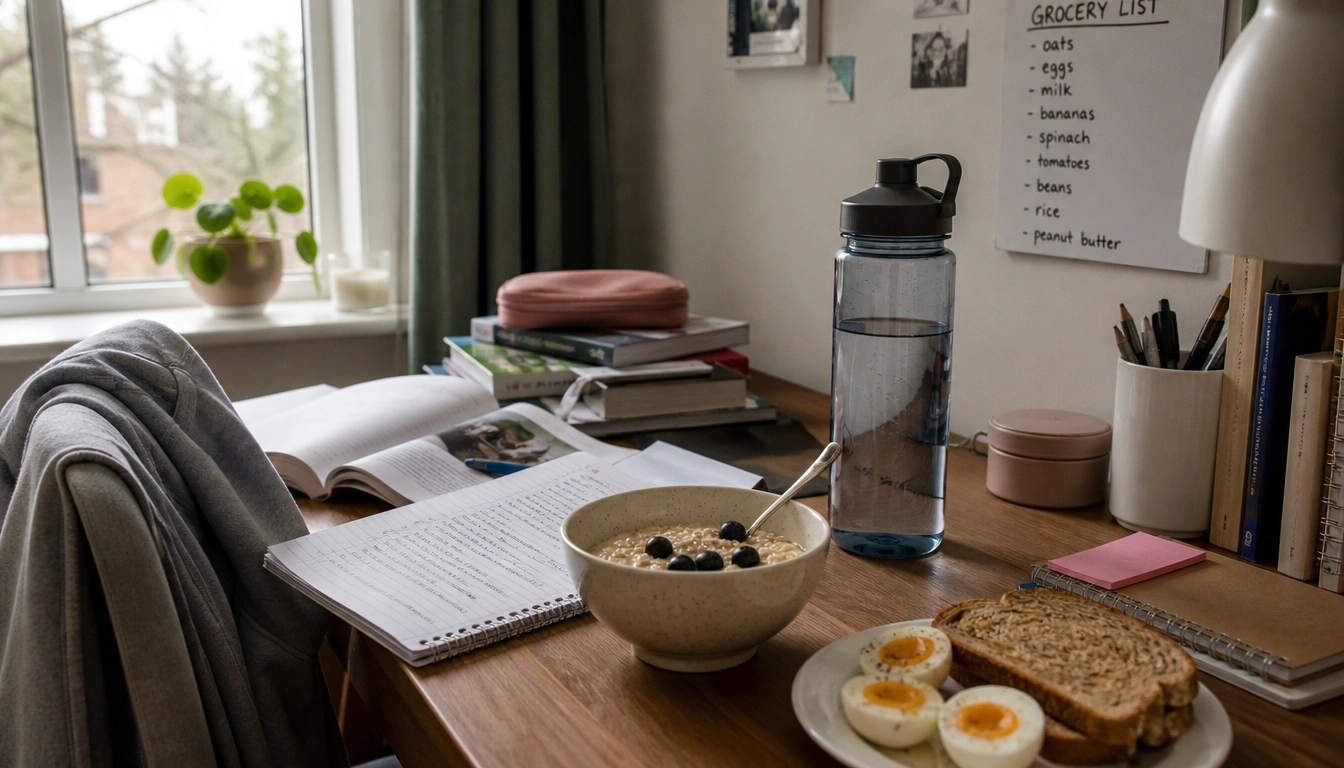
Students and families should aim for a simple daily rhythm: eat regular low-cost meals, keep study snacks balanced, drink water first, limit caffeine, protect sleep, and plan food ahead so exam stress does not turn into skipped meals or expensive takeaway. The best routine is the one that is repeatable on busy days, not perfect on ideal days.
Key Takeaways
- Build meals around cheap staples such as oats, eggs, beans, lentils, tinned fish, frozen vegetables, wholegrains, and tap water.
- Pair carbohydrates with protein, fibre, or healthy fats to help avoid the quick blood sugar rise-and-fall that can hurt concentration.
- Treat sleep as part of revision: a short wind-down before bed can support memory, mood, and next-day focus.
- Use batch cooking, own-brand swaps, and shared grocery lists to reduce decision fatigue and last-minute food spending.
- Moderate caffeine can help alertness, but energy drinks and caffeine pills can disrupt sleep and worsen anxiety during exams.
- Students with diabetes, neurodivergence, or restrictive eating patterns may need flexible, individualized routines rather than rigid rules.
Exam-week reality check
Exam periods often push households into survival mode. Timetables change, stress rises, and the easiest food in reach is usually the cheapest ultra-processed option. That does not mean healthy eating has to become complicated or expensive. Public health guidance from the CDC and NHS supports a routine built on regular meals, enough fluids, sleep, and manageable activity rather than special products or perfection.
Stress can change appetite in both directions. Some students forget to eat, then crash later. Others graze on sugary or salty foods because they are quick comfort. The problem is not occasional convenience; it is a pattern of long gaps between meals followed by heavy, fast-digesting food. That pattern can make focus feel worse, especially during long revision sessions.
A better approach is to make the default choices easy. Keep a few low-cost foods visible, prepped, and ready to eat. That lowers the effort needed on a busy morning or after a difficult paper. The routine should support the brain, not add another task list to manage.
Food-first routine for stable energy
A stable exam day usually works best when breakfast, lunch, dinner, and snacks all have the same basic structure: a slow-digesting carbohydrate, plus protein, fibre, or fat. That combination helps people feel fuller for longer and can reduce the sharp energy swings that often follow a sugary snack alone.
Cheap breakfast ideas for exam mornings
Oats are one of the most reliable budget foods for exams because they are cheap, shelf-stable, and easy to prepare. Porridge with milk or water is a practical base. Add peanut butter, a banana, frozen berries, or a spoon of yogurt if available. Eggs on wholemeal toast are another quick option. If mornings are rushed, even a simple bowl of oats and fruit is better than nothing.
Low-cost lunch and dinner patterns
For lunch, think in templates rather than recipes. A jacket potato with beans, tuna, or cheese; rice with lentils and frozen vegetables; or pasta with tinned tomatoes and peas all give a steadier energy release than a snack-only lunch. For dinner, use the same logic: wholegrains, a protein source, and vegetables. Tinned fish, eggs, beans, and lentils are especially useful because they store well and do not require a last-minute supermarket trip.
Best snacks for studying on a budget
Study snacks work best when they are small and planned. Good options include fruit, yogurt, wholegrain toast, popcorn, a handful of nuts if affordable, hummus with bread or crackers, or leftover beans on toast. If a snack is mostly sugar, it may feel helpful for a short time and then leave the student more tired or irritable. A balanced snack can be much more useful during a long revision block.
How to build a cheap exam meal plan for the week
Meal planning during exams does not need to mean a detailed calendar. A short list of repeatable meals is often enough. Choose two breakfasts, two lunches, and two dinners that can be made from overlapping ingredients. That makes shopping simpler and reduces food waste.
Frozen vegetables and tinned produce are especially helpful for budget-conscious households. They are usually cheaper than fresh food, last longer, and can be used in soups, pasta sauces, curries, stir-fries, and omelettes. Own-brand versions of oats, pasta, rice, beans, and tinned fish are often a sensible swap. The point is not to buy the cheapest item blindly, but to choose reliable staples that can be used in several meals.
Batch cooking is one of the most useful exam-week habits. Make a large pot of chilli, lentil stew, bean soup, pasta sauce, or rice-based meals when there is a spare hour. Portion some into containers for the fridge and freezer. That gives the household a backup meal on the busiest nights and lowers the temptation to spend on takeaway because no one has the energy to cook.
If the household is small, batch cooking can still help. Even preparing a few boiled eggs, a pan of rice, or chopped vegetables at the start of the week saves effort later. Small actions count when the schedule is crowded.
Hydration and caffeine strategy
Water is the first-line drink for exam days. Mild dehydration can contribute to headaches, low energy, and reduced concentration, and tap water is the cheapest option. A reusable bottle at the study desk makes it easier to sip without thinking about it.
Caffeine can help some students feel more alert, but timing and amount matter. Moderate intake earlier in the day is less likely to interfere with sleep than repeated cups into the evening. The risk rises when caffeine becomes a rescue strategy for poor sleep, skipped meals, or long study sessions that run too late. Energy drinks and caffeine pills are especially worth avoiding because they can intensify jitters, increase anxiety, and make sleep worse. The NHS advises caution with high-caffeine products, particularly for young people.
A practical rule is to use caffeine intentionally, not automatically. If a student is sleepy because they have not eaten or slept enough, another drink will not fix the cause. Food, water, movement, and a short break are often more effective than trying to push through on caffeine alone.
Sleep protection plan for exam season
Sleep is not time lost from revision. It is part of learning. Research-based guidance from health organizations supports the idea that sleep helps memory consolidation, emotional regulation, and next-day concentration. All-nighters usually trade a few more hours of studying for a worse brain the next day.
A workable sleep plan starts with a wind-down buffer. Thirty to sixty minutes before bed, switch from intense revision to lower-effort tasks such as packing a bag, laying out clothes, reviewing a short summary sheet, showering, or reading something calm. This buffer helps the body move out of high alert mode. For many students, that transition matters more than trying to force one more hour of work.
If study time runs late, protect the most important part: a consistent sleep window whenever possible. A shorter but regular sleep pattern is usually more useful than irregular late nights and catch-up sleep. If a student notices that evening caffeine, screen time, or late snacking is pushing bedtime back, those are good places to adjust first.
Micro-breaks and movement that help focus without costing money
Study breaks do not need to be elaborate. Short movement breaks can help restore attention, reduce stiffness, and give the brain a reset. A walk outside, a few stretches, a lap around the house, or standing up to refill a water bottle can be enough.
Movement is often more helpful when it is scheduled instead of left to chance. For example, after one study block, step away for five to ten minutes before starting again. That keeps the break from turning into a long drift. A budget-conscious break is one that does not require spending money, ordering food, or scrolling until the next study session disappears.
Households can make this easier by normalizing short breaks. If one person is pacing the hallway or stretching in the kitchen, others are more likely to do the same. Small shared habits can make a stressful week feel less isolating.
Household planning that reduces stress and spending
For families and roommates, the main challenge is often not nutrition knowledge but logistics. People are studying at different times, eating at different hours, and trying not to waste money. Shared planning can solve a lot of that.
A shared grocery list is one of the simplest tools. Keep it on paper, on a phone note, or on the fridge. Add the same reliable staples each week: oats, eggs, bread, milk or alternatives, beans, lentils, frozen vegetables, rice, pasta, fruit, and a few quick proteins such as tinned fish or yogurt. This lowers the chance that everyone buys separate snacks or forgets essentials and then orders takeaway later.
Batch cooking works even better when responsibilities are shared. One person can cook rice, another can portion fruit, and someone else can wash containers. For younger students, parents or caregivers often need to take the lead on grocery planning and mealtimes because the student’s attention is already stretched thin. The goal is to reduce decision fatigue, not to create a perfect family meal schedule.
Shared households can also agree on a “backup meal shelf” for exam week. That shelf might hold noodles, tinned soup, wholegrain crackers, peanut butter, or other shelf-stable foods that can be turned into a meal quickly. Having a backup plan is usually cheaper than repeatedly buying last-minute food.
Special considerations for different students
Younger students usually need more family support because they have less control over shopping, cooking, and bedtime. For them, the healthiest routine is often the one that the household can maintain together. Regular meals, predictable sleep, and access to simple snacks matter more than complicated nutrition rules.
Students living independently may need a more practical system: a short shopping list, a few repeat meals, and food stored where it is easy to see. If transport or supermarket access is limited, shelf-stable foods become even more important.
Students with diabetes should not make sudden eating changes during exam season without considering how those changes affect blood glucose. Skipping meals or swapping to erratic snack patterns can be risky, so individualized advice from a clinician or diabetes team may be needed. Students with anxiety, neurodivergence, or sensory sensitivities may also need more flexible food options. Texture, smell, and predictability matter. A safe and tolerated meal is more useful than a “perfect” meal that is never eaten.
If exam stress is leading to severe food restriction, repeated bingeing, panic attacks, persistent insomnia, or physical symptoms that do not settle, it is worth involving a healthcare professional, school counselor, or family doctor. A healthy routine should make life more manageable, not more rigid.
Frequently Asked Questions
What are cheap foods that support concentration during exams?
Good budget choices include oats, eggs, beans, lentils, wholemeal bread, rice, pasta, tinned fish, frozen vegetables, fruit, and tap water. These foods are practical, filling, and easier to turn into balanced meals than relying on snack foods alone.
How can a family plan meals and snacks cheaply when everyone’s schedule is different?
Use a shared grocery list, choose a few repeatable meals, and keep backup foods such as oats, bread, eggs, beans, and frozen vegetables on hand. Batch cooking once or twice a week can cover different mealtimes without each person needing a separate plan.
How much caffeine is too much during exam season?
There is no single number that fits everyone, but caffeine becomes a problem when it starts replacing sleep, causing jitters, or making anxiety worse. Energy drinks and caffeine pills are more likely to cause problems than moderate coffee or tea, especially later in the day.
What is a realistic sleep routine during exams if study time runs late?
Aim for a short wind-down before bed, even on busy nights. Stop intense revision for 30 to 60 minutes, pack what you need for the next day, and switch to calmer tasks. A regular sleep window is usually more useful than trying to study late every night.
How can students avoid blood sugar crashes and energy dips while studying?
Try not to study on an empty stomach for long stretches. Combine carbohydrates with protein, fibre, or fat, such as oats with yogurt, toast with eggs, or rice with beans. That tends to be steadier than sweets or refined snacks on their own.
The Bottom Line
A good exam-week routine is built from simple habits that are cheap enough to repeat: regular meals, water, sensible caffeine, movement breaks, and enough sleep to let the brain recover and store what it has learned.
Families and students do not need special foods or a perfect schedule. They need a few reliable staples, a shared plan for busy days, and flexibility when stress, sensory needs, or health conditions make the usual routine harder to follow.
If eating patterns, sleep, or anxiety are becoming severe rather than just stressful, it is sensible to ask for professional support sooner rather than later.
Medical disclaimer
Medical disclaimer: This content is for educational and informational purposes only and is not a substitute for professional medical advice, diagnosis, or treatment. Dietary needs and supplement suitability vary by individual.
Sources
- National Institutes of Health (NIH) — nih.gov. Accessed November 2026.
- Centers for Disease Control and Prevention (CDC) — cdc.gov. Accessed November 2026.
- National Health Service (NHS) — www.nhs.uk. Accessed November 2026.
- National Health Service (NHS) — diabetesmyway.nhs.uk. Accessed November 2026.
