
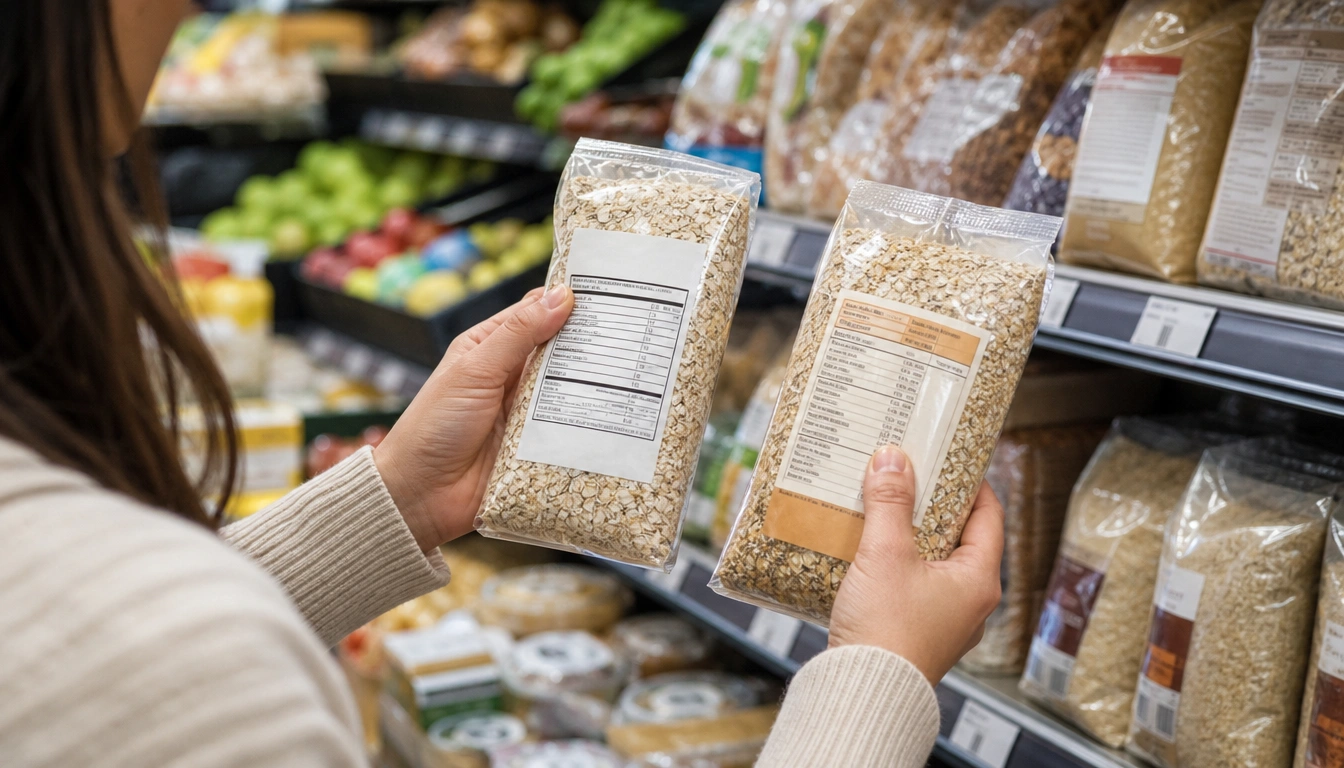
The fastest way to choose the healthiest affordable food is to ignore the front label first and check the Nutrition Facts panel in this order: serving size, sodium/saturated fat/added sugars, fiber or other beneficial nutrients, ingredients, then unit price. That quick scan helps you compare store brands and name brands based on nutrition per dollar, not just package claims.
Key Takeaways
- Start with serving size so you know whether the numbers match what you actually eat.
- Use the 5/20 rule: 5% DV or less is low, and 20% DV or more is high.
- For budget shopping, prioritize lower sodium, saturated fat, and added sugars, then look for fiber and key minerals.
- Ingredient order matters: the first ingredients make up most of the food, so whole grains, beans, or fruit should appear early when possible.
- Frozen and canned produce can be smart budget buys if labels show no heavy syrup, sauces, or added sodium.
- Unit price helps you compare store brands and name brands fairly, especially when package sizes differ.
Why the Nutrition Facts label beats marketing claims
For budget shoppers, the Nutrition Facts label is more useful than slogans like “natural,” “made with whole grain,” or “healthy.” Front-of-package claims are designed to sell the product; the label is designed to show what is actually inside. The U.S. Food and Drug Administration uses a standardized format so shoppers can compare foods more objectively, even when packages look very different.
This matters because the healthiest-looking box is not always the best buy. A product may advertise one positive feature while still being high in sodium, added sugars, or saturated fat. For people trying to stretch a grocery budget, that can lead to paying more for a food that is not especially nourishing. Reading the label helps you spend on nutrients that matter most rather than on marketing.
It also helps you compare foods that seem similar but are not nutritionally equal. Two cereals may cost about the same, but one may provide much more fiber and less sugar. Two soups may look affordable, but one may be far higher in sodium. The label gives you a practical way to spot the better value without needing to memorize every nutrient.
The five-step label checklist for a tight grocery budget
Use this sequence so the label works like a fast filter rather than a puzzle. First, check the serving size. Second, look at calories if that helps you match the food to your needs. Third, scan the nutrients you want to limit. Fourth, look for nutrients you want more of. Fifth, read the ingredient list to see what the product is mostly made of.
Serving size comes first because all the numbers on the panel are based on that amount, not on the whole package. A bag, bottle, or box may contain more than one serving, and that can make a food look cheaper or healthier than it really is. If you usually eat more than one serving, multiply the numbers in your head before deciding.
Next, check the nutrients to limit: saturated fat, sodium, and added sugars. These are common in many lower-cost processed foods, especially snacks, frozen meals, sauces, and canned soups. Then look for beneficial nutrients such as fiber, protein, calcium, iron, and potassium. A budget food does not need to be perfect, but it should give you some nutritional return for the money.
Finally, read the ingredient list. Ingredients are listed by weight from most to least. If whole grains, beans, vegetables, fruit, or plain dairy appear early, that is a good sign. If sugar, refined starches, or oils dominate the list, the product may be more filler than food. This one step often reveals more than the front label ever will.
How to use the 5/20 rule in the grocery aisle
The 5/20 rule is a quick way to judge the % Daily Value (%DV) on the label. As a general rule, 5% DV or less means a nutrient is low, and 20% DV or more means it is high. The FDA and CDC use this kind of rule of thumb to help shoppers move faster in the store.
For nutrients you want to limit, such as sodium, saturated fat, and added sugars, lower numbers are usually better. For nutrients that help fill gaps in the diet, such as fiber, iron, calcium, potassium, and vitamin D, higher numbers can be a plus. That means the same rule works in two directions: low for limit nutrients, high for beneficial nutrients.
This is especially helpful when you are choosing between affordable foods. A lower-cost cereal with more fiber and less sugar may be a better everyday buy than a flashy brand with colorful packaging. A canned bean with little or no sodium may be a stronger pick than a similar product with a long list of seasonings and added salt. The rule is simple, but it works best when you use it with the ingredient list and serving size.
Practical caution: the %DV is based on a 2,000-calorie diet, which is only a reference point. Your needs may differ based on age, activity, health status, and medical conditions. If you live with diabetes, hypertension, celiac disease, or allergies, you may need to be more selective than the average shopper and pay closer attention to specific ingredients, not just the percentage numbers.
How to compare unit price and nutrition together
Price alone does not tell you which food is the better deal. A package may cost less overall but provide fewer servings, less protein, less fiber, or more added sugar. That is why the unit price on the shelf tag matters. It shows the cost per ounce, pound, or other standard unit so you can compare different package sizes fairly.
For example, a larger store-brand bag may seem more expensive at the register, but it could cost less per ounce and deliver the same basic nutrition as a smaller national brand. On the other hand, a discount food may have a low unit price but be mostly refined starch, sugar, or salt. The best value is the option that balances cost per unit with a solid Nutrition Facts panel.
A useful habit is to compare two products in the same category before deciding. Ask three questions: Which one costs less per unit? Which one has less of the nutrients to limit? Which one gives more fiber, protein, or key minerals? That quick comparison often makes the decision obvious without needing a calculator or a nutrition app.
| What to check | Budget-friendly sign | Why it matters |
|---|---|---|
| Unit price | Lower cost per ounce or pound | Shows the real cost of the food |
| Serving size | Matches what you actually eat | Prevents underestimating cost and nutrients |
| Limit nutrients | Lower sodium, saturated fat, and added sugars | Helps you choose a more balanced staple |
| Beneficial nutrients | Higher fiber, protein, calcium, iron, or potassium | Improves the nutrition you get for the money |
| Ingredients | Whole grains, beans, or fruit near the front | Suggests the product is built around real food |
Budget-friendly packaged foods that usually deliver good value
Some foods are consistently good buys because they are nutritious, versatile, and usually inexpensive per serving. Dry beans, lentils, oats, frozen vegetables, canned vegetables, plain yogurt, tuna, and whole-grain staples often score well on both price and nutrition. They also work in many meals, which helps reduce waste.
Beans and lentils are especially useful because they are high in fiber and plant protein, and the ingredient list is often simple. Oats are another budget staple with a short ingredient list and useful fiber. Plain yogurt can provide protein and calcium without the added sugars often found in flavored varieties. Tuna and other simple canned proteins can be affordable sources of protein when bought in water or with minimal added ingredients.
Frozen vegetables and canned vegetables can be excellent budget options, especially when fresh produce is expensive or likely to spoil before you use it. Many are picked or packed at good quality and can be just as useful in meals as fresh produce. The label check is simple: choose frozen items without heavy sauces and choose canned items with no salt added or lower sodium when possible. For fruit, look for options packed in water or juice rather than heavy syrup.
Whole-grain staples such as brown rice, whole-wheat pasta, and whole-grain bread can also be worth comparing carefully. The ingredient list should help you tell whether whole grain is truly the main ingredient or just a small feature on the package. When these foods are minimally processed, they often bypass much of the label confusion and give better cost per nutrient than specialty “health foods.”
When the checklist needs extra caution
The label checklist is useful for most shoppers, but some people need to read it more carefully. If you have diabetes, the added sugars, total carbohydrate, and serving size may need closer attention than price alone. If you have high blood pressure, sodium becomes especially important, and a cheaper food is not a good deal if it pushes you far over your target for the day.
For people with food allergies, the ingredient list is not optional. It is a safety tool. A low-cost product that seems healthy on the label is not worth it if it contains an allergen or is processed in a way that makes cross-contact a concern for you. For celiac disease, look beyond the nutrition numbers and make sure the product is specifically safe for gluten avoidance when needed.
If you are managing a chronic condition, the best food choice may not be the cheapest item that looks healthy in the store. It may be the item that fits your treatment plan, your blood sugar goals, your sodium needs, or your allergy restrictions. In that case, a registered dietitian or clinician can help you build a safe budget plan that still feels realistic.
Common label traps that can waste money
One common trap is the health halo. Words like “natural,” “whole grain,” “light,” or “made with real fruit” can make a product sound nutritious even when the label tells a different story. Another trap is the misleading serving size: the package may appear to contain a single snack or bowl, but the label may define a serving as much less than what most people eat.
Be careful with products that emphasize one good thing while hiding several weaker ones. A granola bar may contain whole grains but still be high in added sugar. A soup may be low in fat but very high in sodium. A “high protein” snack may be expensive and still not offer much fiber or lasting fullness. The front of the package can highlight the best feature; the panel shows the whole picture.
Also watch for ingredients that suggest the product is mostly filler rather than food. If sugar, refined flour, corn syrup, or other sweeteners appear near the top of the list, the product may be more dessert-like than nourishing. For budget shoppers, that matters because cheap calories are not always cheap nutrition.
A quick three-step cart audit
Before you put a packaged item in your cart, do a fast check. First, ask whether the serving size matches the amount you usually eat. Second, scan the nutrients to limit and the nutrients to seek. Third, compare the unit price with at least one other option in the aisle.
In real shopping terms, that might mean choosing the lower-sodium canned beans over the flavored version, the plain yogurt over the sweetened one, or the frozen vegetables without sauce over the more heavily prepared bag. You do not need a perfect food every time. You need a repeatable way to find the better option most of the time.
That is where the checklist saves both time and money. It helps you ignore packaging tricks, avoid paying extra for unnecessary ingredients, and choose foods that give you more nutrition for every dollar spent.
Frequently Asked Questions
What does the 5/20 rule mean on a nutrition label?
It is a quick guide for % Daily Value. As a rule of thumb, 5% DV or less is low and 20% DV or more is high. Use low numbers for nutrients to limit, such as sodium or added sugars, and higher numbers for nutrients you want more of, such as fiber or iron.
How do I compare serving size with what I actually eat?
Start by estimating how much of the food you usually eat at one time, then compare that amount with the serving size on the label. If you eat two servings, double the calories and nutrients on the panel. This is one of the most common places people underestimate intake and cost.
What ingredients should budget shoppers look for or avoid first?
Look for whole grains, beans, plain dairy, fruit, or vegetables near the top of the ingredient list. Try to limit products where sugar, refined flour, or syrups appear very early, especially if the item is supposed to be a basic staple. Ingredient order tells you what the food is mostly made of.
How do I compare store brands and name brands by unit price and nutrition?
Check the unit price first so you can compare equal amounts of food, then compare serving size, sodium, saturated fat, added sugars, fiber, and protein. If the nutrition is similar, the lower unit price is usually the better value. If one product has a much better label, it may justify a slightly higher price.
Which packaged foods are usually the best value for nutrition?
Dry beans, lentils, oats, frozen vegetables, canned vegetables with lower sodium, plain yogurt, tuna, and whole-grain staples are often strong budget choices. They tend to provide useful nutrients, work in many meals, and reduce waste when stored well. Frozen and canned produce can be especially helpful when fresh food is too costly or spoils too fast.
The Bottom Line
A fast label check can help you buy better food on a budget without falling for front-of-package hype. Start with serving size, then look at the nutrients to limit, the nutrients to seek, the ingredient list, and the unit price.
The best low-cost choices are often simple foods: beans, lentils, oats, frozen vegetables, canned vegetables with no heavy sauce or added sodium, plain yogurt, tuna, and whole-grain staples. These foods tend to give more nutrition for the money and fewer surprises on the label.
If you manage diabetes, high blood pressure, allergies, or celiac disease, use the same checklist with extra caution and follow your care plan. A registered dietitian or clinician can help tailor the approach when your medical needs are more specific.
Medical disclaimer
Medical disclaimer: This content is for educational and informational purposes only and is not a substitute for professional medical advice, diagnosis, or treatment. Dietary needs and supplement suitability vary by individual.
Sources
- U.S. Food and Drug Administration (FDA) — fda.gov. Accessed November 2026.
- Centers for Disease Control and Prevention (CDC) — cdc.gov. Accessed November 2026.
- U.S. Food and Drug Administration (FDA) — fda.gov. Accessed November 2026.
- eatright.org — eatright.org. Accessed November 2026.
