
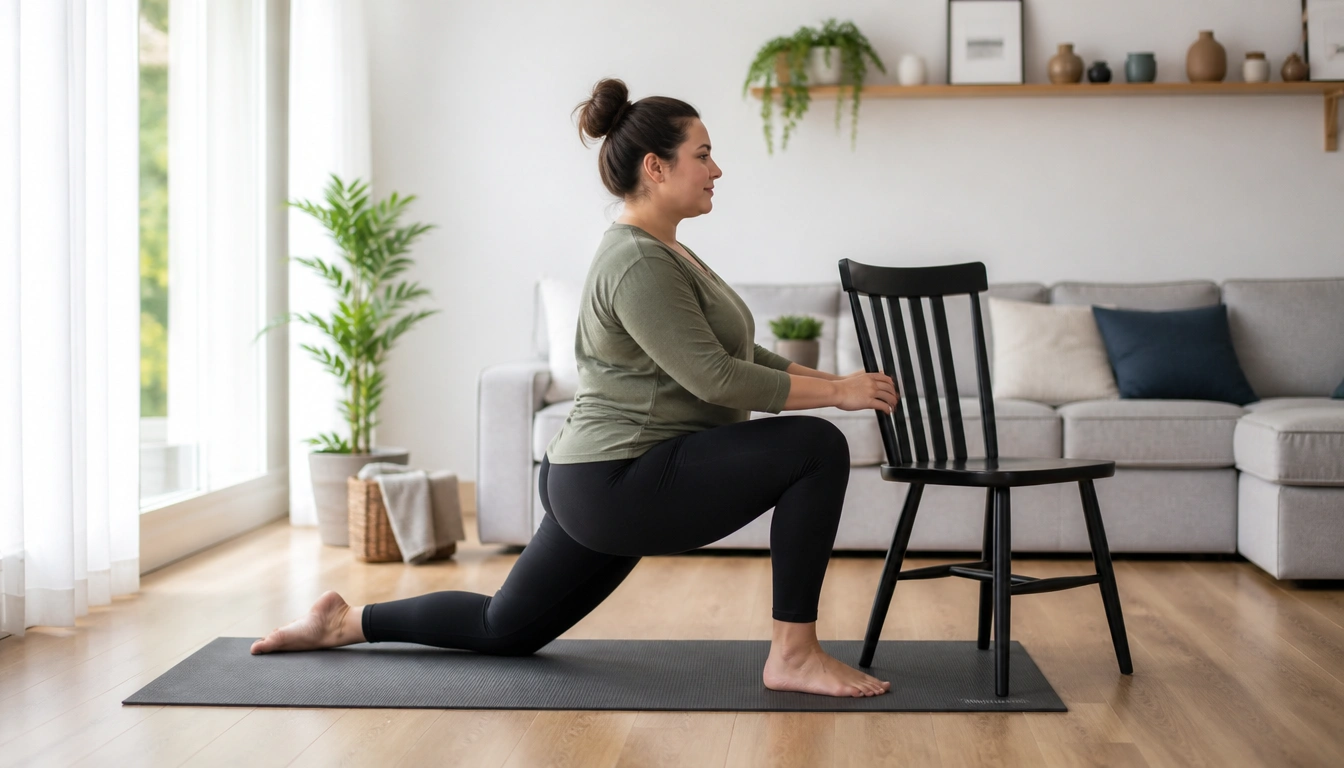
A safe beginner hip mobility routine usually means 5 to 10 minutes of gentle, controlled movements 2 to 3 times a week, plus brief movement breaks during long sitting periods. Start with a warm body, stay in a mild stretch—not pain—and focus on control as much as range. For most beginners, four basics are enough: a hip flexor stretch, glute bridges, a figure-4 or knee-hug stretch, and gentle windshield wipers.
Key Takeaways
- Hip mobility is not just stretching; it also includes strength and control, which helps you use your hips safely in daily life.
- Long periods of sitting can leave hip flexors short and glutes underactive, which is one reason hips can feel stiff.
- Beginners usually do well with short sessions 2 to 3 times per week, plus brief movement snacks on desk days.
- Warm up first with a short walk or light activity; do not force deep stretches when the body is cold.
- Mild tension is normal, but sharp pain, catching, or symptoms that linger for hours are signs to scale back.
- Older adults, pregnant people, and hypermobile people often need smaller ranges, more support, or a stronger focus on stability.
Why hip mobility matters if you sit a lot
The hip mobility routine for absolute beginners works best when you understand why hips get stiff in the first place. The hip is a ball-and-socket joint that can move forward, backward, side to side, and rotate. That variety matters for walking, stairs, getting up from a chair, bending, and turning.
Prolonged sitting keeps the front of the hip in a shortened position for long periods. Over time, the hip flexors can feel tight, while the glutes may become underactive. The result is not just a sensation of stiffness. It can also change how you move when you stand, walk, or exercise. Guidance from the National Health Service and major clinical sources supports gentle movement and regular activity to keep joints moving well.
For beginners, it helps to think beyond passive stretching. A muscle can be flexible enough to lengthen, but that does not always mean you can control the joint well in that range. That is where mobility comes in. Mobility combines flexibility with strength and coordination, so the hips can move smoothly and stay stable. In practice, that means the routine should include both stretching and active movement.
The beginner routine at a glance
Most people do well starting with this routine 2 to 3 times per week. Keep the total session short enough that you can repeat it. Five to 10 minutes is enough for a beginner, especially if you are rebuilding a habit after a long break.
A simple starter session can include four movements: one front-of-hip stretch, one glute activation drill, one outer-hip stretch, and one rotation drill. The goal is not to force a big change in one day. It is to teach your hips to move more comfortably and with better control over time.
If you are very stiff, start with the lowest-effort version of each movement and keep the range small. If you feel steady after a couple of weeks, you can slowly add a few more seconds, a few more repetitions, or a slightly larger range. According to clinical exercise guidance from sources such as Mayo Clinic, consistency usually matters more than intensity for beginners.
Low kneeling hip flexor stretch and glute bridge
The low kneeling hip flexor stretch targets the front of the hip, which is often the area that feels shortened after sitting. Kneel on one knee with padding under it, place the other foot in front, and keep your torso tall. Gently shift forward until you feel a mild stretch in the front of the kneeling-side hip. Do not arch your low back to fake a bigger stretch. Hold for about 20 to 30 seconds, then switch sides.
Common mistakes include leaning too far forward, twisting the pelvis, or holding the breath. A small, steady stretch is enough. If kneeling is uncomfortable, use extra padding or perform a standing hip flexor stretch with one foot behind you.
Next comes the glute bridge, which helps wake up the muscles that often switch off during long sitting periods. Lie on your back with knees bent and feet flat. Tighten your abdomen gently, press through your feet, and lift your hips until your body forms a straight line from shoulders to knees. Pause briefly, then lower slowly. Start with 1 set of 10 to 12 repetitions.
If a full bridge feels too hard, lift only partway. If your hamstrings take over, bring your feet a little closer to your hips and focus on squeezing the glutes at the top. The point is control, not height.
Figure-4 work and gentle windshield wipers
The seated figure-4 stretch is a good option if you have limited floor mobility. Sit near the front of a sturdy chair, place one ankle over the opposite knee, and keep the spine long as you hinge forward slightly from the hips. You should feel a mild stretch through the outer hip and glute on the crossed-leg side. Hold for 20 to 30 seconds, then switch.
If sitting on a chair is not comfortable, try a supine knee-hug version. Lie on your back and bring one knee toward your chest with both hands. Keep the movement gentle and let the other leg rest. This version is often easier for people who are very stiff or nervous about balance.
Gentle windshield wipers work on hip internal and external rotation. Sit or lie on your back with knees bent and feet wider than hip width. Slowly let both knees move together to one side, pause, then guide them to the other side. Keep the motion smooth and small at first. Five to 10 slow side-to-side repetitions are enough. The goal is control through rotation, not forcing the knees all the way down.
How to fit hip mobility into real life
Warm muscles move better, so avoid stretching cold. The easiest way to prepare is a 3- to 5-minute walk, marching in place, or light household movement before you start. If you prefer, do the routine after a workout or at the end of the day when your body is already warmer.
For people who sit for long periods, brief movement snacks are often more realistic than trying to fix stiffness in one long session. Stand up once an hour, take a short walk, or do a minute of easy hip circles or a gentle hip flexor stretch. These breaks do not need to be dramatic. They just need to interrupt long stillness.
Consistency is the real win. A few short sessions each week are easier to recover from and easier to keep doing than one intense session that leaves you sore or discouraged. If you know you will miss workouts on busy days, place the routine where it will happen automatically: after brushing your teeth, after a walk, or right after work.
How to scale the routine for your body
Older adults often benefit from the same movements, but smaller ranges and more support are usually better. Use a chair, a wall, or extra padding under the knee. Move slowly, pause if balance feels uncertain, and avoid forcing the joint. If you have osteoarthritis or a history of stiffness, gentle mobility is usually more useful than aggressive stretching.
Pregnant people may need to swap floor-based positions for seated or supported standing versions. As balance and joint laxity can change during pregnancy, choose comfort, stability, and breathing room over depth. Stop any movement that feels unstable, compressive, or difficult to control, and check with a clinician if you are unsure which positions fit your stage of pregnancy.
For hypermobile people, the priority is usually control, not range. Do not chase deep end positions. Use short holds, smaller arcs, and more emphasis on glute and trunk engagement. If a joint already moves easily, loading the muscles around it often matters more than stretching farther. In that case, a slower bridge or a supported single-leg balance drill may be more useful than extra range.
How to tell if a movement is safe
A little tension, warmth, or a mild stretching sensation is normal. Sharp pain, pinching, catching, numbness, or a feeling that the joint is slipping is not. If your body feels better as you move, that is usually a good sign. If the movement keeps getting worse, scale it back.
The 2-hour rule is a useful self-check: if discomfort lasts longer than about 2 hours after the session, or if it increases later in the day, the routine was probably too much. Next time, reduce the range, shorten the hold, or cut the number of repetitions. That kind of response does not mean you failed. It means the dosage needs adjusting.
See a healthcare professional before starting if you have severe hip damage, a recent injury, prior hip surgery, or pain that interferes with walking or sleep. If pain is persistent or you are unsure whether it is safe to exercise, a physical therapist or physician can help you tailor the routine.
What to do after two to four weeks
After a couple of weeks, the next step is usually small progression, not a total overhaul. You can add a few more seconds to the holds, add a few more bridge repetitions, or make the movement slightly smoother and slower. If your hips feel better and your form is steady, you may also extend the routine to a few more days per week.
Another useful progression is to pair mobility with light strength. For example, after bridges, try standing up from a chair slowly or adding a supported hip hinge pattern. That helps carry the new motion into daily life. If a movement becomes easy and calm, you are not obligated to keep stretching it forever. At that point, the next step may be better control, not more range.
The best long-term plan is simple: keep the routine short enough that you can repeat it, and let your body guide the pace. Small, steady improvements are usually more durable than dramatic efforts followed by soreness or inconsistency.
Frequently Asked Questions
How long should I hold each hip stretch or movement?
For beginner hip mobility, short holds are usually enough. A common starting point is 20 to 30 seconds for gentle stretches like the hip flexor stretch or figure-4, and 5 to 10 controlled repetitions for active drills like windshield wipers or bridges.
What’s the difference between hip mobility and hip flexibility?
Flexibility is how far a muscle can lengthen passively. Mobility is broader: it includes flexibility, strength, and control so you can move the hip through a range safely and actively. That is why mobility work usually includes both stretching and activation.
Should I do hip mobility before or after a workout?
Either can work. A brief warm-up walk first is a good idea if you plan to do mobility before exercise. After a workout is also a good time because the body is warmer. If you are very stiff, saving it for after activity can feel easier.
How do I know if a hip movement is too intense or causing harm?
Mild stretching or muscle effort is normal. Stop or scale back if you feel sharp pain, pinching, catching, numbness, or a worsening joint sensation. If discomfort lasts more than about 2 hours after the session, the movement was probably too intense.
What changes should older adults, pregnant people, or hypermobile people make?
Older adults usually do better with smaller ranges, support, and slower pacing. Pregnant people may need seated or standing versions instead of floor work. Hypermobile people should avoid deep end-range stretching and focus more on control, stability, and gentle strengthening.
The Bottom Line
A good hip mobility routine for absolute beginners is short, gentle, and repeatable. Two to three sessions a week, plus small movement breaks on long sitting days, is a practical place to start.
Build around four basics: hip flexor stretch, glute bridge, figure-4 or knee-hug stretch, and gentle windshield wipers. Warm up first, stay out of pain, and let control matter as much as range.
If your hips feel better within a day and the routine does not trigger lingering discomfort, you are probably in the right zone. If not, reduce the range, shorten the hold, and progress more slowly.
Medical disclaimer
Medical disclaimer: This content is for educational and informational purposes only and is not a substitute for professional medical advice, diagnosis, or treatment. Dietary needs and supplement suitability vary by individual.
Sources
- National Health Service (NHS) — wwl.nhs.uk. Accessed November 2026.
- National Health Service (NHS) — www.nhs.uk. Accessed November 2026.
- National Health Service (NHS) — cuh.nhs.uk. Accessed November 2026.
- Mayo Clinic — mayoclinic.org. Accessed November 2026.
