
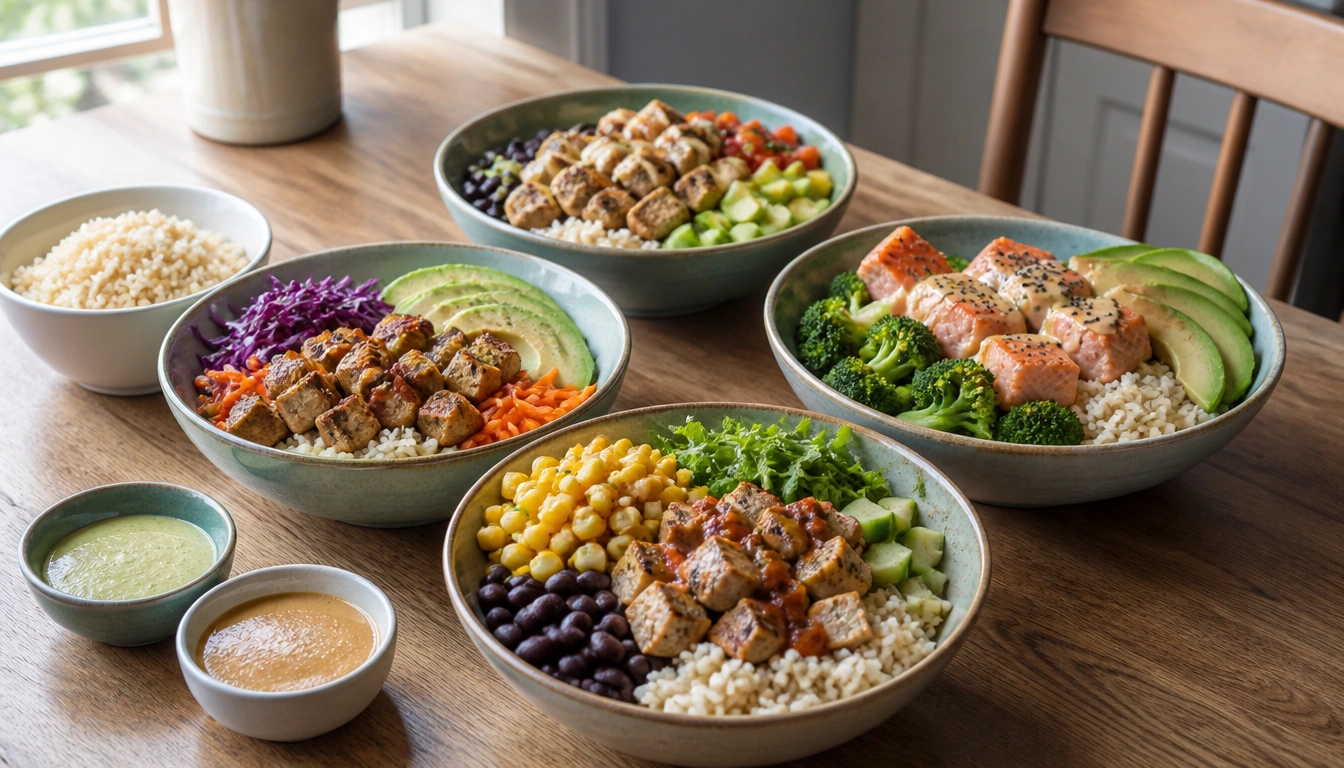
A fast, nutritious rice bowl for a busy weeknight starts with a simple formula: a grain base, a protein, vegetables, and a small amount of healthy fat. Choose batch-cooked rice, quick protein options like beans, chicken, eggs, tofu, or fish, and frozen or pre-cut vegetables to save time. Keep sauces measured and rice stored safely so the meal stays practical, family-friendly, and food-safe.
Key Takeaways
- Build each bowl around four parts: grain, protein, vegetables, and healthy fat.
- Batch-cook rice and a few proteins once so weeknight assembly takes minutes, not hours.
- Use frozen, canned, or pre-cut ingredients to reduce chopping, cleanup, and decision fatigue.
- For picky eaters, serve the components separately so kids can assemble their own bowl.
- Choose lower-sodium sauces and use citrus, herbs, and measured condiments for flavor.
- Handle cooked rice carefully: cool it fast, refrigerate promptly, and reheat until steaming hot.
A simple rice bowl formula that works on busy nights
A balanced rice bowl is easiest to think about as a buildable meal, not a recipe you have to follow exactly. Start with a grain base, add a protein, include vegetables, and finish with a little healthy fat. That structure lines up well with public health guidance from groups such as USDA MyPlate and the CDC, which encourage meals centered on whole grains, lean protein, and plenty of vegetables.
The grain base can be brown rice, white rice, a blend, or another whole grain if your family likes it. If you want more fiber and staying power, choose whole-grain rice more often, or mix regular rice with brown rice or quinoa. Protein helps make the meal more filling and gives you more flexibility with appetite differences. Vegetables bring color, texture, and micronutrients. A modest amount of healthy fat, such as avocado, olive oil, sesame oil, or seeds, rounds out the bowl and helps the flavors feel complete.
The easiest way to make the bowl family-friendly is to keep the core formula steady and rotate the flavors. One night you might go with chicken, broccoli, and sesame. Another night can be beans, corn, and salsa. The structure stays the same, so shopping and prep stay simple.
How to prep once and assemble all week
Busy parents usually do better with a short list of repeatable staples than with a new recipe every night. The goal is not to cook everything in advance. The goal is to set up a small system that makes dinner faster than ordering out.
Start with one batch of rice or another grain at the beginning of the week. Keep it in the refrigerator in a shallow container so it cools quickly. Then prep two or three proteins that can be used in different ways. For example, bake chicken breast, roast tofu, or keep canned black beans and canned salmon on hand for no-cook meals. If you like eggs, hard-boiled eggs are another quick option for some families.
For vegetables, lean on shortcuts that cut prep time without lowering quality. Frozen broccoli, edamame, corn, and mixed vegetables cook fast and require almost no cleanup. Pre-cut slaw mixes, baby spinach, cherry tomatoes, shredded carrots, and microwave-steam bags can do the same job. The point is to reduce friction on a weeknight, not to create a perfect meal-prep routine.
If you like planning ahead, make one “base” grain, one mild protein, and two vegetables that can be reused in different bowls. That gives you enough variety to avoid boredom while still keeping ingredients efficient and budget-friendly.
Mix-and-match bowl templates for the family table
Template meals make dinner easier because you can repeat the structure while changing the flavor. These ideas work well for families because they are familiar, flexible, and easy to adjust for different appetites.
Chicken, broccoli, and sesame
Use brown rice or white rice, add sliced or cubed chicken, and top with steamed broccoli and shredded carrots. Finish with a small drizzle of sesame oil and a sprinkle of sesame seeds. A mild soy-based sauce works if you keep it light.
Black beans, corn, and avocado
This version works well when the pantry is thin. Warm rinsed black beans with a little cumin and garlic powder, then add corn, diced bell pepper, and rice. Top with avocado, salsa, or plain yogurt for creaminess.
Salmon, cucumber, and greens
Flaked baked salmon pairs well with rice, cucumber, tomatoes, and spinach. Lemon juice or a light yogurt sauce adds freshness without much effort. This bowl is especially useful when you have leftover cooked fish from another meal.
Tofu, edamame, and mixed vegetables
Use crisped tofu or warmed tofu cubes with rice, edamame, and a bag of frozen stir-fry vegetables. A little ginger, garlic, and citrus can make it feel very different from the chicken or bean versions while still staying simple.
These templates are not rules. They are a starting point that helps you reuse ingredients without feeding the same meal every night.
How to make rice bowls kid-friendly without cooking twice
Picky eaters often do better when dinner feels predictable and controllable. A rice bowl does not have to be mixed together to count as a rice bowl. If your child resists combined foods, serve the parts separately on a plate or in compartments. That lets them try one ingredient at a time without feeling pressured.
A topping bar can also help. Set out rice, one or two proteins, a couple of vegetables, and a few mild toppings so kids can choose what they want. The choices should stay limited; too many options can feel overwhelming. A “build your own bowl” setup is especially useful when siblings have different preferences.
Milder flavor bases usually work better for children than strongly spicy sauces. You can keep the adults’ sauce on the table and let kids add it later if they want. Another easy strategy is to leave crunchy vegetables, sauce, or herbs on the side so the bowl stays familiar rather than mixed into a texture they dislike.
For uneven appetites, serve rice bowls in smaller portions and allow seconds. Children often eat better when they are not looking at an oversized serving. Adults can increase the vegetable portion or add extra protein to make the same meal fit their needs.
Smart swaps that save money and effort
Rice bowls are especially useful when your grocery budget is tight because they are built from flexible ingredients. Frozen vegetables are often just as practical as fresh vegetables for weeknight cooking, and they cut down on waste. Canned beans, canned salmon, canned tuna, and shelf-stable grains are helpful pantry items when the fridge is nearly empty.
Leftover proteins also fit naturally into this meal style. Roast chicken from last night can become tonight’s bowl topping. Leftover vegetables can be reheated and added in. Even a small amount of meat can stretch farther when it is paired with rice, beans, and vegetables.
If your family prefers softer textures, use white rice or a rice blend. If you want more fiber, try brown rice, wild rice, or a mix. You can also use more than one grain in the same batch, such as a rice-quinoa blend, to change the texture without changing the overall routine. This kind of swapping helps you balance preference, nutrition, and convenience without making a separate meal for everyone.
Keeping sauces flavorful without too much sodium or sugar
Sauces can turn a plain bowl into something your family wants to eat, but they can also add a lot of sodium or sugar very quickly. The easiest fix is to treat sauce as a finishing ingredient, not the main event. Measure it instead of pouring freely, especially with teriyaki, sweet chili sauce, bottled stir-fry sauces, or creamy dressings.
When you want more flavor without relying on a heavy sauce, build it from simple ingredients. Citrus juice, vinegar, garlic, ginger, herbs, and a small amount of olive oil can make a bowl taste bright and complete. Salsa, plain yogurt, tahini, and low-sodium soy sauce are also useful depending on the flavor profile you want.
If you buy bottled sauces, compare labels and choose lower-sodium versions when possible. Another good habit is to thin strong sauces with citrus juice, water, or a little broth so you can use less while still coating the food. That makes the bowl taste seasoned instead of salty.
The idea is not to remove flavor. It is to use flavor more intentionally so the meal stays satisfying without leaning on sugar-heavy or sodium-heavy shortcuts.
How to store and reheat cooked rice safely
Rice deserves special attention because cooked rice can support bacterial growth if it sits out too long. Public health guidance from the CDC and USDA emphasizes cooling cooked rice quickly, refrigerating it promptly, and reheating leftovers thoroughly. A practical home routine is to spread hot rice into a shallow container so it cools faster, then refrigerate it as soon as it is no longer steaming heavily.
Do not leave cooked rice at room temperature for long periods. Once refrigerated, use it within a few days and reheat only the portion you plan to eat. Reheat until it is steaming hot throughout. If you are using a microwave, stir the rice partway through to help it heat evenly. Add a splash of water if it looks dry, then cover it loosely so it does not harden.
Keep cooked rice separate from fresh toppings until serving time if you want better texture and safer storage. If rice smells off, looks unusual, or has been left out too long, throw it away. It is better to lose a small amount of food than to risk foodborne illness.
If you are making bowls for lunches as well as dinner, portion leftovers into smaller containers right away. That makes weekday reheating faster and reduces the chance that the whole batch sits out while everyone serves themselves.
A weekly rice bowl rotation that cuts decision fatigue
A simple rotation plan can make rice bowls feel like a default dinner instead of another decision. Pick one grain, two proteins, three vegetables, and two sauces for the week. Then repeat those ingredients in different combinations.
For example, your week could look like this: a chicken-and-broccoli bowl on Monday, a black bean and corn bowl on Wednesday, and a salmon or tofu bowl later in the week. Use the same rice base for all three meals, then change the toppings and sauce. That gives you variety without creating extra shopping or prep work.
Another helpful approach is to assign a “theme” to each night, such as sesame, Tex-Mex, Mediterranean, or simple herb-and-citrus. The theme gives the meal a different feel even when the ingredient list stays short. You can also build in one flexible leftovers night, where any remaining protein or vegetables get turned into a new bowl.
Over time, this kind of rotation becomes easier because you are shopping from a familiar list and using ingredients before they spoil. That is often the difference between a healthy plan that sounds good and one that actually fits real family life.
Frequently Asked Questions
What components should a balanced rice bowl include?
A balanced rice bowl usually includes a grain base, a protein, vegetables, and a small amount of healthy fat. That combination gives you energy, staying power, and better texture variety. The exact ingredients can change from night to night, but the structure stays the same.
How can busy parents meal-prep rice bowl ingredients without cooking every night?
Batch-cook one grain, prep one or two proteins, and rely on shortcut vegetables such as frozen broccoli, edamame, or pre-cut slaw. Store the parts separately so you can assemble bowls in minutes. This reduces both cooking time and the mental load of deciding what to make.
What are kid-friendly rice bowl ideas for picky eaters?
Serve the bowl deconstructed, with rice, protein, vegetables, and toppings kept separate. A small topping bar lets kids choose what they want without feeling overwhelmed. Mild sauces and familiar ingredients, such as chicken, beans, corn, or cucumber, often work better than strongly seasoned mixes.
How do you keep rice bowls lower in sodium and added sugar?
Use measured amounts of sauce, and choose lower-sodium versions when possible. Brighten the bowl with citrus, herbs, garlic, ginger, vinegar, salsa, or plain yogurt instead of relying on sweet bottled sauces. A little flavor goes further when it is added intentionally.
How do you store and reheat cooked rice safely?
Cool cooked rice quickly, refrigerate it promptly in a shallow container, and use it within a few days. Reheat only the portion you need and heat it until steaming hot. If rice has been left out too long or looks or smells off, discard it.
The Bottom Line
A good weeknight rice bowl does not need to be elaborate. If you start with a grain, a protein, vegetables, and a little healthy fat, you can build a meal that works for adults and kids without starting from scratch every night.
The biggest time-savers are batch-cooked rice, pantry proteins, frozen vegetables, and a short list of sauces and toppings. Keep the flavors simple, let picky eaters deconstruct their bowls, and use careful rice storage and reheating habits so leftovers stay safe and useful.
Once you have two or three dependable bowl templates, dinner becomes more about assembly than cooking. That is often the most realistic path to a balanced family meal on a busy weeknight.
Medical disclaimer
Medical disclaimer: This content is for educational and informational purposes only and is not a substitute for professional medical advice, diagnosis, or treatment. Dietary needs and supplement suitability vary by individual.
Sources
- Centers for Disease Control and Prevention (CDC) — cdc.gov. Accessed November 2026.
- U.S. Government / Health Authority — realfood.gov. Accessed November 2026.
- Centers for Disease Control and Prevention (CDC) — cdc.gov. Accessed November 2026.
- Academic Research Institution — harvard.edu. Accessed November 2026.
