
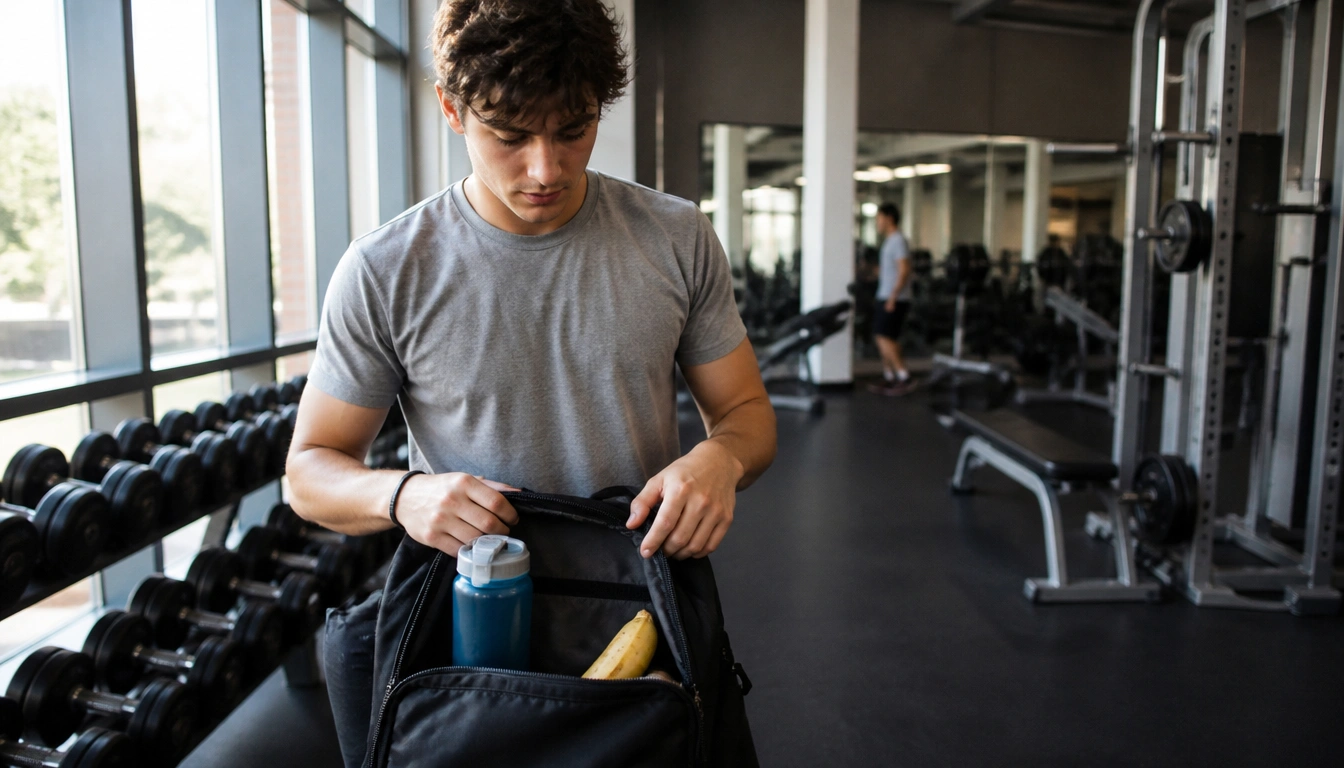
After lifting, focus on three things first: refuel, rehydrate, and protect sleep. For college students, the best recovery routine after strength training is usually a protein-containing meal or snack within a few hours, light movement later in the day, and enough rest before training the same muscle group again. Most college-aged lifters recover best with about 8 to 10 hours of sleep and roughly 48 to 72 hours before hard work for the same muscles.
Key Takeaways
- Sleep is a recovery tool, not an optional extra. College-aged lifters generally need 8 to 10 hours to support muscle repair, glycogen restoration, and nervous system recovery.
- You usually do not need to train the same muscle group hard again for about 48 to 72 hours. That spacing fits most student lifting schedules better than daily heavy work.
- A full meal is ideal, but a practical post-workout snack with protein and carbs is often enough when class or commuting gets in the way.
- Normal soreness is common after lifting. Sharp joint pain, major swelling, dark urine, or unusual weakness are warning signs that need medical attention.
- Stress and sleep debt can slow recovery even when training is well planned. Academic pressure can add to nervous system fatigue and make workouts feel harder.
- Low-fatigue activity like walking or mobility work can help recovery on rest days without adding much physical stress.
How recovery works after strength training
Recovery after lifting is not just about sore muscles feeling better. Strength training creates small amounts of muscle damage, especially when you lower a weight under control, and the body responds by repairing tissue and building it back stronger. That repair process depends on muscle protein synthesis, the rebuilding of glycogen used during training, and recovery of the nervous system that helped drive the workout.
For college students, that matters because recovery is affected by more than the gym session itself. A hard lift followed by poor sleep, skipped meals, or a night of studying can leave recovery behind schedule. The result is often more soreness, lower performance in the next session, and a harder time feeling fresh for class or daily life.
The American College of Sports Medicine and public health guidance support strength training on at least 2 days per week, but that does not mean every muscle should be trained hard every day. A balanced plan gives the body time to adapt. If sleep and food are inconsistent, that recovery window matters even more.
What to do in the first few hours after lifting
Right after a workout, keep the routine simple. Start by drinking water, especially if you trained hard, sweat a lot, or went to the gym between classes and forgot to hydrate earlier. If you are heading straight to a lecture, lab, or library, carrying a bottle and sipping during the next hour is enough to begin.
Food matters next. You do not need a perfect post-workout ritual, but it helps to get protein and carbohydrate within a few hours. Protein supports muscle repair, while carbohydrate helps refill the energy stores you used during training. If a full meal is not available, a snack can bridge the gap until you can eat properly.
Keep the rest of the day low-drama for the body. You do not need to lie down for hours, but avoid turning the rest of the day into another hard physical session. If you trained legs, for example, a long walk across campus is fine, but a second intense lower-body workout later the same day usually is not the best recovery choice.
Sleep strategy for students who train
Sleep is one of the biggest recovery tools available to college students, and it is often the hardest one to protect. Young adults generally need 8 to 10 hours of sleep per night for optimal recovery, cognition, and training adaptation, according to sleep and sports medicine guidance. That range is especially relevant when classes, studying, and social schedules make sleep irregular.
Deep sleep supports growth hormone release and other repair processes, while chronic sleep loss can blunt recovery, raise stress hormones, and make muscle repair less efficient. It can also slow glycogen restoration and increase injury risk. If you routinely sleep 5 to 7 hours, the issue is not just feeling tired the next day; your lifting recovery may also be incomplete.
For students, the most realistic sleep strategy is usually consistency rather than perfection. Keep a fairly steady wake time, even on weekends when possible. If late-night studying is unavoidable, try to protect a shorter but more predictable wind-down routine afterward. Reducing bright light and screens before bed can help your body shift into sleep more easily, even if the day was chaotic.
If dorm noise or shared housing makes sleep harder, practical fixes matter. Use earplugs, a fan, a white-noise app, or a sleep mask if those help you get to sleep and stay asleep. The goal is not a perfect routine; it is a repeatable one that gives your body enough time to recover between training days.
Food-first recovery on a student budget
Campus life rarely gives you a perfectly timed recovery meal. That is normal. What matters is building a food-first pattern that is easy to repeat. Protein distribution across the day is more useful than trying to rescue everything with one giant meal at night. If you can include a protein source at breakfast, lunch, dinner, and after training, you give muscle repair more consistent support.
If you need something fast after lifting, combine protein and carbohydrates in a way that fits your budget and schedule. Good examples include Greek yogurt and fruit, chocolate milk, a turkey or egg sandwich, trail mix with a protein-rich item, cottage cheese with crackers, tofu and rice from the dining hall, or a grab-and-go wrap. Even a simple snack is better than waiting too long and then going to bed underfed.
If a full meal is delayed by class or work, do not panic or overcomplicate it. Have a backup option in your backpack, fridge, or dining hall plan. Shelf-stable protein drinks, jerky, peanut butter sandwiches, roasted edamame, or a meal-prep container from the night before can all help bridge the gap. The point is steady intake, not perfection.
Rest days and active recovery
Rest days are not wasted days. They are when adaptation catches up. Some students do best with complete rest, especially after a hard week of lifting, poor sleep, or a lot of walking already built into campus life. Others feel better with light movement. Both can be reasonable.
Active recovery should feel easy. A relaxed walk, light cycling, gentle mobility work, or a few minutes of stretching can help you move blood through sore areas and reduce stiffness without creating meaningful fatigue. The effort should stay low enough that you could hold a conversation easily.
What usually does not qualify as recovery is turning a rest day into another workout. Long, hard conditioning sessions, intense ab circuits, or repeated high-effort sport practice can add fatigue instead of reducing it. If your body feels especially run down, doing less is often smarter than forcing activity for the sake of feeling productive.
How to tell normal soreness from a problem
Delayed onset muscle soreness, or DOMS, is common after strength training, especially when you try a new movement, do more volume than usual, or emphasize the lowering phase of a lift. DOMS typically feels like dull, tender, or stiff muscle soreness that shows up later and improves gradually over a few days.
Normal soreness is different from warning signs. Sharp pain during a lift, sudden swelling, bruising around a joint, or pain that feels localized to a tendon or joint instead of a muscle can point to an injury. Weakness that is much worse than expected, pain that keeps escalating, or soreness that stops you from moving normally deserves attention.
One symptom students should not ignore is dark, tea-colored urine paired with severe muscle pain, swelling, or weakness. That can be a sign of rhabdomyolysis, a medical emergency involving severe muscle breakdown. If you notice that pattern, seek urgent medical care. The same goes for chest pain, fainting, or symptoms that feel out of proportion to a normal workout recovery process.
It is also possible to be under-recovered without having a specific injury. Persistent fatigue, declining performance, irritability, elevated resting heart rate, and disrupted sleep can suggest that training stress is outrunning recovery. In that situation, the fix is usually to reduce training load, improve sleep, and reassess the schedule rather than push harder.
Building a weekly lifting schedule around recovery
A smart student lifting plan respects the 48 to 72 hour window for the same muscle group. That does not mean every workout must be separated by two or three full days, but it does mean heavy work for the same muscles should usually not be repeated back to back. If you train chest and shoulders hard on Monday, another hard pressing session may fit better on Wednesday or Thursday than on Tuesday.
For many college schedules, an upper-body and lower-body split works well because it spreads fatigue across the week. Another option is full-body training three days per week, which can fit naturally between classes and still leave enough recovery time. The right plan is the one you can sustain while sleeping enough and eating enough.
Spacing also matters when exams or late nights pile up. If you know you will sleep less than usual, that is a reason to keep the next session moderate rather than maxing out. Recovery is not only about the calendar; it is also about how much stress you already carry from school, work, and life.
If a workout feels unusually heavy several sessions in a row, check the whole week, not just the program. You may need more sleep, more food, or one less hard set than planned. Small adjustments usually work better than trying to force your way through accumulated fatigue.
Campus barriers and practical fixes
Dining halls, dorms, and busy schedules can make recovery feel harder than the training itself. A dining hall may not have the exact meal you want after a workout, and a late class may push dinner back by hours. That is why a flexible routine matters more than a perfect one.
For dining hall recovery, build a plate around a clear protein source, a carbohydrate source, and some fluid. If the options are limited, choose the most protein-rich item available and add food as soon as you can later. If you live in a dorm, keep a small set of reliable foods on hand so you are not dependent on the schedule of the dining hall.
Hydration is another common weak spot. Many students drink very little during class blocks and then try to catch up late at night. Carrying a reusable bottle is a simple fix, and sipping through the day usually works better than trying to force a large amount at once. If you train hard and sweat a lot, pay more attention to fluids after lifting and around meals.
Late-night study sessions are often the biggest recovery challenge because they take sleep, food, and mental recovery at the same time. On those days, simplify. Get the best meal you can, finish your study block, and protect your sleep window rather than trying to squeeze in extra training or extra caffeine. A routine that survives busy weeks is better than one that only works when life is easy.
Frequently Asked Questions
How long should college students wait before training the same muscle group again?
A common guideline is about 48 to 72 hours before hard training of the same muscle group again. That spacing gives muscle tissue and the nervous system time to recover, especially if the session was heavy or high volume.
What should I eat or drink after a strength workout if I’m on a student budget?
Choose something with protein and carbohydrates that is easy to grab. Examples include chocolate milk, Greek yogurt and fruit, a sandwich, a wrap, or a meal from the dining hall that includes a clear protein source. Water is the first drink to prioritize.
How much sleep do college-aged lifters need for recovery?
Most college-aged adults recover best with about 8 to 10 hours of sleep per night. If you regularly sleep less than that, recovery, performance, and concentration can all suffer.
What are the signs that I’m not recovering well or may be overtraining?
Common signs include declining strength, feeling unusually tired, poor sleep, irritability, higher resting heart rate, and soreness that never seems to clear. If those symptoms keep building, it is a sign to reduce training stress and improve recovery habits.
Is active recovery better than doing nothing on rest days?
Either can work. Light walking, easy cycling, or gentle mobility can help you feel looser without much fatigue, but if you are very run down, complete rest may be the better choice. The right option depends on how recovered you actually feel.
The Bottom Line
The best recovery routine after strength training for college students is simple: eat something with protein and carbs, hydrate, and protect sleep. Those basics do more for adaptation than complicated post-workout rituals.
Plan training around recovery, not just motivation. Most students do better when the same muscle group gets about 48 to 72 hours before heavy work again, and when sleep debt or exam stress leads to a lighter session instead of a harder one.
Normal soreness is expected, but sharp pain, major swelling, dark urine, or weakness that feels out of proportion should not be pushed through. If recovery keeps slipping despite better sleep, food, and spacing, get evaluated by a healthcare professional.
Medical disclaimer
Medical disclaimer: This content is for educational and informational purposes only and is not a substitute for professional medical advice, diagnosis, or treatment. Dietary needs and supplement suitability vary by individual.
