
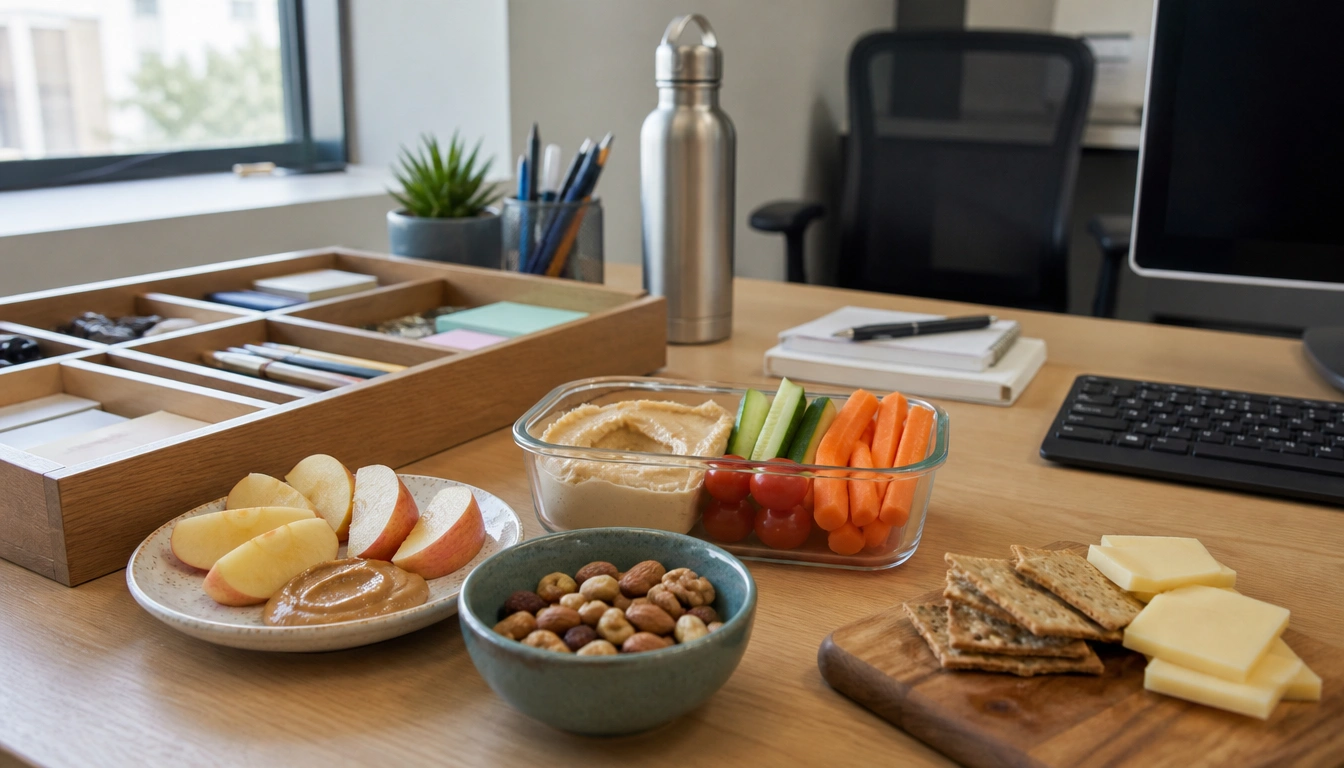
The fastest healthy snacks for busy professionals are usually simple pairings: protein plus fiber-rich produce or whole grains, with a little healthy fat when possible. Think nuts and fruit, hummus and vegetables, yogurt and berries, cheese and whole-grain crackers, or shelf-stable options like jerky, roasted chickpeas, and popcorn. The best choice is the one you can keep on hand, portion well, and actually eat between meetings.
Key Takeaways
- A protein + produce snack is the easiest way to stay fuller longer and avoid the sharp energy dips that follow candy, pastries, or chips.
- Shelf-stable snacks work best for drawers, bags, and commutes: unsalted nuts, roasted chickpeas, jerky with lower sodium, popcorn, and single-serve nut butter.
- If a packaged snack says “protein” or “healthy,” still check added sugar, saturated fat, sodium, and the ingredient list before buying it.
- Desk workers usually need smaller portions than more active professionals; the right snack should bridge hunger, not replace a full meal.
- People with high blood pressure, cardiovascular disease, kidney disease, or food allergies need extra label scrutiny and, in some cases, personalized guidance.
Why busy workdays push people toward weaker snacks
Busy professionals rarely choose snacks in a calm, planned way. They choose what is closest, fastest, and easiest to eat during a calendar gap: a vending-machine bag of chips, a pastry from the break room, a sweet coffee drink, or nothing at all until dinner. That pattern can leave you feeling briefly energized and then uncomfortably hungry, distractible, or irritable an hour later.
For desk-based workers, the problem is not just calories. It is the combination of convenience, stress, and long stretches without a real meal. A snack that is mostly refined carbohydrate or added sugar may be easy to grab, but it usually does not hold hunger for long. That can lead to more grazing, more caffeine, and a stronger urge to overeat later. A better snack bridges the gap between meals without creating another crash.
According to the American Heart Association, snack quality matters because snacks can make up a meaningful share of daily intake. For office days, the goal is not perfection. It is to keep an energy gap from turning into a vending-machine habit.
The simplest winning formula: protein and produce
The most practical snack-building rule is simple: combine protein and/or healthy fats with fiber-rich produce or whole grains. This is the “protein + produce” pattern, and it works because it slows digestion, supports satiety, and gives your body a steadier release of energy than a carbohydrate-only snack.
Protein helps you feel full, while fiber adds staying power. Fruits, vegetables, and whole grains also bring water and volume, which can make a snack feel more satisfying without relying on a big portion. Healthy fats from nuts, seeds, avocado, or nut butter can make that effect last longer.
Some easy examples are apple slices with peanut butter, carrots with hummus, berries with plain yogurt, or whole-grain crackers with cheese. The exact combination is less important than the pattern. If the snack is mostly refined starch or sugar, it will usually be less satisfying. If it contains protein plus a high-fiber food, it is more likely to carry you to the next meal.
Zero-prep snacks you can keep in a drawer or bag
For the days when even two minutes feels like too much, keep a few shelf-stable options where you can reach them fast. The best zero-prep snacks are portable, relatively tidy, and less likely to melt, spoil, or crumble in your laptop bag.
- Unsalted or lightly salted nuts such as almonds, walnuts, pistachios, or mixed nuts.
- Seeds such as pumpkin or sunflower seeds, especially in portioned packs.
- Roasted chickpeas for crunch plus fiber and plant protein.
- Jerky or meat sticks, preferably lower in sodium and with a short ingredient list.
- Air-popped or lightly salted popcorn for a whole-grain snack that feels more filling than chips.
- Single-serve nut butter packs that can pair with fruit, crackers, or plain rice cakes.
These foods are useful because they are hard to “forget” once hunger starts. Keep one or two in your desk drawer, one in your laptop bag, and one at home near the door. That reduces the chance you will default to whatever is in the break room.
If you work long commutes or move between buildings, choose snacks that tolerate heat and time out of the fridge. That usually means avoiding anything creamy or highly perishable unless you have a cooler bag.
Two-minute pairings that feel more like a meal
If you have a fridge, a pantry, or even just a desk drawer and a can opener, you can build a more balanced snack in under two minutes. These pairings are useful because they are fast enough for a short break but substantial enough to quiet hunger.
- Apple or pear + nut butter for fiber, healthy fat, and a satisfying sweet-salty balance.
- String cheese + whole-grain crackers for protein plus a more slowly digested carbohydrate.
- Baby carrots or bell peppers + hummus for crunch, fiber, and a creamy dip.
- Plain Greek yogurt + berries for protein with natural sweetness.
- Hard-boiled eggs + cherry tomatoes for a simple protein-rich snack that feels more complete.
- Edamame + fruit for plant protein and a fresh finish.
If you want a stronger afternoon buffer, choose the version that includes the most fiber and the least added sugar. A fruit-and-nut butter snack will usually hold better than fruit alone. A yogurt cup with berries and no candy-style mix-ins will usually work better than a flavored dessert yogurt.
The point is not to make snacks complicated. It is to make them balanced enough that you stop thinking about food for a while.
Weekend prep and how to spot a health halo on package labels
A little prep on the weekend can save a lot of weekday decision fatigue. The most useful batch-prep snacks are the ones you can portion once and use many times during the week.
- Hard-boiled eggs for an easy protein source.
- Portioned trail mix made with nuts, seeds, and a small amount of unsweetened dried fruit.
- Washed and cut vegetables stored in containers for quick grabbing.
- Washed fruit such as grapes, berries, or apples that can be taken on the run.
Pre-packaged snacks can be convenient, but “protein,” “natural,” or “healthy” on the front of the package does not guarantee a good choice. Check the Nutrition Facts panel first. Focus on added sugars, saturated fat, and sodium. Then look at the ingredient list. If sugar, syrup, or refined starches appear near the top, the product may be closer to candy than to a real snack.
That same label check helps you compare protein bars. A useful bar should provide some staying power, but many bars are still heavily sweetened and built around syrups or sugar alcohols. If the bar looks more like a dessert than a food, it probably functions that way too.
How much snack is enough for a desk job?
Snack size should match your actual hunger and activity level. A desk-based professional usually needs a smaller snack than someone with a physically demanding job, long walks between sites, or training sessions after work. If you spend most of the day seated, the goal is often a modest bridge between meals rather than a mini-meal.
That means a handful of nuts, a piece of fruit with nut butter, or a yogurt-and-berries cup may be enough. More active workers may need a larger snack or a more substantial combination, especially if there is a long gap until the next meal. The best cue is not the clock alone but your hunger, energy, and the length of time until you will eat again.
Portioning helps because snack foods are easy to overeat when you are distracted. Pre-portioning trail mix, crackers, or popcorn into small containers can make it easier to stop at the amount that actually helps. A snack should take the edge off hunger, not turn into an unplanned second lunch.
Special cautions for blood pressure, kidney disease, and allergies
Some snack choices need extra attention. If you have high blood pressure or cardiovascular disease, pay close attention to sodium in jerky, packaged cheeses, crackers, and flavored nuts. Unsalted or lower-sodium versions are usually better, and whole foods are often the safest default.
For chronic kidney disease, snack advice can change a lot depending on your labs and treatment plan. Protein needs, potassium limits, and phosphorus additives may all matter. Some high-potassium foods, nut-heavy snacks, and protein products may not be appropriate for everyone with CKD. This is one area where individualized guidance from a clinician or renal dietitian matters more than generic advice.
Food allergies are another office reality. Peanut and tree nut allergies can make shared snack drawers and communal bowls risky. If allergies are part of your life or your workplace, keep your snacks clearly separated, labeled when needed, and stored in a way that avoids cross-contact. For colleagues, it is worth remembering that a “healthy” snack is not truly healthy if it creates an exposure risk.
Office and travel tactics that make healthy snacks actually work
The most effective snack is the one you can access without friction. That means thinking about storage, portability, and meeting schedules before hunger hits.
Keep a small snack kit in places you actually use: one in a desk drawer, one in your bag, and one at home for the morning rush. If your office has a communal snack bowl, place your own backup snacks elsewhere so you are not dependent on whatever appears in the common area. For commuting, choose items that can survive heat, jostling, and a delayed train without a refrigerator.
If you do have access to cold storage, use it strategically for yogurt, cheese, hummus, eggs, cut fruit, and cut vegetables. If you do not, lean on shelf-stable foods and small containers. A resealable pouch, hard-sided container, or single-serve pack can prevent crumbs and make snacks easy to grab between meetings.
Meeting-proof planning also helps. If you know your afternoon is packed, pack a snack before the day starts instead of waiting for hunger to decide for you. That one habit can keep you out of the vending machine and make your workday feel more predictable.
Frequently Asked Questions
What snack combinations keep me full longer without causing a blood sugar crash?
Pair protein with fiber-rich produce or whole grains. Good examples include apple slices with nut butter, hummus with vegetables, yogurt with berries, or cheese with whole-grain crackers. These combinations usually satisfy hunger better than sugary or refined-carb snacks alone.
What are the best shelf-stable snacks I can keep at my desk or in my bag?
Good shelf-stable options include unsalted nuts, seeds, roasted chickpeas, popcorn, jerky with lower sodium, and single-serve nut butter packs. Choose items that tolerate heat, stay tidy in a bag, and do not need immediate refrigeration.
Which pre-packaged snacks are actually healthy when I’m short on time?
Look for packaged snacks with a short ingredient list and a Nutrition Facts panel that is reasonable for added sugar, sodium, and saturated fat. Protein bars, crackers, or trail mixes can work, but they should look more like food than candy.
How do I choose snacks that are lower in added sugar, sodium, and saturated fat?
Start with the label, not the front package claims. Compare the Nutrition Facts panel, then scan the ingredient list for syrups, refined starches, hydrogenated fats, and long additive-heavy lists. Unsalted nuts, plain yogurt, and whole foods are usually easier choices.
What snack options should I avoid if I have high blood pressure, kidney disease, or food allergies?
If you have high blood pressure, limit high-sodium snacks such as some jerky, cheeses, and flavored nuts. If you have kidney disease, you may need individualized guidance on protein, potassium, and phosphorus. For food allergies, avoid cross-contact risks in shared office snack areas and choose clearly safe foods.
The Bottom Line
The fastest healthy snacks for busy professionals are usually simple, portable combinations that pair protein with fiber-rich foods. That pattern helps you stay fuller longer and makes afternoon energy dips less likely than candy, pastries, or chips.
A good snack plan is practical, not perfect. Keep shelf-stable options in your drawer or bag, use two-minute pairings when you have a fridge, and batch-prep a few items on the weekend so workday decisions get easier.
If you have high blood pressure, kidney disease, or food allergies, your snack choices may need extra tailoring. In those cases, label reading and individualized guidance matter more than any single “best” snack.
Medical disclaimer
Medical disclaimer: This content is for educational and informational purposes only and is not a substitute for professional medical advice, diagnosis, or treatment. Dietary needs and supplement suitability vary by individual.
