
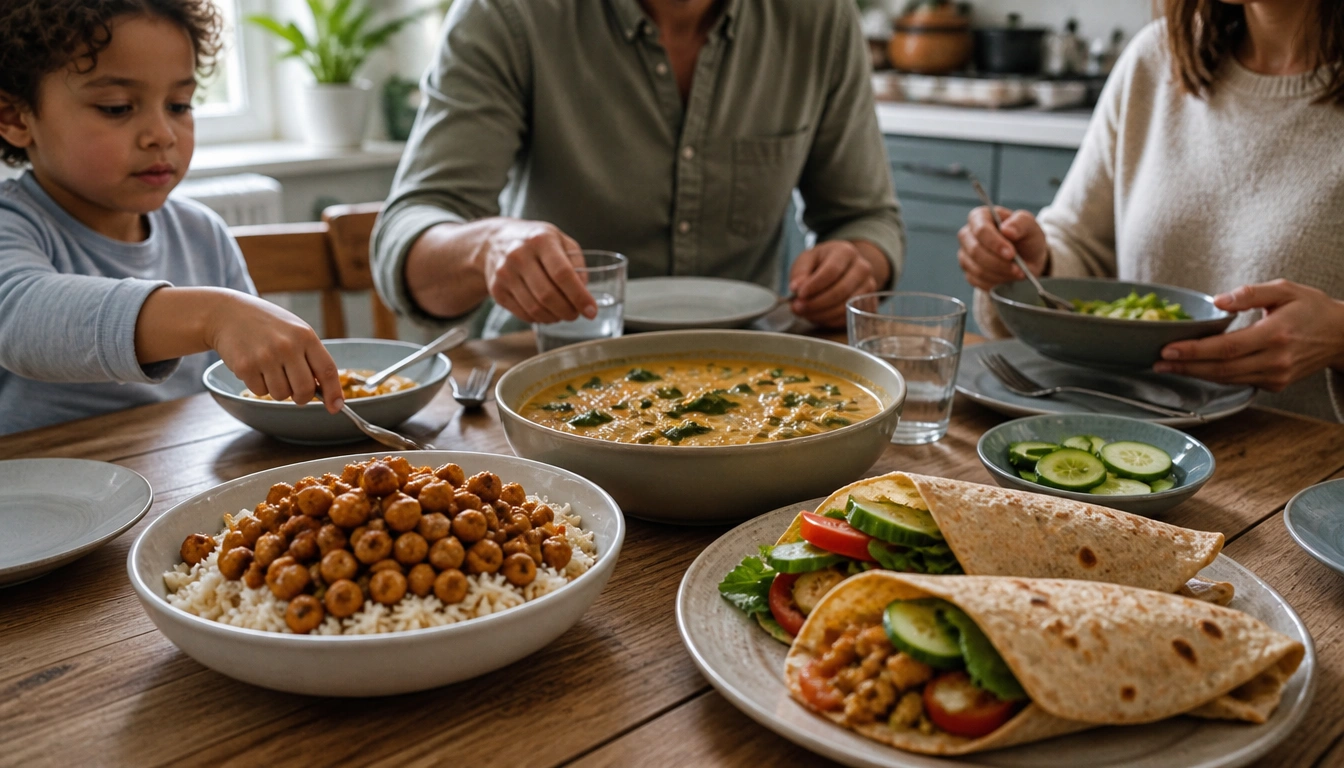
Fast chickpea dinners can absolutely work on busy weeknights. Chickpeas are affordable, shelf-stable, and naturally rich in fiber and plant protein, so they can anchor a balanced family meal without much prep. For the quickest wins, use canned chickpeas for sheet-pan dinners, creamy curry, smashed wraps, or pasta e ceci. The main family-friendly choices are texture and safety: keep whole chickpeas for older kids and adults, and mash, blend, or crisp them for younger eaters.
Key Takeaways
- Canned chickpeas are the fastest option for weeknights because they skip soaking and long simmering.
- Chickpeas can play two roles at once: they count toward protein and help round out the vegetable side of a family dinner.
- For picky kids, texture matters as much as flavor—try crispy roasted chickpeas, smooth sauces, or mashed fillings.
- Whole firm chickpeas can be a choking concern for toddlers, so serve them in safer forms like mashed, puréed, or well-crisped.
- Rinsing canned chickpeas can help reduce surface sodium and is an easy step before cooking.
- If chickpeas are new to your family, add them gradually and pair meals with fluids to help limit temporary gas or bloating.
Fast chickpea dinners that work on weeknights
For easy chickpea dinner ideas for busy parents, the best recipes are the ones that use one of four formats: a crispy sheet-pan dinner, a creamy curry, a mash-and-spread sandwich filling, or a pasta-and-chickpea pot meal. Each one relies on pantry staples, cooks quickly, and can be adjusted for different ages and tastes. That makes chickpeas especially useful when you need dinner to feel homemade without turning into a second shift.
Chickpeas are a strong weeknight ingredient because they are inexpensive, shelf-stable, and flexible enough to work with rice, pasta, pita, vegetables, and dairy-free or vegetarian meal patterns. Public health guidance that encourages more pulses fits well here: legumes can help families build meals that are more filling and less dependent on ultra-processed convenience food. They also bring fiber and plant protein to the table, which helps a dinner feel complete even when the rest of the meal is very simple.
If you are deciding between canned and dried chickpeas, canned usually wins for speed. Dried chickpeas make sense when you want to cook a larger batch ahead of time, but for a weeknight dinner they require planning. Canned chickpeas are the no-soak, no-simmer shortcut that can move dinner from “what are we eating?” to “it’s on the table” much faster.
Simple formulas for chickpea dinners your family will actually eat
A useful way to think about chickpea meals is to start with a formula instead of a recipe. One easy formula is chickpeas + starch + produce + fat. For example: chickpeas with rice, roasted carrots, and olive oil; chickpeas with pita, cucumber, and yogurt sauce; or chickpeas with pasta, tomatoes, and spinach. This keeps dinner balanced without requiring a complicated ingredient list.
Here are four reliable options. First, a 15-minute sheet pan dinner: toss drained chickpeas with olive oil, garlic powder, paprika, and a little salt, then roast them until lightly crisp. Serve with rice, pita, or roasted vegetables. Second, a one-pot creamy coconut chickpea curry: cook onions and garlic, add mild curry powder or cumin, then stir in chickpeas, tomatoes, and coconut milk. Finish with spinach or peas for color and extra produce. Third, smashed chickpea wraps or sandwiches: mash chickpeas with yogurt or mayonnaise, lemon juice, and mild add-ins such as cucumber or celery. Fourth, pasta e ceci: simmer chickpeas with broth, tomatoes, herbs, and small pasta until the sauce turns starchy and comforting.
These meals work because they do not ask everyone to eat chickpeas in the same way. The adults can enjoy stronger seasoning or extra vegetables, while children can keep things plain, creamy, or dip-friendly.
How to make chickpeas more kid-friendly
For picky eaters, the biggest issue is often not the taste of chickpeas but the texture. Some children dislike soft beans, while others object to anything that seems grainy or “mixed up.” That is why texture-specific strategies matter. Roasting chickpeas until crisp can make them feel more like a snack or topping than a bean. Mashing them with a fork or blending them into a sauce can make them disappear into a familiar dish. Both approaches can make chickpeas easier to accept.
Flavor also matters, but it helps to keep seasoning mild at first. Good child-friendly options include garlic powder, a little onion powder, mild paprika, cumin, lemon, olive oil, plain yogurt, and a small amount of salt. Strong heat is usually less helpful for younger children than gentle, familiar flavors. If a child already likes pasta, rice, soup, or wraps, use chickpeas as an add-in rather than the main event.
Another useful move is to separate the components. Put chickpeas, rice, sauce, and vegetables in separate piles instead of mixing everything together. Some children are more willing to try a food when they can see each part clearly and control how much goes on the fork.
Ways to let kids build their own dinner
Self-serve dinners can lower resistance because they give kids some control. Set out a few simple parts and let them choose what goes together. A chickpea bowl can include rice or couscous, roasted chickpeas, chopped cucumber, shredded carrots, and a mild sauce. A wrap station can include mashed chickpeas, lettuce, tomato, cheese or a dairy-free spread, and soft tortillas or pita. A pasta night can offer plain pasta, chickpeas, olive oil, and one vegetable on the side.
This approach is especially helpful when you are feeding different age groups at once. Adults can season their portions more heavily or add chili flakes, while younger children can keep the base mild. Kids often do better when they can take part in dinner assembly, even if they only choose one ingredient. The meal still feels structured, but it is less likely to trigger a power struggle over what is on the plate.
As a bonus, self-serve dinners help with leftovers. Extra roasted chickpeas can become tomorrow’s salad topping, sandwich filler, or snack. Leftover curry can be repurposed into lunch. That kind of overlap is useful for busy parents who want one cooking effort to cover more than one meal.
Safety and tolerance notes for families
Chickpeas are generally a family-friendly food, but a few safety and tolerance points are worth keeping in mind. First, check the serving form for younger children. Whole, firm chickpeas can be a choking risk for toddlers and some younger children, so it is safer to mash them, purée them, or serve them in a softer mixed dish. Roasted chickpeas can work for older children when they are cooked until crisp enough to crush easily, but they are not the best choice for very young eaters unless you are confident they break down easily.
Second, introduce chickpeas gradually if your family is not used to beans. Chickpeas are high in fiber, and a sudden jump in fiber intake can temporarily cause gas or bloating. That does not mean chickpeas are a problem food for most people; it usually means the body needs time to adjust. Serving them in modest amounts at first and making sure children drink enough fluid with meals can help.
Third, pay attention to how your family responds. If a child has chronic digestive symptoms, a known food allergy, or a medical condition that affects diet, it is wise to ask a pediatrician or registered dietitian for individualized guidance. For most families, though, chickpeas are a practical and safe dinner ingredient when age-appropriate textures are used.
Smart canned chickpea tips and meal-building shortcuts
Canned chickpeas are one of the easiest pantry foods to keep on hand because they can turn into dinner almost immediately. Rinsing them in a colander under cool water is a smart habit because it helps wash away some of the surface sodium and the slightly thick canning liquid. If you want an even lower-sodium option, look for no-salt-added cans when they are available.
Once you have rinsed the chickpeas, build the rest of the meal from what you already have. A good weeknight pattern is chickpeas plus a starch plus produce plus fat. The starch might be rice, pasta, bread, or potatoes. The produce might be spinach, peas, carrots, cucumber, tomatoes, or frozen mixed vegetables. The fat might be olive oil, avocado, yogurt, tahini, or coconut milk. That simple structure makes a meal feel complete without requiring a long recipe list.
If your family says they do not like beans, try changing the role chickpeas play. They can disappear into soup, become a smooth spread, or act as a crunchy topping instead of a visible centerpiece. If they need to feel more filling, pair chickpeas with a grain and a source of fat. If they need to feel saucier, add broth, tomatoes, yogurt, or coconut milk. Small adjustments often solve the problem better than starting over with a new recipe.
How to adapt chickpea dinners for different diets
Most chickpea dinners are naturally flexible. They are already a strong option for vegetarian meals because they can help replace the protein usually provided by meat. They can also fit dairy-free dinners if you use olive oil, coconut milk, or a dairy-free spread instead of yogurt or cheese. For gluten-free meals, serve chickpeas with rice, potatoes, gluten-free pasta, corn tortillas, or gluten-free flatbread instead of wheat-based sides.
If you are cooking for mixed needs at one table, keep the base recipe simple and offer add-ons separately. For example, make a mild chickpea curry and let people choose rice, yogurt, herbs, or extra vegetables at the table. That makes the meal adaptable without doubling the work. It also keeps chickpeas in the role they do best: a reliable, low-cost, flexible foundation for a family dinner that can be adjusted as needed.
Frequently Asked Questions
How can I make chickpeas more appealing to picky kids?
Texture is usually the biggest lever. Try roasting chickpeas until crisp, mashing them into wraps or sandwiches, or blending them into sauces and soups so they feel familiar. Mild seasoning, separate serving components, and kid-controlled assembly can also help reduce resistance.
What is the easiest way to use canned chickpeas in dinner recipes?
Drain and rinse them, then add them directly to a sheet pan, curry, soup, pasta, or wrap filling. Canned chickpeas are already cooked, so they work as a no-soak, no-simmer shortcut for weeknight meals.
Are chickpeas safe for toddlers and younger children?
They can be, but serving form matters. Whole firm chickpeas can be a choking risk for toddlers, so mash, purée, or mix them into softer dishes. For very young children, avoid hard or round pieces that do not break down easily.
How do chickpeas affect digestion and bloating when added suddenly?
Chickpeas are high in fiber, so a sudden increase can cause temporary gas or bloating in some people. Introducing them gradually and drinking enough fluids with meals can help the gut adjust more comfortably.
Should I choose canned or dried chickpeas for weeknight meals?
For most busy parents, canned chickpeas are the better weeknight choice because they save time and need no soaking. Dried chickpeas can be useful for batch cooking, but they are less convenient when dinner needs to happen fast.
The Bottom Line
Chickpeas are one of the easiest budget-friendly ingredients for family dinners because they are fast, filling, and flexible. They can anchor a meal or disappear into one, depending on what your family prefers.
For the best results, match the chickpea form to the eater: crisp for some kids, mashed or blended for others, and whole for older children and adults. Rinse canned chickpeas, add them gradually if your family is new to beans, and build the plate with a starch, produce, and healthy fat.
Used this way, chickpeas can help you get a balanced dinner on the table with less stress and fewer last-minute convenience foods.
Medical disclaimer
Medical disclaimer: This content is for educational and informational purposes only and is not a substitute for professional medical advice, diagnosis, or treatment. Dietary needs and supplement suitability vary by individual.
