
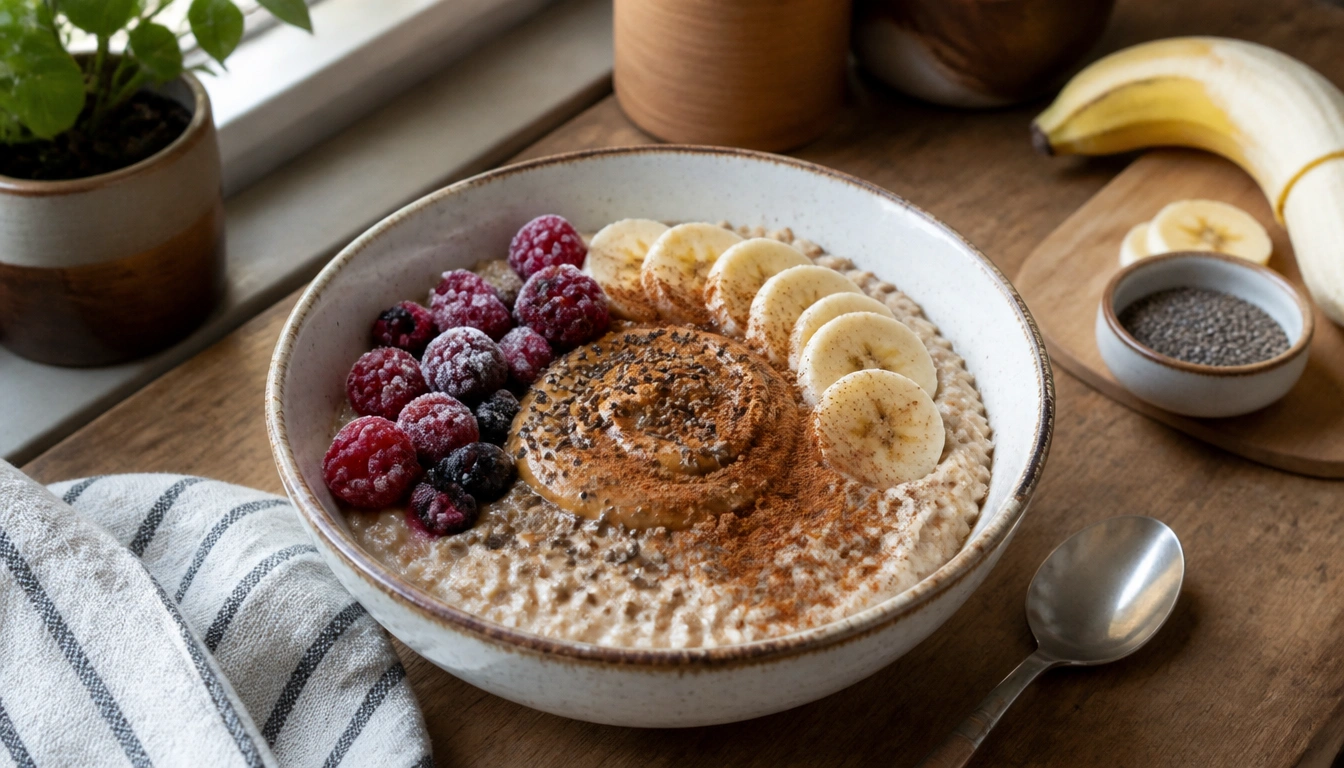
The cheapest way to upgrade oatmeal is to add foods that bring protein, fiber, and flavor without much waste. Budget-friendly choices like bananas, frozen berries, raisins, peanut butter, chia, flax, milk, and cinnamon can make oats more filling, more satisfying, and easier to enjoy than plain oatmeal or sugary instant packets.
Key Takeaways
- Protein, healthy fats, and extra fiber help oatmeal keep you full longer and can slow the rise in blood sugar after a meal.
- Bananas, frozen berries, raisins, peanut butter, chia, flax, and sunflower seeds are some of the most affordable oatmeal add-ins.
- Frozen and shelf-stable foods usually save money because they last longer and reduce food waste.
- Spices such as cinnamon, nutmeg, cocoa, and pumpkin pie spice add flavor for pennies without relying on sugary packets.
- If you need gluten-free oats, choose certified gluten-free oats; and if you add more fiber, increase it gradually for comfort.
Choose the first add-in based on your main goal
If you want to stretch a bowl of oatmeal on a budget, start by deciding what the bowl needs most: more staying power, more flavor, or more sweetness. That makes it easier to spend money where it matters instead of piling on random toppings.
For the biggest satiety boost, choose an add-in that brings protein, fiber, or fat. Oats already supply complex carbohydrates and soluble fiber, including beta-glucan, which the USDA and other public health authorities associate with heart benefits. Adding peanut butter, chia, flax, milk, or seeds can make the meal feel more substantial because these foods slow digestion and add texture.
If the bowl tastes flat, a small amount of fruit or spice may solve the problem more cheaply than specialty products. If your main issue is that oatmeal leaves you hungry too soon, focus first on protein and fat. If your issue is breakfast boredom, a spice, fruit, or milk-based change may be enough to make oats something you actually want to eat every week.
Best low-cost fruit additions to oatmeal
Fruit is one of the easiest ways to improve oatmeal on a tight budget. It adds natural sweetness, moisture, and freshness, and it can help you use less sugar or syrup. The best choice depends on the season, the store sale, and how much prep you want to do.
Bananas are usually the cheapest fruit option and one of the most useful. A ripe banana mashed into cooked oats adds sweetness and a creamy texture, which can make plain oatmeal taste much richer. Sliced banana on top works too, especially if you want a little texture. Overripe bananas are not a problem here; they are often the sweetest and can be used before they go to waste.
Frozen berries are often the best value when fresh berries are expensive or out of season. They keep longer than fresh fruit, reduce spoilage, and usually come in large bags that are easy to portion. As they heat in the bowl, they release juice that flavors the oats without much added effort. Frozen blueberries, strawberries, or mixed berries all work well.
Raisins are another budget-friendly option, especially if you want shelf-stable sweetness. They last a long time in the pantry and only need a small handful to make a bowl taste less plain. Because dried fruit is more concentrated than fresh fruit, a little goes a long way. That is helpful for budget shoppers, but it also means portion size matters if you are watching total sugar intake.
If you want the lowest-cost approach overall, use bananas for immediate use, frozen berries for flexibility and less waste, and raisins for long storage. Rotating between them helps prevent breakfast burnout without increasing grocery bills very much.
Cheap protein and healthy-fat boosters
Protein and healthy fats are the add-ins that most often transform oatmeal from a light bowl into a breakfast that carries you through the morning. They also tend to improve flavor and mouthfeel, which is useful when plain oats feel monotonous.
Peanut butter is one of the best all-around budget add-ins. It brings protein, unsaturated fat, and a rich flavor that makes oatmeal feel more like a complete meal. A spoonful stirred into hot oats melts easily and creates a creamy texture. If you want the peanut flavor with fewer calories and less fat, powdered peanut butter is a useful pantry option, though it is usually less filling than the regular version.
Eggs and egg whites can sound unusual in oatmeal, but they are very practical. Whisked into hot oats as they cook, they create a custard-like texture and add protein without much extra prep. Egg whites are milder and lower in fat, while a whole egg gives a richer result. Either way, this is a cheap way to make oatmeal more substantial if you already keep eggs at home.
Chia seeds, ground flaxseed, and sunflower seeds are small but useful upgrades. Chia and flax add fiber and a little healthy fat, which helps thicken oats and improve staying power. Ground flax usually blends in more smoothly than whole flaxseed. Sunflower seeds add crunch and are often less expensive than specialty toppings. Because these ingredients are calorie-dense, a modest amount is usually enough.
These foods are especially helpful if you want a bowl that feels balanced rather than just sweet. You do not need all of them in one serving. One protein or fat booster is often enough to make a noticeable difference.
Flavor builders that cost pennies
Some of the cheapest oatmeal upgrades do not add many nutrients on paper, but they dramatically improve taste and make a healthy breakfast easier to stick with. That matters, because a breakfast you enjoy is more likely to become a routine.
Cinnamon is the classic option. It adds warmth and a sweet impression without adding sugar. Nutmeg gives a stronger, more aromatic flavor, so a small amount goes a long way. Pumpkin pie spice works well when you want a fall-style bowl without buying specialty products.
Cocoa powder can make oatmeal taste more like dessert while staying relatively simple. Pair it with banana, peanut butter, or milk for a richer bowl. If you want a more dessert-like flavor without a long ingredient list, cocoa is one of the most flexible pantry items you can keep around.
Milk is another practical upgrade. Cooking oats in milk, or adding a splash at the end, improves creaminess and can increase protein and calcium if you use dairy milk. Even a small amount changes the texture. A plain bowl can become much more satisfying just by swapping part of the cooking liquid from water to milk.
For a vanilla-style effect without buying flavored products, use cinnamon plus milk, or cinnamon plus a little peanut butter. Those combinations often give enough sweetness perception that you need less actual sugar. The goal is not to make oatmeal taste like a dessert every day; it is to make a simple bowl enjoyable enough that you will keep making it.
Shelf-stable, frozen, or fresh: which saves the most
Budget shopping is not only about the sticker price. It is also about how much food you throw away. An affordable topping that spoils before you finish it is not really cheap.
Shelf-stable foods such as peanut butter, raisins, cinnamon, cocoa, flax, and many seeds are easy on the budget because they last a long time and are usually available in store brands or bulk bins. They are especially useful if you only make oatmeal a few times a week or if your household has limited refrigerator space.
Frozen foods are often the best mix of price, nutrition, and convenience. Frozen berries are a good example: they are picked and packed for longer storage, so you can use a little at a time without worrying about mold or soft spots. For many households, frozen fruit beats fresh fruit for value because it stays usable longer and reduces waste.
Fresh produce can still make sense when it is in season, on sale, or already in your kitchen for another meal. Bananas are the standout fresh option because they are inexpensive and easy to use before they overripe. If you shop carefully, fresh fruit can be part of a budget bowl, but it is usually less forgiving than frozen or shelf-stable choices.
The most economical plan for many shoppers is a mix: one fresh fruit, one frozen fruit, and a few pantry staples. That combination keeps oatmeal interesting without forcing you to buy expensive toppings that may go bad before you use them.
How to build a balanced oatmeal bowl on a budget
A balanced bowl does not need a long ingredient list. Think in layers: a base, one filling add-in, one flavor booster, and one fruit or texture element if you want it. That keeps oatmeal cheap while improving taste and nutrition.
For a more filling bowl: oats plus peanut butter, milk, and banana is a simple combination that adds protein, fat, and natural sweetness. It works well for busy mornings because it tastes rich without requiring special ingredients.
For more protein: oats plus egg whites or a whole egg, with cinnamon on top, is a strong choice. Add a few berries if you want fruit, but the main benefit is a thicker, more substantial bowl.
For lower sugar: oats plus chia or flax, unsweetened milk, cinnamon, and a small amount of berries gives plenty of flavor without leaning on added sugar. This is a useful option if you are trying to keep breakfast steadier or simply prefer a less sweet bowl.
For the best bargain breakfast: rolled oats, a sliced banana, cinnamon, and a spoonful of peanut butter is hard to beat. It uses inexpensive foods that are easy to keep on hand, and it works whether you cook the oats on the stove or in the microwave.
One practical reason these combinations work is that they cover different sensory needs. Protein and fat improve fullness. Fruit adds sweetness. Spices improve aroma and flavor. When a bowl checks all three boxes, it is easier to eat regularly without reaching for a more expensive breakfast later.
Digestive comfort and special diet considerations
Oats are a good fit for many people, but a few simple precautions matter. The first is fiber. If you are used to a lower-fiber diet, adding oats plus chia, flax, and fruit all at once can cause bloating or gas. A better approach is to increase fiber gradually and drink enough fluids through the day. That gives your digestive system time to adjust.
Portion awareness matters with calorie-dense toppings too. Nut butters, seeds, and some dried fruits are nutritious, but they can add up quickly. You do not need a huge amount to get flavor or texture. A small spoonful often gives enough payoff without turning breakfast into a much larger meal than intended.
If you have celiac disease or non-celiac gluten sensitivity, choose certified gluten-free oats. Oats are naturally gluten-free, but they are often processed in facilities that also handle wheat, barley, or rye. Certified gluten-free labeling helps reduce the risk of cross-contact.
For anyone managing blood sugar, cholesterol, or another medical condition, oatmeal can still be part of a healthy pattern, but it should fit into the rest of the diet and any treatment plan. Oats are helpful, not magical. The mix-ins should support your goals rather than undermine them with lots of added sugar or oversized portions.
Simple shopping and batch-prep tips
The easiest way to keep oatmeal cheap all week is to buy ingredients that work in more than one meal. Rolled oats, bananas, peanut butter, cinnamon, frozen berries, and seeds can all be used in yogurt, toast, smoothies, or baking too. That kind of overlap makes it easier to finish what you buy.
Choose store brands when they are available, especially for oats, peanut butter, raisins, and frozen fruit. Bulk bins can also be useful for chia, flax, or sunflower seeds if your store has them at a lower price than packaged versions. If you are comparing costs, look at the price per ounce or per serving, not just the shelf price.
Batch prep saves both time and money. You can cook several servings of oats at once and reheat them during the week, or portion dry oats into containers so breakfast takes less effort in the morning. Keeping a few toppings ready to go makes it less likely that you will skip oatmeal and buy a more expensive breakfast elsewhere.
A final money-saving habit is to keep a small “oatmeal rotation” at home: one fruit, one seed or nut butter, and one spice. That way, you can mix and match without stocking a dozen specialty products. A modest pantry works better than an overstuffed one that goes stale before you finish it.
Frequently Asked Questions
What are the cheapest high-protein add-ins for oatmeal?
Peanut butter is usually one of the best budget-friendly choices, and eggs or egg whites can also add a lot of protein for the cost. Powdered peanut butter is another option if you want flavor with less fat. If you already buy milk, that can also help increase the protein in a simple bowl.
Which fruit is the best budget-friendly oatmeal topping: fresh, frozen, or dried?
Frozen fruit often gives the best balance of price, convenience, and low waste, especially for berries. Bananas are usually the cheapest fresh fruit and work well when you want a creamy, naturally sweet bowl. Raisins are inexpensive and shelf-stable, but they are more concentrated, so a little goes a long way.
How can I make oatmeal more filling without adding lots of sugar?
Focus on protein, fat, and fiber rather than sweetness. Peanut butter, chia, flax, milk, or eggs can make oatmeal more satisfying. Cinnamon, nutmeg, or cocoa can improve flavor without much or any added sugar. Fruit is still useful, but you do not need a lot of sweetener if the bowl is balanced.
Can I add seeds or nut butter to oatmeal on a budget?
Yes. Seeds and nut butter are often worth it because a small amount can improve texture, flavor, and fullness. The main thing to watch is portion size, since these foods are calorie-dense. Buying store brands or bulk options can help lower the cost per serving.
Is oatmeal still a good heart-healthy breakfast if I use inexpensive mix-ins?
Yes, if the mix-ins support the overall pattern. Oats themselves are a heart-friendly base, and add-ins like fruit, chia, flax, and small amounts of peanut butter can fit well. The main thing to avoid is turning the bowl into a sugary dessert with lots of sweetened packets or heavy toppings.
The Bottom Line
Budget oatmeal does not have to be bland. The most useful add-ins are usually the cheapest foods that bring protein, fiber, and flavor: bananas, frozen berries, raisins, peanut butter, chia, flax, milk, and simple spices.
If you want the best value, buy foods that store well, stretch across multiple meals, and help reduce waste. That usually means a mix of pantry staples and frozen fruit rather than expensive specialty toppings.
If you need gluten-free oats, choose certified gluten-free labels, and if you increase fiber, do it gradually so your stomach has time to adjust. A simple, affordable bowl can still be filling, nutritious, and easy to repeat all week.
Medical disclaimer
Medical disclaimer: This content is for educational and informational purposes only and is not a substitute for professional medical advice, diagnosis, or treatment. Dietary needs and supplement suitability vary by individual.
Sources
- U.S. Government / Health Authority — usda.gov. Accessed November 2026.
- Academic Research Institution — illinois.edu. Accessed November 2026.
- myplate.food — myplate.food. Accessed November 2026.
