
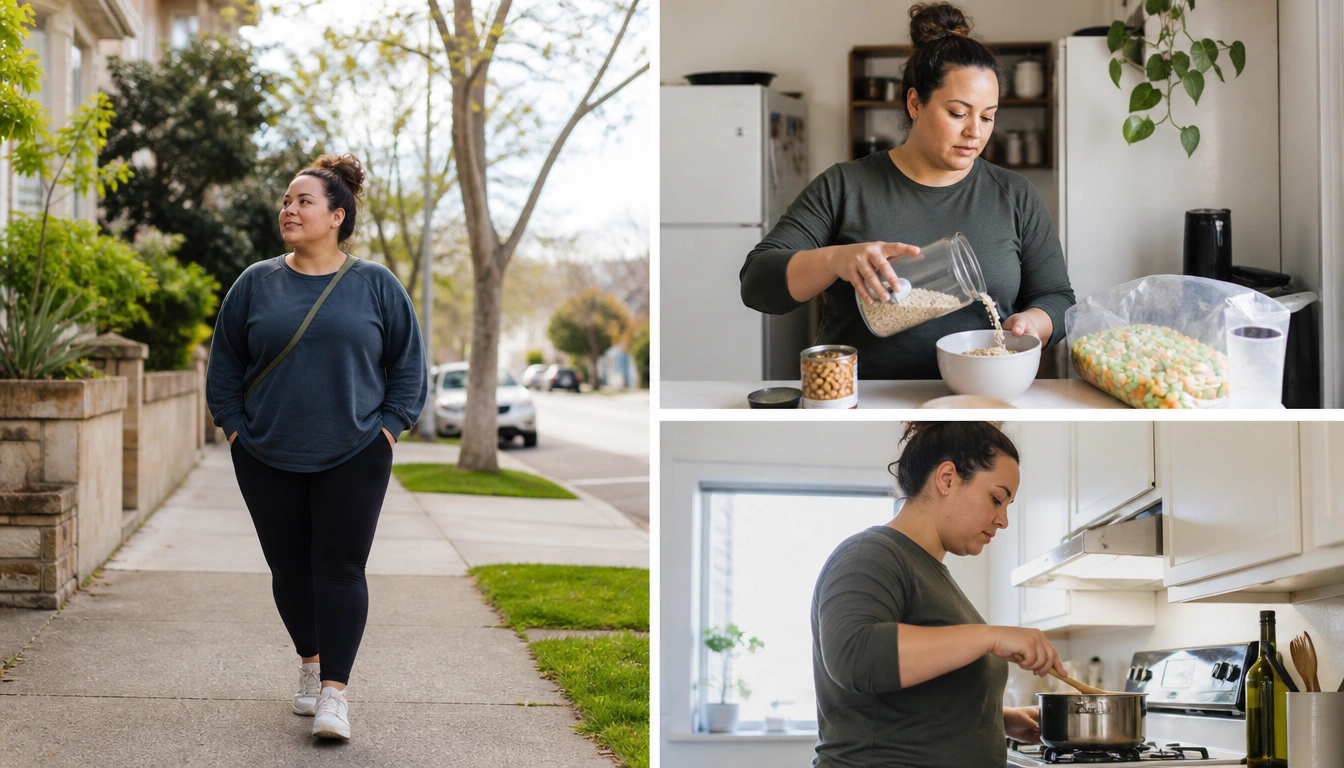
The simplest, cheapest wellness habits are the ones you can repeat: walking, basic bodyweight movement, water, budget meals built from beans, oats, frozen or canned produce, and a consistent sleep routine. If you are starting from zero, do not wait to feel “ready.” Some activity is better than none, and small changes can add up without a gym membership or special equipment.
Key Takeaways
- Start with movement, food, hydration, and sleep before buying anything. These basics give the biggest return for the lowest cost.
- If you are sedentary, begin with short walks and light bodyweight exercises. You do not need to jump straight to a full exercise target.
- Budget foods like oats, beans, lentils, eggs, rice, frozen vegetables, and canned fruit or vegetables can anchor simple meals.
- A low-cost sleep routine matters: regular bed and wake times, dimmer light, less late-night screen time, and a cooler, darker room.
- Build one habit at a time. Habit stacking is more sustainable than trying to overhaul exercise, food, and sleep all at once.
Why wellness basics matter more than expensive tools for beginners
If you are new to wellness, the biggest mistake is assuming improvement starts with a purchase. For most beginners, the basics that matter most are movement, food quality, hydration, and sleep. Those habits work through physiology, not fancy equipment. A walk still asks your heart, muscles, and lungs to do useful work. A simple meal still provides energy and nutrients. A regular bedtime still supports recovery.
This is also where the cheapest progress usually happens. Public health guidance from the CDC and the NHS emphasizes that foundational habits are worth doing even when you are not doing them “perfectly.” You do not need to become highly active overnight, and you do not need a full pantry reset to eat better. The goal is to make the healthy choice the easy one often enough that it becomes normal.
For beginners, that usually means ignoring the high-cost extras at first: supplements you have not been told you need, wearables you will stop checking, premium classes you may not keep attending, and plans that require too much willpower. Start with actions that fit your current life. A ten-minute walk, a bowl of oats, a glass of water, and a regular bedtime are small, but they are real. Repeated over time, they do more than most “wellness hacks.”
Low-cost wellness basics are not a shortcut. They are the foundation. Once they are steady, you can decide whether anything else is worth adding.
The 4 core habits to focus on first: movement, food, hydration, sleep
When time, money, and confidence are limited, it helps to narrow the field. Four basics cover most of the ground: move your body a little more, eat from simple staples, drink water regularly, and protect sleep. Those are not separate projects. They interact. Better sleep can make movement easier. Better meals can make energy more stable. More movement can help with mood and sleep.
Movement helps circulation, joint health, mood, and everyday stamina. You do not need to start with intense workouts. You need a repeatable pattern.
Food gives your body fuel and building blocks. Budget-friendly foods can still be nutritious. The biggest wins often come from fewer ultra-processed meals and more simple ingredients you can combine in many ways.
Hydration is simple but easy to overlook. Regular water intake is usually the cheapest upgrade available, especially if sugary drinks are common in your routine.
Sleep is not passive downtime. It is an active recovery period that supports memory, metabolism, mood, and next-day function. A basic sleep routine is often more useful than a new product.
If you only change one thing this week, choose the habit that feels easiest to repeat. The best starting habit is the one you can do on a tired day, not just a motivated one.
A cheapest-possible movement starter plan: walking, errands, and bodyweight exercises
Walking is the most practical entry point for many beginners because it costs nothing and can be folded into daily life. The CDC says adults should aim for 150 minutes of moderate-intensity activity a week, but beginners do not need to hit that immediately. Some movement is better than none, and smaller amounts still count.
Start where you are. If you are unused to exercise, try one short walk a day and build from there. You can walk around the block, take a longer route to the store, pace during a phone call, or turn part of your commute into active time. If you sit for long stretches, a few minutes of walking after meals or during breaks can be a realistic first step.
For strength, use your body weight. You do not need a home gym to train the major muscle groups. Simple moves such as chair squats, wall push-ups, standing calf raises, and supported lunges can be enough to begin. If floor work feels hard, use a wall, counter, or sturdy chair for support.
The purpose is not to “crush” a workout. It is to teach your body to tolerate regular effort again. Mild muscle soreness can happen when you are new to movement, but sharp pain, joint pain, chest pain, dizziness, or unusual shortness of breath is a reason to stop and get medical advice.
Practical starter idea: walk most days in whatever time block you already have, and do a brief bodyweight session two days a week. That alone can be a meaningful beginning.
Budget nutrition basics: pantry staples, frozen/canned produce, and simple meal-building
Eating well on a budget does not require special powders or expensive “health foods.” It usually means building meals around inexpensive staples that keep well and are easy to combine. Good starting foods include oats, beans, lentils, rice, potatoes, eggs, plain yogurt if you use dairy, canned fish if you eat it, and frozen or canned vegetables and fruit.
Frozen and canned produce are especially useful for beginners because they are affordable, last longer, and reduce food waste. Choose versions without heavy added sugar or sauce when possible. Nutritionally, they can still play a strong role in a simple eating pattern.
A low-cost meal does not need to be complicated. One easy method is to build around three parts: a starch, a protein, and a fruit or vegetable. For example, oats with fruit; rice with beans and vegetables; eggs with toast and tomatoes; or lentil soup with bread. You do not need a perfect menu. You need enough structure to avoid defaulting to whatever is fastest and least satisfying.
If your budget is tight, remember that consistency beats novelty. A small set of repeatable meals is usually better than a collection of recipes you never cook. Keep a few shelf-stable and freezer-friendly foods on hand so that healthy eating is easier on busy days.
A cheap rule of thumb: center meals on whole or minimally processed staples first, then add flavor and variety with spices, sauces, onions, garlic, or whatever affordable ingredients you already use.
How to start small if you are sedentary: habit stacking and gradual progression
If you have been sedentary, the hardest part is often not the exercise itself. It is the pressure to change everything at once. A better approach is habit stacking: attach one new action to something you already do. That keeps the new habit small enough to remember and easy enough to repeat.
Examples are simple. Walk for five minutes after brushing your teeth. Drink a glass of water when you start your workday. Do wall push-ups after you make coffee. Add a frozen vegetable to dinner before you try changing the whole meal. Put your phone down a little earlier before bed and dim the lights while you do it.
Gradual progression matters because it lowers the chance that you will quit after an overambitious start. If a habit feels too easy, that is often a good sign for week one. You are trying to make the behavior automatic before making it bigger. Once it feels normal, you can add time, frequency, or variety.
Beginners often do better with a “minimum version” of each habit. Maybe that means a ten-minute walk instead of an hour, one extra vegetable serving instead of a full diet overhaul, or a consistent bedtime routine instead of a perfect sleep schedule. Those smaller versions still count. They also protect confidence, which is part of sustainability.
If you miss a day, do not restart with a punishment plan. Restart with the smallest version again.
Low-cost sleep support: a no-purchase wind-down routine and bedroom basics
You do not need sleep products to improve sleep. The most useful changes are usually behavioral. A steady sleep schedule, less light late at night, fewer stimulating screens before bed, and a cooler, darker room can help set up better rest.
Start with a simple wind-down routine that takes the place of “scroll until exhausted.” For example: dim the lights about 30 minutes before bed, put your phone on charge away from the pillow, wash up, lay out clothes for tomorrow, and read or sit quietly for a few minutes. You are teaching your body that sleep is coming.
Bedroom basics matter too. Darkness helps. A cooler room often feels more comfortable for sleep. If you cannot change the thermostat, use bedding and clothing that make the room feel manageable. Even small changes, like closing curtains or reducing light from devices, can make a difference.
Try to keep wake time fairly steady, even if bedtime is imperfect at first. A regular wake time can help anchor the rest of the routine. If late-night anxiety or racing thoughts are a problem, write tomorrow’s to-do list on paper before bed so your mind does not have to hold it.
Good sleep habits are not about “winning” the night. They are about making rest easier to start.
Common beginner mistakes that waste money or make the plan harder than it needs to be
One common mistake is buying equipment before the habit exists. A mat, watch, blender, or specialty shoe can be useful later, but it is not the first step. If you do not yet walk regularly, cook a few simple meals, or keep a stable bedtime, an extra purchase will not do the work for you.
Another mistake is trying to fix everything at once. If you overhaul exercise, diet, sleep, and hydration on the same Monday, the plan can become too heavy to maintain. Choose one or two changes first. Let them settle before adding more.
It also helps to avoid all-or-nothing thinking. Beginners often believe a habit “doesn’t count” unless it is long, intense, or flawless. That mindset creates avoidable quitting. A short walk, a simple meal, or an earlier bedtime is still progress.
Finally, do not assume expensive always means better. Many wellness basics are low-cost because they are fundamental: walking, plain food, water, and sleep. Supplements and devices may have a place for some people, but they are not the starting point for most beginners.
If a plan is making you feel worse, more stressed, or more restricted, it is probably too complicated for where you are right now.
When to get medical advice before starting exercise or making bigger changes
For many healthy adults, starting with gentle walking and basic food and sleep changes is reasonable. Still, some situations call for medical guidance before you push ahead. If you have chest pain, unexplained shortness of breath, fainting, dizziness, a known heart or metabolic condition, a long period of inactivity, or any symptom that feels unusual or concerning, speak with a healthcare professional first.
Pain matters too. Feeling a little tired or mildly sore when you begin is different from sharp pain, joint pain, swelling, or pain that gets worse when you continue. Those signs should not be brushed off. Stop the activity and ask for advice if needed.
Pregnancy, older age, and chronic conditions can change what is appropriate, so individualized guidance is helpful. The NHS and CDC both support adjusting activity to the person rather than forcing a one-size-fits-all plan.
If you are unsure, a simple question for a clinician is: “Is it safe for me to start with walking and light bodyweight movement?” That is often a good starting point for a more personalized conversation.
Frequently Asked Questions
How much exercise does a beginner actually need to start seeing benefits?
Beginners do not need to start at the full weekly target right away. The CDC says some physical activity is better than none, and small amounts can still help. Start with what you can repeat, such as short walks most days and a little strength work twice a week.
What are the cheapest healthy foods to build meals around?
Affordable basics often include oats, beans, lentils, rice, potatoes, eggs, frozen vegetables, and canned fruit or vegetables. These foods are versatile, keep well, and can form simple meals without a lot of waste or cost.
Can I improve wellness at home without buying equipment?
Yes. Walking, stair climbing, wall push-ups, chair squats, a steady sleep routine, and simple meal prep all work at home with little or no equipment. For many beginners, those habits matter more than any product.
How do I start if I’m sedentary or easily discouraged?
Make the first step very small and attach it to something you already do. Five minutes of walking after a daily task is enough to begin. The goal is consistency, not intensity, and small wins are easier to keep going than ambitious plans.
When should I check with a doctor before starting exercise?
Check with a healthcare professional if you have chest pain, fainting, dizziness, unusual shortness of breath, a heart or metabolic condition, or you have been inactive for a long time. Get advice if movement causes sharp or worsening pain.
The Bottom Line
The cheapest wellness plan is usually the simplest one: walk a little, eat from basic staples, drink water, and sleep on a steadier schedule. You do not need to buy a program, a device, or supplements to begin.
Start with one habit you can repeat this week, then stack the next habit onto it. If you keep the changes small enough to fit your real life, they are far more likely to last.
If you have medical conditions, unusual symptoms, or pain that does not feel like normal adjustment, get personalized advice before pushing harder.
Medical disclaimer
Medical disclaimer: This content is for educational and informational purposes only and is not a substitute for professional medical advice, diagnosis, or treatment. Dietary needs and supplement suitability vary by individual.
Sources
- National Health Service (NHS) — www.nhs.uk. Accessed November 2026.
- Centers for Disease Control and Prevention (CDC) — cdc.gov. Accessed November 2026.
- Centers for Disease Control and Prevention (CDC) — cdc.gov. Accessed November 2026.
- National Health Service (NHS) — www.nhs.uk. Accessed November 2026.
