
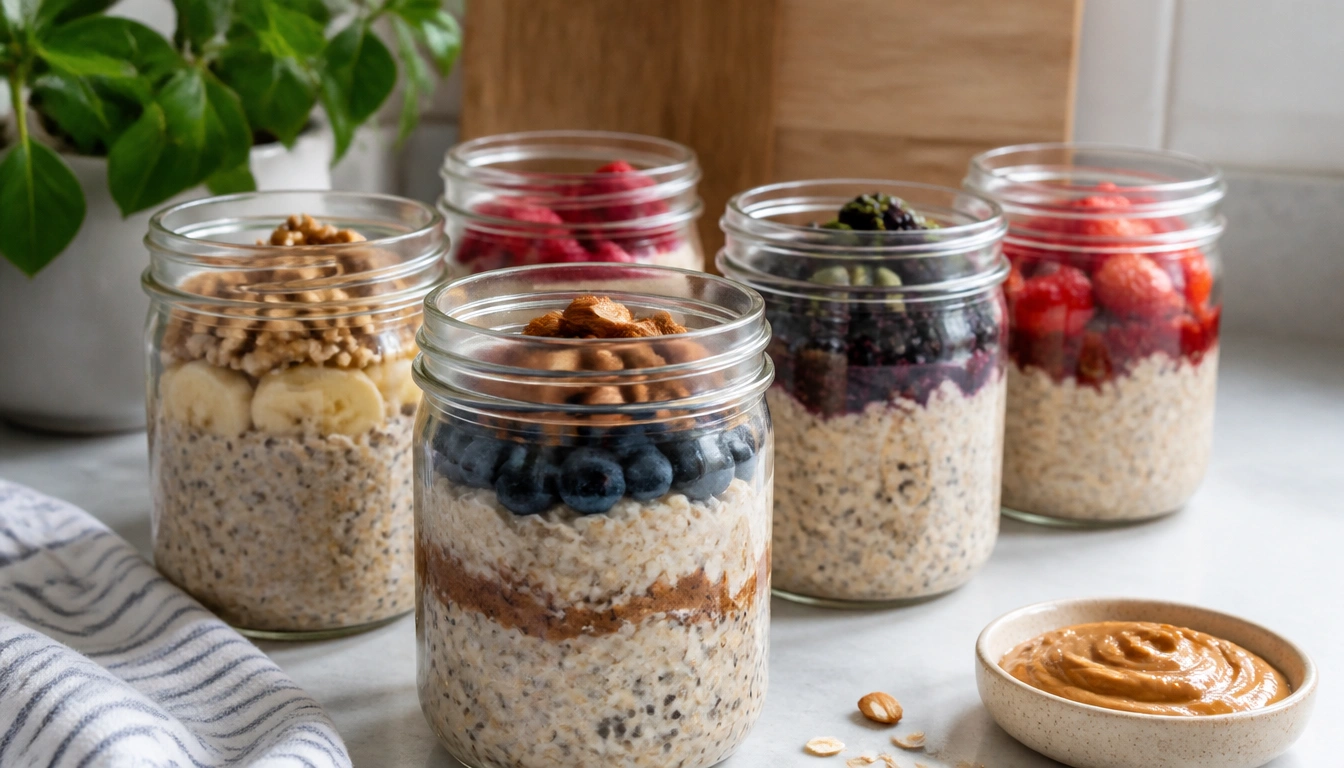
The easiest oatmeal toppings to prep ahead are the ones that hold flavor and texture in the fridge: chia, flax, hemp seeds, cinnamon, nutmeg, and a little dried fruit. Keep watery fruit, crunchy nuts, and nut butter separate until serving so the oats stay fresh and not soggy. For better satiety, pair oatmeal with protein and healthy fat, and use certified gluten-free oats if you need gluten-free meals.
Key Takeaways
- Prep-ahead toppings should add flavor or thickness without turning watery: seeds, spices, and a small amount of dried fruit work well.
- Add fresh fruit, nuts, and nut butter right before eating to protect crunch and keep meal-prepped oats from getting mushy.
- Oats are naturally gluten-free, but cross-contamination is common, so certified gluten-free oats matter for celiac disease or gluten sensitivity.
- Pair oats with protein and healthy fat, such as yogurt, milk, or nut butter, to slow digestion and help breakfast feel more filling.
- Measure calorie-dense toppings like nuts and nut butter instead of free-pouring them, especially if you are watching portions or calories.
- Refrigerated oat jars with milk or yogurt are best eaten within 3 to 4 days and should be discarded if they smell off or look spoiled.
How to choose oatmeal toppings by function
For meal-prep beginners, the easiest way to think about quick oatmeal toppings is by what each ingredient does in the jar. Some toppings are mainly for flavor, some add texture, some help you stay full longer, and some are better for storage. That simple filter keeps breakfast practical instead of turning it into a guessing game.
Flavor boosters include cinnamon, vanilla, nutmeg, pumpkin spice, and small amounts of dried fruit. Texture boosters give oats contrast, like seeds or nuts. Satiety boosters are ingredients that bring protein or fat, such as Greek yogurt, milk, soy milk, nut butter, or hemp seeds. Storage-stable toppings are the ones that can sit in a sealed jar without getting limp or watery.
Using this system helps you build oats that taste good on day three as well as day one. It also keeps you from adding everything at once and ending up with a breakfast that is sweet but soft, or filling but soggy. The goal is a mix of creamy base, steady flavor, and one or two toppings that stay pleasant after chilling.
A simple prep-day vs day-of system
Meal-prep oats work best when you split toppings into two groups: what can soak overnight, and what should stay dry until breakfast. On prep day, mix the oats with liquid and add ingredients that improve after chilling. On the day you eat them, add anything that loses crunch or releases extra moisture quickly.
This approach needs no special equipment. If you use jars, small containers, or reusable food cups, the rule is the same. Anything that benefits from softening can go in early. Anything that should stay crisp or bright can wait.
A useful shortcut is to ask, “Will this ingredient still taste good after sitting in liquid for 24 to 72 hours?” If the answer is yes, it belongs in the prep jar. If the answer is no, keep it separate or add it right before eating. That keeps the texture balanced and makes the breakfast feel intentional instead of assembled out of leftovers.
| Prep day | Day of eating |
|---|---|
| Chia seeds, ground flax, hemp seeds | Fresh berries, sliced banana, chopped apple |
| Cinnamon, nutmeg, pumpkin spice | Nuts, toasted seeds, granola |
| Small amounts of raisins, chopped dates, dried cranberries | Nut butter drizzle, yogurt swirl |
| Milk, plant milk, yogurt, kefir | Crunchy toppings and delicate fruit |
The best toppings to prep ahead, and the ones to save for later
The most reliable prep-ahead toppings are the ones that either absorb liquid well or keep their flavor when chilled. Chia seeds are especially useful because they thicken the oats and help create a spoonable texture. Ground flax and hemp seeds also work well, adding a mild nutty taste and extra body. These ingredients help oatmeal feel more substantial without requiring extra sugar.
Spices are another easy win. Cinnamon, nutmeg, and pumpkin pie spice hold up beautifully in the fridge and make oats taste sweeter without using commercial flavored packets. A small amount can make plain oats feel like a different breakfast from day to day. If you want variety, rotate one spice blend at a time rather than buying several add-ins you will rarely use.
Moderate amounts of dried fruit can also work on prep day. Raisins, chopped dates, and dried cranberries soften in the refrigerator and blend into the oats. They are convenient, but they are also concentrated, so a little goes a long way. Use them as a flavor accent rather than the main sweetener.
Fresh or crunchy toppings are different. Berries, banana slices, diced apple, toasted nuts, pumpkin seeds, and nut butter are usually better added right before eating. Fresh fruit keeps its shape and brightness, and crunchy toppings keep their snap. Nut butter can also be added at the end so it does not disappear into the base and make the whole jar heavy.
If you want the easiest routine possible, prep only the ingredients that improve with time, then set a tiny “finish box” in the fridge with your day-of toppings. That keeps the process fast in the morning and protects texture without forcing you to remake breakfast from scratch.
How to make oatmeal more filling with protein and healthy fat
Oats are mostly complex carbohydrates, which makes them a strong breakfast base but not always enough on their own. Pairing oats with protein and healthy fat can slow digestion and help breakfast feel satisfying for longer. That is useful if you want steadier energy, fewer midmorning hunger cues, or a meal that actually holds you until lunch.
Good protein options include milk, soy milk, Greek yogurt, skyr, cottage cheese, or a scoop of another protein-rich food you already use. Good fat options include nuts, seeds, nut butter, or tahini. You do not need a large amount of either. Even a modest addition can change the texture and staying power of the bowl.
A practical combination is oats plus milk or yogurt, one seed-based topping, and one fresh fruit topping. For example, oats with cinnamon, chia, and berries make a simple base; adding yogurt or a spoonful of nut butter makes it more filling. The point is not to turn breakfast into a high-effort recipe. It is to pair ingredients so the meal digests more gradually and feels complete.
Public health guidance from the USDA and the NHS encourages whole grains and fiber-rich foods, and oats fit that pattern well. Their beta-glucan fiber is one reason oats are such a popular breakfast choice. A supportive topping strategy simply helps you get more satisfaction out of the same base.
Storage and food safety for refrigerated oat jars
Overnight oats and other refrigerated oat jars are convenient, but they still need safe storage. If your jar contains dairy or plant milk, keep it refrigerated and aim to eat it within 3 to 4 days. That window is a practical guideline for meal-prep beginners and helps reduce the chance of spoilage while preserving texture.
Sealed oats can get soggy because liquid continues to move into the grains, seeds, and fruit over time. That is normal, but it becomes more noticeable when fruit is stored in the jar or when the oats sit longer than intended. Using a thicker base, adding crunchy toppings later, and keeping the jar cold slows the softening.
Do not eat a jar if you notice mold, an off smell, unusual discoloration, bubbling, or a texture that seems clearly wrong. When in doubt, throw it out. If you make several jars at once, label them with the prep date so you know which one to eat first. For beginners, that small habit prevents accidental over-storage.
If you use yogurt, kefir, or milk alternatives, remember that spoilage can show up differently than it does in plain oats. The safest approach is to store the jars in the coldest part of the fridge, keep lids tight, and avoid leaving them at room temperature for long periods before eating.
How to portion calorie-dense toppings without overdoing it
Nuts, seeds, and nut butter are useful toppings, but they are also calorie-dense, which means a small amount can add a lot of energy to breakfast. That is not a problem by itself. It only becomes an issue when beginners pour freely and accidentally turn a light breakfast into a much heavier one than intended.
A simple habit is to portion those toppings before they touch the jar. Use a measuring spoon, small ramekin, or pinch bowl if that helps you stay consistent. This is especially useful with nut butter, which spreads easily and can look like “just a little” even when the amount is generous. Pre-portioning also makes it easier to repeat a breakfast you like without guessing.
Another practical option is to choose one main calorie-dense topping per jar rather than stacking several at full strength. For example, you might use chia in the oats and add fresh fruit on top, or use a spoonful of nut butter and skip extra nuts that day. That keeps the meal balanced and gives you more control over fullness.
If your goal is weight management, the best oatmeal topping strategy is consistency, not restriction. Measure the rich toppings, then let fiber, fruit, and protein do the work of making breakfast satisfying.
Gluten-free and dairy-free swaps that still taste good
Oats are naturally gluten-free, but they are often processed in facilities that also handle wheat, barley, or rye. That cross-contamination matters for people with celiac disease or gluten sensitivity. If you need gluten-free oatmeal, choose oats that are explicitly certified gluten-free rather than assuming a regular container is safe.
For dairy-free meal prep, there are many easy swaps. Unsweetened dairy milk can be replaced with soy milk, oat milk, almond milk, or another preferred plant milk. Yogurt can be swapped for dairy-free yogurt if you want a creamy finish. The main goal is to choose an option that supports texture and protein without adding unnecessary sugar.
If you are trying to keep the bowl simple, build from a neutral base: certified gluten-free oats, your preferred milk, cinnamon, and one fruit topping. Then add protein or fat only if it helps you feel satisfied. That keeps the recipe flexible enough for different dietary needs without making it complicated.
When you are choosing replacements, pay attention to the label as much as the ingredient type. Some flavored plant milks and yogurts can contain more added sugar than expected. A plain, unsweetened version usually gives you more control over the final taste and texture.
A beginner-friendly build-your-own oatmeal formula
If you want a repeatable formula instead of a long list of ideas, start with this pattern: oats + liquid + one prep-ahead flavor booster + one protein or fat + one day-of topping. That gives you a creamy base, enough body to stay satisfying, and one fresh element for contrast.
Examples are easy to mix and match. Try cinnamon, chia, and berries for a bright bowl. Try nutmeg, flax, and banana slices for a warmer flavor. Try pumpkin spice, hemp seeds, and a spoonful of yogurt for a thicker, more filling breakfast. If you like crunch, add almonds or pumpkin seeds right before eating instead of the night before.
You do not need a new recipe every time. Once you know which toppings belong in the jar and which belong on top later, oatmeal becomes one of the easiest breakfasts to meal prep. The best version is the one you can repeat without wasting ingredients or getting bored halfway through the week.
Frequently Asked Questions
Which oatmeal toppings can I add on prep day without getting soggy?
Chia seeds, ground flax, hemp seeds, cinnamon, nutmeg, pumpkin spice, and small amounts of dried fruit are the easiest prep-day toppings. They either soften in a helpful way or stay flavorful after chilling.
Which toppings should I keep separate until the day I eat oatmeal?
Fresh berries, banana slices, chopped apples, nuts, pumpkin seeds, granola, and nut butter are usually best added right before eating. They keep more texture and avoid turning the oats watery or soft.
How do I make overnight oats more filling without adding too much sugar?
Pair the oats with protein and healthy fat, such as milk, yogurt, soy milk, seeds, or nut butter. Spices like cinnamon can add sweetness perception without relying on flavored packets or lots of added sugar.
Are oats and oatmeal toppings safe for people with gluten sensitivity or celiac disease?
Oats are naturally gluten-free, but cross-contamination is common. People with celiac disease or gluten sensitivity should choose oats labeled certified gluten-free and check toppings for hidden gluten ingredients.
How long do meal-prepped oatmeal jars keep in the fridge?
If the jar contains milk or another dairy or plant milk, it is generally best eaten within 3 to 4 days when kept refrigerated. Discard it if you notice mold, off odors, or unusual discoloration.
The Bottom Line
The easiest oatmeal topping strategy is to separate ingredients by function. Put in the fridge what benefits from soaking, and keep crunchy or watery toppings for the end. That alone solves most soggy-oat problems.
For a more filling breakfast, combine oats with a protein source and a modest amount of healthy fat. Use spices and a small amount of dried fruit for flavor, and measure calorie-dense toppings so portions stay consistent.
If you need gluten-free oats, choose certified gluten-free products. And for any refrigerated oat jar with milk or yogurt, stay within the 3 to 4 day window and toss it if anything looks or smells off.
Medical disclaimer
Medical disclaimer: This content is for educational and informational purposes only and is not a substitute for professional medical advice, diagnosis, or treatment. Dietary needs and supplement suitability vary by individual.
Sources
- National Health Service (NHS) — www.nhs.uk. Accessed November 2026.
- heartfoundation.org.au — heartfoundation.org.au. Accessed November 2026.
