
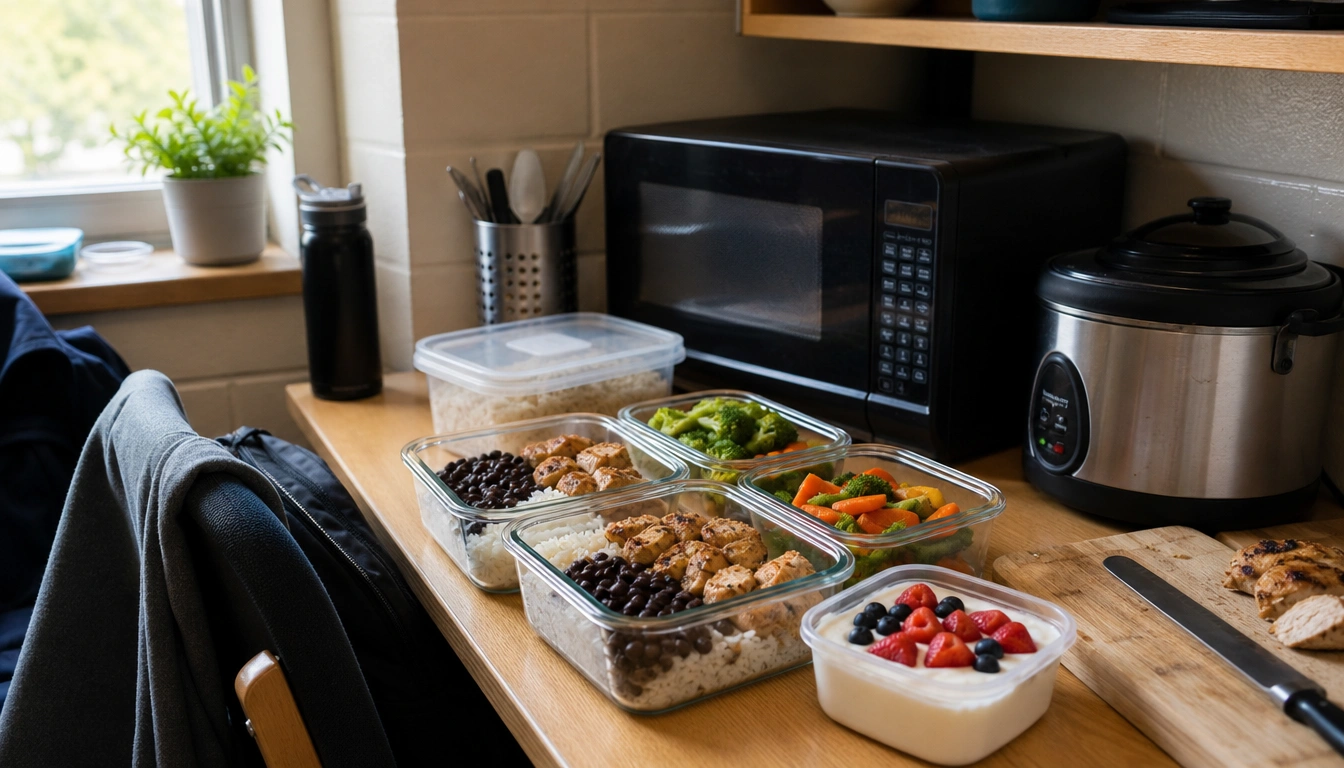
You can meal prep high-protein meals in college by keeping the plan simple: pick one protein, one carb, and one vegetable, then repeat that formula with different seasonings and sauces. For most healthy adults, 0.8 grams of protein per kilogram of body weight is the baseline, but students who lift or train often do better with more. The easiest approach is to rely on affordable staples, use a microwave, rice cooker, or no-cook assembly, and store cooked food safely for only a few days.
Key Takeaways
- The baseline protein RDA for healthy adults is 0.8 g/kg, but active students often need more for muscle repair, recovery, and satiety.
- Budget staples like eggs, canned tuna, beans, lentils, chicken thighs, and Greek yogurt usually stretch farther than premium fitness foods.
- A simple meal-prep formula—one protein, one carb, one vegetable—keeps shopping, cooking, and packing manageable.
- Dorm-friendly prep can work with a microwave, rice cooker, mini-fridge, or no-cook assembly, so a full kitchen is not required.
- Cooked foods usually stay safe in the fridge for only 3 to 4 days, so freezing extra portions can be the smarter move.
- Protein needs shift with training goals: muscle gain, maintenance, and fat loss all call for different levels of attention to timing and total intake.
Why high-protein meal prep helps in college
High-protein meal prep for college students works because it solves three common problems at once: money, convenience, and consistency. If your schedule changes by the hour, it is easy to end up grabbing expensive takeout or skipping meals altogether. A few planned meals can cut decision fatigue and give you a reliable option between class, practice, the library, and late-night study sessions.
Protein also has a practical role beyond muscle building. It helps with satiety, which can make it easier to stay full longer and avoid constant snacking. The Dietary Guidelines for Americans and USDA-style food patterns also emphasize nutrient-dense foods rather than relying on highly processed convenience meals. For students, that means the best plan is usually not a perfect plan. It is a repeatable one.
If your goal is general health, meal prep can simply help you hit the baseline. If your goal is sports performance, lifting, or body composition changes, a more protein-focused routine can make it easier to recover and stay on track without overcomplicating food choices.
How much protein college students actually need
The official baseline for healthy adults is 0.8 grams of protein per kilogram of body weight per day. That amount is meant to prevent deficiency, not necessarily to optimize athletic recovery or muscle gain. In other words, the RDA is a floor, not a sports nutrition target.
For students who lift weights, practice a sport, or train regularly, higher intakes are commonly used in sports nutrition guidance. A practical range often falls around 1.2 to 2.0 grams per kilogram per day, depending on training load, body size, and whether the goal is muscle gain, maintenance, or fat loss. Students trying to build muscle often benefit from the higher end of that range, while those simply trying to support regular activity may need less.
Meal timing matters too, but not in a fussy way. Spreading protein across the day tends to be more useful than squeezing most of it into one giant dinner. A breakfast, lunch, and dinner that each contain a solid protein source often works better than saving everything for one meal after practice.
If you have kidney disease or another medical condition that affects protein needs, get individualized guidance from a healthcare professional before changing your intake significantly.
The simplest meal-prep framework to follow
The easiest college meal-prep system is a three-part template: one protein base, one carb base, and one vegetable base. That structure gives you enough variety to stay interested without turning meal prep into a weekend project.
For example, you might batch-cook chicken thighs, make a pot of rice, and keep frozen broccoli on hand. Then you can turn that into bowls, wraps, or stir-fry-style meals with different sauces. Another week, the protein could be eggs or tofu, the carb could be potatoes or pasta, and the vegetables could be frozen mixed veggies or bagged salad.
This approach works especially well in college because you do not need a gourmet setup. You just need a few repeatable combinations. If you have access to a dining hall, you can still use the same framework by building plates around the highest-protein options you can find, then adding fruit, vegetables, whole grains, or other low-cost sides.
Keeping the structure simple also helps with grocery budgeting. Instead of buying ten ingredients for one recipe, buy a few ingredients that can be reused in several meals.
Budget-friendly protein foods that stretch the farthest
Students usually save the most money by building meals around low-cost, versatile protein foods rather than specialty bars, powders, or pre-made fitness meals. According to USDA-style food planning principles, affordable staples are often the best long-term choice because they provide protein without draining the food budget.
Good low-cost options include eggs, canned tuna, canned salmon, Greek yogurt, dry or canned beans, lentils, tofu, peanut butter, chicken thighs, and edamame. These foods can cover a range of textures and meal styles, from breakfast bowls to rice meals to sandwiches and snack plates.
Plant proteins are especially helpful for budget control. Beans and lentils are inexpensive, shelf-stable, and easy to mix into soups, rice bowls, pasta, or burritos. Animal proteins can still fit a student budget if you choose cheaper cuts like chicken thighs instead of premium boneless cuts, or canned fish instead of deli meat.
A useful budget rule is to compare cost per serving, not just sticker price. A bigger package may look expensive, but if it gives you multiple meals, it may be cheaper than buying small convenience items every day.
Dorm-friendly prep methods without a full kitchen
You do not need a full kitchen to eat enough protein. A microwave, rice cooker, mini-fridge, and a couple of storage containers can go a long way. The goal is not fancy cooking. It is low-friction assembly.
A microwave can handle oatmeal, steamed vegetables, scrambled eggs in a microwave-safe bowl, reheating leftovers, and heating grain bowls. A rice cooker can cook rice, quinoa, oats, and sometimes steam simple proteins or vegetables depending on the model. A mini-fridge can support yogurt, cottage cheese, hummus, deli-style protein sources, tofu, and pre-cooked meals for a few days.
No-cook ideas are also useful. Think Greek yogurt with fruit and granola, tuna packets with crackers, bean salad, peanut butter sandwiches, tofu wraps, or cottage cheese with tomatoes and whole-grain toast. If you have a dining hall, you can build no-cook meals there too by choosing the most protein-rich station first and adding inexpensive sides.
When you do have one batch-cooking session, keep it basic: cook a protein, cook a carb, portion into containers, and refrigerate or freeze what you will not eat within a few days.
How to build filling meals that support energy and focus
A high-protein meal is more useful when it also keeps you energized. Protein matters, but students still need enough carbohydrate and fiber to stay mentally sharp through classes, study sessions, workouts, and long days on campus.
A balanced container might include chicken, rice, and vegetables; beans, pasta, and peppers; or tofu, potatoes, and broccoli. The protein helps with fullness and recovery, while the carb source supports training and mental energy. Vegetables add volume, fiber, and micronutrients without driving the cost up too much.
This balance matters even more if you lift weights or play sports. Protein helps maintain and build lean tissue, but if your meals are too low in carbs or calories overall, your energy can dip and recovery may suffer. For students trying to gain muscle, that often means enough total food, not just enough protein. For students trying to lose fat, it means protecting protein intake while still creating a manageable calorie deficit.
Meal timing can be simple: include protein at breakfast, again at lunch, and again at dinner, then add a snack if your schedule or training demands it. You do not need perfect timing. You do need a pattern you can keep up during exams and busy weeks.
Food safety and storage rules that matter in small college kitchens
Food safety is one of the most overlooked parts of college meal prep. Cooked leftovers, including proteins and grains, generally should be eaten within 3 to 4 days when stored properly in the refrigerator. If you think you will not finish them in that time, freezing portions is usually the smarter choice.
Cold storage also matters. A crowded mini-fridge may not hold food evenly if it is packed too tightly or set too warm. Keep prepared food in sealed containers, store it in the coldest part of the fridge when possible, and cool hot food before sealing and refrigerating it. That helps reduce the risk of foodborne illness.
Rice deserves extra attention because improperly handled rice can create food safety problems if it sits out too long. The same is true for meats, dairy-based dishes, and anything with a short shelf life. If a meal has been left at room temperature for too long, do not try to rescue it with reheating alone.
Food safety should not make meal prep feel scary. It just means planning portions around a realistic fridge window and freezing extra servings before they become questionable.
How to keep meals interesting and avoid common mistakes
Meal prep gets boring when every container tastes the same. The easiest fix is not more complicated cooking. It is flavor rotation. A few sauces and seasonings can change the same ingredients into different meals: salsa, soy sauce, mustard, hot sauce, curry seasoning, garlic, pepper, lemon juice, or a low-sugar dressing.
You can also mix and match textures. Pair creamy yogurt with fruit, crispy toast with eggs, rice with beans, or roasted vegetables with a savory protein. Small changes make repetition easier to tolerate, which matters if you are eating the same base ingredients several times a week.
Common mistakes include buying too many special ingredients, prepping meals you do not actually enjoy, forgetting fridge limits, and choosing protein foods that are too expensive to repeat. Another mistake is treating protein as the only thing that matters. If you skip carbs, fiber, and enough total calories, the meals may be high in protein but still leave you tired or unsatisfied.
The most sustainable system is usually the plainest one: a few cheap staples, a short shopping list, a safe storage plan, and one or two flavor upgrades so you do not burn out by Wednesday.
| Goal | Practical protein focus | Simple college-friendly examples |
|---|---|---|
| General health | Hit the baseline consistently | Eggs, yogurt, beans, tuna, tofu, peanut butter |
| Muscle gain | Use a higher daily intake and spread it across meals | Chicken thighs, Greek yogurt, lentils, milk, tuna bowls |
| Fat loss | Keep protein high so meals stay filling while calories stay controlled | Bean bowls, yogurt snacks, egg wraps, lean poultry, tofu stir-fries |
Frequently Asked Questions
How much protein do college students actually need each day?
For healthy adults, the baseline RDA is 0.8 grams per kilogram of body weight per day. Students who lift, practice sports, or want better muscle recovery often use a higher range, commonly around 1.2 to 2.0 grams per kilogram per day, depending on goals and training load.
What are the cheapest high-protein foods for a student budget?
The best budget options are usually eggs, canned tuna or salmon, dry or canned beans, lentils, tofu, Greek yogurt, peanut butter, and chicken thighs. These foods tend to offer more protein per dollar than specialty bars, shakes, or pre-made fitness meals.
How can I meal prep high-protein food in a dorm with only a microwave or mini-fridge?
Use no-cook foods and microwave-friendly meals. Good options include yogurt bowls, tuna packets, bean salads, egg mugs, oatmeal with peanut butter, wraps, and reheated rice bowls. A mini-fridge helps you keep a few cooked portions or ready-to-eat proteins on hand.
How long does cooked meal prep stay safe in the fridge?
A common food safety rule is 3 to 4 days for cooked leftovers when they are stored properly in the refrigerator. If you will not eat them in that window, freeze portions instead of stretching them too long.
What are good high-protein meal prep ideas for students who lift weights?
A practical pattern is protein plus carbs plus vegetables: chicken and rice, tuna pasta bowls, lentils with sweet potatoes, tofu stir-fry, or eggs with toast and fruit. Spreading protein across the day is usually more helpful than packing it into one large meal.
The Bottom Line
High-protein meal prep in college does not need to be expensive or complicated. If you build meals from a few affordable staples, use simple cooking methods, and keep portions realistic for your fridge space, you can stay consistent without a full kitchen.
For most students, the best approach is to match protein intake to your real goal: baseline health, muscle gain, maintenance, or fat loss. Keep the structure simple, watch food safety, and use sauces and seasonings so your meals stay practical enough to repeat all semester long.
Medical disclaimer
Medical disclaimer: This content is for educational and informational purposes only and is not a substitute for professional medical advice, diagnosis, or treatment. Dietary needs and supplement suitability vary by individual.
Sources
- U.S. Government / Health Authority — usda.gov. Accessed November 2026.
- U.S. Government / Health Authority — health.gov. Accessed November 2026.
- U.S. Government / Health Authority — realfood.gov. Accessed November 2026.
