
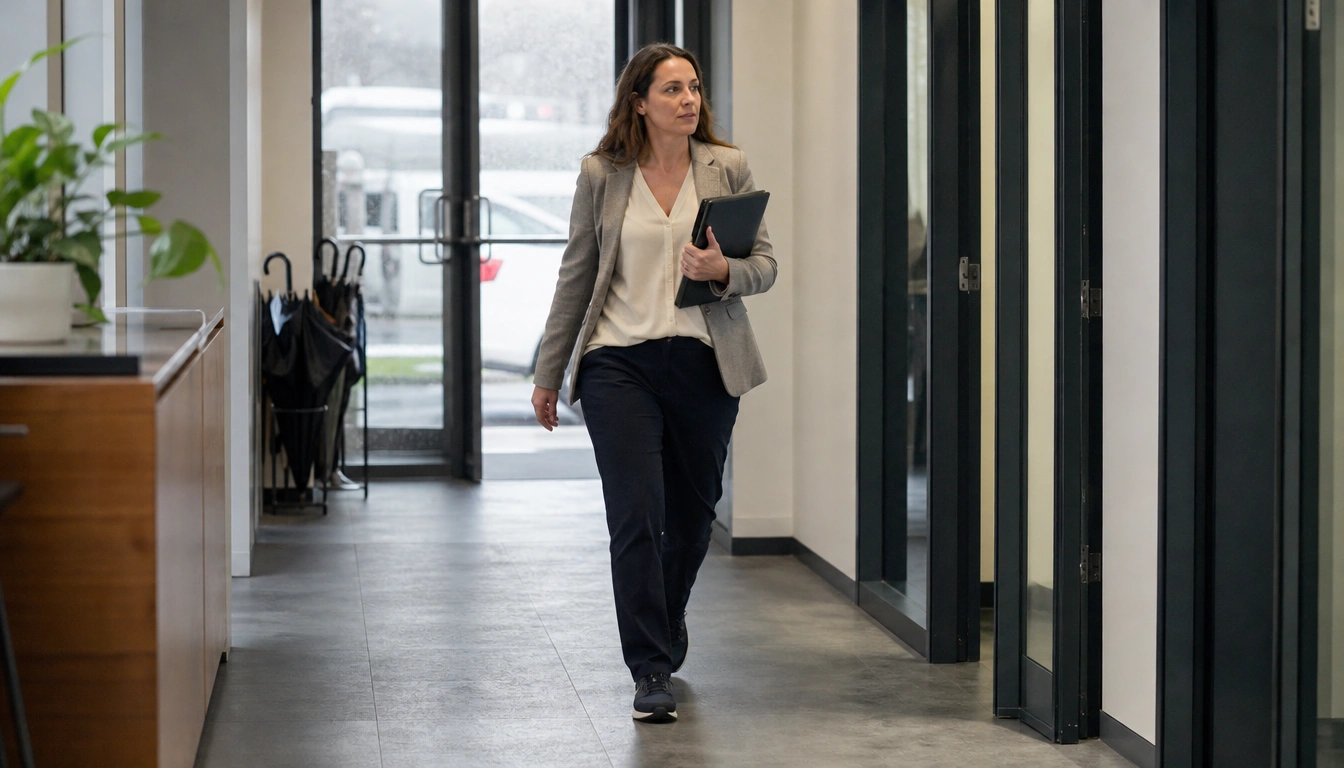
You can replace your usual outdoor walk with a rainy-day indoor walking routine made of short, low-disruption walking breaks throughout the workday. Aim for 3 to 5 minutes at a time, use hallways, stairs when appropriate, or a small home-office loop, and keep the pace brisk enough that you can still talk. That approach helps you stay consistent on rainy days without needing a full workout session.
Key Takeaways
- Short indoor walking breaks can interrupt long sitting stretches, which is helpful for circulation, stiffness, and mental reset.
- The 150-minute weekly activity target can be built from office-friendly chunks instead of one long walk.
- A 3- to 5-minute walk each hour is a practical way to make rainy-day movement fit a desk schedule.
- Open-plan offices, multi-floor buildings, home offices, and small spaces all need different routes and pacing plans.
- Supportive shoes, dry floors, and clear pathways matter more indoors because wet weather raises slip risk.
- If you have joint pain or a chronic condition, keep the routine gentle and check with a healthcare professional before increasing intensity.
Why rainy-day indoor walking is worth doing for desk workers
A rainy-day indoor walking routine is less about replacing a perfect outdoor workout and more about protecting the habit of moving during the workday. When the weather is bad, it is easy to turn a walk into another seated block of time. For office workers, that can mean hours of uninterrupted sitting, which is associated with stiffness, lower energy, and less comfortable circulation. A few brief walks indoors can interrupt that pattern without derailing meetings or deadlines.
The value of these short breaks is practical. Light-to-moderate walking gives your muscles a chance to contract, which helps move blood through the legs and can make a desk day feel less static. It also gives your eyes and brain a break from the screen. Many people find they return to work more focused after a few minutes of movement than after trying to push through a slump at their desk.
Public health guidance from the CDC supports the idea that physical activity does not have to happen in one long session. If your normal routine is a daily outdoor walk, indoor walking can keep that routine alive on rainy days instead of treating weather as an all-or-nothing barrier.
How to turn rainy-day indoor walking into a workday routine
The easiest version is to make indoor walking part of the rhythm of the day rather than a separate fitness event. Think in small blocks. A few minutes before you start a difficult task, after finishing a meeting, or while waiting for a file to upload can be enough to get in a useful loop. The routine should feel simple enough that you can repeat it without needing motivation each time.
Start by deciding when walking will happen. Some people do best with a fixed schedule, such as once per hour. Others prefer to attach it to a trigger, such as after refilling a water bottle or after sending a batch of emails. For work-from-home days, it can help to tie the walk to a change in location, such as moving from your desk area to the kitchen and back several times.
Do not aim for a perfect workout. Aim for reliability. If your usual outdoor walk is 20 to 30 minutes, you can divide it into several short indoor walking breaks and still protect the habit. If the day is packed, even a few rounds of hallway walking is better than sitting straight through until lunch.
A simple hourly movement-snack framework
A useful structure for many desk workers is a 3- to 5-minute walking break about once an hour. That pattern is long enough to interrupt sitting and short enough to fit between tasks. If your schedule is especially tight, even two or three minutes can help you reset before returning to your desk.
Here is one practical way to use it:
- At the top of the hour, stand up and step away from the screen.
- Walk a loop that is safe, clear, and familiar.
- Keep the pace comfortable but purposeful.
- Return to your desk with a specific next task so the break does not sprawl.
If you are trying to reach the CDC and American Heart Association weekly target of 150 minutes of moderate-intensity activity, these short walks can contribute meaningfully. For example, several 5-minute indoor walks spread across the day add up over the week without requiring a separate workout block. That matters for people who struggle to protect a full lunch-hour exercise session.
The best framework is the one you can repeat on ordinary workdays. If every hour feels unrealistic, start with two or three movement snacks during the day and build from there. Consistency matters more than squeezing in a heroic number of steps on one rainy afternoon.
How to tell if your indoor walking is moderate intensity
You do not need a tracker to judge pace. The talk test is a practical guide used in public health and exercise guidance: during moderate-intensity walking, your heart rate should be up and you should breathe harder, but you should still be able to talk in short sentences. If you cannot speak comfortably, the pace is probably too hard for a routine desk break.
For indoor walking, moderate intensity often looks like brisk but controlled movement. Your arms may swing naturally, your stride may lengthen a little, and you may feel warmer after a few minutes. If you are just strolling slowly, you are still getting the benefit of standing up and moving, but the walk may be lighter than moderate intensity.
That said, not every indoor walk has to be moderate. On days with back-to-back meetings, a gentle pace may be the right choice. On days when you have more time, you can pick up the pace slightly while staying within the talk test. The right intensity is the one that fits your schedule and keeps the routine sustainable.
Indoor route ideas by setting
Different workspaces call for different routes. In an open-plan office, a simple perimeter loop along unobstructed pathways often works best. Keep your route predictable so coworkers do not have to dodge you, and avoid stopping in busy traffic areas. If your building has clear hallways, use the longest safe stretch available and turn around before you create a bottleneck.
In a multi-floor building, stairs can be useful when they are safe and not crowded. Stair climbing adds intensity quickly, so reserve it for times when you feel stable, have supportive footwear, and are not carrying heavy items. If stairs feel awkward, a level hallway route is enough. You do not need stairs for the routine to count.
For a home office, a compact loop can work surprisingly well. Walk from desk to kitchen to hallway and back, or pace through two connected rooms in a figure-eight pattern. If you have a small space, repeated short laps are fine. You can also use a walking pad or treadmill if you already own one and have room for it, but it is not required.
Small offices and shared workspaces may need a little creativity. Look for unused corridors, lobby loops, or quiet side passages that do not interfere with security zones or foot traffic. If your route forces you to stop and turn every few steps, that is still useful. The goal is movement, not mileage.
How to reduce friction during a busy day
Most people do not skip indoor walking because they dislike walking. They skip it because they forget, get interrupted, or do not want to break momentum. The answer is to make the cue unavoidable and the route easy to start. Calendar reminders, watch alarms, and desktop prompts all work better when they are specific. A reminder that says “5-minute hallway walk” is more useful than a vague note to move more.
Pairing the habit with existing routines also helps. Walk after every water refill, after you print a document, or immediately after a meeting ends. If you have a regular one-on-one call, consider turning it into a walking meeting when the topic allows it and you can use a headset or speaker safely. That keeps the call productive while reducing uninterrupted sitting.
For office workers, it can help to protect one or two recurring movement windows each day rather than waiting for motivation. Many people do well with a short morning walk snack, one after lunch, and one in the mid-afternoon slump. If your workplace culture is formal, keep it low-key and consistent so it feels normal rather than disruptive.
Safety checklist for indoor walking on wet days
Rainy weather creates specific indoor hazards. Floors can be slick from wet shoes, umbrellas, and tracked-in water, especially near entrances, elevators, and stairwells. Before you start walking, scan for puddles, loose rugs, cords, boxes, and clutter. If the route is crowded or damp, choose a different one. A safe route is more important than a longer route.
Footwear matters too. Dress shoes, high heels, and worn-out soles can make indoor walking less stable and more tiring. If possible, keep a pair of supportive walking shoes at your desk or in your bag. Shoes with good traction and enough room in the toe box are usually more comfortable for repeated short walks than office shoes meant only for sitting.
Be cautious with stairs, polished floors, and hard surfaces if you have joint discomfort or feel unsteady. Softer, level routes are usually easier on the knees and feet. If you notice pain rather than ordinary effort, stop and adjust the route. If you feel chest pain, sudden dizziness, severe shortness of breath, or sharp joint pain, stop walking and seek medical help promptly.
How to adjust the routine for joint pain, low fitness, or chronic conditions
Indoor walking is flexible, which makes it useful for people who are easing back into activity. If you have low fitness, start with shorter bouts and a gentler pace. A two-minute corridor walk may be enough at first. The goal is to build tolerance without leaving you overly tired for the rest of the workday.
If you have joint pain, plantar fasciitis, or another musculoskeletal issue, choose the smoothest route available and prioritize supportive shoes. Avoid making stairs your default option if they aggravate symptoms. Shorter, more frequent walks may feel better than one longer bout. Warm muscles often tolerate movement better than stiff ones, so a brief easy start can help.
For chronic health conditions such as cardiovascular, metabolic, or respiratory issues, ask a healthcare professional before quickly increasing your walking volume or intensity. The same is true if you are returning to activity after a long break or a recent illness. A personalized plan may be safer than trying to copy a generic walking target all at once.
Many office workers also benefit from thinking of indoor walking as part of a larger movement routine. Standing more often, changing posture, and taking walking breaks all support a less sedentary day. On rainy days, the best plan is the one that keeps you moving safely and regularly, even if the route is short and the pace is modest.
Frequently Asked Questions
How often should office workers take indoor walking breaks during the day?
A practical starting point is a 3- to 5-minute walking break about once an hour, especially during long sitting stretches. If that is too much at first, begin with fewer breaks and build up. The main goal is to interrupt sitting regularly rather than waiting for one long workout block.
What counts as moderate-intensity indoor walking if I only have a hallway, office floor, or small home space?
Moderate intensity usually means your breathing is heavier and your heart rate is up, but you can still talk in short sentences. In a small space, that may look like brisk laps, a purposeful hallway pace, or repeated turns at a comfortable but steady speed.
How can I build indoor walking into a desk job without losing productivity?
Use walking as a transition, not a distraction. Attach it to tasks you already do, such as after meetings, after sending emails, or after refilling water. Keep the route short and the return point clear so the break ends on time and your next task is obvious.
What are the safest indoor walking routes and footwear choices for office workers?
Choose dry, uncluttered, well-lit routes with good traction. Avoid puddles, cords, rugs, and crowded stairwells. Supportive shoes with stable soles are usually safer than dress shoes, heels, or worn-out footwear, especially on rainy days when floors are more likely to be slippery.
Can walking meetings and hourly movement breaks really help if I sit all day?
Yes, they can help reduce long uninterrupted sitting and make it easier to stay active during a busy workday. They do not replace every health habit, but they are a realistic way to add movement, reduce stiffness, and keep your routine going when outdoor walking is not practical.
The Bottom Line
A rainy day does not have to erase your walking habit. A simple indoor routine built around short, repeatable movement breaks can fit into office life, home offices, and crowded schedules without much disruption.
The most useful version is the one you can do safely and consistently: a few minutes at a time, a clear route, supportive shoes, and a pace that feels brisk but controlled. If you have pain or a chronic condition, adjust the plan to your body and get medical guidance when needed.
Medical disclaimer
Medical disclaimer: This content is for educational and informational purposes only and is not a substitute for professional medical advice, diagnosis, or treatment. Dietary needs and supplement suitability vary by individual.
Sources
- National Health Service (NHS) — northlondonsharedservices.nhs.uk. Accessed November 2026.
- Centers for Disease Control and Prevention (CDC) — cdc.gov. Accessed November 2026.
- Academic / Medical Research Institution — heart.org. Accessed November 2026.
