
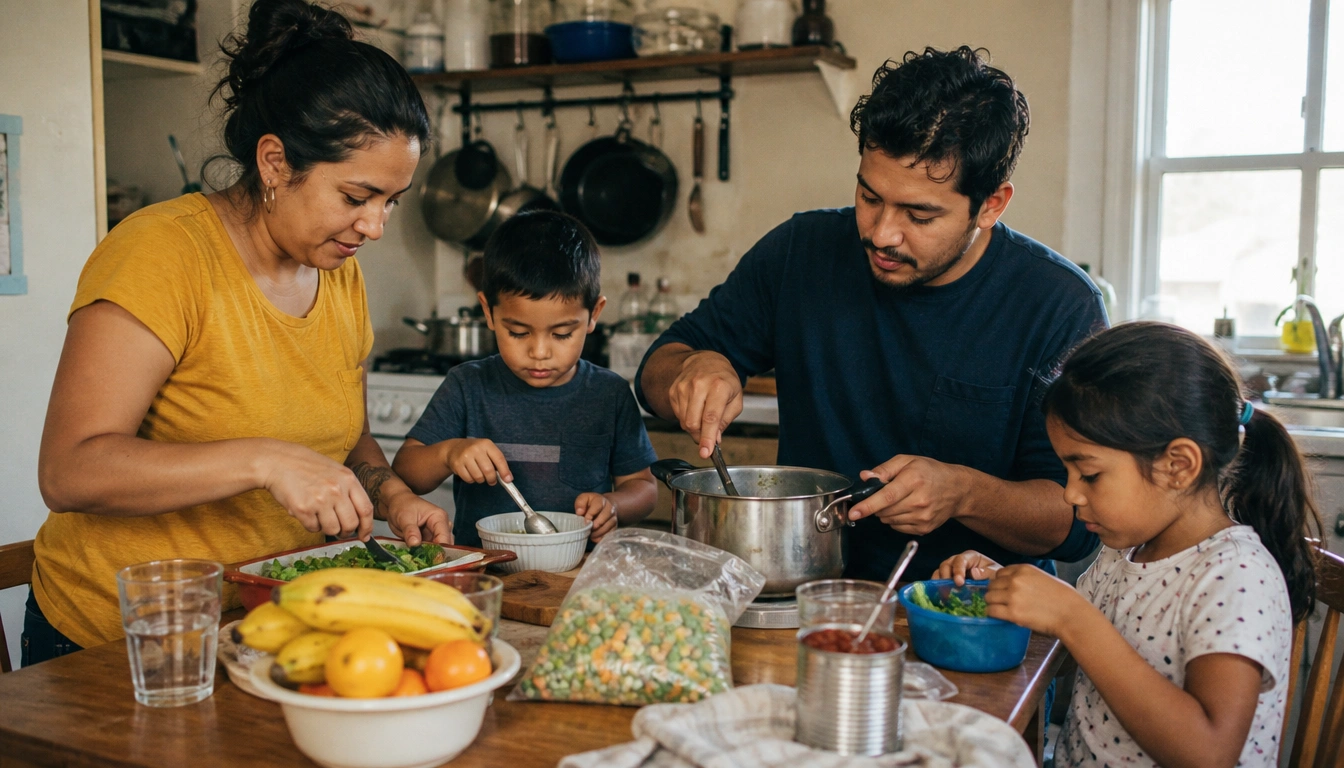
The simplest, cheapest wellness habits for busy parents are the ones that fit into existing routines: keep water and low-cost staple foods on hand, add short bursts of movement to normal transitions, protect sleep with a consistent wind-down, and set screen boundaries that support rest. For many families, frozen and canned produce, family walks, and regular meal times are easier to sustain than elaborate health plans.
Key Takeaways
- Frozen and canned fruits and vegetables can be just as practical as fresh produce, often at lower cost and with less waste.
- Habit-stacking works better than separate wellness projects: pair small changes with coffee, school drop-off, dinner cleanup, or bedtime.
- Parents of infants often need micro-rest and recovery strategies, while school-age kids and teens benefit more from stable family anchors like meal times and screen limits.
- Avoid rigid food rules. Supportive involvement, flexible choices, and attention to hunger and fullness cues work better than pressure or forced eating.
- If sleep problems, fatigue, mood symptoms, or unexplained growth or weight changes persist, the family should seek medical evaluation instead of self-managing longer.
Why low-cost wellness works better than perfection for busy families
Busy parents usually do not need a total reset. They need a system that survives errands, work shifts, missed naps, picky eaters, and the days when everyone is running on low energy. That is why low-cost wellness basics tend to work better than perfection: they reduce decision fatigue, fit the household budget, and are easier to repeat. The CDC and NHS both emphasize basic behaviors such as healthy eating patterns, regular activity, and sleep routines as foundations of health, not optional extras.
The most useful habits are often the least dramatic. Water instead of sugary drinks, a walk after dinner, a few extra minutes of sleep protection, and meals built from affordable staples can improve family routines without creating another full-time job. When parents make these habits visible, children are more likely to copy them. That role-model effect matters because kids learn from what adults repeatedly do, not from what adults only recommend.
Think of wellness as a household pattern rather than an individual project. If a parent can reliably stack one small habit onto something that already happens every day, the habit is more likely to stick. That can be as simple as stretching while coffee brews, drinking water during the school run, or putting phones away when the evening dishes start.
The 4 habit pillars that give the biggest return: food, movement, sleep, and screens
The highest-return basics are food quality, movement, sleep, and screen use. Parents do not need special products to improve any of them. Public health guidance generally points toward a pattern built around fruits and vegetables, lean or plant-based proteins, high-fiber starches, water instead of sugar-sweetened drinks, daily movement, and enough sleep for each age group.
For food, the cheapest reliable strategy is to keep a few staples in rotation: oats, rice, whole-grain bread or pasta, beans or lentils, eggs, peanut butter or other nut butters if tolerated, plain yogurt, frozen vegetables, canned tomatoes, and canned fruit packed in water or natural juice. Frozen and canned produce are especially useful because they reduce waste, last longer, and still bring fiber and nutrients to soups, stir-fries, pasta, and lunchboxes. NHS-style public health advice supports fruit and vegetable intake as part of an everyday pattern, not as a luxury item.
For drinks, the biggest low-cost win is usually cutting back on sugary beverages. Tap water, seltzer, or water with fruit slices can replace soda, sweet tea, and juice most of the time. That shift saves money and helps make meals feel less chaotic because children are less likely to expect sweet drinks at every transition.
For movement, the goal is consistency, not athletic performance. Adults are generally advised to reach at least 150 minutes of moderate activity a week, while children and teens need about an hour a day. Those numbers sound large, but families can build them through ordinary movement: walking to school, playing outside, doing chores together, or taking a loop around the block after dinner.
For screens, the main issue is not guilt; it is timing and structure. Unbounded recreational screen use tends to crowd out sleep and movement. A family media plan is more realistic than a vague promise to “use screens less.” If screens stay in the routine, keep them predictable and away from the sleep window when possible.
How to build a family movement routine from everyday moments instead of workouts
Parents who do not have time for workouts often do better with movement anchors than with formal exercise plans. Habit-stacking makes this easier because the habit is attached to something that already happens. Coffee brewing can become standing calf raises or shoulder rolls. School drop-off can become a longer walk back to the car. Dinner cleanup can become a few minutes of upbeat music and tidying. Bedtime can include a short stretch or a hallway walk with a child who still has energy to burn.
Small movement breaks matter because they are repeatable. A 10-minute walk after a meal, a stair lap while laundry runs, or a game of tag in the yard can add up over the week. If the household is too busy for one long block of exercise, splitting movement into short pieces is still worthwhile. The CDC’s activity guidance does not require all movement to happen at once.
Families with younger children can turn movement into play. Families with older kids and teens may do better with shared routines that feel less childish, such as an after-dinner walk, weekend errands on foot when possible, or a brief family stretch before everyone disperses into their own screens. The right movement routine is the one people will actually repeat.
Sleep protection for parents and kids: what to do when evenings are messy
Sleep often needs the most protection in a busy home because evenings are messy by default. A realistic approach starts with making the last part of the day more predictable, even if the rest of the day is chaotic. That can mean setting a loose wind-down sequence: lights lower, screens off or reduced, pajamas on, teeth brushed, and one quiet activity before bed. For many households, that structure matters more than the exact bedtime.
Parents should also give themselves permission to use micro-rest when sleep is fragmented, especially with infants or shift work. Short naps, going to bed earlier when possible, and swapping tasks with another adult can be more useful than trying to “push through” fatigue indefinitely. Sleep loss compounds quickly, so small recovery steps matter.
For children and teens, predictable sleep cues help the body recognize night as night. Regular mealtimes, fewer late-evening snacks, a calmer room, and less bright light near bedtime all support that cue. The NHS and other public health bodies treat sleep as a core health behavior because it affects mood, attention, appetite, and energy.
If the family needs a practical rule, use this: protect the last hour before bed as much as possible. The goal is not perfection, but reducing the things that keep brains alert when they should be winding down.
Screen boundaries that actually fit real households
Screen rules work best when they are specific, predictable, and tied to family routines. A vague “less screen time” rule usually fails because it does not tell anyone what to do instead. A better approach is to decide when screens are off-limits, where they stay, and what happens next. For example, devices can charge outside bedrooms, mealtimes can be screen-free when feasible, and the last stretch before sleep can be a no-scroll zone.
Families do not need to ban screens to protect health. They need to keep screens from taking over the hours that support sleep, movement, and conversation. If recreational screens are part of the routine, use them intentionally: one show, one game, or one scheduled check-in, rather than an all-evening background habit. The less reactive the system, the less conflict it tends to create.
For children, consistency matters more than arguments. If the rule changes every day, the child learns to negotiate rather than to transition. If the rule is simple and repeated, it becomes part of the household rhythm. For adults, the same logic applies. Phones are easier to put down when there is a replacement activity ready, such as a walk, a puzzle, a shower, or prep for the next day.
Age-stage adjustments: infants, school-age kids, and teens need different strategies
Parents often hear one-size-fits-all advice, but age stage changes what is realistic. With infants, the priority is often survival-level rest, feeding support, and micro-recovery. A parent with a baby may not be able to complete a full workout or sleep through the night, so the win is taking short rest periods, asking for help where possible, and lowering the pressure to do everything perfectly.
With school-age kids, the best wellness tools are usually routine and structure. Fixed meal times, after-school snacks that are not highly sugary, outdoor play, and limits on bedtime screens can reduce friction. This age group responds well to simple expectations because they are old enough to follow patterns but still need help with transitions.
With teens, flexibility and boundaries both matter. Teens often need more ownership than younger children, but they still benefit from family anchors such as shared dinners, a curfew for screens at night, and regular opportunities to move. The aim is not control for its own sake; it is creating conditions that support sleep, mood, and attention while respecting growing independence.
The same family can use different tactics for different children at the same time. That is normal. A household wellness plan should fit the people in it, not force every age into one routine.
How to avoid wellness rules that backfire: food guilt, forced eating, and all-or-nothing thinking
Wellness advice can backfire when it turns into food guilt or power struggles. Families do better when meals are supportive rather than moralized. That means serving a variety of foods, including familiar favorites, and allowing children to decide how much to eat from what is offered. Hunger and fullness cues matter. Forcing children to clean their plates can teach them to ignore those cues.
Rigid rules can also make parents feel like they are failing if a meal is not “clean” or if a child refuses vegetables. A more workable approach is to include vegetables in low-pressure ways: add frozen peas to pasta, offer carrot sticks with dip, serve canned beans in soup, or let children choose between two vegetables at the store. Involving children in washing produce, stirring, or assembling simple meals increases cooperation without turning dinner into a battle.
All-or-nothing thinking is another trap. A family does not need to eat perfectly to benefit from healthier habits. One sugary drink swap, one extra vegetable, one evening walk, or one earlier bedtime can matter more than an impossible standard. Public health guidance is about patterns, not punishment.
A 7-day starter plan for busy parents
This starter plan is meant to be small enough to begin this week. Pick one or two items per day instead of trying to overhaul everything at once. The point is to make the household feel a little steadier, not to create another source of pressure.
Day 1: Stock water and two low-cost pantry or freezer staples that can become quick meals, such as beans, frozen vegetables, oats, or eggs.
Day 2: Add one movement anchor, such as a 10-minute walk after dinner or stretching while coffee brews.
Day 3: Set one screen boundary, such as no phones during meals or charging devices outside bedrooms overnight.
Day 4: Build one sleep cue, like dimming lights and starting the wind-down routine 30 to 60 minutes before bed.
Day 5: Make one meal more flexible and less stressful by serving a familiar food plus one produce item, without pressure to finish everything.
Day 6: Invite children into a simple task: washing fruit, stirring soup, choosing between two vegetables, or helping set the table.
Day 7: Review what felt easiest and repeat only that piece next week. The best routine is the one that survives a normal family week, not a perfect one.
If the family wants a better routine, the next step is usually not more intensity. It is better anchors: cheaper staple foods, more predictable movement, calmer evenings, and less friction around food and screens.
Frequently Asked Questions
How can busy parents eat healthier on a budget without buying special diet foods?
Build meals from affordable staples such as oats, rice, beans, lentils, eggs, plain yogurt, frozen vegetables, and canned fruit or vegetables. These foods can be combined in many ways, reduce waste, and usually cost less than specialty health products.
What are the easiest movement habits for parents who do not have time for workouts?
Use habit-stacking. Walk during school drop-off, stretch while coffee brews, take a short after-dinner walk, or do a few minutes of movement during chores. Short repeats across the day can still support overall activity.
How can families improve sleep when evenings are chaotic and screens are part of the routine?
Keep the last part of the evening predictable. Lower lights, reduce screen use before bed when possible, and use the same wind-down steps most nights. Charging devices outside bedrooms can also make sleep easier without requiring a perfect schedule.
What are affordable kid-friendly wellness habits that work for different ages?
Younger children usually do well with play-based movement and simple food choices. School-age kids often need regular meals and bedtime routines. Teens usually benefit from family anchors, reasonable screen limits, and chances to help shape the routine.
When should a parent stop self-managing and ask a clinician about fatigue, sleep, mood, or growth concerns?
Seek medical advice if sleep problems, chronic fatigue, mood symptoms, or unexplained weight, appetite, or growth changes persist. Those issues can signal something more than an off week or a busy schedule.
The Bottom Line
The most effective low-cost wellness habits for busy parents are usually small, repeatable, and tied to existing routines. Frozen and canned produce, water instead of sugary drinks, short movement breaks, and a calmer bedtime pattern can help both adults and children without adding much cost or complexity.
A family does not need a perfect schedule to improve health. Start with one food habit, one movement habit, and one sleep or screen boundary, then keep what is sustainable. If symptoms such as fatigue, poor sleep, mood changes, or growth concerns continue, get medical guidance rather than trying to solve everything with lifestyle changes alone.
Medical disclaimer
Medical disclaimer: This content is for educational and informational purposes only and is not a substitute for professional medical advice, diagnosis, or treatment. Dietary needs and supplement suitability vary by individual.
Sources
- Centers for Disease Control and Prevention (CDC) — cdc.gov. Accessed November 2026.
- National Health Service (NHS) — icb.nhs.uk. Accessed November 2026.
- National Health Service (NHS) — www.nhs.uk. Accessed November 2026.
- National Health Service (NHS) — scot.nhs.uk. Accessed November 2026.
