
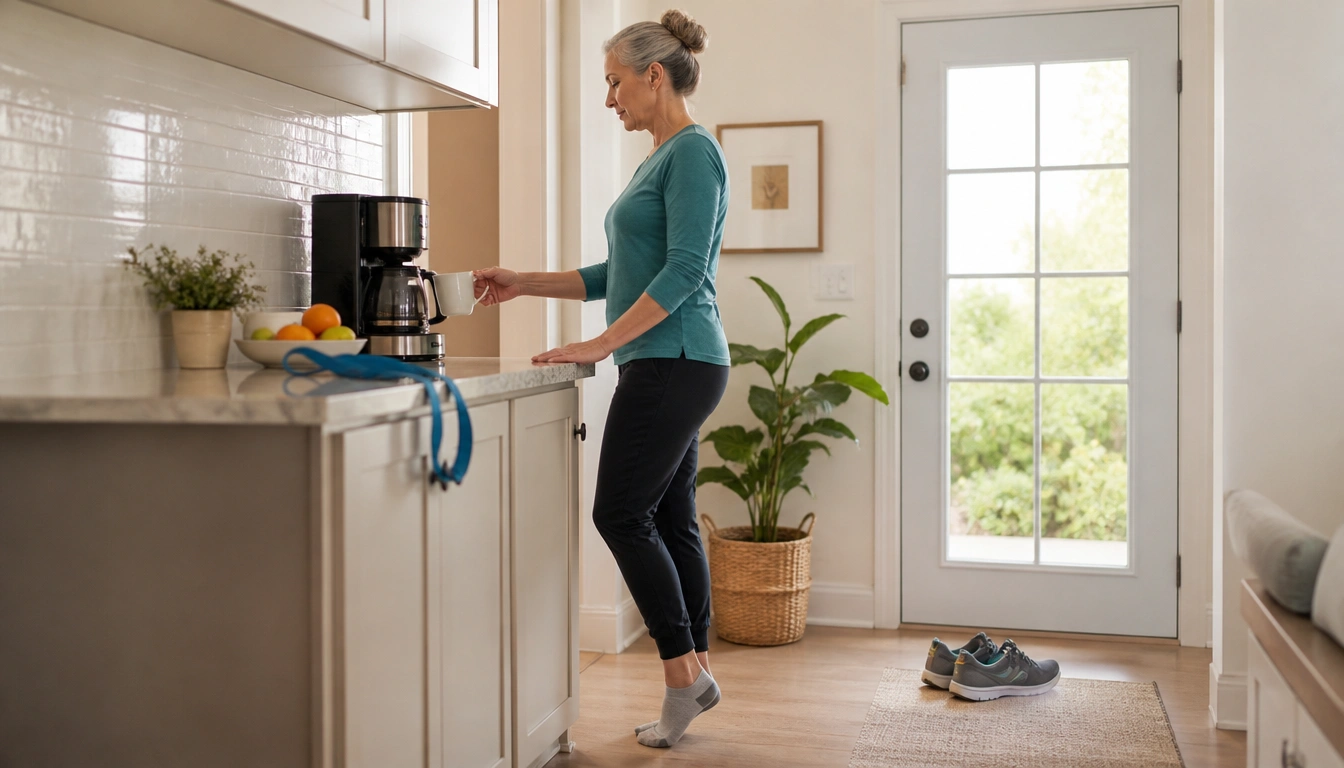
Habit stacking works after 50 by tying one very small healthy action to an existing routine you already do automatically. The best stacks are simple, repeatable, and safe enough to do most days: for example, standing up during a TV break, doing balance practice after coffee, or taking a short walk after the mail. Start tiny, use a reliable cue, and build consistency before you try to make the habit bigger.
Key Takeaways
- Choose a cue you already do without much thought, then attach one small health action to it.
- For adults over 50, the best stacks often support walking, strength, balance, hydration, or sitting less.
- Tiny actions can still support CDC and HHS goals when they happen regularly across the week.
- Use stable cues such as coffee, brushing teeth, commercials, or putting on shoes, especially if memory is less reliable.
- If you have arthritis, osteoporosis, heart disease, diabetes, or low mobility, scale the movement and get medical advice when needed.
Why habit stacking is useful after 50
Habit stacking for healthy choices after 50 works because it reduces the amount of thinking needed to start. Instead of asking yourself to remember a brand-new task, you connect it to something already built into the day. That cue-behavior-reward loop matters when motivation is low, schedules are irregular, or decision fatigue sets in.
This approach is especially useful in midlife and later life because many adults already have strong life-management skills. You may be good at keeping appointments, caring for others, or following established routines. Habit stacking uses that strength rather than treating routine as a weakness. The goal is not perfection. It is making healthy choices easier to begin, repeat, and eventually do with less effort.
Behavioral research suggests that automaticity usually takes weeks to months, depending on the habit and the person. Simpler habits and self-chosen routines tend to settle in faster than complicated or imposed ones. Morning habits often work well because the day has fewer competing demands and the anchor is more stable.
The best kinds of habits to stack first
Start with habits that are small, safe, and useful even when repeated often. For many adults over 50, the most practical first stacks support movement, balance, hydration, or breaks from sitting.
Movement is often the easiest place to begin. A short walk, a few sit-to-stands, or a brief march in place can be enough to count as a meaningful action when repeated regularly. Balance practice is another smart choice because it is often forgotten, yet it supports confidence with everyday movement. Hydration works well as a stack because it is simple and tied to existing routines. If you sit for long periods, adding a standing or walking break can help interrupt sedentary time.
The best habit is not the most ambitious one. It is the one you can do so often that it starts to feel routine.
How to choose the right anchor habit
Pick an anchor that is already automatic, happens most days, and is unlikely to move around much. Good anchors are things like making coffee, brushing your teeth, feeding a pet, sitting down for the news, or locking the front door. The more stable the cue, the easier it is to remember the new habit.
A simple formula helps: After [Current Habit], I will [New Small Habit]. Keep the new habit short enough that you do not have to negotiate with yourself. For example: After I pour my morning coffee, I will do two minutes of balance work. After I brush my teeth at night, I will fill a glass of water. After I sit down for the news, I will stand up during the first commercial break.
If memory or sensory changes make routine harder, make the cue visible. Put resistance bands next to the coffee maker, place walking shoes by the door, or keep a water glass where you will see it. Environmental cues often work better than relying on memory alone.
Practical examples for morning, evening, and screen-time routines
Morning routines often work well because they are already structured. After coffee starts brewing, you could do heel raises while holding the counter, practice a brief one-leg stand with support nearby, or walk a lap around the kitchen while waiting for the toast. These are small actions, but they are tied to a dependable anchor.
Evening routines can support hydration and recovery. After brushing your teeth, you might place a full glass of water on the bedside table, lay out your walking clothes for the next day, or take a few gentle stretches. If you use supplements or other prescribed routines, keep those tied to the same anchor only if your clinician has told you they are appropriate.
Screen-time routines are especially useful for breaking up sitting. During a commercial break, stand up and do 5 to 10 sit-to-stands from a sturdy chair. If you stream shows, use a timer or a natural pause to remind you to stand, walk to another room, or march in place. These tiny interruptions help turn a passive routine into a movement cue.
How to keep stacks safe and age-appropriate
Safety matters more than intensity. If a new stack includes balance work, start near a counter, wall, or heavy chair so you have support within reach. If a movement feels unstable, shorten it, slow it down, or switch to a seated version. If you have arthritis, osteoporosis, cardiovascular disease, diabetes, or limited mobility, adapt the stack to your current abilities instead of copying someone else’s routine.
Adults who have been mostly sedentary, or who have chest pain, unusual shortness of breath, or unstable medical conditions, should ask a clinician before increasing activity in a meaningful way. The CDC and HHS both recommend regular aerobic activity, muscle-strengthening work, and reducing long sitting time, but those goals can be met in smaller pieces. A short walk after mail delivery, a few sit-to-stands after a TV break, or brief balance practice while waiting for coffee can all contribute to those public-health targets over time.
Stop immediately and seek medical evaluation if your habit stack triggers chest discomfort, severe dizziness, sudden shortness of breath, or sharp joint pain. A safe habit stack should feel manageable, not risky.
Common barriers after 50 and how to troubleshoot them
Pain, low energy, forgetfulness, and schedule changes are the most common reasons a stack breaks down. If pain is the issue, reduce the range of motion, cut the reps, or choose a chair-based version. If standing bothers your knees, try seated marches or upper-body movement instead of forcing a step-up or squat.
If energy is low, make the habit smaller rather than skipping it altogether. One minute still counts if it keeps the cue-response link alive. If forgetfulness is the problem, make the cue visible and stable. Put the cue where you cannot miss it: shoes by the door, bands on the counter, or a note on the kettle. For mild memory changes, fewer steps is better than more reminders.
When routines change on weekends, travel days, or caregiving days, keep the anchor but shrink the action. The same habit can become a “travel version” or “low-energy version” so you do not have to start over. Consistency matters more than doing the exact same thing every day.
How to keep the habit small enough to repeat and strong enough to matter
The best stacks are tiny at first. A habit that feels almost too easy is often the right size because it lowers resistance. If the target is walking more, begin with a short loop after a daily anchor rather than a long workout. If the goal is balance, start with a few seconds rather than a full routine.
Small habits matter because they are repeatable. Repetition is what turns intention into routine. Once the stack feels dependable, you can add time, repetitions, or a second linked action. That might mean turning a two-minute walk into a five-minute walk, or adding a second sit-to-stand set after the first one feels easy.
Think in terms of durability. A modest habit done most days is usually more useful than an ambitious plan that collapses after a week.
What progress should feel like
At first, progress usually feels ordinary. You remember to do the habit more often, not perfectly. That is a good sign. The early win is not fitness; it is reducing friction. You are teaching your brain that the cue and the action belong together.
Over time, the habit should require less effort to start. You may notice that you do not argue with yourself as much, or that the action begins automatically when the cue appears. Habit formation is gradual, and the timeline varies. For many people, the shift from “I have to remember this” to “I just do it” happens slowly, not overnight.
If the habit still feels difficult after a few weeks, that does not mean it failed. It may need a better cue, a smaller action, or a different time of day. Morning and self-selected routines often stick better, but the right stack is the one that fits your life and your body now.
Frequently Asked Questions
What is a good habit-stacking formula for older adults?
A simple formula is: “After [current habit], I will [new small habit].” For example, after coffee, do a short balance exercise; after brushing your teeth, fill a water glass. The best version is brief, specific, and tied to something you already do almost every day.
Which healthy habits are easiest to stack onto existing routines?
Movement snacks, balance practice, hydration, standing breaks, and short walks are often easiest because they are small and flexible. They work well when tied to reliable anchors such as coffee, meals, brushing teeth, TV breaks, or putting on shoes.
How can adults over 50 use habit stacking to meet weekly activity goals?
Use small stacks to add up movement across the week. A short walk after mail pickup, a few sit-to-stands during TV time, and brief balance practice in the morning can all contribute to CDC and HHS-style goals for aerobic activity, strength, balance, and less sitting.
Is habit stacking safe for people with arthritis, osteoporosis, or heart disease?
It can be, but the stack should be adapted to the person. Use support surfaces, lower intensity, and simpler movements if needed. People with unstable symptoms, chest pain, severe breathlessness, or major medical concerns should ask a clinician before increasing activity.
How long does it usually take for a stacked habit to feel automatic?
There is no exact timeline. Research suggests automaticity often develops over weeks to months, and it depends on the habit, the cue, and how often you repeat it. Simple, self-chosen morning habits often become easier sooner than complex routines.
The Bottom Line
Habit stacking is a practical way to make healthy choices feel less effortful after 50. Start with one reliable cue, one tiny action, and one routine you already do most days. That structure can help you move more, sit less, and build consistency without relying on motivation alone.
If you have pain, chronic disease, low mobility, or memory changes, adjust the stack to fit your body and your day. Safety comes first: use support, keep the action small, and stop if symptoms feel wrong. Over time, small repeats can become a durable routine.
Medical disclaimer
Medical disclaimer: This content is for educational and informational purposes only and is not a substitute for professional medical advice, diagnosis, or treatment. Dietary needs and supplement suitability vary by individual.
Sources
- National Institutes of Health (NIH) — nih.gov. Accessed November 2026.
- Centers for Disease Control and Prevention (CDC) — cdc.gov. Accessed November 2026.
- National Health Service (NHS) — www.nhs.uk. Accessed November 2026.
- Academic / Medical Research Institution — heart.org. Accessed November 2026.
