
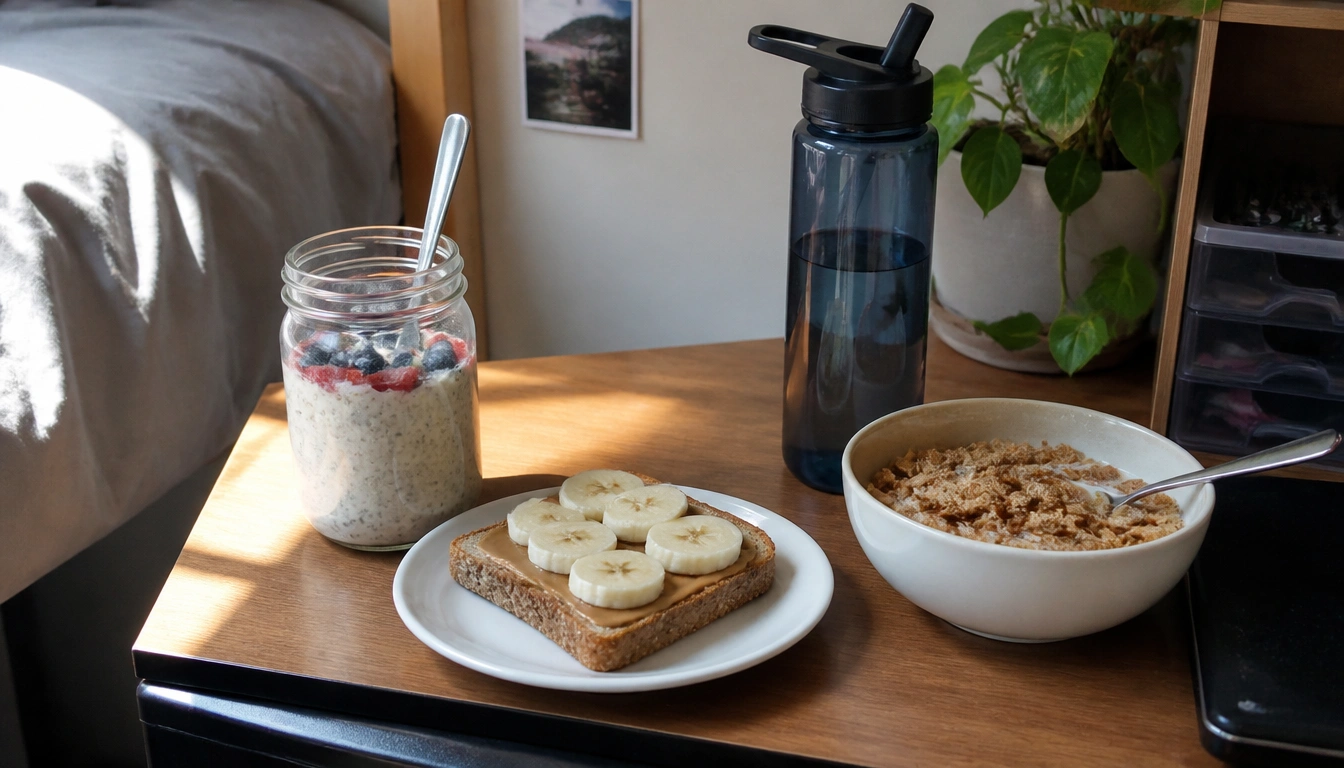
For a college breakfast that is high in fiber, cheap, quick, and realistic for dorm life, focus on simple combinations built around whole grains, fruit, and a seed, nut, or bean component. Aim for about 8 to 10 grams of fiber at breakfast, which is roughly one-third of a day’s goal. Good low-effort options include overnight oats, bran cereal with fruit, whole-grain toast with peanut butter and banana, or a whole-wheat bagel with avocado or nut butter.
Key Takeaways
- Breakfast does not need to be perfect to help. A repeatable, inexpensive meal that you will actually eat is more useful than a complicated high-fiber recipe.
- A practical breakfast target is about 8 to 10 grams of fiber, or roughly one-third of an adult day’s goal.
- Soluble fiber in oats, chia, fruit, and beans helps with fullness and steadier blood sugar; insoluble fiber in whole grains and many seeds helps keep digestion moving.
- Dorm-friendly fiber can come from shelf-stable foods, mini-fridge foods, and dining hall items without needing a full stove.
- Increase fiber gradually and drink enough fluid, because jumping too fast can cause bloating, cramping, gas, or constipation.
- If you have an active digestive condition or unexplained bowel changes, high-fiber eating may not be the right first step without medical guidance.
Why college breakfasts are often low in fiber
College mornings are built for speed, not ideal nutrition. Many students grab pastries, sweetened cereal, breakfast sandwiches on refined bread, or nothing at all before class. Those options can be convenient, but they usually leave fiber out. The result is a breakfast that may be fast but is less filling and less steady for energy through long lectures, lab work, or commutes.
The best college breakfast is not the one with the most ingredients. It is the one you can repeat on a busy weekday with the tools you actually have. For many students, that means shelf-stable foods, a mini-fridge, a microwave, and a tight budget. A practical fiber-rich breakfast should be easy to assemble, affordable enough to buy again next week, and realistic when you are half-awake.
Fiber also matters for students because it supports satiety and helps avoid the sharp rise-and-fall feeling that can happen after a low-fiber, refined-carb breakfast. According to the U.S. government dietary guidance, fiber is a nutrient most people do not get enough of, and young adults are no exception.
How much fiber breakfast should cover
Adults are generally encouraged to get about 14 grams of fiber for every 1,000 calories eaten, which works out to roughly 25 to 34 grams per day for many adults depending on sex, age, and energy needs. The National Health Service uses 30 grams per day as a simple adult benchmark. For a college student, breakfast does not need to carry the whole day, but it should make a meaningful contribution.
A useful morning target is about 8 to 10 grams of fiber. That is close to one-third of a daily goal and is high enough to matter without making breakfast so bulky that you cannot finish it before class. If your current breakfast is close to zero fiber, even getting to 5 or 6 grams is a real improvement. The goal is consistency, not perfection.
It can also help to think of fiber as something that shows up in layers. One food may contribute mostly soluble fiber, another mostly insoluble fiber, and together they make a breakfast that feels more balanced. That is more useful than chasing one magic ingredient.
The simplest fiber-building breakfast formula
A practical fiber-friendly breakfast usually has three parts: a whole-grain base, a fruit or vegetable, and a seed, nut, or bean component. That pattern works because it combines different kinds of fiber with protein and healthy fats, which helps the meal feel more satisfying.
Whole-grain base: oats, whole-wheat bread, bran cereal, wholemeal bagels, whole-grain English muffins, or whole-grain crackers. These often provide more insoluble fiber than refined grains.
Fruit or vegetable: banana, berries, apple, pear, avocado, spinach, or tomato. Fruit adds volume, natural sweetness, and often soluble fiber.
Seed, nut, or bean component: chia seeds, ground flaxseed, peanut butter, almond butter, pumpkin seeds, or even hummus. These can raise the fiber content without making the meal feel heavy.
The most useful mix depends on your morning. If you need something you can eat while walking to class, lean on a portable grain base and a spread. If you have a few extra minutes, add fruit or seeds. If you are using dining hall food, build around what is already there instead of trying to create a perfect meal from scratch.
No-cook breakfast builds for dorms and mini-fridges
When you have no kitchen, no time, or no energy, no-cook breakfasts are the easiest way to make fiber regular. Overnight oats are the classic example: rolled oats mixed with milk or fortified soy milk, plus chia or flaxseed and fruit, then chilled overnight. Oats bring soluble fiber, especially beta-glucan, while seeds add more fiber and help the mixture feel more substantial.
Another simple option is a whole-grain cereal bowl. Look for unsweetened bran flakes, whole-wheat biscuits, or similar high-fiber cereals, then add milk and sliced banana, pear, or berries. This is often cheaper than packaged breakfast bars and usually less sugary than colorful cereals marketed as breakfast for kids.
Toast builds also work well in a dorm. Whole-grain toast with peanut butter and banana gives you grain fiber, fruit, and fat in a fast, portable format. If you want something less sweet, try avocado on whole-grain toast with a sprinkle of seeds. These options are easy to repeat, and repetition is a strength when mornings are crowded.
If you keep only a few foods on hand, choose ones that can mix and match: oats, peanut butter, bananas, a bag of apples, chia or flaxseed, and one sturdy whole-grain bread or bagel. That small setup can cover multiple breakfasts without waste.
Microwave and dining-hall breakfast ideas that still deliver fiber
A microwave opens up more options without requiring real cooking. Eggs can be scrambled in a mug and paired with whole-grain toast, avocado, or salsa. The eggs themselves are not a fiber source, but they help make a higher-fiber breakfast more filling. The grain base and any vegetables or avocado do the fiber work.
Microwave oatmeal is another strong choice. Use plain oats, then stir in chia seeds, nut butter, or frozen berries after cooking. This is helpful if you need a warm breakfast but still want something that stays within a student budget. It is also easy to scale up or down depending on your class schedule.
In a dining hall, focus on building rather than searching for a perfect labeled “high-fiber” meal. If there is oatmeal, choose it and add fruit and nuts. If there are whole-grain breads or bagels, use them instead of refined white options. If there is a salad bar or breakfast buffet with beans, salsa, vegetables, or avocado, those can all help raise the fiber total without extra effort.
For students who eat breakfast on the run, a whole-wheat bagel or English muffin with peanut butter and a banana can be a practical compromise. It is portable, inexpensive, and usually more filling than a pastry or a plain refined roll.
Cheap, shelf-stable swaps that raise fiber fast
You do not need specialty products to eat more fiber at breakfast. The cheapest improvements are often the most basic ones. Replace white bread with whole-wheat bread. Choose plain oats over flavored instant packets. Buy bananas, apples, or pears instead of juice. Use peanut butter, sunflower seed butter, chia, or flaxseed to add fiber and fat without much extra prep.
Dry cereal can also be a budget win if you choose carefully. Bran-heavy cereals or plain whole-grain cereals often give more fiber per serving than many sweetened brands. If price is a concern, compare the ingredient list and the fiber on the label rather than the front-of-box claims.
Beans at breakfast may sound unusual, but they are useful if you already like savory food. Hummus on toast or a breakfast wrap with beans and vegetables can fit the same role as oats in a sweet breakfast. Shelf-stable or frozen options are often cheaper than pre-made convenience items, and they are easy to keep on hand in a dorm setup.
The cheapest high-fiber breakfast is usually the one made from a few base ingredients you can reuse in different combinations. That reduces food waste, which matters when you are stretching a student budget.
How to increase fiber safely
Fiber works best when you raise it gradually. If your current breakfast is low in fiber and you suddenly jump to a very high-fiber meal, you may get gas, bloating, cramping, or loose stools. That does not mean fiber is a problem; it usually means your gut needs time to adapt.
Start by adding one fiber-rich item to your usual breakfast. For example, add fruit to cereal, swap white toast for whole-grain toast, or stir a spoonful of chia into oatmeal. Once that feels comfortable, build from there. This slower approach is especially helpful if you have been eating mostly refined foods or if you are under stress, sleeping poorly, or eating irregularly.
Hydration matters: fiber needs fluid to move through the digestive tract comfortably. If you add more fiber but do not drink enough water, you may feel more constipated instead of less. A glass of water with breakfast is a good habit, and some students do better with another drink before class or during the morning.
If you notice that a new breakfast makes you uncomfortable, look first at the size of the change. Sometimes the fix is simply reducing the portion and building up more slowly. If symptoms are persistent or severe, that is a reason to get medical advice rather than just pushing through.
When high-fiber breakfasts are not the right choice
High-fiber breakfasts are not appropriate for every student in every situation. People with an active digestive flare-up, a known narrowing or stricture, or certain bowel conditions may need a low-fiber or low-residue approach under medical supervision. In those cases, a “more fiber is better” mindset can backfire.
It is also smart to pay attention to warning signs that go beyond ordinary adjustment symptoms. Persistent abdominal pain, unexplained changes in bowel habits, blood in the stool, or ongoing distress should be evaluated by a healthcare professional. Those symptoms should not be managed only by changing breakfast.
For most healthy college students, though, a high-fiber breakfast is a practical way to feel fuller longer and make mornings more stable. The best version is not fancy. It is repeatable, affordable, and easy enough to use on the mornings when you are rushing out the door.
Frequently Asked Questions
How much fiber should a college student aim for at breakfast?
A realistic target is about 8 to 10 grams at breakfast, which is roughly one-third of a typical adult daily goal. If you are starting from a very low-fiber diet, even a smaller increase is useful as long as you build up gradually.
Which breakfast foods are naturally high in fiber and easy to find on a student budget?
Oats, bran cereal, whole-wheat bread, whole-grain bagels or English muffins, bananas, apples, pears, berries, peanut butter, chia seeds, and flaxseed are all affordable, easy-to-find options that can raise breakfast fiber without much cooking.
How can I get more fiber without cooking a full meal?
Use no-cook combinations like overnight oats, cereal with fruit, toast with nut butter and banana, or a bagel with avocado. The easiest method is to add one fiber-rich item to a breakfast you already eat instead of making a completely new routine.
What happens if I increase fiber too quickly?
You may get temporary gas, bloating, cramping, or looser stools. That usually improves if you back off a little and increase fiber more slowly. Drinking enough water also helps your body handle the extra fiber more comfortably.
Are there any medical reasons to avoid high-fiber breakfasts?
Yes. People with an active inflammatory bowel flare, bowel narrowing, or certain other digestive conditions may need a low-fiber or low-residue diet. If you have persistent pain, blood in the stool, or major bowel changes, get medical advice instead of self-treating with more fiber.
The Bottom Line
A high-fiber college breakfast does not need to be elaborate. If you can build around a whole grain, add fruit, and include a seed, nut, or bean component, you are already much closer to a filling morning meal than most convenience breakfasts provide.
For dorm life, the best options are the ones you can repeat: overnight oats, bran cereal with fruit, whole-grain toast with peanut butter and banana, or a whole-wheat bagel with avocado. Aim for a gradual increase, and drink enough water so the extra fiber works with your digestion instead of against it.
If breakfast changes make you uncomfortable or you have ongoing digestive symptoms, do not keep pushing fiber higher on your own. A healthcare professional can help you decide whether a high-fiber approach is appropriate for your situation.
Medical disclaimer
Medical disclaimer: This content is for educational and informational purposes only and is not a substitute for professional medical advice, diagnosis, or treatment. Dietary needs and supplement suitability vary by individual.
Sources
- U.S. Government / Health Authority — usda.gov. Accessed November 2026.
- U.S. Food and Drug Administration (FDA) — fda.gov. Accessed November 2026.
- U.S. Government / Health Authority — dietaryguidelines.gov. Accessed November 2026.
- National Institutes of Health (NIH) — nih.gov. Accessed November 2026.
- National Health Service (NHS) — www.nhs.uk. Accessed November 2026.
- Mayo Clinic — mayoclinic.org. Accessed November 2026.
