
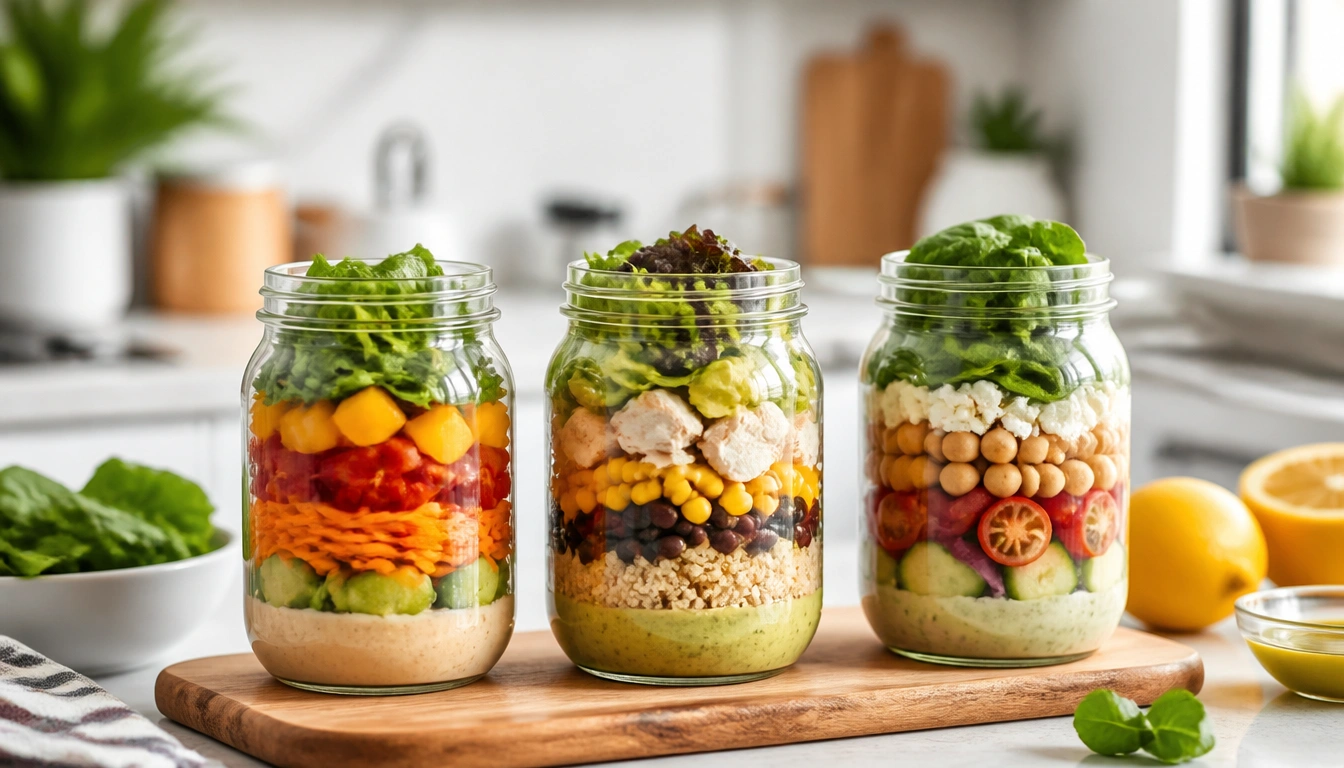
Build salad jars from wettest to driest: dressing on the bottom, then sturdy vegetables, grains or beans, protein, and greens on top. Use a wide-mouth 32-ounce jar or straight-sided glass container, cool cooked ingredients before assembling, and keep the jars refrigerated at 40°F or below. For best quality and safety, plan to eat most assembled perishable salad jars within 3 to 4 days.
Key Takeaways
- Layering matters because it keeps dressing away from delicate greens, which helps prevent sogginess and wilting.
- Beginner-friendly salad jars work best with sturdy vegetables, cooked grains, beans, and protein that can hold up in the fridge.
- A wide-mouth 32-ounce jar or straight-sided glass container is easier to fill, layer, and empty than a narrow-neck jar.
- Assembled perishable salad jars are best eaten within 3 to 4 days when kept cold and handled safely.
- Pack avocado, croutons, seeds, and fresh herbs separately when you want them to stay fresh and crunchy until serving.
Why salad jars work for meal prep
Salad jars are popular because they solve three common lunch problems at once: they keep salads more crisp, they make portions easier to grab, and they help use up produce before it spoils. The trick is the vertical stack. Dressing stays at the bottom, far away from the leafy greens, so the most delicate ingredients are not sitting in liquid all day.
That structure also helps reduce food waste. Instead of assembling a full salad in the morning and watching it wilt by noon, you can prep several lunches at once and store them in the fridge. For beginners, the appeal is simple: fewer decisions during the workweek and a better chance that healthy food actually gets eaten.
Another advantage is flexibility. A salad jar can be built around what you already have on hand, from chickpeas and cucumbers to leftover chicken and cooked quinoa. The format is forgiving as long as you respect the layering order and food-safety basics.
The beginner formula for a successful salad jar
Think from bottom to top. The wettest ingredient belongs on the bottom because gravity pulls moisture downward. If dressing touches tender greens first, those leaves soften quickly and lose their texture. A jar works best when each layer does a small job for the layer above it.
Start with a modest amount of dressing, then add sturdy vegetables that can handle contact with moisture. After that, add grains or beans if you want more staying power, then protein, and finally greens on top. This keeps the most fragile ingredients furthest from the dressing and gives you a more balanced lunch once the jar is shaken or poured out.
For beginners, it also helps to keep the structure consistent from week to week. Once you find a formula you like, you can swap the flavor profile without changing the logic. A Mediterranean jar, a Southwest jar, and a sesame-ginger jar can all follow the same order.
Best ingredients for each layer
The best salad jar ingredients are the ones that stay pleasant after a few days in the refrigerator. The bottom layer should be a vinaigrette or other dressing that can be poured easily. Creamy dressings can work too, but they should be used sparingly because they may feel heavier in a jar and can be harder to distribute evenly.
Next come sturdy vegetables. Good options include cherry tomatoes, cucumbers, bell peppers, carrots, radishes, celery, and red onion. These vegetables help create a buffer between the dressing and the rest of the salad, and they keep some bite even after chilling.
For the middle layers, choose cooked and fully cooled grains such as quinoa, brown rice, farro, or pasta, or use beans and lentils such as chickpeas, black beans, kidney beans, or lentils. These ingredients add fiber and make the salad more filling without requiring much extra work.
Protein can come from cooked chicken, hard-boiled eggs, tofu, tuna, or cheese such as feta, goat cheese, or mozzarella. Keep the pieces bite-sized so they mix well when the jar is emptied. Finish with greens such as spinach, kale, chopped romaine, or mixed field greens. If you want extra crunch, tuck nuts or seeds near the top or pack them separately.
| Layer | Good beginner choices | Why it works |
|---|---|---|
| Dressing | Vinaigrette, lemon-based dressing | Stays at the bottom and flavors the salad without wetting the greens |
| Sturdy vegetables | Cucumbers, carrots, tomatoes, peppers, radishes | Create a moisture barrier and stay crisp longer |
| Grains or beans | Quinoa, brown rice, chickpeas, black beans | Add staying power and absorb flavor well |
| Protein | Chicken, eggs, tofu, tuna, cheese | Makes the jar more filling and meal-worthy |
| Greens and toppings | Romaine, spinach, kale, herbs, seeds, croutons | Best kept away from moisture until serving |
Three beginner-friendly salad jar flavor combinations
Mediterranean chickpea jar: Lemon-herb vinaigrette on the bottom, followed by cherry tomatoes, diced cucumbers, red onion, olives, chickpeas, feta, and spinach on top. This is one of the easiest jars to start with because the ingredients are sturdy and easy to find.
Southwest black bean and chicken jar: Lime-cilantro dressing, then corn, black beans, diced bell peppers, and cooked chicken breast, finished with romaine. If you want avocado, add it fresh right before eating so it does not brown or turn soft in storage.
Sesame-ginger tofu jar: Sesame-ginger dressing, then shredded carrots, sugar snap peas, edamame, tofu cubes, and purple cabbage. This version has plenty of crunch and holds up well for a few days because the vegetables are firm and colorful.
These combinations are useful because they show the same pattern in three different flavors. Once you understand the structure, you can swap ingredients based on what you already like or what is already in your fridge.
How to choose the right container and portion size
A practical container makes salad jars much easier for beginners. Wide-mouth 32-ounce mason jars are a common choice because they are easy to fill, easy to layer, and easy to empty. Straight-sided glass containers also work well because the opening is roomy and the sides do not narrow toward the top.
Narrow-neck jars are harder to use. Ingredients can get stuck, layering becomes awkward, and it is more difficult to shake or pour the salad out later. For someone just starting out, convenience matters. If the container is annoying to pack, the habit is less likely to stick.
Portion size depends on appetite and the rest of your meal, but a 32-ounce jar is a comfortable starting point for a lunch-sized salad. If you plan to add lots of grains, protein, or beans, the larger size gives you room to layer without compressing the greens too much. The goal is a jar that closes cleanly without smashing the contents.
Food-safety rules for prepping salad jars ahead of time
Freshness and safety are related but not the same thing. A salad jar can look fine and still be past its best storage window. According to the USDA, assembled perishable leftovers and cooked foods should generally be eaten within 3 to 4 days when kept refrigerated. That is a good benchmark for salad jars that contain cooked chicken, eggs, tofu, grains, or cut produce.
Keep the refrigerator at 40°F or below, as recommended by the FDA. Refrigerate prepared ingredients within 2 hours of cooking or assembling, and within 1 hour if the room is especially warm. If you cook grains or protein for the jars, let them cool completely before sealing them in a container. Sealing in steam creates condensation, and extra moisture can make the jar soggy and less safe.
The CDC and FDA also stress basic kitchen hygiene: wash hands before prep, rinse produce under running water, and keep raw animal foods separate from ready-to-eat produce. Use clean utensils and clean cutting boards, especially if you are making chicken or egg salads alongside raw vegetables.
For meal-prep beginners, a good rule is to make only what you can reasonably eat in a few days. If you know one jar will sit too long, freeze or repurpose the ingredients instead of stretching the storage window.
Common mistakes that make salad jars soggy or unsafe
The biggest sogginess mistake is putting greens too close to the dressing. Even a sturdy green can turn limp if it sits in liquid for days. Another common problem is packing warm ingredients into the jar. Heat turns into trapped condensation, and condensation turns into moisture that spreads through the layers.
Overfilling is another beginner issue. If the jar is packed too tightly, it is hard to mix later and the greens can get bruised. On the other hand, a jar that is too loose can shift around and bruise fragile leaves during transport. Aim for a firm but not crushed pack.
A simple make-ahead workflow can help: wash and dry produce, cook grains or protein if needed, cool those ingredients fully, layer the jar from wettest to driest, seal it, and store it in the coldest part of the fridge. If you are making several lunches, build them in one session so the ingredients stay consistent.
Salad jars can also be customized by eating style. Vegetarian jars often work well with chickpeas, beans, lentils, tofu, or eggs. Chicken-based jars are especially practical for people who want a more filling lunch. Grain-forward jars are a good fit if you want a more substantial meal and prefer fewer leafy greens. The same layering order still applies.
When to add avocado, herbs, seeds, and croutons
Delicate ingredients are best treated as finishing touches. Avocado is the clearest example: it can brown and soften before you are ready to eat it. Fresh herbs can wilt or lose flavor if they sit with dressing too long. Croutons and many seeds lose crunch quickly when exposed to moisture.
The easiest fix is to pack these items separately and add them right before serving. If you do want to layer them inside the jar, keep them as close to the top as possible, just under the lid, so they have the least contact with moisture. Even then, they are usually better when added at the last minute.
For beginners, this separation is a useful exception rule. Most of the jar can be built in advance, but the most fragile ingredients do better as a fresh finish. That gives you both convenience and a better final texture.
When it is time to eat, you can shake the jar to distribute the dressing or empty it into a bowl if you prefer a more even mix. Either way, the layering system is doing the work for you, which is the whole point of the salad jar method.
Frequently Asked Questions
What ingredients work best in a salad jar for beginners?
Start with ingredients that stay crisp and hold their shape: vinaigrette, cucumbers, carrots, cherry tomatoes, beans, grains, cooked chicken or tofu, and sturdy greens like romaine or spinach. These are forgiving, easy to find, and less likely to turn mushy after a day or two in the fridge.
What is the correct layering order for a salad jar?
Use the wettest-to-driest order: dressing first, then sturdy vegetables, then grains or beans, then protein, and greens on top. If you add toppings like seeds or croutons, keep them separate or place them right under the lid so they stay crunchy.
How long do salad jars last in the fridge?
For best quality and safety, plan to eat assembled perishable salad jars within 3 to 4 days when they are stored in a refrigerator at 40°F or below. If the jar includes cooked chicken, eggs, or other perishable ingredients, that timing matters even more.
Can I use chicken, eggs, tofu, or beans in salad jars?
Yes. Cooked chicken, hard-boiled eggs, tofu, beans, and lentils all work well in salad jars. Just make sure cooked ingredients are cooled before assembling, and keep the jar refrigerated. Bite-sized pieces are easiest to layer and eat.
What kind of jar or container is best for meal-prep salads?
A wide-mouth 32-ounce mason jar or a straight-sided glass container is usually easiest for beginners. Those shapes make layering simpler and make it easier to shake or pour the salad out later. Narrow-neck jars are harder to fill and mix.
The Bottom Line
Salad jars are one of the easiest meal-prep habits to build because they solve the two biggest lunch problems at once: convenience and texture. If you layer them from wet to dry, use sturdy ingredients, and keep them cold, they can stay appealing for several days.
For beginners, the simplest formula is also the most reliable: dressing, sturdy vegetables, grains or beans, protein, then greens. Add avocado, herbs, croutons, and seeds at the last minute or pack them separately. That small extra step makes a big difference in freshness.
If you keep food safety in mind and choose a container that is easy to use, salad jars can turn weekday lunches into something practical instead of repetitive.
Medical disclaimer
Medical disclaimer: This content is for educational and informational purposes only and is not a substitute for professional medical advice, diagnosis, or treatment. Dietary needs and supplement suitability vary by individual.
